Sir Ken Dodd: Comedy king who refused to leave the stage when TV consigned the music hall tradition to history
He relished taking audiences for a ride with his expert clowning and carefully crafted jokes in performances that could last until the early hours of the morning
Ken Dodd was the last of the great standup comics of the age where the theatre had yet to be trumped by TV. We shall not look upon his like again. The theatres where he learned his art have all closed down. Since it is the nature of standup comedy for the comedian to face an audience in person, the desertion by that audience of the variety halls for the television screen left Dodd to conduct, as it were, a one-man crusade on behalf of a dying theatrical cause.
Not that it ever looked in other than the best of health when he was at the helm. Whether in pantomime, summer shows or his own, the man’s command over his talent, and therefore over us, bordered on genius.
For more than four hours at a time he would amaze, amuse, defy and delight up to a couple of thousand people at a time with his apparently inconsequential torrent of tomfoolery at the footlights.
From his record-breaking twice-nightly seasons at the Palladium in 1965 and 1967 to his “one-night stands” in the 1990s, which he played once or twice a week all over the country, the Liverpool-born and Liverpool-bred comedian broke records every night as a solo performer, not only for the length of his one-man shows but also for audience attendance. Inconsequential? Spontaneous? It only seemed so.
In fact, he had rehearsed his act down to the last dot and comma, leaving gaps for the ebb and flow of an audience’s response when he would call upon a personal repertory of gags ancient and modern, polite or risqué, to suit the moment. It was the discipline, energy, precision, readiness and range of Dodd’s humour which never ceased to amaze most of his admirers.
His unfailing warmth and goodwill combined with a dazzling technique established him in the public’s affection for over 40 years. While he repeated gags until they became catchphrases they never came in quite the same place or with the same emphasis two nights running; such was the pace of their delivery that few spectators would claim to relish at first hearing all the nuances, jeux de mots and stabs of satire in the nightly battle to win us over.
Some nights it took longer than others. The length of an evening with Dodd became a subject of pride among connoisseurs. “You were out before midnight? Well, he kept us until nearly one o’clock in the morning.”
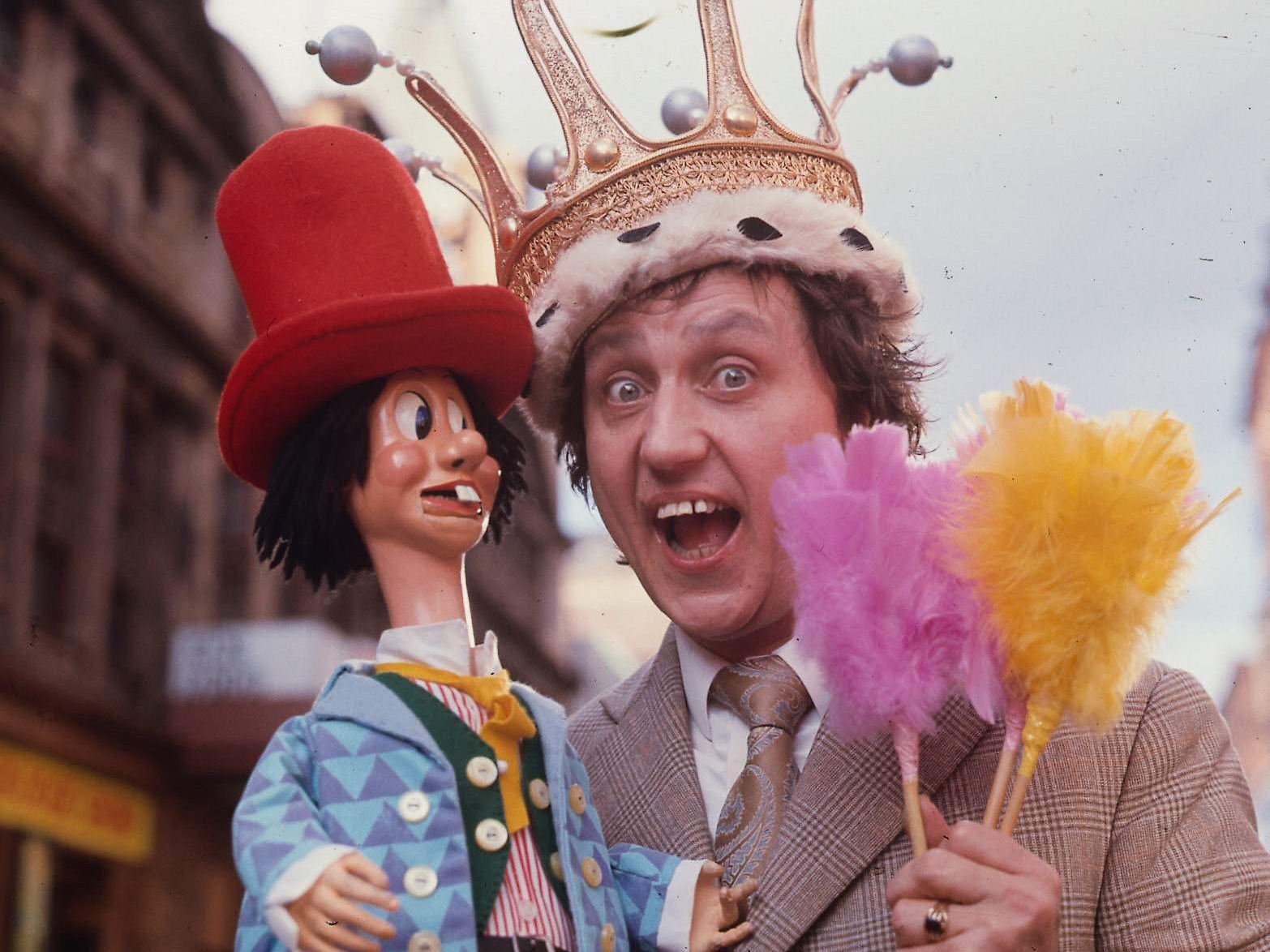
Dodd was a funny man with whom the fun began on sight. His long, large, rubbery face possessed, when pulled, a flexibility to make you gasp. Like one of Marcel Marceau’s masks, it looked as if it might peel off if Dodd chose.
By merely pushing both his hands up through his hair, he could make it stand literally on end; and when he chose to affect a spectacular double squint, he would also project his buck teeth (capable, it was claimed, of eating a tomato through the strings of a tennis racket) into a ghoulish grin so that the whole broad map of his blue-eyed face proclaimed its owner’s lifelong dedication to the noble cause of cheering us all up.
All? Inevitably there were pockets of resistance, especially among academics and intellectuals, many of whom had first encountered the comic merely on the television screen or the radio where by the nature of each medium his art could hardly be at its best. His spell was apt to dwindle without a natural, paying audience which might answer back or fail to giggle until he had set about his task from the footlights.
Broadcasts were bound to leave millions of sitting-room viewers feeling left out in the cold; and Dodd’s personality was nothing if not warm. It thrived only in the playhouse. He had his props. Enveloped in a grotesquely long and loud overcoat when he came on stage, he would proudly explain its origins – “made from 28 moggies, all toms!” and then take it off to reveal an equally colourful suit which in turn he would strip off to cries of female delight to disclose another pair of trousers.
“Surprised you, didn’t I?” he grins at the women in the house. “Thought you were going to see the main feature, didn’t you?” The main feature of his props was a so-called tickle-stick: a long pink feather duster of variable length which he would wave ambiguously about his person or extend phallically over the orchestra pit before enquiring of a mythical matron in the stalls: “Have you, Missus, experienced the rejuvenating powers of my tickle stick?”
He would go on: “How tickled I am under circumstances,” and turn to another mythical lady with: “Have you ever been tickled under the circumstances, Missus?” Affecting to hear the answer he would continue: “You’ve been tickled under the stairs at dances? Oh, I see. How tickled I am by all this goodwill. Have you ever been tickled by good will, Missus? … Good old Willie!”
Another prop was a huge bass drum which towards the end of his act (in the early hours perhaps after an eight o’clock start) he would lug on from the wings and begin vigorously, abruptly to thump, for no evident reason save to show his joy in the resonance or as a way to change the subject at each thump, himself breaking into booming: “On the road to Mandalay…”
Hereabouts the evening lurched into the realms of fantasy. He would implore us to ponder the sadness of men’s legs. “Such a lonely life standing in the dark in your trousers all day… just an occasional flash of sunlight,” or recall his origins: “I was born one day when my mother was out. We were so poor the lady next door had me…”
He was in fact born into a middle-class musical family at what many people supposed to be a mythical northern town, Knotty Ash, an agreeable residential Liverpool suburb. His grandmother was Liverpool’s first woman magistrate, and each of her children played two musical instruments; and Dodd’s father was a coal merchant who played the clarinet and saxophone. Young Ken was taken regularly to one or other of the city’s numerous variety halls before the Second World War; and as a youth took lessons in ventriloquism.
At the age of eight, with a script written by his father and an act which embraced tap-dancing, the saxophone and the piano, the boy made his debut at a local orphanage. At 12 he worked as props boy at a local pantomime, and on leaving Holt High School at 16 he joined his father’s firm as driver and delivery boy, never losing a chance to perform as an amateur locally. At 19 he turned travelling tinker, purveying from a converted furniture van pots, potions, polishes and detergents to housewives on local post-war housing estates. In his mid-twenties his amateur theatricals were doing well enough for him to risk turning professional. He appeared, quaking, in variety at the Empire, Nottingham, in September 1954. He never looked back. One of his early billings was as Professor Yaffle Chuckabutty, Operatic Tenor and Sausage Knotter.
Years later that voice took him into the charts. In 1965, the ballad “Tears” topped them for six weeks.
Doddy’s Here packed the Palladium for 42 weeks and for the rest of his career he travelled the length and breadth of the country in celebration of a form of theatrical entertainment which had been on the decline since he turned standup comic.
He also won awards for his 1960 singles “Love Is Like A Violin” and “Happiness”, which endured as a signature tune.
Like other clowns Dodd had classical longings. As it was with George Robey’s Falstaff in the Thirties and Forties, and Frankie Howerd’s Bottom so it was with Dodd’s Malvolio, which he debuted at the Liverpool Playhouse in 1971; and in some quarters it was gratefully received.
But the gift of pathos was not among this theatrical clown’s dramatic virtues as it had been with certain predecessors (Max Wall, Frankie Howerd). Nor could he hope to know, as a sudden “legitimate” actor, about the need in a company for the players to give and take; still less, for all his study of the role, how to become part of such a company. It was with his own lines (or his scriptwriter’s) that he was in his artistic element.
Especially as he entered his fourth hour at, say, Skegness or Scarborough, Blackpool or Bournemouth. Audiences would be glancing at their watches and taxi drivers would keep their meters running. Dodd, loitering on with mischievous intent in his eyes, would give the drum a loud thump and yell interrogatively at the house, “Give in?” Dodd relished the length of such nights.
For one thing he felt it was time to dwell more daringly on what might be called the Max Miller side of his talent, which would lead, through metaphor, euphemism and innuendo, to all sorts of normally forbidden paths of impropriety until the imagination boggled, whereat Dodd, like Miller, would affect utter innocence.
Although the subjects arising from those tales of marital discontent inevitably involved male inadequacy, Dodd’s descriptions were wreathed in such gentility (as mail order catalogues were consulted for organ transplants and wives opted for new kitchens instead) that the skill of the narration overcame any objections on grounds of taste; and in any case, he could always plead that any lewdness was in our minds, not his.
If anyone dared to depart he would, at, say, a pierhead theatre, advise: “I wouldn’t use that door, Missus, it goes straight on to the sea…” and, if ignored, disconcert the rest of us with an assurance that the defector would soon return, dripping.
One of Dodd’s official ambitions was to play every theatrical venue in the British Isles, which led him to play many a municipal misadventure in theatrical architecture. “What a thrill, ladies and gentlemen to stand here this evening. Here in this magnificent shed – no, no, I mean this theatre, this theatre of the imagination.
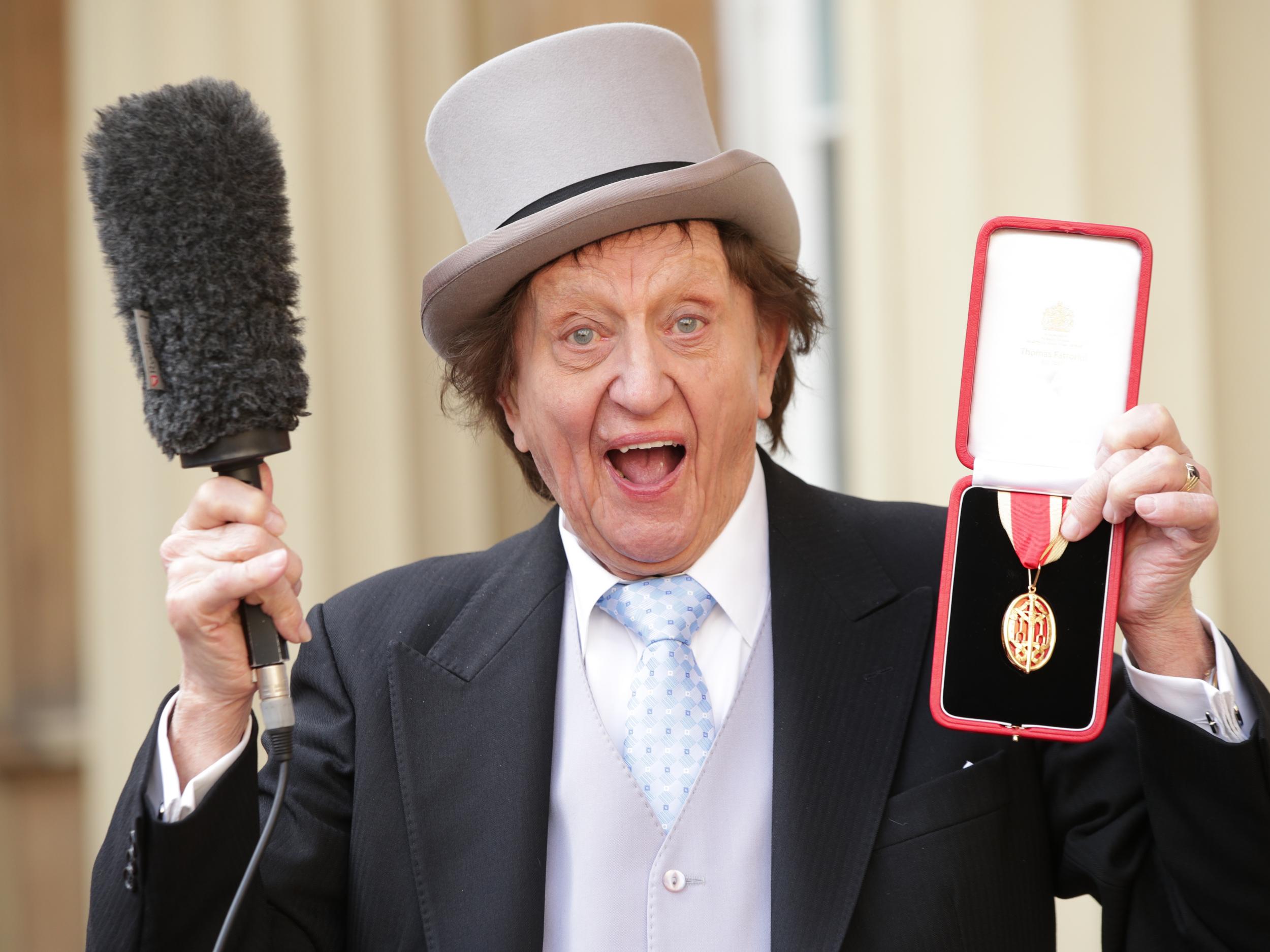
“Of course you have to use a lot of imagination. I have to. I have to imagine that you’re enjoying yourselves. You have to imagine that I’m a comedian … you’ve got the biggest job… Now, ladies and gentlemen, one thing is very important … we all have to be out of here by 10.30 … yes … ’cos that’s when they bring the trams back … I’ve really been looking forward to coming here, you know … Tonight I feel completely underwhelmed. I woke up this morning. I was up at the crack of noon. This morning I thought, ‘What a beautiful day – what a beautiful day for going up to Lady Smith and saying ‘I hear you’ve been relieved!’ Or what a beautiful day for going up to Count Zeppelin and saying, ‘You’ll never sell a sausage that size!’”
No comedian ever took himself less seriously or his art more seriously. Had he taken the Inland Revenue as seriously as his stage performances the events which brought him unwelcome headlines in 1989 might never have happened.
Declared astronomically in debt, he went into the witness box to reveal a personality of such beguiling naivety and anxiety about impoverishment that when hordes of bank notes were discovered among the mounds of scripts at his house in Knotty Ash, Liverpool, the cartoonists had a field day.
Dodd pleaded that all his life he had dreaded poverty, ever since his Liverpool childhood in the 1930s. Later as a working actor he had continued, he pleaded, in constant fear of failure, unsure from week to week where his next job was coming from. He had simply been storing the money at home at Knotty Ash, not to hide the fact that he had earned it, but to avoid the ruin implied by what they called in show business a rainy day. Besides, he had no faith in banks.
And the newspaper-reading nation, fearing for its favourite comic’s health (during the hearing he was reported to have heart trouble), when it learned that Dodd would not be going to prison after all, heaved a sigh of relief. His witness box performance had been absurd and touching in its revelation of his obsessions.
He himself, after a decent interval, returned to the stage, joking obliquely about the Inland Revenue, and having cleared the air for the nation about Knotty Ash. It was not a mythical northern factory where “Diddy People” (small children who formed a sort of chorus line in certain Dodd entertainments) manufactured jam butties or broken biscuits. It existed.
Dodd drove home there every night after the theatre with his earnings. It was the place, moreover, which stored not only his money and scripts but also heaps of notebooks which he had kept down the years as a record of what sort of joke went down best and where.
He used to say that he had studied, from the start of his career, Schopenhauer, Kant and Freud to find the key to humour; but the great thinkers proving of small aid he came to depend on his experiences, recorded in detail by him or a girlfriend after every show.
If a joke flopped at Leicester but flourished at Wigan, was it the telling or the timing? It was often local taste. Wigan, for example, did not like sex jokes. Domestic plumbing, yes, and a touch of hearty vulgarity, but no sex. The south coast on the other hand relished “a bit of spice”, as well as weird, imaginative comedy, though it yawned at gags involving downtrodden little men. Football was not a popular subject in Glasgow, at any rate not on Fridays or Saturdays, nor were English county accents. Nottingham and Belfast liked picture gags, such as “the one about the egg in the meat pie and the clever hen”. In Blackpool it was risky to try, especially at matinees, anti-marriage lines like: “I’m not married really, I’ve always been round-shouldered.” Bristol enjoyed puns and Great Yarmouth liked being teased and addressed personally from the stage – some spectators even moving about the auditorium to induce it. In the Black Country all jokes (according to Dodd) had to be told “more and more slowly the deeper you went”. The riskiest subjects of all, Dodd concluded, were death, religion, “coloured people” and bosoms. He once took what he thought was a good bosom joke to Glasgow, Birmingham, Cheltenham and Brighton. Its failure was shattering.
In 2009, still performing up to 150 shows a year. Speaking to The Independent, the then 80-year-old expressed his dismay that Nottingham Concert Hall had told him of the “painful” decision not to go ahead with a forthcoming show because of the “quality of some of the performances” in his Christmas show.
Sir Ken is survived by his wife Anne Jones, his partner of 40 years – the couple finally tied the knot as recently as 11 March. (In 1977, his previous partner, Anita Boutin, died aged 45 – they had been together for 24 years.) The Archbishop of Canterbury and the comedian Dara O Briain are among those who paid tribute to him. The theatre, he told The Independent, was his very lifeblood: “That is the holy temple out there and people have paid you the greatest compliment in the world by coming to see you.”
Kenneth Arthur Dodd, comedian born 8 November 1929, died 11 March 2018
(The writer of this updated obituary, Eric Shorter, died in January)
Join our commenting forum
Join thought-provoking conversations, follow other Independent readers and see their replies
Comments
Bookmark popover
Removed from bookmarks