7 Chinese sentenced to 20 years each for trafficking and forced labor in South Africa
A court in Johannesburg has sentenced seven Chinese nationals to terms of 20 years in prison each for trafficking people from Malawi and forcing them to work at a factory in South Africa
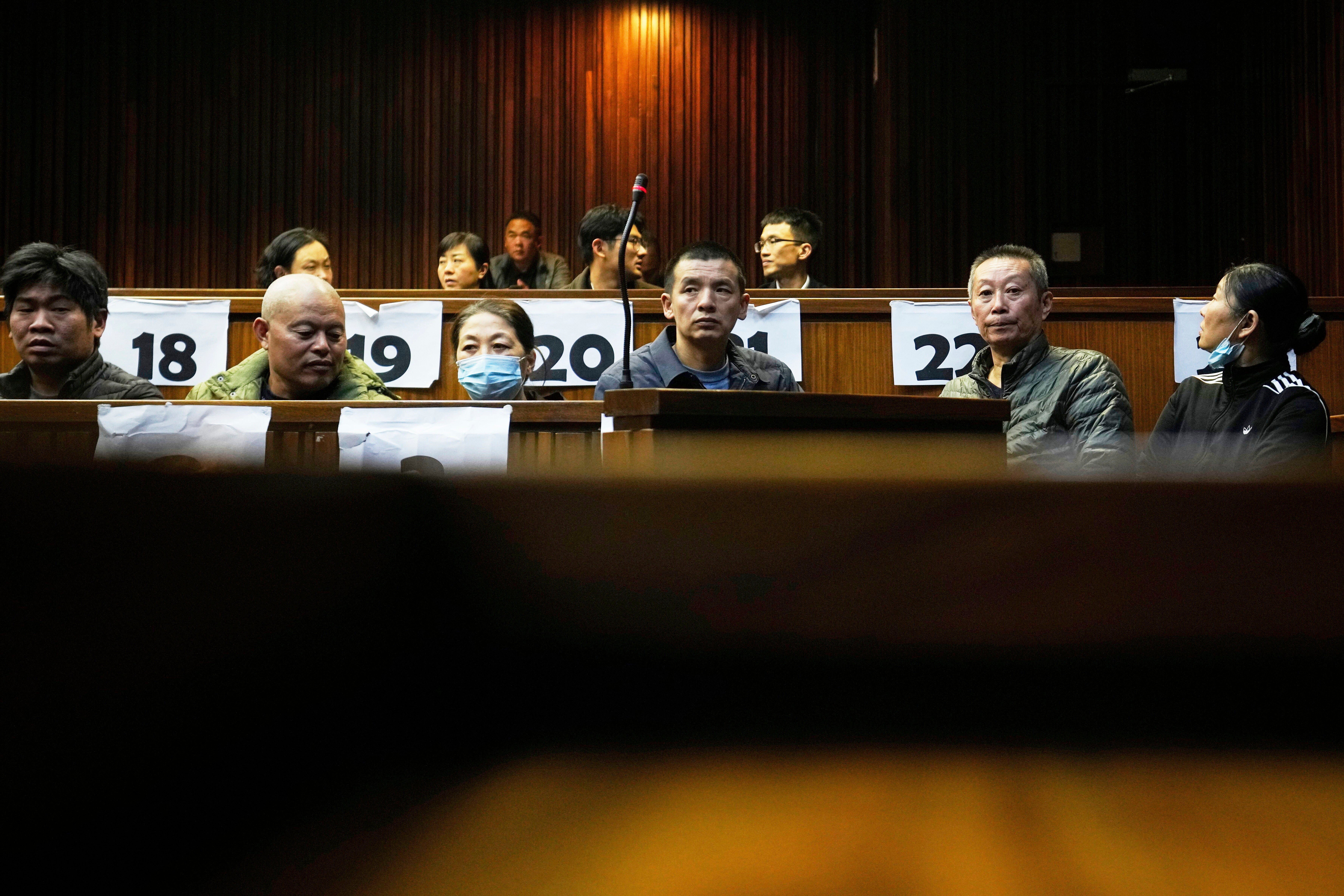
A court in Johannesburg sentenced seven Chinese nationals on Wednesday to terms of 20 years in prison each for trafficking people from Malawi and forcing them to work at a factory in South Africa.
The group was convicted on Feb. 25 of trafficking 91 undocumented Malawian nationals from 2017 to 2019 to work at a cotton fabric factory in Village Deep, an industrial area in the south of Johannesburg.
The Chinese nationals had been arrested on Nov. 12, 2019 when police raided the factory and found the Malawians confined under inhumane conditions with armed guards controlling their movements. The factory had a high wall and razor fence.
Court records listed the defendants as Shu-Uei Tsao, 42; Biao Ma, 50; Hui Chen, 50; Quin Li, 56; Zhou Jiaquing, 46; Junying Dai, 58; and Zhilian Zhang, 51. They all were sentenced in Gauteng South Division Court to 20 years after being convicted of human trafficking and breaking the country’s labor and immigration laws.
Prosecutors had sought life sentences. They said the victims were forced to work 11-hour shifts, seven days a week, without proper training or safety equipment.
Many had previously worked at Chinese-owned factories in Malawi, and were recruited to go to South Africa under false pretenses, the prosecutors said.
During the trial, the victims described harsh conditions, including being transported in windowless trucks to the factory, where they were not allowed to leave.
They were also forced to work on holidays and were prohibited from bringing in outside food. Personal communication was banned, and they were made to operate defective machines without protective gear, leading to accidents, they said.
Bookmark popover
Removed from bookmarks