Mom of 7-year-old hospitalized with brain swelling from measles: ‘I still wouldn’t have given my son the vaccine’
EXCLUSIVE: South Carolina parents living in the state’s measles epicenter tell Rhian Lubin of their devastation after their unvaccinated 7-year-old son, Ethan, developed encephalitis, a complication from the virus that causes swelling and inflammation in the brain
Six weeks ago, Ethan was like most 7-year-olds — spending the weekend riding his new bike or playing Minecraft on his iPad on a rainy day.
“He just learned how to ride, he got the hang of it right away,” Ethan’s dad, Luis, said proudly. “He wanted to go outside because he wanted to jump on his bike…it was an amazing thing for him.”
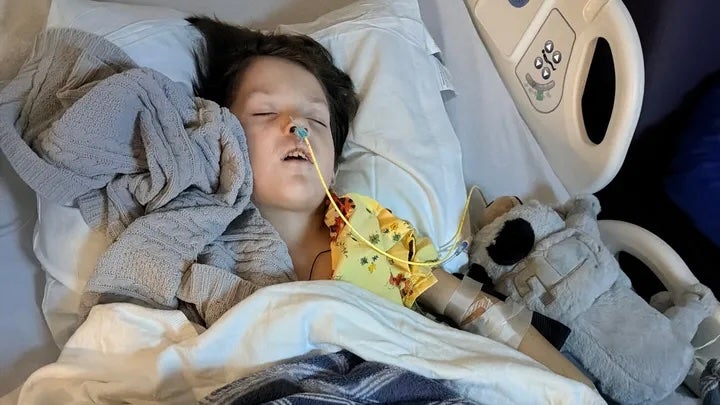
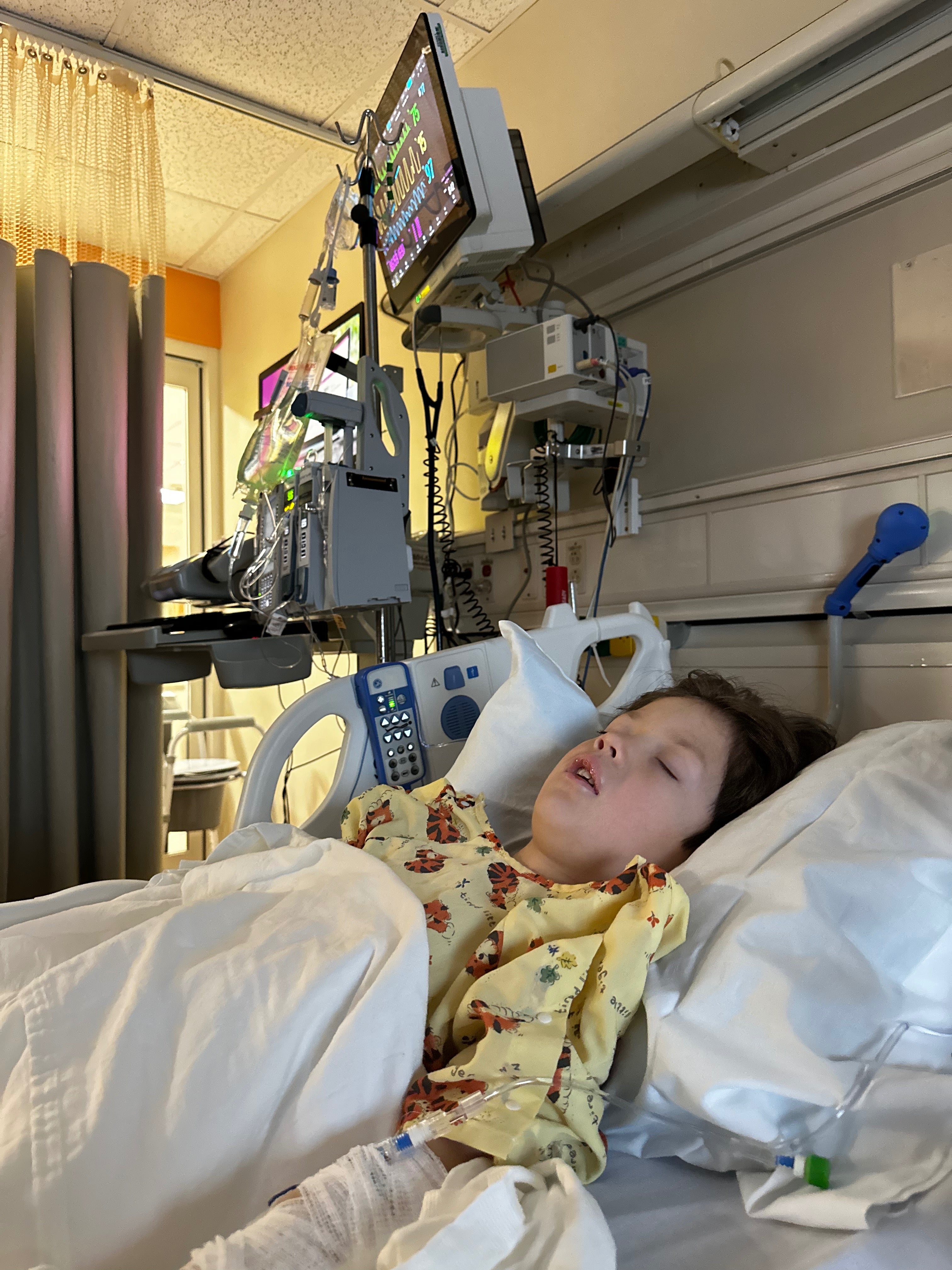
Instead, since late January, the schoolboy has been confined to a hospital bed with measles encephalitis, a complication that causes swelling and inflammation in the brain. “He's pretty much as if he was paralyzed,” his devastated father, 41, told The Independent in a phone interview from his son’s hospital bedside.
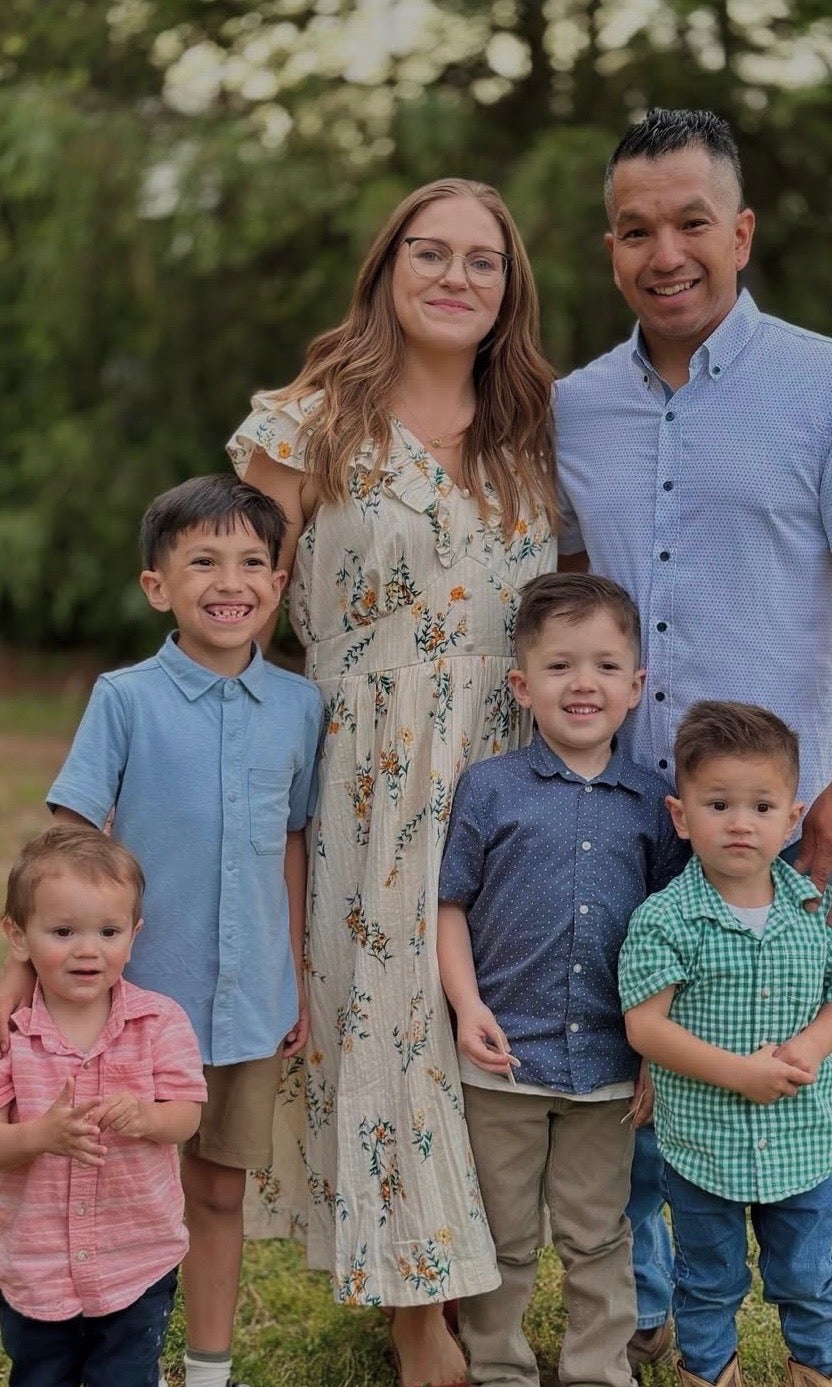
Ethan’s parents decided not to immunize him against measles as they did with his three brothers. Three out of four of them contracted measles. Still, despite Ethan’s ordeal, his mom stands by their decision. “We’re not blaming God for this,” said 35-year-old Kristina. “Yes, it hurts, of course, it hurts. But God has chosen Ethan for a reason. God is doing something, and we're gonna glorify his name regardless.
“And we wouldn't change it any other way,” the mom continued. “If I knew this could be the outcome, I still wouldn't have given my son the vaccine.”
“Our biggest reason why we didn't do it is just with all the unnecessary stuff they add into it,” Kristina added, referring to her beliefs about the vaccine.
“With my own eyes, I have seen the damage it does to kids who are perfectly normal, and then once they get it, they're not the same anymore,” she claimed.
Her stance on the vaccine is not unique these days, even though it is so effective that by the year 2000, measles had been declared all but extinct in the U.S. by both the Centers for Disease Control and the World Health Organization. And doctors praise it as highly effective at preventing serious complications like encephalitis.
But, like several other childhood vaccines, it has been caught in a political tug of war that includes a good measure of conspiracy theory and skepticism fueled by unproven claims.
‘Why do we need to add so much to our children’s bodies?’
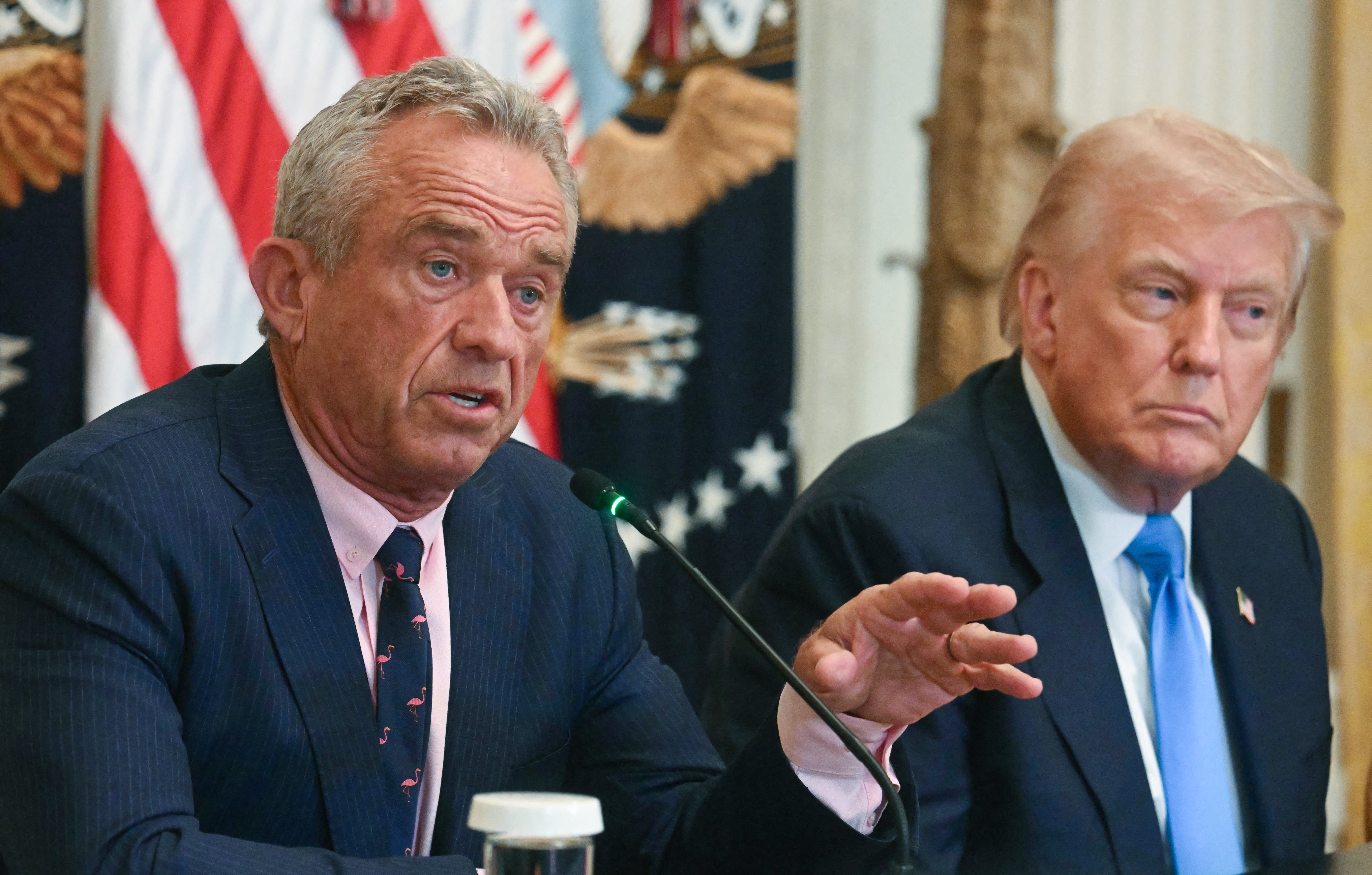
That anti-vax position is only growing under MAHA Health Secretary Robert F. Kennedy Jr’s anti-vaccine policies, which medical experts say have undermined public trust in immunizations by promoting unproven theories about the dangers of vaccines.
Now, once-dormant measles is surging across the U.S. as vaccination rates continue to drop.
Ethan and his family live in South Carolina’s Spartanburg County, the epicenter of the outbreak where cases of the highly contagious virus have exploded in recent months. There have been 962 confirmed cases in the state since the outbreak began in September 2025, surpassing the 762 cases reported in West Texas last year.
Kristina explained her anti-vaccine reasoning as based on what she claims to have seen in the children of friends who have had the measles shot, or from what she’s read about other cases.
“They think it’s so safe,” she said of the vaccine. The mother of four also questioned the number of vaccinations children are recommended to take nowadays compared to when she was growing up — echoing a sentiment that has been publicly shared by both Kennedy and President Donald Trump.
“Why do we need to add so much to our children’s bodies?” she asked.
In October 2025, under Kennedy, the Department of Health and Human Services reduced the number of routine vaccines recommended for use by all children in the U.S. from 13 to 7, though the measles, mumps and rubella vaccine was not one of them.
The parents said that they hope sharing their son’s story might help other families going through a similar ordeal.
About 1 child out of every 1,000 who get measles, which has no cure, will go on to develop encephalitis, according to the Centers for Disease Control and Prevention. The condition can result in permanent brain damage and is fatal in 10 to 15 percent of those cases.
‘No movement at all’
When Ethan contracted the measles around January 20, his parents hoped he would shake it off and “bounce back” like his brothers, aged 2 and 4, did when they came down with it a week or so prior. Ethan was not so lucky.
Luis, an electrician, has been unable to work while he and Kristina, a stay-at-home mom, watch over Ethan in the hospital. The family has rallied around them; their three other boys aged 9, 4, and, 2, are being looked after by an uncle.
Ethan came down with a severe rash and a fever on January 21. In the days that followed, his appetite diminished and he grew weak to the point where he could no longer stand up by himself. He began to fade in and out of consciousness.
“Something's wrong,” Kristina recalled thinking as she looked at her son on the couch that week. “He was just sleeping. And anytime I would ask him a question, he'd just look at me and fall back asleep.”
Ethan’s parents took him to the emergency room at Spartanburg Medical Center, where he was admitted overnight and put on antibiotics. Doctors at the hospital told the parents their son could be suffering from measles encephalitis, but they couldn’t be sure until they ran further tests the next day.
However, an MRI and spinal tap— a procedure that can diagnose conditions that affect the brain— did not give any indication of swelling or inflammation, the parents said. “He got the MRI in the morning, and it came back clean,” said Kristina.
In the hospital, Ethan grew more and more distressed. “He just wanted to get out. He wasn't eating the hospital food. He was just screaming,” she recalled. “Seeing him like that was like…This is not my son, like he needs to go home.”
You don't get measles encephalitis unless you have measles, and we have a very good vaccine for measles. As somebody who treats the worst of these encephalitis cases, it's hard to swallow that we have a vaccine-preventable infection and we're seeing encephalitis from that.
Doctors suggested Ethan’s parents could take him to Greenville Memorial Hospital, a larger facility with more specialists. Because their son was in so much distress, his parents decided to take him home and keep a close eye on him.
“If all they're doing is antibiotics, maybe he'll be more comfortable at home, and we don't have to put him through this,” his mom said, explaining her thought process, and encouraged by the fact that Ethan appeared to have regained some strength; he could drink water by himself and walk a short distance to the bathroom.
Less than 48 hours later, though, on Jan. 30, Ethan’s condition deteriorated to the point where he had “no movement at all,” his mom said.
“It felt like his body was slowly losing all mobility,” she recalled.
Kristina rushed Ethan to see the local doctor, who took one look at him and told the mom to get him to Greenville Memorial Hospital, about a 36-mile drive, right away.
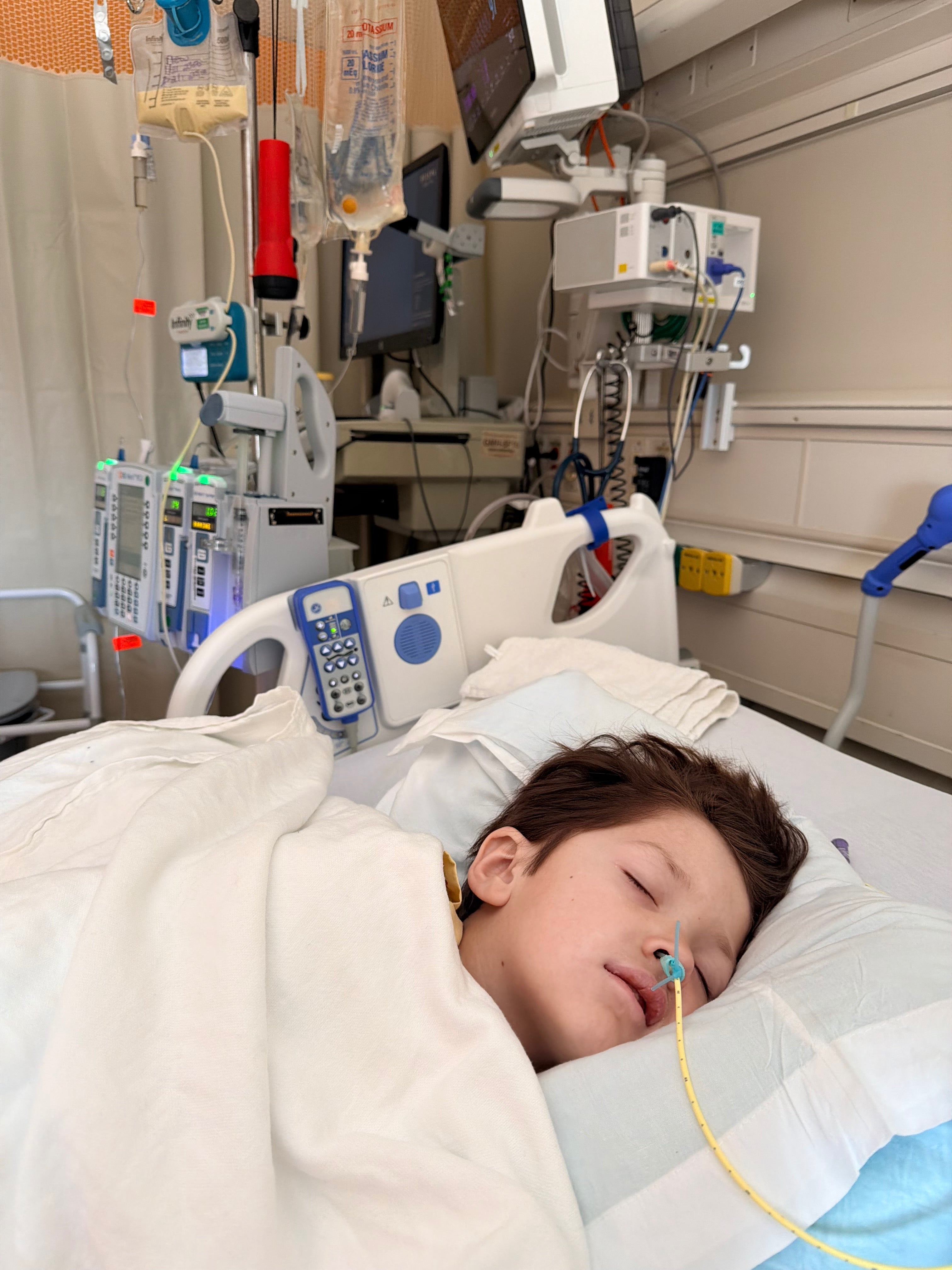
“They immediately started giving him fluids, taking blood again, doing all the tests again,” Kristina said, panicking as she watched her son being hooked up to machines.
Then Ethan’s heart rate started dropping.
“The machine started beeping,” she recalled. “And we were really concerned … doctors kept coming in and so then we asked, ‘What number do we need to be concerned?’ And [the doctor] said, ‘Anything that goes under 50.’
“And all of a sudden, his heart rate went under 50,” Kristina said.
What is encephalitis?
Six symptoms to look out for
Encephalitis causes the brain to become inflamed, most commonly due to infection or the immune system attacking the brain. For many people affected, it can feel as though their brain is literally on fire.
The F.L.A.M.E.S acronym, developed by Encephalitis International, provides a clear prompt for the most serious and common symptoms that should never be ignored.
F – Flu-like symptoms
L – Loss of consciousness
A – Acute headache
M – Memory problems
E – Emotional or behavioral changes
S – Seizures
The mom recalled that a nurse then shouted, “Ethan, you gotta wake up, you gotta wake up,” and started “pounding” on her son’s chest, before calling for more medics to help.
“It was just one of those moments you just think…no, no,” the mom said, through tears. “This can't be.”
To the parents’ relief, doctors were able to stabilize Ethan’s heart rate and he was admitted to the intensive care unit, where his mom and dad sat by his bedside all night anxiously watching the heart rate monitor. The next morning, Ethan underwent another MRI and second spinal tap.
‘As if he was paralyzed’
“That's when they told us that there's inflammation in the center of his brain, and they were waiting for the spinal tap to confirm that it is measles encephalitis,” Kristina said.
Doctors explained to the couple that the swelling on the brain would impact Ethan’s movement and speech.
“It’s why he’s…he’s pretty much as if he was paralyzed,” Luis said.
“He can't move his body, but his brain, his mind… My son is 100 percent there,” Kristina added. “He understands everything. He hasn't lost any of his memory or anything.”
In the first few days in the hospital, the parents were communicating with Ethan by asking him questions and telling him to squeeze their fingers, or blink, but they could sense their son was growing frustrated. “You feel helpless,” said Luis. “Now we're in this kind of battle of trying to understand each other, to make him feel comfortable.”
Doctors were initially bleak about Ethan’s prognosis, his parents said, but there is some hope on the horizon.
While it can’t reverse the damage, Kristina and Luis are hopeful that plasma exchange treatment could help their son’s condition by subduing the inflammation in the brain.
And Ethan’s neurologist told his parents at the weekend that while some inflammation in the brain remains, some areas have shown signs of improvement, Luis said. “He is no longer on any meds and is communicating a lot better, and moves his arms,” the dad said.
“Walking will be a process,” he added, and said Ethan should soon be able to begin physical therapy.
“He’s on the road to recovery,” said Luis.
As of February 17, 913 of South Carolina’s 962 cases are in Spartanburg County near the North Carolina border, according to the latest figures from the state’s Department of Public Health. The department confirmed to The Independent that there have been two cases of measles encephalitis since South Carolina’s outbreak.
‘Very efficient and deadly carriers of this disease’
Measles is so highly contagious because it spreads through very fine droplets and can stay in the air for up to two hours. Out of 962 measles cases in the Palmetto state, 893 occurred among unvaccinated people. Broken down by age group, 868 cases hit minors, under age 18, according to the data.
Dr. Linda Bell, South Carolina’s state epidemiologist, said the MMR shot is one of the safest and most well-studied for safety concerns of any modern vaccine.
“The MMR vaccine itself contains a weakened measles virus that stimulates the immune response but does not cause disease, as well as stabilizers like sugar, amino acids and gelatin, and small amounts of protein and antibiotic,” Bell told The Independent.
“It does not contain mRNA, aluminum, preservatives like thimerosal, or fetal tissue. The ingredients contained in the MMR vaccine are only there to promote a robust immune response and provide lifelong immunity from the potentially devastating effects of measles infection,” Bell continued.
“Measles encephalitis is a well understood, well documented outcome of measles infection which can be fatal or lead to lifelong complications from brain injury; complications which may require lifelong care and treatment,” Bell said. “By contrast, the MMR vaccine does not cause this same outcome.”
Dr. Andrew Bernstein, a pediatrician and spokesperson for the American Academy of Pediatrics, warned that as vaccine rates decline and measles cases increase, “we are going to start, unfortunately, seeing cases like this child with encephalitis, or unfortunately, people who can die from measles.”
And Dr. Yvonne Maldonado, Stanford Professor of pediatrics-infectious disease and epidemiology and population, warned that South Carolina is “the canary in the coal mine.”
“Once you start introducing unvaccinated people into a population, they can not only get infected themselves, but they can serve as very efficient and very deadly carriers of this disease, which then can spread, not only in your community, but into adjacent communities,” Maldonado warned. “Viruses aren’t restricted by borders.”
The leading epidemiologist also outlined how unvaccinated people pose a risk to those who cannot receive the MMR vaccine if they are immunocompromised.
“In the United States, there are at least 11 million people, and probably more now, who have immuno-compromising conditions of certain sorts,” Maldonado said. “If they're exposed to other people, not only can they get sick, but they can actually die from measles.”
When it comes to encephalitis, outcomes of patients vary depending on the severity of the inflammation, according to medical experts.
Early supportive care and rehabilitation “can lead to better outcomes,” said Dr. Kiran Thakur, Herbert Irving associate professor professor of neurology at Columbia University Irving Medical Center.
“Oftentimes,” Thakur added, “we will see things like developmental issues, seizure disorders, and learning difficulties in children in the aftermath of encephalitis.”
Ethan’s mom believes that “there will be a miracle.”
“That’s what’s keeping us strong, and being able to be here with him,” she said from Ethan’s bedside. “We know it's in God's hands.”
When asked to describe their son and the things he loves to do most, the parents paused.
“He loves playing with his brothers. He has an iPad, and he loves to play on Minecraft,” Luis replied. “He is creative to the max; he will build whatever you ask him to. And we're amazed with the things he's created...”
They thought of his future.
“And so we've always told him that he's going to be an engineer when he grows up.”
Join our commenting forum
Join thought-provoking conversations, follow other Independent readers and see their replies
Comments
Bookmark popover
Removed from bookmarks