Forget BMI – this is the real way to predict how healthy you are, experts say
Waist-to-height ratio ‘outperforms’ BMI in identification of serious health risks, analysis of over 120,000 people suggests
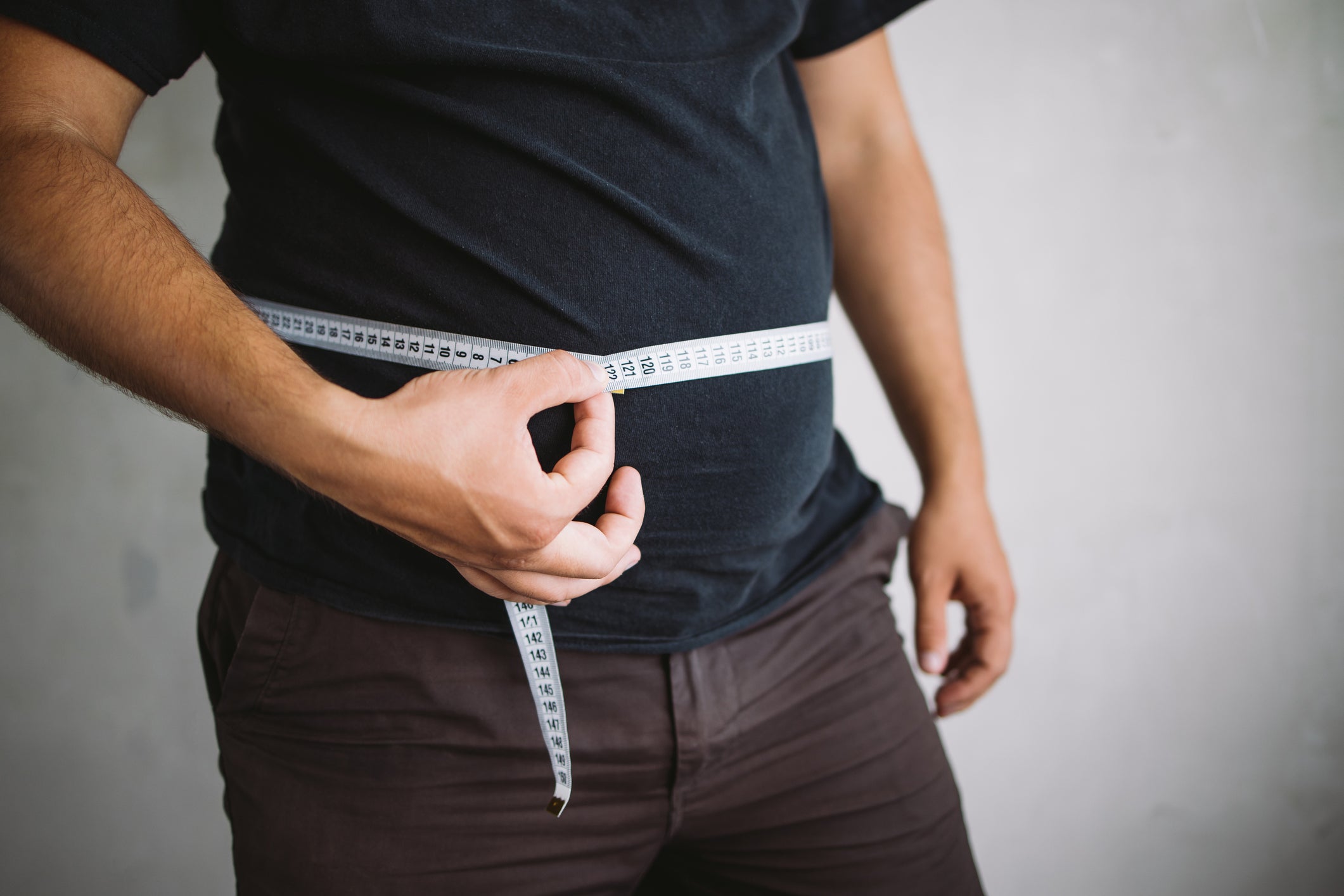
Measuring your waist to height ratio may be a better predictor of health than traditional measures like body mass index (BMI), scientists have suggested.
A landmark analysis of over 120,000 people suggests that “hidden” fat around the waist is a mounting health concern, which is routinely being missed by BMI figures.
Despite BMI having long been the go-to measure for obesity, the research indicates it may be better identified by using other measures of “central obesity”.
These include waist circumference, waist-to-hip ratio, and waist-to-height ratio, all of which can be used to give early warnings of serious health conditions.
These measures “have all been shown to outperform BMI in the early identification of health risks, in particular cardiovascular and cardiometabolic risks,” the researchers said.
Therefore, a tape measure may be of more value than a set of scales, with health experts suggesting that those in good health will have waist measurements under half their total height – this is especially true in older people as body composition changes as we age.
“Obesity is already a substantial public health concern, but our research suggests that obesity is continuing to rise over time,” Dr Laura Gray, from the University of Sheffield who co-authored the research, told The Independent.
“We also see a significant increase in obesity with age and since we have an aging population, as do many other countries, this is expected to increase the prevalence of obesity further as well as increasing the burden of obesity and obesity-related diseases.”
The study, published in the International Journal of Obesity, warns that “BMI could be misclassifying 10 per cent of the UK population as having obesity when they do not, and that 25 per cent of individuals with a healthy BMI may have been misclassified and therefore not alerted to their obesity-related health risks.”
The research team used data from the Health Survey for England (2005-2021) for 120,024 individuals aged 11-89 years, born in 1919-2008.
BMI is calculated by dividing your weight in kilograms by the square of your height in metres.
Adults with a BMI below 18.5 are classified as underweight, while a healthy weight falls between 18.5 and 24.9. A BMI of 25 to 29.9 is considered overweight, and a reading of 30 or above is defined as obese.
Explaining the concerns about how BMI measurements are used, Dr Gray said the weight measurement “does not take into account whether a person has higher levels of fat or muscle,” and that instances of athletes having high BMIs are “a great example of how BMI can be really misleading”.
“Athletes' bodies have a lot of heavy muscle which affects their BMI in an unintended way. Our study highlights the other end of this problem, people with lower muscle mass are lighter and could mean their BMI is within the healthy range, but this doesn't tell us anything about their levels of fat.”
She added: “If someone has particularly low muscle mass, it actually means that their body fat percentage is likely to be higher, but their BMI might tell us the opposite story.”
The research team said that their work highlighted how BMI measures became less reliable as people age, and instead, the central obesity measures, “particularly” weight-to height ratio, “could provide a more consistent reflection of age-related increases in obesity risk”.
But Dr Gray said there remains a place for BMI measurements in terms of understanding the health of populations.
“BMI was originally designed to measure the obesity prevalence of a population and it does a really good job at this because 'on average' it is good. However, it is not so good at measuring obesity in individuals who are not average when it comes to muscle mass and this is where waist-to-height ratio is a much better option,” she said.
NICE currently recommends that waist-to-height ratio is used alongside BMI when identifying obesity in individuals if their BMI is less than 35.
Join our commenting forum
Join thought-provoking conversations, follow other Independent readers and see their replies
Comments
Bookmark popover
Removed from bookmarks