UK car production slumped by 15.5 per cent in 2025 as industry faced ‘worst year in a generation’
Jaguar Land Rover cyber-attack and Trump tariffs among factors behind dismal year
The British motor industry suffered “its worst year in a generation” in 2025 with the number of vehicles built down by 15.5 per cent, according to a new report.
Some 764,715 cars and commercial vehicles left factories last year in what Mike Hawes, the chief executive of the society of motor manufacturers and traders (SMMT), called a “tough” year.
The sharp fall has been attributed to some well-publicised major blows to the sector, including the closure of the Stellantis Vauxhall van factory in Luton, the cyber attack on Jaguar Land Rover (JLR), tariffs imposed by the US, and preparations for transitioning to production of new EV models.
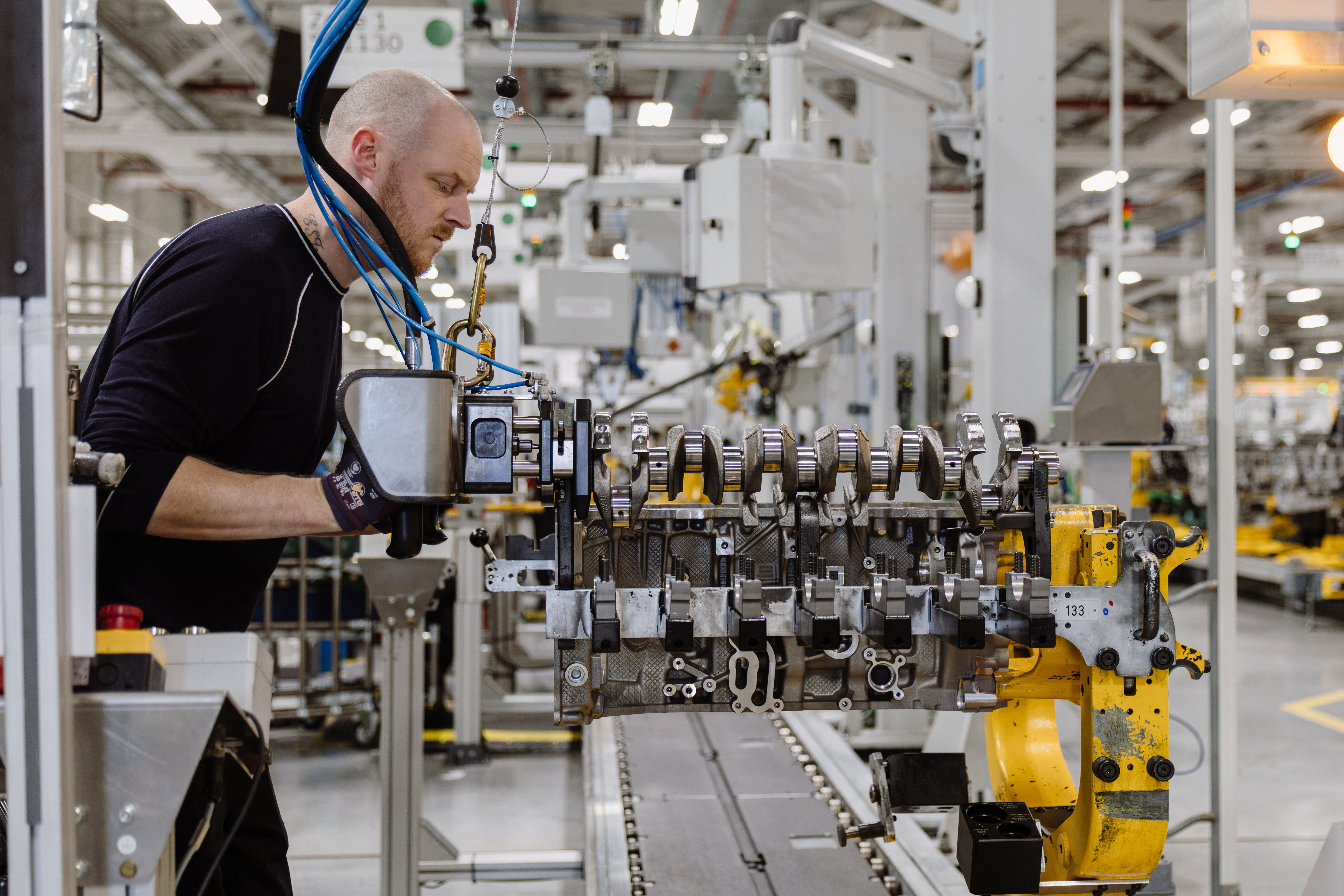
The dismal performance was so bad it even depressed the UK’s GDP figures, and the government spent £1.5bn on supporting the JLR supply chain in order to protect thousands of jobs.
Europe received the majority (56.7 per cent) of vehicles exported, followed by the US (15 per cent) and China (6.3 per cent). Exports to each fell, with shipments to the US affected by tariff uncertainty earlier last year. Turkey and Japan rounded off the UK’s top five global export markets, followed by Canada, Australia, South Korea, Switzerland and UAE.
Despite the gloom, car production picked up towards the end of the year as work returned to normal at JLR, and the new generation electric Nissan Leaf started to roll off the lines in Sunderland.
Mr Hawes said he was “optimistic” and independent forecasters see the industry recovering in 2026, with total vehicle production shifting up to around 824,000 units. New electrified cars from Jaguar and an electric Nissan Leaf will be notable contributors to this improvement.
Production of battery electric (BEV), plug-in hybrid (PHEV) and hybrid (HEV) cars rose by 8.3 per cent to a combined 298,813 units – a record 41.7 per cent share of output.
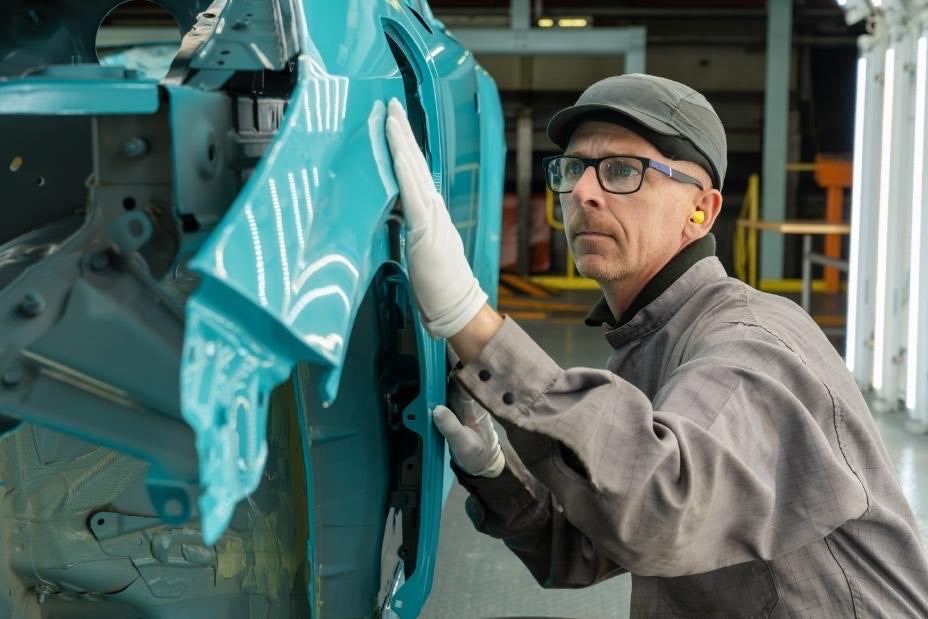
With the start of next generation volume electric car production in Sunderland, and the planned launch of seven new EV models across the UK, output is expected to grow in 2026.
In a mood of optimism, Mr Hawes sees a “pathway” for vehicle production reaching one million in the coming years, with 1.3 million a possibility of a new entrant, probably Chinese, though the industry stresses a stable and strong domestic market will be essential to attracting new inward investment.
Another requirement will be for the automotive sector to qualify for lower energy bills under the British Industrial Competitiveness Scheme.
Looking at the car market more broadly, the SMMT also calls for an easing in the EV mandate, which penalises motor manufacturers if they fail to sell the required proportion of new electric vehicles - such penalties amounts to around £5bn last year alone and are “unsustainable”.
Mr Hawes added: "Structural changes, new trade barriers, and a cyber attack that stopped production at one of the UK's most important manufacturers combined to constrain output, but the outlook for 2026 is one of recovery.
"The launch of a raft of new, increasingly electric models and an improving economic outlook in key markets augur well.
"The key to long-term growth, however, is the creation of the right competitive conditions for investment, reduced energy costs, the avoidance of new trade barriers, and a healthy, sustainable domestic market.
"Government has set out how it will back the sector with its industrial and trade strategies, and 2026 must be a year of delivery."
Join our commenting forum
Join thought-provoking conversations, follow other Independent readers and see their replies
Comments
Bookmark popover
Removed from bookmarks