Humanoid robots to build cars for major manufacturer from 2028
Automation in production lines is not new, but soon robots will work alongside human staff
Vehicle maker Hyundai says it plans to use humanoid robots to build cars from 2028.
The South Korean-based firm will join the likes of Tesla and BYD in using human-like robot forms to help production. The firm displayed a model named Atlas at the Consumer Electronics Show (CES) in Las Vegas and said it now plans to integrate the model across its global network.
Robotics manufacturing company Boston Dynamics built Atlas, while Hyundai own a majority stake in Boston Dynamics.
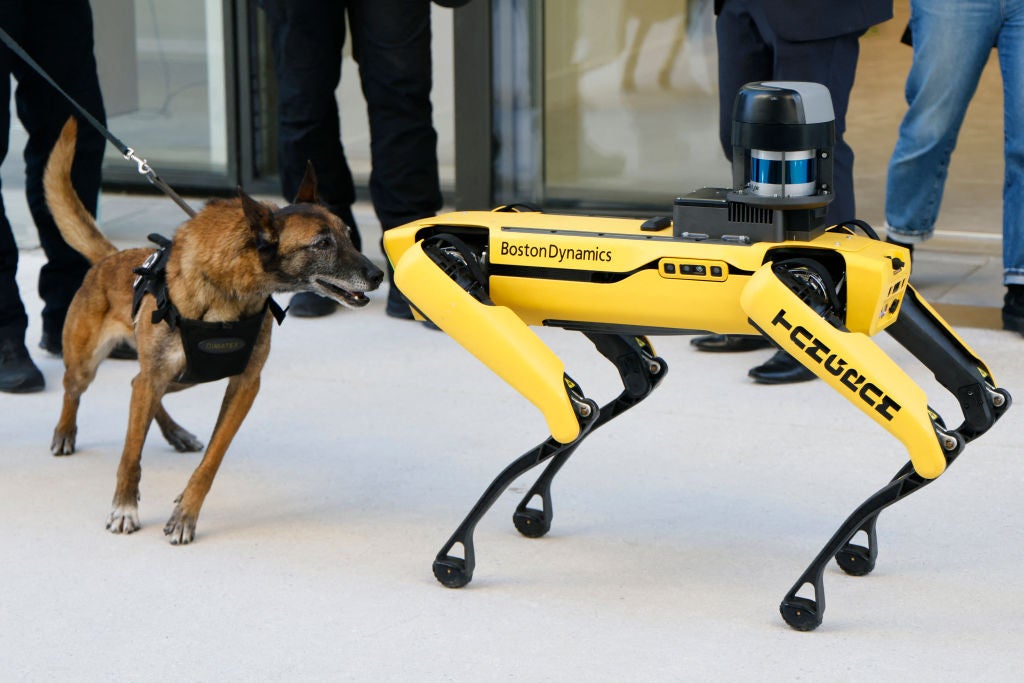
That firm has become renowned for another product named Spot, a robot dog, which has a wide range of uses, including operating in environments unsafe for humans, close-up inspection and data capture.
Atlas, on the other hand, walks upright on two legs rather than four and is described as “the world’s most dynamic humanoid robot”.
Among the features listed by Boston Dynamics are a four-hour battery, which Atlas can replace itself before it runs out, the ability to learn new tasks and is “made to operate at the same workstations using the same equipment your staff does”.
The company also say that Atlas already took its “first steps into a customer facility with Hyundai for field testing on real-world sequencing tasks” to evaluate how useful it would be in a full production role.
Hyundai have said the robots will help to ease physical loads on human staff and take on any potentially dangerous tasks to improve safety.
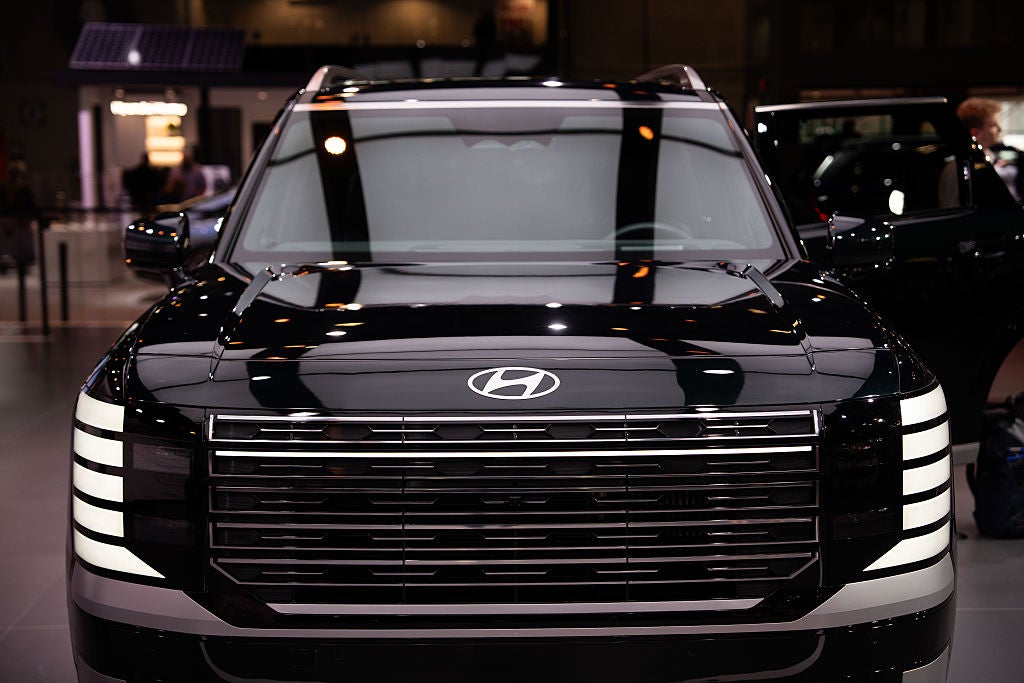
The move comes after Hyundai announced more than $20bn (£15.5bn) would be invested in the US over the coming years, as they look to expand car production in the country and provide further investment in both AI and autonomous driving technology.
In the US, the likes of Google’s parent company Alphabet, with its Waymo division, and EV-maker Tesla have both invested heavily in autonomous driving operations.
Tesla has also created its own humanoid robot, named Optimus, though it continues to face challenges in building and operating it to the required level. Selling one million robots is part of Elon Musk’s new salary scheme, which could net him up to $1 trillion across the decade.
For Hyundai, while vice chair Jaehoon Chang acknowledged that concerns remain over people losing jobs to robots, the age of integration in the workforce will begin around two years from now.
No details over how many robots will initially be deployed were given.
Join our commenting forum
Join thought-provoking conversations, follow other Independent readers and see their replies
Comments
Bookmark popover
Removed from bookmarks