Stay up to date with notifications from The Independent
Notifications can be managed in browser preferences.

Why you should invest in trucks – not trains
In business, efficiency is tempting, but agility wins when markets shift fast. But how do you know which horse – or vehicle – to back? Here’s why adaptable businesses thrive in times of high-frequency change, while optimised but inflexible ounces risk derailing, according to our expert futurist


What’s more important in business? Being agile, or being efficient? You can’t always be both.
Trains and trucks make a great analogy to explain this. An analogy, I warn you, I will stretch to breaking point in this article. But one that I think is both useful and timely.
Roads and rails
What do you think of when you think of a train? OK, maybe the archetype of the train, not the reality of delays and overcrowded carriages. Trains move between fixed points. They do so on rails. Trains are optimised for efficiency. Built for a single purpose, a single destination, they can go from A to B at the lowest absolute cost.
If you want to move lots of stuff between two distant points on land, then trains are the way to do it. They are cheaper. They release a fraction of the emissions of the equivalent trucks. Trucks are comparatively inefficient. They’re dirty (for now). They’re slower. They can carry a fraction of the load.
I think most businesses can be divided into trucks and trains. And based on the definitions so far, you’d want your business to be like a train, right? Efficient and optimised. After all, every kid wants to be a train driver.
But trucks have one huge advantage: adaptability. Trucks can go almost anywhere. They can change their destination mid-trip. They can route around traffic. Trains cannot. If there are no rails, they can’t go there. If the rails fail, they’re stuck. And train drivers have limited control: they can only brake or go faster.
In times of rapid change, control is more important than efficiency.
High frequency change
It’s an oft-quoted trope that we live in times of unprecedented change, and it’s one that I set out to qualify, if not debunk, in my first book, High Frequency Change. My conclusion was that change is too complex to be measured in a single dimension of fast or slow. Though I didn’t make things much more sophisticated. I just added one more dimension, so that changes can be thought of as a wave.
Waves have both amplitude - the scale of the change - and frequency - how fast the changes are coming. What we were facing when I wrote the book, seven long years ago now, was a lot of high frequency change. Not necessarily big, but small wave after small wave, that left us feeling destabilised, unable to keep up.
This effect is largely (though not exclusively) the result of technology. Technology strips away the friction that slows change, accelerating innovation, production, distribution, and communication.
Today that lubricating effect has spread to some of the big changes in our lives. It’s not just faster fashion, overwhelming content choices, or rapid iterations of devices. It’s affected our politics, for example. Some things still change at a sedate pace, like human biology and behaviour. But we are undoubtedly in a period where nimbleness is an asset.
Agility vs efficiency
Unfortunately, as I also wrote in that book, there is often a tension between being nimble and being efficient. The more an organisation optimises for one efficient mode of operation, the more it tends to bake in particular behaviours, exclude other possibilities, and disinvest in innovation that challenges that profitable model.
Think of it like building rails.
If there’s a great business in moving logs from the forest to the sawmill, and from the sawmill to the city, then you build rails. Rails are expensive. They take time to build. Once you’ve built them, you want to extract the maximum value from them. You buy better locomotives. Upgrade your rolling stock. Increase capacity. You optimise your process.
What you don’t do as much is think about whether the forest is being well managed. Or whether another material might replace wood. In fact, in my experience, you tend to actively ignore those possibilities, or even lobby against their happening.
At least until it’s too late.
Keep on truckin’
Now imagine there’s a competing business. Its founder has a truck so she uses her truck to haul logs. Then she buys another truck. And another.
Things are going great until her competitor completes its railway. Then she struggles. The rail business can haul logs much cheaper than she can with her trucks, which cost more in fuel, need more maintenance, and have higher staff costs with many drivers rather than one.
So she looks around for other uses for her trucks. And finds that there’s a new quarry that needs to bring its stone to the city. So she starts moving stone instead of wood.
The rail business might move into stone hauling. But they’re mostly focused on moving wood. Even if they do build a new line, it’s going to take them two years. And she’s already got plans to start moving farm crops. And she’s thinking about expanding into buses.
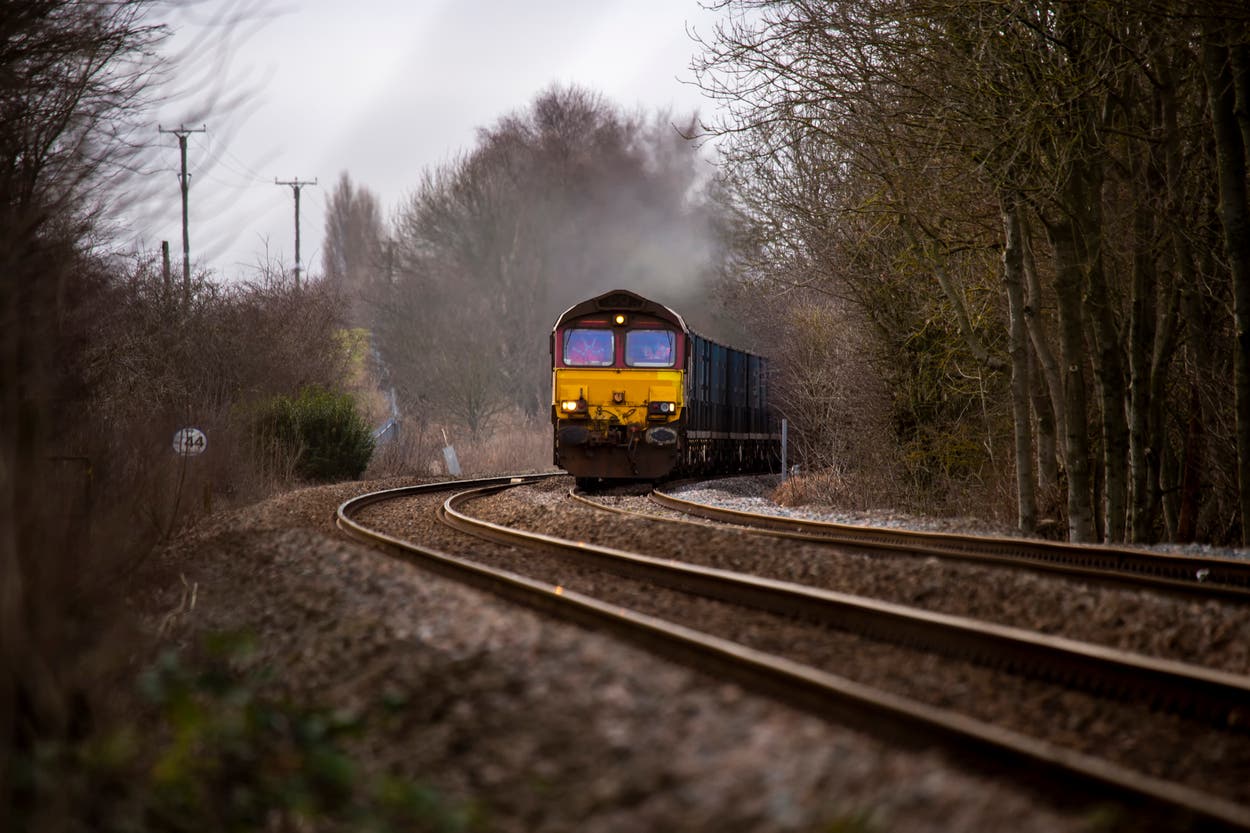
When the rails are running
Trains, as above, are super efficient. And so are train-type businesses. When the market is good for those businesses, they will grow and grow, and make profit hand over fist. The problem comes when the market changes. And in an age of high frequency change, the market changes fast.
In order to be so efficient, train-type businesses have doubled down on a single route. A single model. A single path to market. A single set of processes. They might have ancillary incomes (the buffet car), but the majority of their income is based on being extremely good and efficient at one thing.
Becoming so efficient has taken time and investment. Often in vast quantities. Every person and process in the organisation is there because they need to be, and locked tightly to the explicit purpose of the business. There is very little excess capacity for imagination or innovation. Often what innovation there is tends to be more PR gloss than fundamental business reinvention, created for marketing purposes but ignored at the highest levels because it distracts from the thing that is making the big money today.
In fact, real innovation is often discouraged at these businesses, by investors as much as leaders. No-one wants to see the business cannibalise or disrupt the successful model that’s generating all the cash. Even if some people are screaming that the tracks are running out.
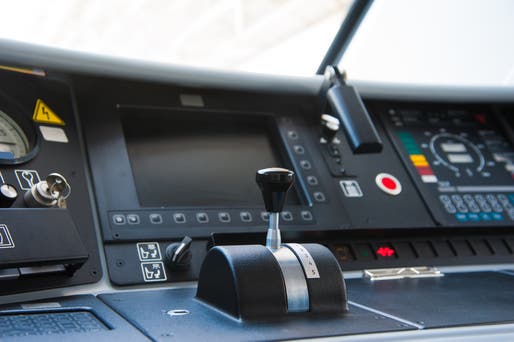
With no steering wheel to change direction, the only control a driver of a train-type business has is how fast or slow they get to their destination. CEOs of train-type businesses only have one lever in front of them, one choice. If things are going wrong, all they can do is pull the brake or push the lever forward to make the train go faster. Accelerating is often their only option, chasing ever greater efficiency, even if the station they’re heading towards is no longer there.
These businesses tend to hit the buffers at high speed.
In order to be so efficient, train-type businesses have doubled down on a single route. A single model. A single path to market. A single set of processes.
Truck boss
Truck-type businesses might never have the profitability or the growth rate of train type businesses. But they are much more resilient in the face of change.
These businesses spend more money and more time on innovation and M&A. They carry an excess of staff to support this constant change and evolution. They are structured differently, around multiple lines of business rather than one core. There’s probably some duplication of capability. They’re not necessarily wasteful. They’re just not the ultra-lean businesses characterised by their competitors on rails.
Just like in our story above, truck-type businesses can adapt rapidly to new opportunities - or challenges. Not just at the organisational but at the unit level. Every truck has a satnav that allows it to route around hold-ups. Maybe even entrepreneurial drivers who use the space capacity in their trucks to carry different types of cargo; or who change their destination before they set off. If, for example, the price for the products they are hauling is better at a new destination than the one they were originally heading for.
Businesses that are like trucks are inherently less efficient. But in an age of high frequency change, efficiency isn’t the most important determinant of sustainable success. Agility is.
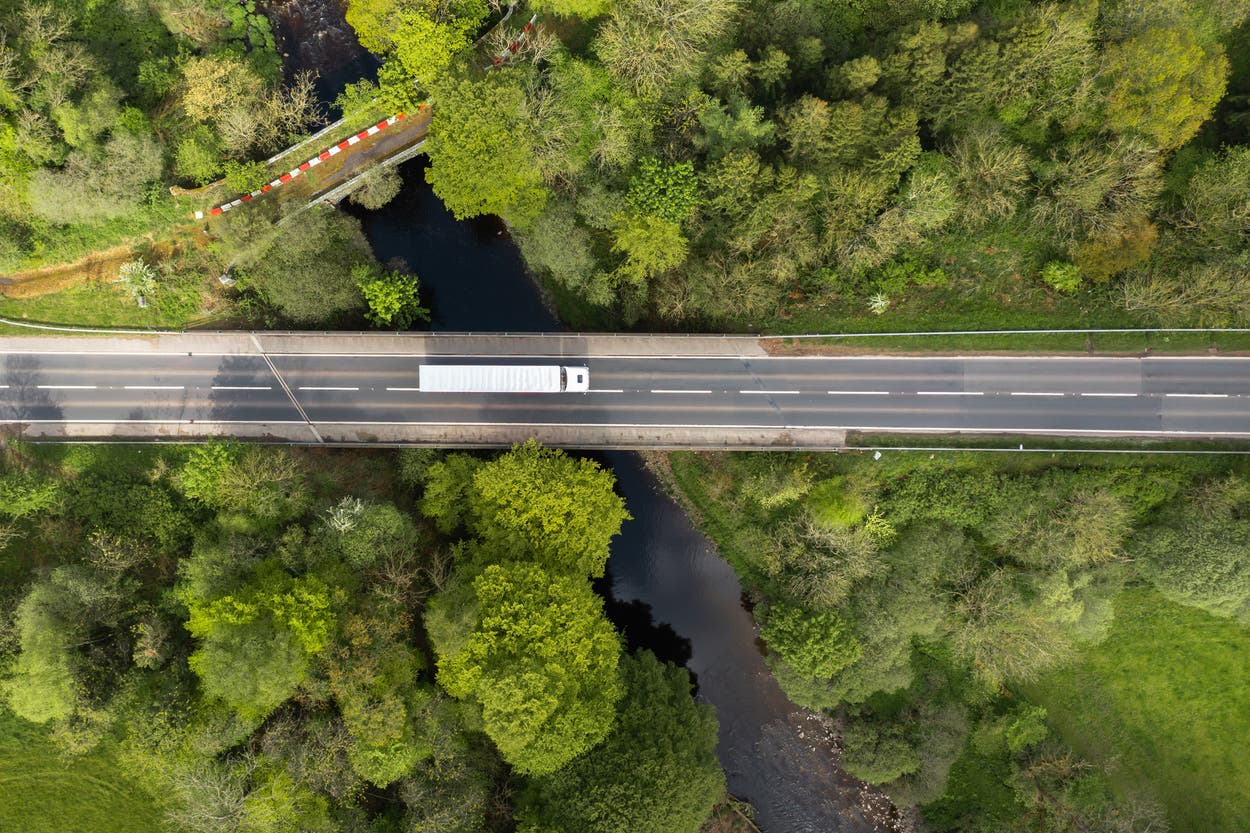
Timing is everything
There are times when you will want to ride the train. When a company is on a roll, efficiently delivering, quarter after quarter. But the sense I have now is that those periods are shortened. The companies with the greater chance of long term survival and growth - albeit slower - are the more adaptable trucks.
If you want to identify a truck-type business, there are a few things you can look for. Are they acquiring or creating new innovations? And are those innovations making it to market? Do they have a realistic alternative to today’s core business that is scaling up, or that they are at least taking seriously? Do they talk about the future in meaningful ways and have a clarity of vision about what’s next.
None of these are guarantees of resilience in the face of challenge, or of a structure or leadership that can build one successful new line after another. But their absence might at least help you to spot the trains. Especially those heading for the buffers.
Build wealth tax-free with the T212 Stocks ISA
Invest with 0 commission and 0 account fees. Make the most of your £20,000 2025/26 ISA allowance and put every pound to work. When you invest, capital is at risk. Other fees may apply.
Find out more
Bookmark popover
Removed from bookmarks