Stay up to date with notifications from The Independent
Notifications can be managed in browser preferences.
-(1)-1-(2).png)
These are the countries shaping tomorrow’s culture
South Korea has shown how a relatively small nation can shape global culture, from K-pop and K-dramas to cars, cuisine and consumer tech. But who’s next? From Nigeria’s Afrobeats to Turkish dramas the race to define the next cultural wave is already underway…


BTS. Blackpink. Samsung. LG. Hyundai. Kia. Son Heung-Min. Global brands from a relatively small country.
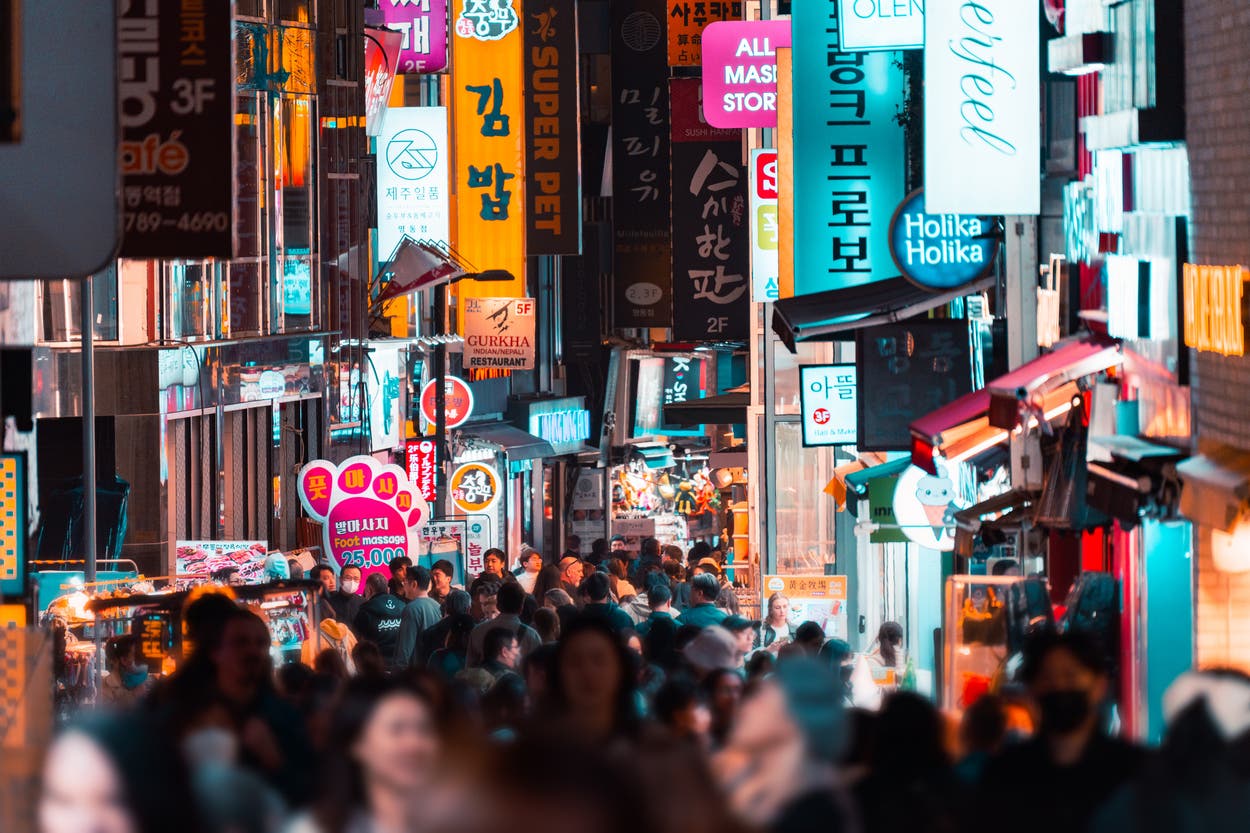
With just 52 million people, South Korea is only the 30th largest country in the world by population, smaller than Sudan, Colombia and Tanzania. Yet Korean music is on every channel and a K-pop themed film is number one on Netflix. Korean electronics are in every home and Korean cars on every street. Korean food has exploded in popularity: I now count ten Korean restaurants in the centre of Manchester where I live.
What made South Korea such a strong global success and powerful cultural influencer? And where might we look for future sources of influence - and opportunity?
The Korean wave
The spread of Korean media, manufacturers, food and sports stars is not a new phenomenon. Nor is it one that was first seen in the UK, Europe, or the US. It started in the late 1980s when the government opened up its borders to allow foreign travel for most Koreans for the first time in thirty years. Pent-up demand saw a wave of Koreans begin to travel abroad, returning with new influences. In the late 1990s as Korea and the rest of Asia emerged from a financial crisis, Korean industry underwent major reforms and started to grow. And Korean films and TV shows started to find a foreign audience across Asia.
The government quickly latched on to the potential of such media to rebrand what had until recently been a poor country. To redefine its image on the international stage. It gave its domestic media industry wholehearted support to produce and distribute more, and not just video.
The Ministry of Culture, Sports and Tourism has played a significant role in funding K-pop concert tours, film festivals, and cultural exchange programmes.
The Korean cultural and industrial product spread across Asia, gaining the Chinese nickname of “Hallyu” or ‘the Korean wave’. The wave then spread to the Middle East, and ultimately to the US and Europe, and has continued to build for over 25 years now, to the point of incredible reach and power that we see today.
High appeal, low friction
It’s not just government intervention that allowed this very rapid expansion of reach and influence. Korea’s resurgent media and industry coincided with a fundamental shift in the means of distribution of consumer goods and content: the internet. The first popular films and shows flowed over the old routes of commerce, with TV shows and distributors recognising a good product, buying it and putting it on their platforms. But Korean media and music entrepreneurs were also early adopters of more direct channels, leveraging the power of YouTube and social media to make direct connections with fans and bypass traditional media gatekeepers. This allowed for rapid dissemination of content, fostering fervent fan communities and creating a powerful viral effect.
Of course it’s no good having distribution if you don’t have great product. While uniquely Korean, the cultural products on which the Korean wave were based often possessed universal appeal. K-pop blends diverse musical genres and highly polished choreography and production values. Korean dramas often explore universal themes of family, love, and ambition that resonate across cultures, even when presented within a distinctly Korean context. Even Korean food, while offering unique flavours, has been adapted and presented in ways that are accessible and appealing to international palates.
In short, while we seek novelty in cultural products, we still want some way to connect to them, some familiarity. When we’re looking at the next cultural success stories, we have to bear that in mind.
Factors for future cultural powerhouses
The precise Korean phenomenon is not going to be replicated. It was a function of a moment in time, a particular environment, and a people and leaders who took advantage of the situation. But that doesn’t mean we can’t learn from the Korean Wave about where we might see future success stories. Countries that can outperform their scale and wealth to gain global cultural power.
Some of the key factors to look for might include:
- Strong digital adoption and young populations: Countries that are rapidly embracing digital technologies and have a large, digitally-native youth are prime candidates for a new wave. Quick to adopt new trends, create and share content, and engage with online communities, countries with these demographics are fertile ground for viral cultural phenomena. Especially in contrast to the ageing populations of many of the legacy cultural powers.
- Deliberate cultural export strategies: Following South Korea's lead, some governments are now actively investing in and promoting their creative industries on the global stage as a means to shift perceptions and attract tourists and trade.
- Untapped cultural narratives: Countries with rich and distinct cultural histories, that have to date had less global exposure, hold immense potential. As the world becomes more interconnected, there's a growing appetite for novel and authentic cultural experiences.
- Rapid transformation and urbanisation: Korea was undergoing an incredibly rapid transition in the period in which its cultural prominence began. These environments often foster dynamic scenes of creativity and entrepreneurialism as new ideas and expressions emerge from societal shifts and increased connectivity.
Considering these factors, here are a few potential candidates for future cultural influence…
Nigeria: Afrobeats and Nollywood's global ascent
Africa's most populous nation is already making significant waves. Its music scene has become globally influential over the last fifteen years, with artists like Burna Boy, Wizkid, and Davido laying a path, selling out arenas and collaborating with international stars. A second wave of artists like Rema and Ayra Starr has now followed this path. All are products of a vibrant domestic music industry and are supported by a vast diaspora that acts as a powerful amplifier for Nigerian talent. In 2024 Universal Music Group invested in Mavin Global Records, a leading Nigerian Afrobeats label in order to tap into this scene and help its artists reach international audiences.
Beyond music, Nigeria's film industry, Nollywood, is a prolific producer of movies and series, even if its global distribution has historically been more limited. With the advent of streaming platforms, Nollywood content is increasingly finding international audiences.
Just as with Korea, Nigerian food is also being carried on this cultural wave, with increasing mainstream recognition of classics like jollof rice, fufu, and egusi soup. National newspapers are featuring recipes, supermarkets are stocking meal kits and ingredients, and more and more restaurants are springing up, from the popular fast food chain Tasty (now with 23 branches) to the Michelin-starred Chishuru.

And also just as with Korea, sport plays a role. The national football teams’ partnership with Nike has received wide promotion in stores around tournaments, with Super Eagles shirts proving very popular.
Nigeria’s population continues to grow fast, fuelling continued innovation, and rising exports. While you might say the Nigerian Wave is already here, I would argue it has only just begun.
Turkey: the rise of Turkish dramas
Turkish dramas have quietly become a massive cultural export, particularly across the Middle East, North Africa, Latin America, and parts of Europe and Asia. These ‘dizi’, known for their high production values, engaging storylines, and often melodramatic plots, have cultivated enormous fan bases. While perhaps less visible in the English-speaking world compared to K-dramas, their global reach is undeniable, making Turkey the third largest exporter of TV shows after the US and UK.
Turkey's strategic geographic location, bridging East and West, also gives its cultural products a unique appeal, blending traditional themes with modern sensibilities. As streaming services continue to globalise content, Turkish dramas are poised for even greater international recognition.
Mexico: rich cultural history and emerging digital talent
While Mexican culture has long had a significant presence, particularly in the Americas, its digital cultural footprint is expanding rapidly - fuelled in part by high levels of emigration that are helping to flatten the country’s population growth.
Mexican creators are increasingly prominent on platforms like TikTok and YouTube, producing original content that combines traditional elements with modern internet humour and trends. The country's strong connection to the US, a major cultural consumer, also provides a natural conduit for cultural exchange and influence.
Traditional Mexican music styles have rocketed in popularity the last five years with a 400% increase in Spotify streams for styles like norteño, corridos and sierreño. And genre groups have seen crossover success, with collaborations like Bad Bunny and Grupp Frontera.
As Mexico continues to urbanise and its digital infrastructure improves, its cultural output is likely to become even more globally influential, tapping into its unique blend of ancient traditions and contemporary creativity.

Indonesia: A giant awakening
Like Mexico, Indonesia’s population has slowed. But at 286 million people, it is more than twice the size. Though not on the scale of giants like India or China, Indonesia is large and critically, young. Roughly a quarter of the population is under 15.
Indonesia is also incredibly diverse, with around 600 different indigenous ethnic groups, speaking over 700 languages across the country’s 17,000 islands. This brings a huge richness in tradition, cuisine, music and more.
While its cultural exports haven't yet achieved the global penetration of South Korea's, the potential is enormous. Indonesian music genres like Dangdut are popular regionally, and crossovers into genres like Indo Rap have the potential to help them reach broader audiences. As internet penetration increases and its youth population grows, Indonesia could well see an explosion of digital content creation that captures global attention.
The sheer scale and diversity of its culture make it a strong contender for future influence, especially if it develops a more strategic approach to cultural export.
Future culture: interconnected but fragmented
We live in a very small world. Digital channels defy borders, whatever the prevailing political climate. This helps to connect us, bringing other cultures into our homes even if the physical goods are subject to tariffs. But it also helps to fragment cultures. With so much choice, there’s much less of an obvious dominant, single set of trends and fashions in cultural goods.
This makes life interesting but also challenging from an investment perspective. Identifying emerging cultural hotbeds early can lead to significant returns, not just in entertainment and media, but also in related industries like fashion, tourism, and technology. There are always new trends to watch, waves to ride. But there is also more threat, risk and competition that places smaller limits on the scale of potential success. As the global cultural landscape continues to evolve, understanding the drivers of influence – deliberate policy, technological mastery, and a nuanced understanding of global tastes – will be paramount.
Over the last 25 years, South Korea has provided a compelling blueprint. The question now is, who will follow in its footsteps?
Build wealth tax-free with the T212 Stocks ISA
Invest with 0 commission and 0 account fees. Make the most of your £20,000 2025/26 ISA allowance and put every pound to work. When you invest, capital is at risk. Other fees may apply.
Open Your ISA
Bookmark popover
Removed from bookmarks