Meet the Americans trading brick-and-mortar homes for converted buses and the open road
As the cost of homeownership continues to climb, a growing number of people are turning to DIY mobile homes. Brittany Miller speaks to self-styled “skoolies” who have transformed bright yellow school buses into their dream living spaces

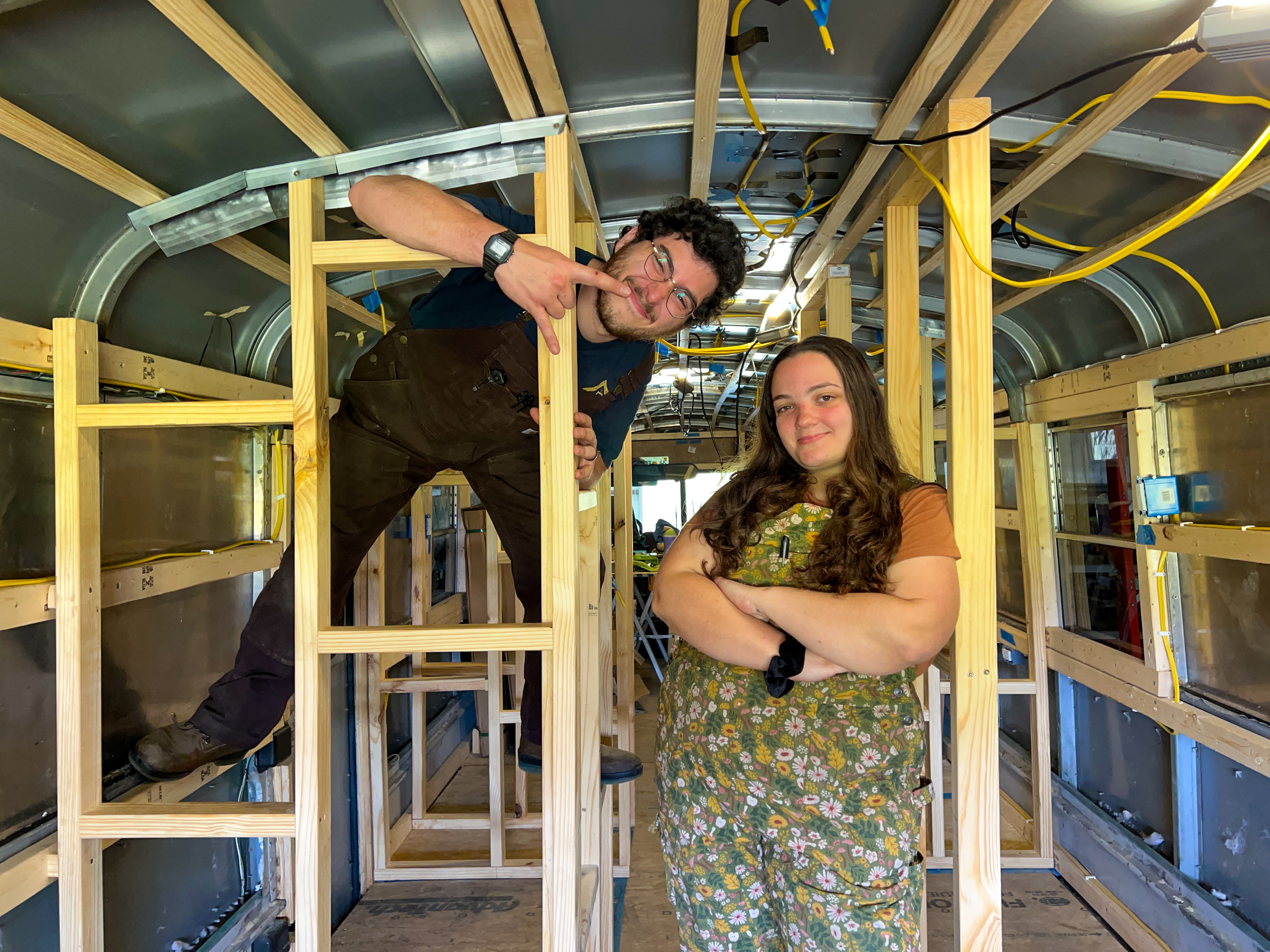
Forget the RV. Young people are trading in traditional homes for the yellow school buses many remember from childhood as a way to live both a minimalist lifestyle and avoid the rising cost of owning a home.
Known as “skoolies,” the growing trend involves converting decommissioned school buses into full-time living spaces, blending DIY renovation with the flexibility of life on the road. What began as a niche project has gained traction online, with thousands documenting their builds on TikTok, YouTube and Reddit — often framing bus life as a cheaper, freer alternative to homeownership.
The rise of skoolie living comes as many Gen Z and millennial Americans face soaring housing costs and limited access to affordable homes, forcing them to search for cheaper, and sometimes unconventional, living arrangements. The national average home price in the U.S. was $522,200 in May 2025, according to the U.S. Census Bureau and Department of Housing and Urban Development, while the median income per household was $83,730 in 2024.
For those who’ve actually taken on the challenge, skoolie life is far more complicated — and demanding — than social media makes it appear.
Most skoolie owners didn’t initially set out to turn a school bus into a permanent home. For many, the decision began with a desire to live differently — or simply to keep moving.
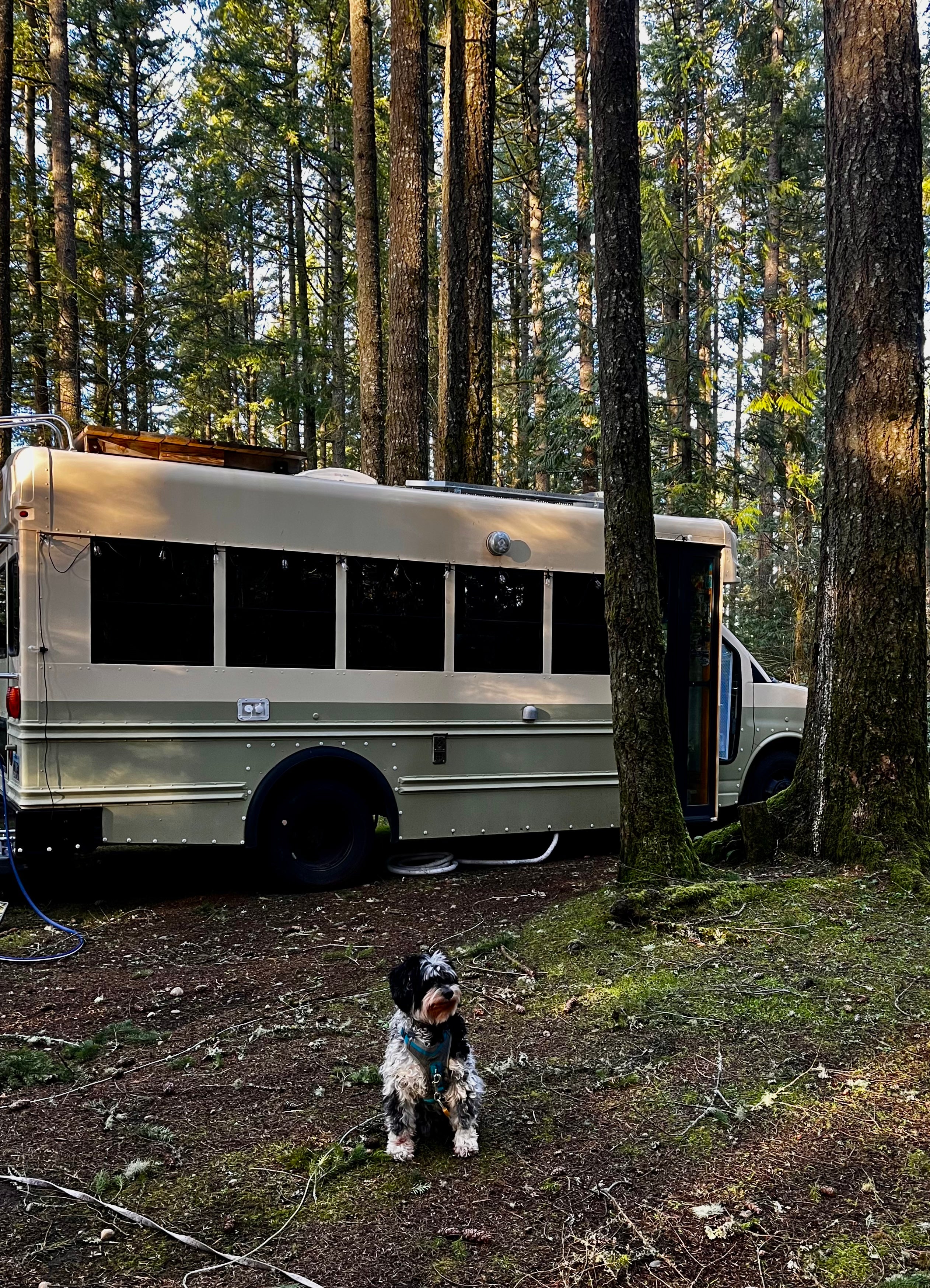
For Jessica Krupski and Daryl O’Brien, both 39, who share their journey to their 11,000 followers under the handle @adventure_omnibus, their goal was to visit every national park in the United States. After weighing up different vans and RVs, they landed on a school bus, drawn to it by its durability, relatively low mileage and price. They purchased their bus for $4,500 from a seller on Facebook Marketplace.
Travel nurse Alyssa Peterson, 30, took a similar leap. She flew from South Dakota to San Diego with $8,000 in cash to pick up her home-on-wheels after finding it on Craigslist, hoping mobile living would align with her short-term hospital assignments.
For influencers Jess Elena and Jake Gomez, both 25, the path was far rockier. After realizing van life wouldn’t provide enough space, the couple turned to a government auction where their state sells old school buses. Their first purchase broke down just 20 miles from the auction site when the engine exploded. A second bus failed inspection, leaving them facing a $20,000 engine replacement estimate with no warranty.
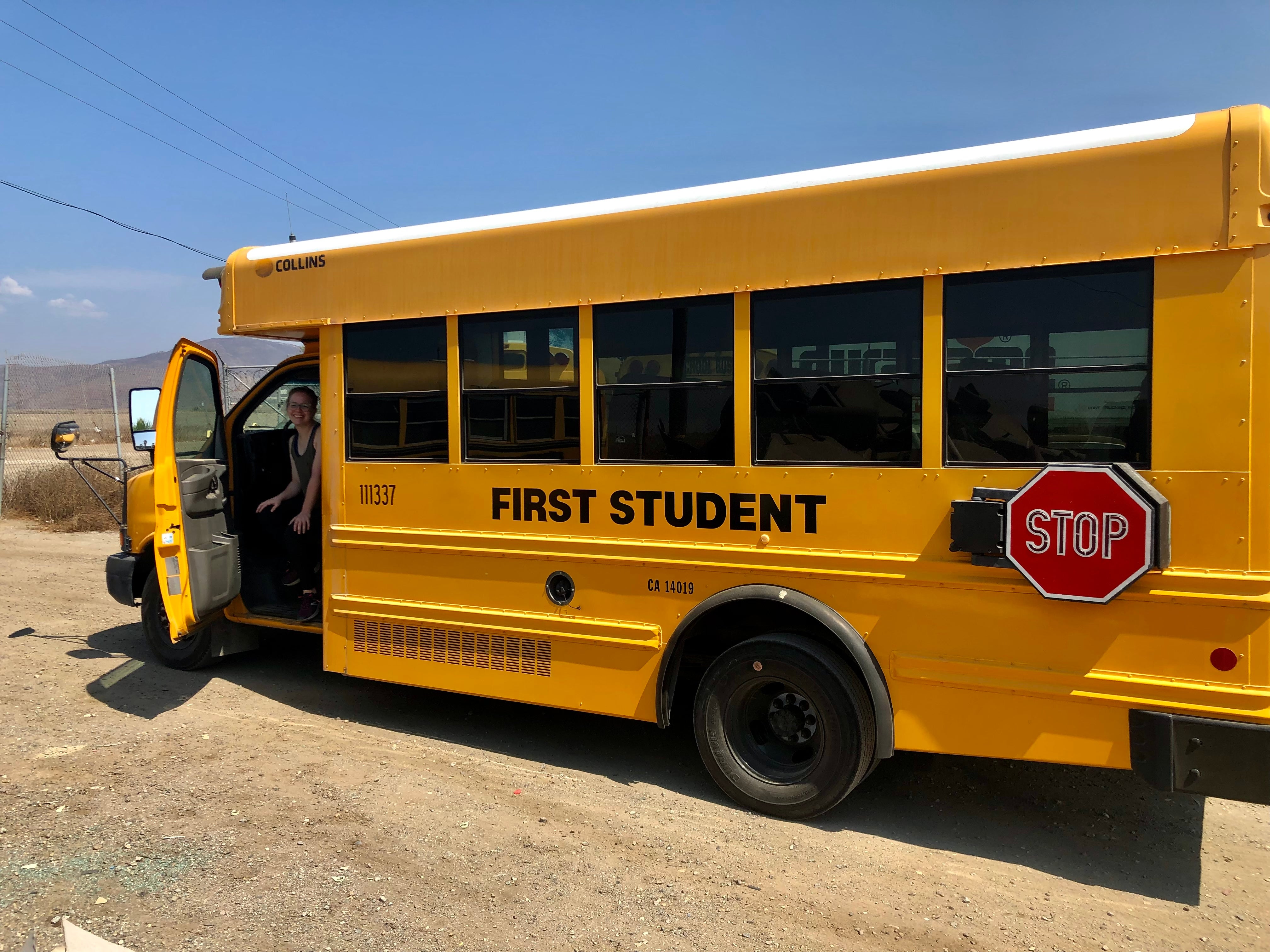
Despite their different paths, all three couples shared one reality: none had the experience required to build a safe, livable home from a vehicle. But they did it anyway.
Before construction could begin, each bus had to be gutted entirely — seats, flooring, insulation, and windows removed.
“We tore everything out,” Krupski told The Independent. “The flooring, the walls, the insulation. We took out every single window, resealed them, cleaned them up, made sure they were functioning, and then we started building.”
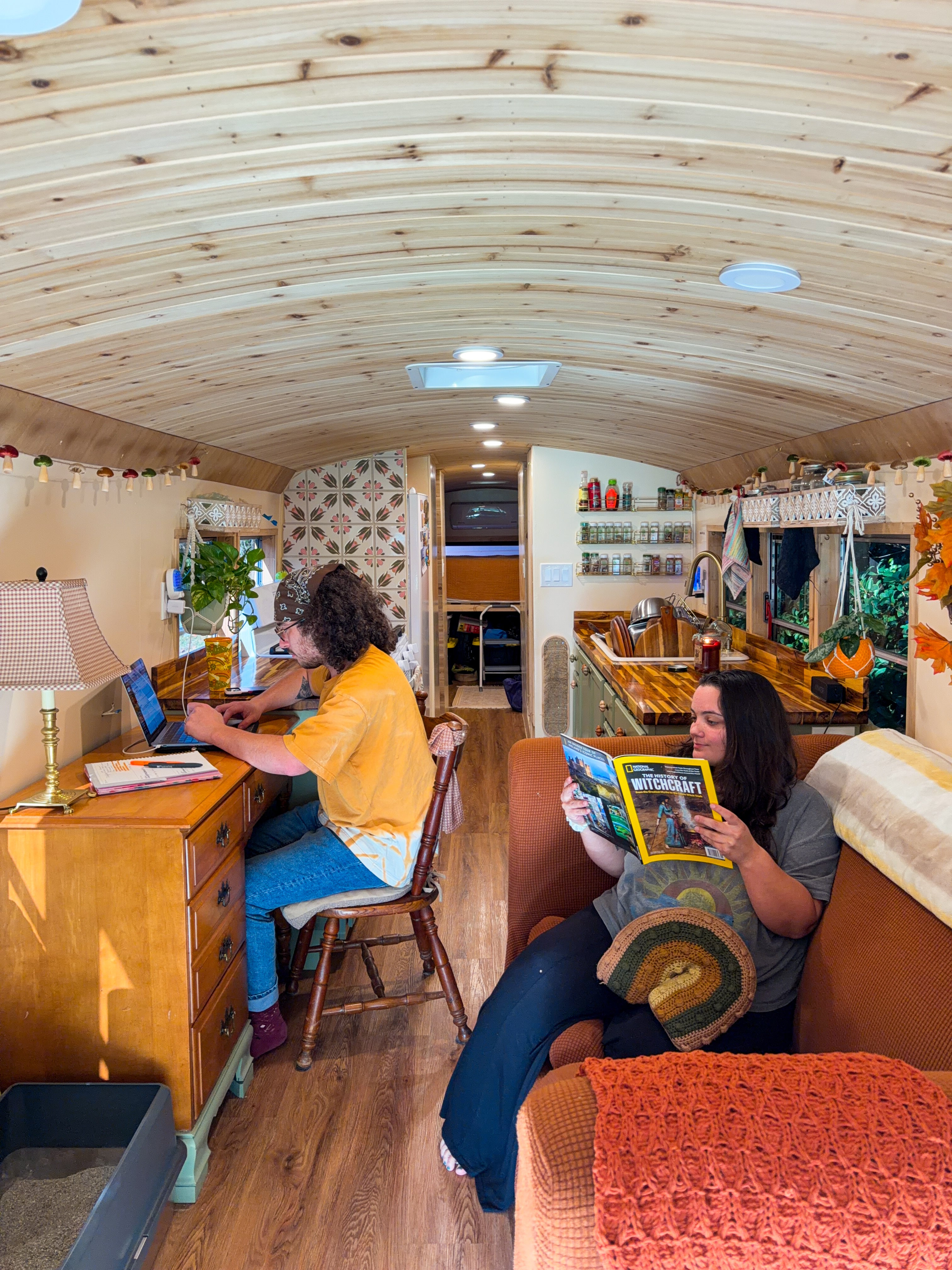
While O’Brien had a background in electrical engineering and plumbing, neither had experience in carpentry. They turned to outside resources — and online skoolie communities — to fill the gap.
“I started with a book called The DIY Skoolie Guide,” he said. “It was dated, but it gave us a starting point. Then YouTube and other creators showed us different approaches we could adapt.”
Elena and Gomez also learnt through trial and error. Aside from Elena’s background as a college set designer, neither had technical training.
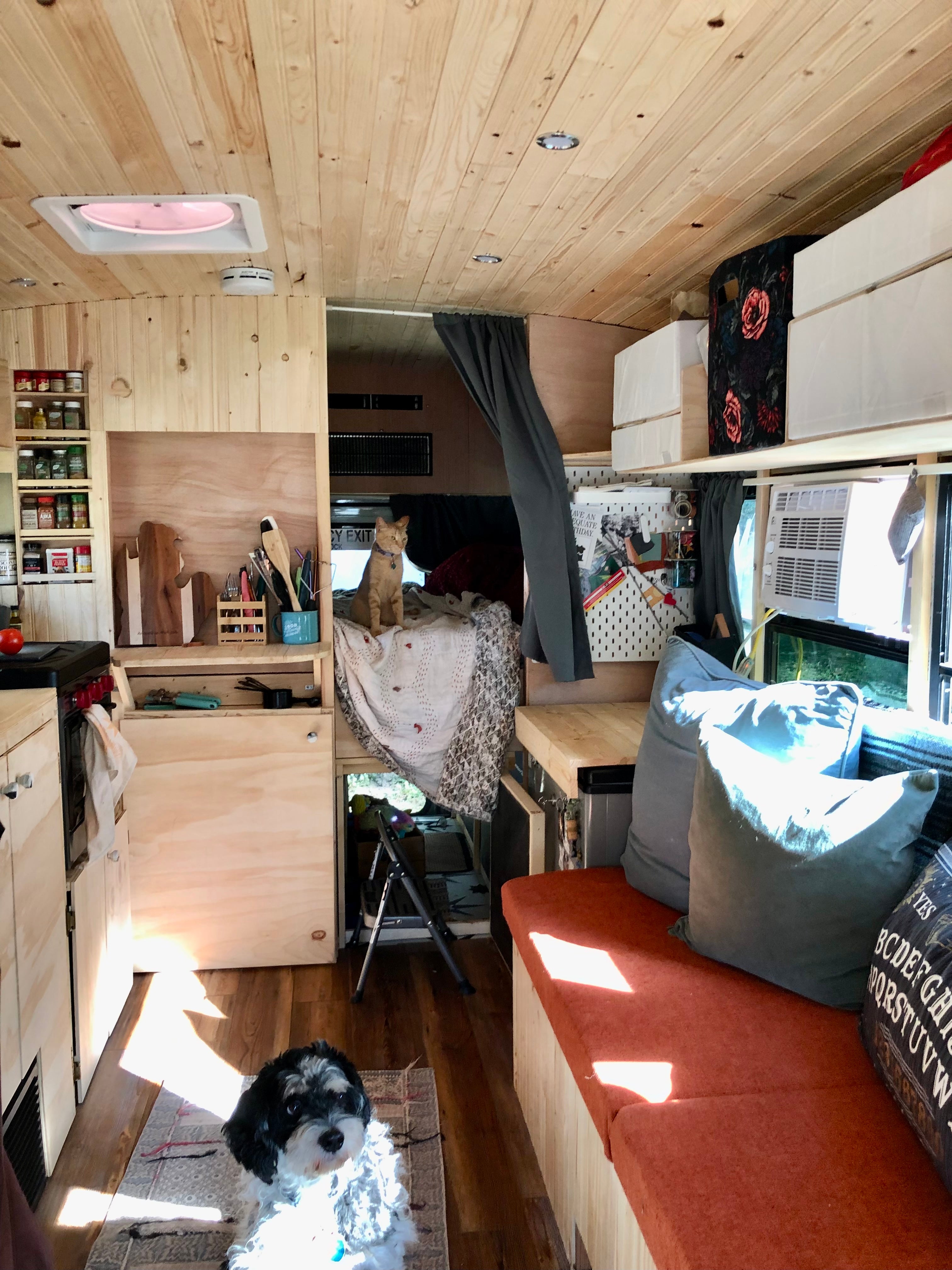
“Every step on a bus project is equivalent to a technical profession,” Elena added. “You have to spend hundreds of hours researching just to make sure you don’t set your bus on fire — or that it’s structurally sound.”
After four and a half years of building, Elena and Gomez were burnt out and eager to finally live in the mobile home they’d been working toward. While they ultimately loved bus life, reality set in quickly. They prioritized installing a shower to avoid public restrooms and soon discovered issues with stabilization as drawers flew open and furniture shifted while driving. Parking proved to be one of the biggest challenges.
“Can we even get the bus there?” Elena said. “What’s the road like? Is it uphill? Full of potholes? Are there sharp turns? Is there room for another car to pass? That was the real problem.”

Peterson faced similar obstacles. Because she needed to remain within commuting distance of hospitals, finding legal and practical parking options became increasingly difficult. Eventually, she switched to a fifth-wheel trailer.
“I was really restrictive on where I could park,” she said. “If I had a different career and a more vagabond lifestyle, it might’ve worked, but I had to be in specific places at specific times.”
Still, she doesn’t regret the experience.
“I learned so much about myself living in the bus for those two years,” Peterson said.
While skoolie life is often portrayed online as a low-cost, carefree alternative to traditional housing, those who’ve lived it say the reality demands resilience, technical skill and constant problem-solving. For many, the bus isn’t just a home — it’s an experiment in independence, one that reshapes how they think about space, stability, and what it really means to live freely.
Join our commenting forum
Join thought-provoking conversations, follow other Independent readers and see their replies
Comments
Bookmark popover
Removed from bookmarks