No rest for the WKD: Inside the new Y2K-fuelled alcopop boom
The endless churn of the trends cycle has driven the return of sickly fruit-and-spirit concoctions such as Bacardi Breezer, Hooch and Reef to supermarket shelves and bar fridges. Kyle MacNeill asks why has booze become naff again?


Last month, an off-licence appeared overnight near my flat. Located smack bang in Manchester’s trendy (and increasingly novelty) Northern Quarter, Cornerbop was decked out with a fruit stand and a lurid, lime-green sign that looked like a dodgy PowerPoint job. The decor – fully stocked shelves; a window plastered with signs – was equally convincing. But a DJ blasting out tech house gave the game away. This was an activation. On closer inspection, I uncovered the culprit: Bacardi Breezer. And the special occasion? The rum-based, fruit-flavoured drink is back after a 10-year hangover.
Breezer isn’t the only throwback beverage enjoying a second wind. Just days prior, I had stumbled across a new mural from Hooch, also in NQ. It was part of a £1.8m 30th birthday campaign that saw the boozy lemonade (discontinued for a spell in 2003) partner with 1,400 pubs and bars across the UK, and go on draught for the first time since its inception in 1995. Smirnoff Ice, hitting a quarter-of-a-century, has also just launched its first-ever global campaign across 20 countries, unveiling a new range of technicoloured cans. And Reef (basically, a souped-up J20) has reappeared on shelves after 20 years, with a new cardboard Tetra Pak option in its range.
Alcopops – fizzy, fruity drinks with an ABV of 3 to 7 per cent – first burst onto the scene in the mid-Nineties, with Hooch, Smirnoff Ice, Bacardi Breezer and WKD going hand in hand with the rise of superclubs. By 2005, the UK market was worth an eye-watering £1bn. Not everyone was happy about it. Panic surrounding their bright and bold marketing alleged that these saccharine tipples were targeting underage drinkers. Among the several entertainingly sensationalist tabloid headlines of the time were “BOOZY COLA RAGE” and “ALCOPOP DRUG BARONS”.

.jpeg?quality=75&width=230&crop=3%3A2%2Csmart&auto=webp)

Hammered by increased taxation, supermarket bans, and pressure to change the marketing, the alcopop boom suffered a final nail in the coffin when the drinks soon became desperately un-chic, associated with trashy binge drinking. “The problem came down to image – they stopped being seen as aspirational,” Chris Wisson, senior drinks analyst at Mintel, told the BBC in 2013.
But now, the alcopop is back with a bang – no doubt bolstered by the resurgence of Noughties aesthetics. “There’s definitely been a little ripple of alcopop nostalgia popping up again, especially in nightlife spaces and TikTok content. They’re not necessarily dominating the shelves, but you’ll see VKs or Hooch bottles used as props in club campaigns, student nights, or content leaning into that Y2K party vibe,” says Erifili Gounari, 25-year-old founder of Gen-Z marketing agency The Z Link. So why are we suddenly partying like it’s 2004?

The first thing to consider is the ready-to-drink boom, which has been bubbling up since the late 2010s, when premix cans of spirits and mixers, such as journey juice staple Gordon’s Gin & Tonic, began to emerge. And now, in 2025, a second ready-to-drink wave is on the way (RTD2, if you will), thanks to edgier canned cocktails such as Moth and the increasingly dominant BuzzBallz (those bulbous cans of garish, neon rocketfuel). It makes sense, then, that alcopops – the original RTD – are also staging a comeback. “With the current boom in RTDs, we’re confident that the new Breezer flavours will hit the sweet spot for fans old and new,” says Claire Presland, global director of Breezer.
Craig Chapman, head of brands at Global Brands (VK, Reef, Hooch), thinks our renewed appetite for alcopops began during Covid, when loads of us, bored of kneading sourdough, tried our hand at at-home mixology instead, whipping up complicated cocktails in the kitchen. That hobby, however, quickly became expensive and inconsistent. So back we turned to the premixed kind. “It’s about people having fun… are they premium, high-end cocktails? No. But are they tasty and delicious? Absolutely. Ultimately, that’s what people want,” says Chapman. “The stigma around bright colourful drinks isn’t there anymore. Disco drinks are cool again.”
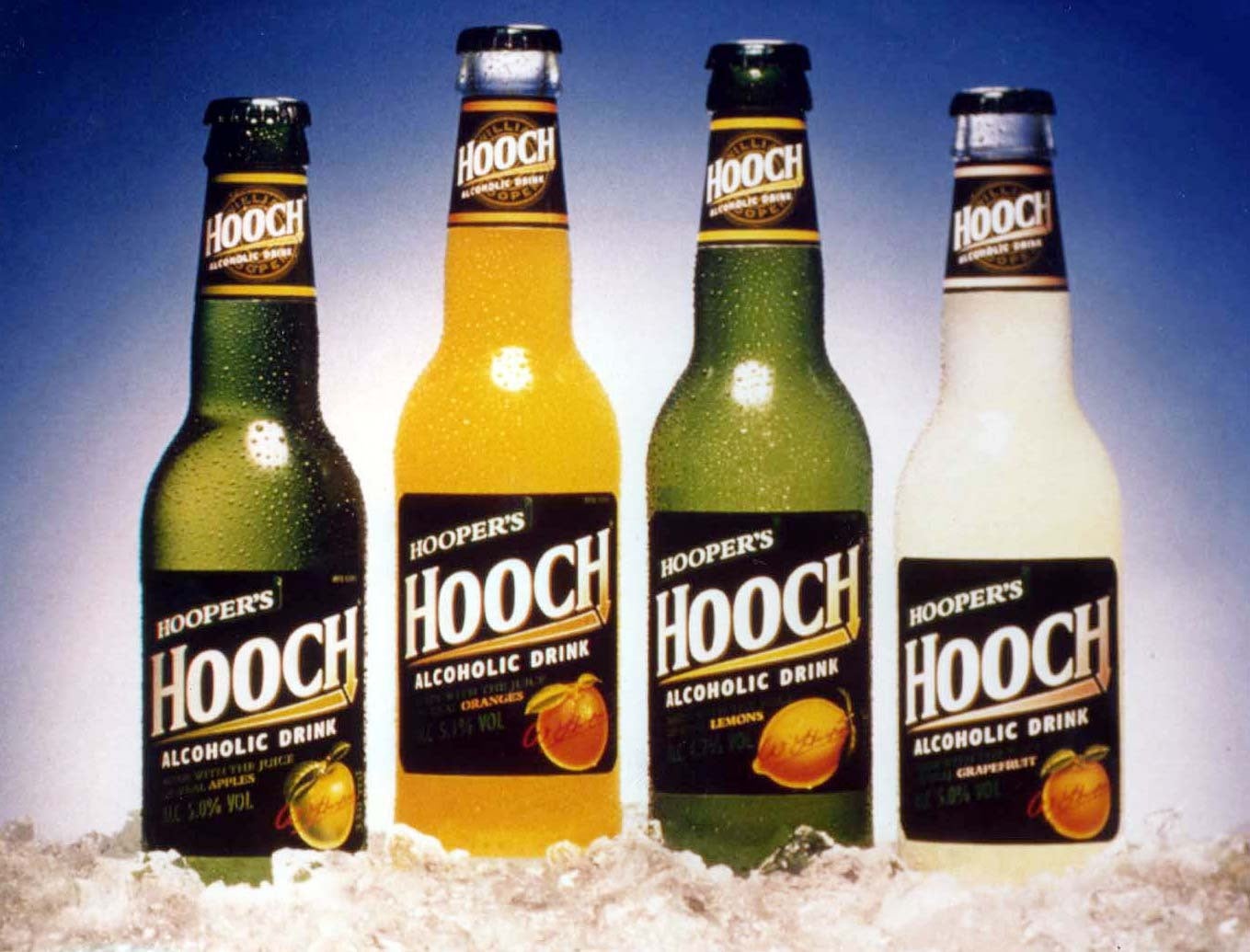
But our taste for alcopops goes back way further than lockdown. Nostalgia is a helluva drug, and it’s just as potent when it comes to beverages. For those who were clubbing in the early 2000s (namely, Gen X and millennials), the alcopop is a portal to their youth. “It takes people back. I think that whole nostalgia trip that people are into at the moment is about, you know, it was a simpler time,” Chapman says. It’s why, for example, he says, 65 per cent of the Hooch demographic is over 30 – and often enjoying the drink in their kitchen, not at a superclub. “The Proustian moment of taking your first sip of an alcopop 10 years after you’ve first tried it. That first sip holds all the memories of parties, parks and puke,” says 26-year-old Corbin Shaw, toast of London’s young art scene and an alcopop enthusiast. For me, like Shaw, an alcopop is a portal back to my first ever alcoholic drink: a Smirnoff Ice, sheepishly sipped while watching a pirate copy of Insidious at a mate’s house circa 2010, aged 13.
That said, it’s not just a nostalgia trip: this new wave of alcopops is tempting a younger crowd, too. It seems that Gen Z (and soon Gen Alpha), who weren’t strawpedoing VKs on sticky dancefloors at the turn of the millennium, are also partial to a sweet alcoholic treat. It makes sense, of course: young people have always been marketed to by alcopop brands, especially via sponsorship deals with student nights (three VKs for a fiver was the go-to deal at uni). The garish, cartoonish branding, though, somehow seems very now. “They just look good to hold. The bottles are like fashion accessories. I think most things boil down to the aesthetics these days with Gen Z,” Shaw says.
It’s not that Gen Z thinks alcopops are cool in the traditional sense – they’re fun because they’re a little uncool
In many ways, it’s adjacent to the vape boom. “The bright colours and ‘so bad it’s good’ branding almost mirror things like vape packaging or meme culture: intentionally loud, a bit ‘cringe’ in the eyes of Gen Z, but fun,” Gounari says. We are living in the era of cringe; corny is now chic. “It fits into the current internet moment where sincerity and irony kind of blur together,” she adds. “It’s not that Gen Z thinks alcopops are cool in the traditional sense – they’re fun because they’re a little uncool.”
And it taps into our increasingly immature taste. “We’re a generation caught in a loop – young adults are living in a state of suspended adolescence. We watch Marvel movies, book trips to Disneyland, smoke pastel-coloured vapes, work in offices with ball pits. We buy toys for our rented flats,” Shaw says. Like vapes, the weaker alcohol content could prove to be catnip for a younger, sober-curious, sweet-toothed crowd.

Whichever poison you pick, downing these RTDs like they’re going out of fashion might not be such a smart idea. While Hooch isn’t literally moonshine, it and other alcopops aren’t transparent about what’s inside. Since drinks over 1.2 per cent ABV don’t legally have to include an ingredients list, it’s anyone’s guess as to what’s actually inside a Reef or VK. What we do know is that they contain more than a spoonful of sugar (and in the case of a 700ml large bottle of WKD Blue, no fewer than 15!) plus a decent amount of caffeine to boot. “The return of alcopops is a classic example of the alcohol industry chasing trends to maintain the brand loyalty of the next generation,” says Ian Gilmore, chair of the Alcohol Health Alliance. “While some of the new iterations of these drinks are lower in alcohol, they can still be packed with sugar and should avoid being seen as a ‘healthy’ option.”
Either way, next time you’re in a real corner shop, you might be better off swerving the alcopop if you’re trying to abide by your daily sugar allowance, which weighs in at seven teaspoons a day, according to the NHS. But if you’re looking for a wild time? Just remember – you can’t spell “weekend” without W, K, D, no matter how old (or drunk) you are. “Alcopops are the gateway from children’s drinks to adult drinks,” says Shaw. “But what if you never grew up?”
Join our commenting forum
Join thought-provoking conversations, follow other Independent readers and see their replies
Comments
Bookmark popover
Removed from bookmarks