How queueing turned cool and ruined a nice day out
From bakeries to bars, there are queues everywhere you turn. Lydia Spencer-Elliott digs in to how the ultra-British practise turned trendy and stopped us totally in our tracks

In the modern world, we want everything now, if not yesterday. From sofa delivery to supper, we despise waiting more than Amazon Prime’s promised 24-hour window to get our hands on our goods. Delayed gratification is thought of as dingy and dull. Whether its weight loss jabs or luxury beauty treatments, if the impact isn't immediate, it’s rarely considered worth it.
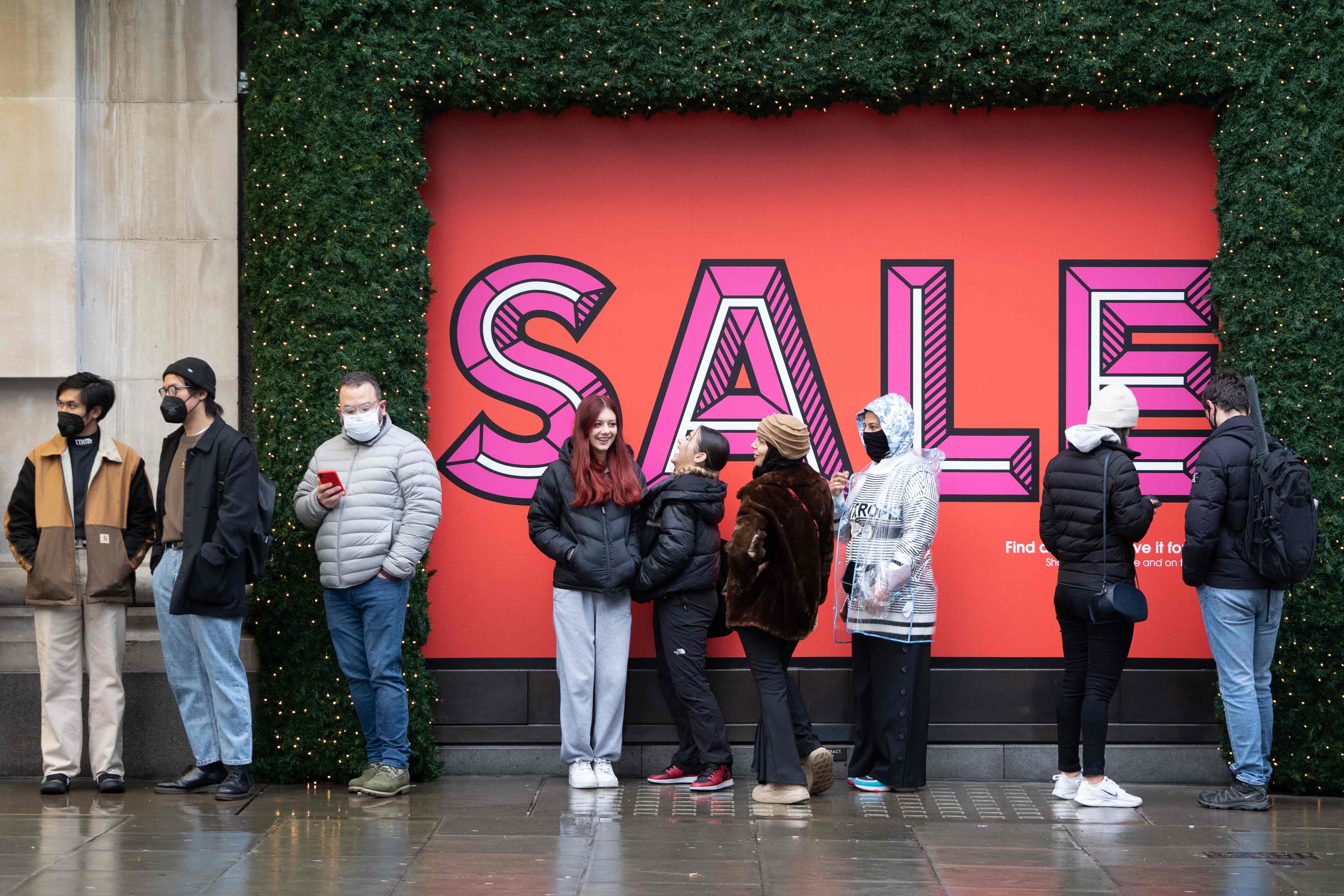
But there is an exception to this overarching rule: The Queue. Despite once being the domain of older generations, queues are now cool, snaking away from bars on Friday nights and lurking outside bakeries on Sunday mornings. It’s now on trend to queue — and it’s making a relaxed day out almost impossible.
London’s Soho has been the main home of queueing since about 2018, when skate brands like Supreme hyped up fans for limited availability streetwear drops. Hoards of young people were prompted to join the line hoping to get their hands on a logo-emblazoned hoodie or hat. As well as new purchases, they found community among their fellow shoppers.
This competitive shopping practice was later replicated by luxury outlets. At the Gucci flagship store on Bond Street, there’s often a 10-person queue outside at peak times. Over at Cartier, they keep their queue in line with a luxe red rope barrier with gold hardware. More than the logos branded on the designer items, it’s the queue that generates the clout and signifies that there’s something exciting to come. For sample sales, passersby will even join lines without knowing what they’re for.
“We go together [to sample sales] a lot, make a bit of a morning of it,” one woman called Ruby told The Face of her decision to stand in the freezing cold at five in the morning to cop a pair of Wales Bonner trainers.
This fashion fever has trickled down into the hospitality industry, where queues outside popular bakeries and bars are less bad luck and more part of the occasion. Jolene, a trending pastry destination with locations in Stoke Newington, Islington and Shoreditch, is almost never without a 30-minute-long snake of people outside waiting for fresh rye bread and glazed chocolate doughnuts. If they were missing, we’d assume the place had (to use a chronically online term) entered its flop era.
On top of this, young people who were coming of age around 2020 have been so conditioned by the pandemic’s two-meter social distancing that some don’t even know the joy of jostling at a bar on a night out.
In 2024, some UK pubs were forced to put up signs to urge customers to stop lining up, because they were in the way of staff and killing the vibe in the venue. This was heavily documented on the Instagram account Pub Queues; a digital campaign to put and end to the practice. “We queue for the bus, or for the checkout, not at bars,” the perturbed bio read.
Contrastingly, last year, Wetherspoons made queuing at the bar mandatory to help out Gen Z customers and employees who weren’t used to the scrum at the bar. Such was the backlash to the enforcement by older customers that it was reversed weeks later, with founder Sir Tim Martin saying it was up to individual pubs to do what they preferred.
While anti-queuers have certainly been the loudest on this issue, a YouGov survey found that 40 per cent of the British public would actually prefer a single file queue to order at the bar. So, perhaps, despite the loud discontent from those in disagreement, the changing times are what most want after all; order over urgency.
In 2019, it was reported that British people spend 47 days of their lifetime queueing. This has undoubtedly increased thanks to Covid, Instagram, TikTok, and influencer accounts like @eatingwithtod and @topjaw turning dinner spots viral, much to repeat customers’ dismay. As queues increase, so too do Gen Z’s expectation, tolerance and even enjoyment of them. As long as it’s moving, it’s not a problem. There’s a determination to get through the door and share the experience online.
Londoner Hayley tells me of a time in around 2024 when Roti King in Euston was having a moment. When she and her boyfriend Liam knew they had to catch a train from the adjacent station they booked a late departure and thought it was the perfect time to tackle the queue and try their famous curry — but two hours later they weren’t even through the door and had to dash to their platform with empty stomachs.
“We spent the whole weekend depressed that this meal had gotten away from us and knew we had to go back,” she says. “We knew we’d be back in Euston on Monday when we didn’t have the time pressure...We didn’t care how late it was. We were going again. You might think ‘why did they not just give up and accept the loss at two hours?’ But it felt like a battle and we weren’t going to be beaten. We went back just for the pure adrenaline of doing it and seeing it through to the end.”
In the end, they queued for an hour. So, a three hour venture all in. “Was the food worth it? I don’t know,” reflects Hayley. “But it felt like we’d really won. I’ve never run a marathon before in my life, but I imagine that’s what it feels like to have your first big meal afterwards. I felt so jammy and plastered it all over my Instagram. It was like my medal. I needed something to show for it.”
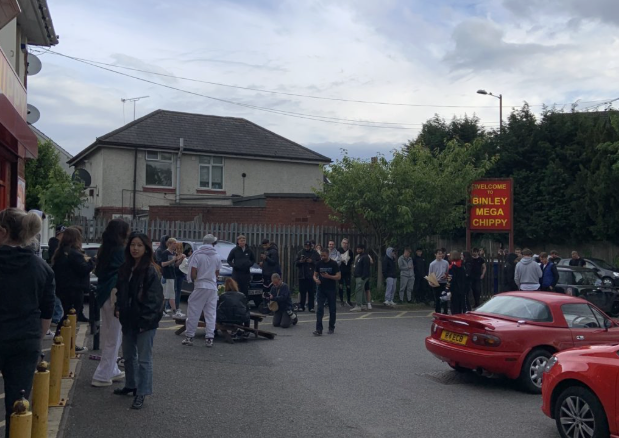
Back in 2022, Binley Mega Chippy bizarrely blew up after someone made a catchy song about the West Midlands chip shop. “I have no idea what happened,” Kamal Gandhi, the shop’s owner said at the time. “Thursday it started to get busy, and I noticed people out the front taking pictures. I was just like, ‘What are people doing?” One teenager told reporters: “I’m not normally a fish and chip person, but for Binley Mega Chippy I had to have some.” As you can imagine, regulars were baffled.
The capacity for things to go viral has paved the way for the introduction of “gatekeeping” aka keeping your favourite spots a secret so you can still get a table. When social media has the capacity to create cult followings over night, it’s no wonder those who’re opposed to waiting 40 minutes to sit down for dinner are now taking a stand with their silence.
“Doesn't matter if it's a beautiful waterfall or a small coffee shop, what makes it nice is that it isn't crowded or widely known,” one person wrote on Reddit. “I'm sick of seeing comments saying to not gatekeep things. I think everyone should do it more.” Restaurant owners did not agree.
It can be hard to fathom that anyone actively enjoys a queue. The anticipatory wait to see your favourite music artist live, perhaps. The excruciating delay to your dinner when you’re already starving hungry? Not so much. Still, some research published last summer might shine a light on how Gen Z handle this frustration: they break the rules.
In fact, booking company American Holidays found that while 73 per cent of Brits consider queue-barging peak rudeness, over half (52 per cent) of Gen Z think it’s acceptable to push in, with a bold 19 per cent of 18 to 29 year olds admitting they wouldn’t think twice about cutting the line. Notably, only five per cent of over 60s said the same.
Maybe it’s time to bring back the scrum at the bar after all.
Join our commenting forum
Join thought-provoking conversations, follow other Independent readers and see their replies
Comments
Bookmark popover
Removed from bookmarks