‘Platonic partners’: How two single women in their forties created a new form of companionship
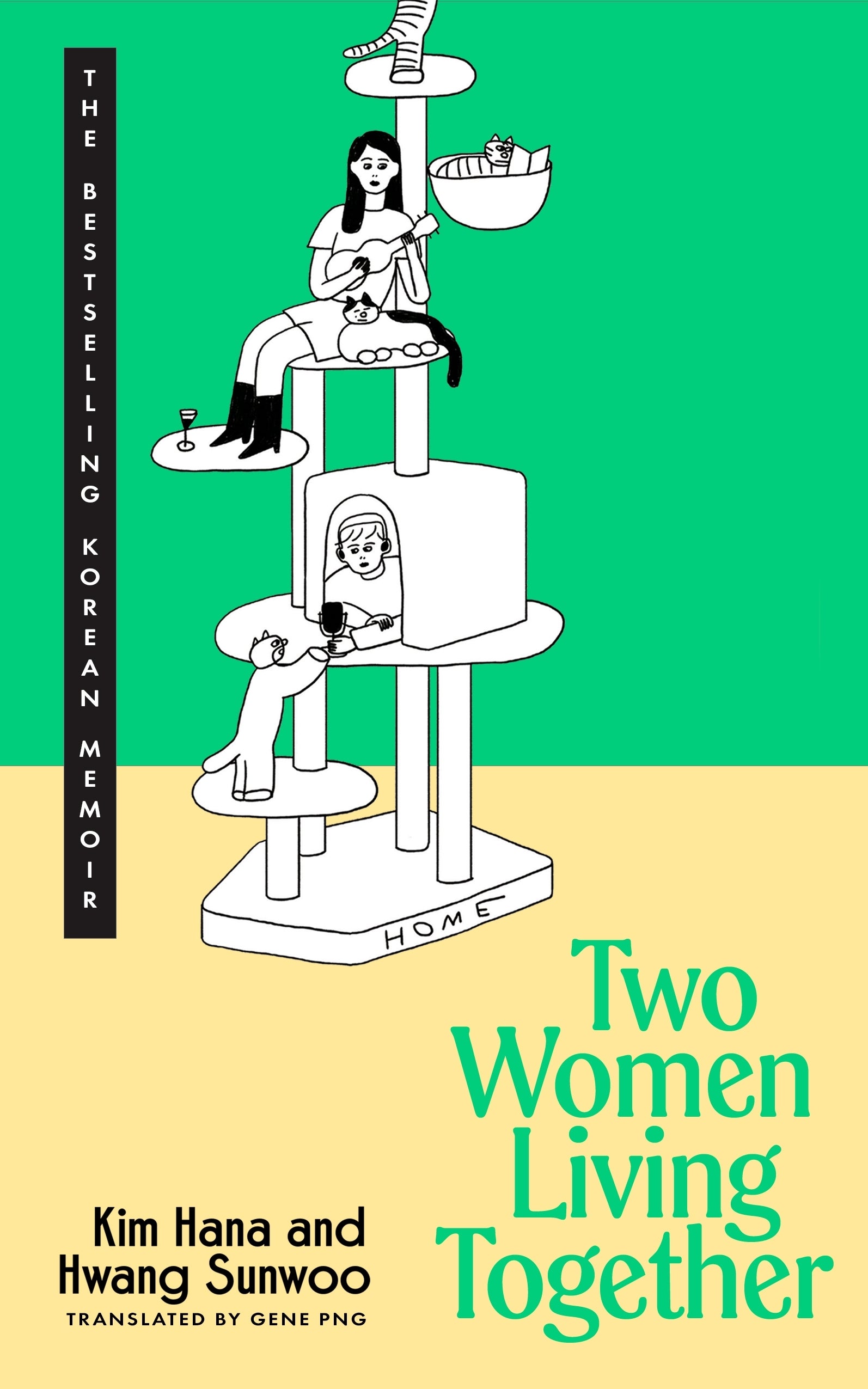
The Korean bestseller ‘Two Women Living Together’ tells the story of Kim Hana and Hwang Sunwoo, two women in their forties who decided to buy a house and commit to each other as platonic partners. Ten years in, as the book is published in the UK, they share their story in an extract
Melmel-Chung_B.jpeg)
Kim Hana
I’d been living alone for a decade when I suddenly became aware of its demands and efforts. Without realising, I’d been expending energy on late-night thoughts and needless worrying. I wondered: Was my weariness a sign that I’d grown out of the perks of living alone? Marriage wasn’t a solution. In fact, it felt like the most foolish thing to do – running straight into another draining world, one ruled by the institution of marriage, in-laws and patriarchy. Besides, it didn’t seem like any man was going to sweep me off my feet and turn me into a fool anytime soon – and that wasn’t something I wanted anyway.
I naturally began to seek out a different way of life. I looked into everything from living with friends to house-shares and eventually ended up meeting a woman who was very similar to me. We were both from Busan, in our forties, had lived alone for a very long time, were seeking a new form of companionship that didn’t involve getting a husband, and we each had two cats. After we’d spilled our hearts to each other, I learnt that Sunwoo, too, was done with living alone and was searching for a different way of life. The more we got to know each other, the more I found myself wondering, what if it’s her?
If either one of us had been convinced that living alone or getting married was the only answer, we would’ve missed out on this felicitous arrangement. Now, wouldn’t that be sad?
On 6 December 2016, 2pm, Hwang Sunwoo and I, both in our forties, became official homeowners. With some help from the bank, we bought a spacious apartment to live in together. Rather than having two separate homes where each kitchen, bathroom and hall would be jampacked into little more than 33m², sharing one home that was twice the size and furnished with the same amenities made so much more sense. Talk about extra space! Our cats finally had the freedom to run around. Most importantly, we got a bathtub. It wasn’t something I’d desperately wanted in the past – given the lack of space – but it’s certainly nice to have.
I started living with my cohabitant ten years ago and I couldn’t be happier with our arrangement. We’ve got our chore distribution down to a T: Sunwoo takes care of the cooking and tidying, and puts the laundry in the washing machine, while I do the dishes and cleaning, and put away the laundry. When I’m in bed, sensing another person’s presence in the house instantly relaxes me. Every morning, we’re woken gently by signs of this shared life, while our little greetings (Did you sleep well? You’re home! I’ll be right back!) add a splash of colour to our daily lives.
Melmel-Chung.jpeg)
When I lived alone, I had to make a conscious effort to keep up my ‘emotional temperature’. But with Sunwoo around, that comes naturally. And if I ever need to raise my actual body temperature, I’ve got a tub to soak in. But the best part is, we’re both single. During the holidays, we’ll visit our parents or ask after them. Our parents are quite pleased with our living arrangement; they find it reassuring.
Sunwoo’s mum always sends a box of all my favourite side dishes, and that’s without me having to travel to visit them out of a sense of filial piety, as would be the case with in-laws. All I have to do is say, ‘Yum!’
The lightness of being single and the benefits of living with a cohabitant go hand in hand. Of course, we’re lucky that we complement each other in so many ways. If either one of us had been convinced that living alone or getting married was the only answer, we would’ve missed out on this felicitous arrangement. Now, wouldn’t that be sad?
They say that single-person households make up 36 per cent of households in South Korea. I think of single-person households as atoms. It’s fully possible to lead a happy life alone. But once we reach a certain threshold, what’s stopping the individual atoms from joining forces to form a molecule? A molecule can be made up of two, three, four, or perhaps even twelve atoms. Its bond could be strong or weak.
We live in a generation where the most common molecule consists of a firmly bonded woman and man. But in the future, we might see a more diverse range of configurations. For instance, in this house, we’re W2 C4 – two women and four cats. And as of now, I’d venture we’re a very stable configuration.
Hwang Sunwoo
The good thing about being unmarried at this age is that I know a secret the world doesn’t: it’s not the end of the world if you don’t get married. I know this because I haven’t got married myself. It’s true, everything’s perfectly fine.
I contain diverse stories and a complex history known only to me, and cannot be reduced to a careless summary from someone else’s lips. Oh, and sorry to disappoint the busybodies, but I am quite happy at the moment.
If only there were an option that connotes greater responsibility and trust than ‘friend’, so that Hana and I, and my friend and her partner, could check it and be properly represented. A word like ‘life companion’, perhaps. It’s out of this need that the Life Partnership Act – a bill allowing cohabiting partners to receive income tax benefits, be registered as dependants under national health insurance and access medical records – is being discussed. A similar bill has already been enacted in France. The Civil Solidarity Pact (commonly known as PACS) provides tax and welfare benefits to unmarried, cohabiting partners.
The way people live evolves faster than any law, institution or concept. Just as workers are no longer devoting themselves to one company until retirement, people are starting to break out of the traditional obligations of blood or marriage. Besides, we live in an age where the average life expectancy is inching towards one hundred. As the population of unmarried couples, divorcees and widowed spouses ages accordingly, there will be more people like Hana and me, looking to turn to their friends for companionship.
‘When it’s good, it’s great’ is what Haruki Murakami says about his married life, and the same applies to me and Hana. I don’t know if I’ll ever meet another person who will laugh at all my bad jokes, make up silly dance moves as we take turns sharing our favourite songs and, at the end of a rough day, tell me I’m a good person who’s doing just fine. Such blessings only come once in a lifetime, don’t they?
And even if I were to meet someone like Hana, I doubt I’ll have the endurance to go through the whole ordeal of matching their lifestyle, arguing with them, combining our furniture, throwing out the extras, fighting over my inability to throw out my things, etc. Besides all that, what would I say to our four cats who would never know why they can’t see their siblings any more? I can’t let that happen.
While this may all come to an end someday, I hope that day keeps getting postponed.
Adapted from Two Women Living Together by Hwang Sunwoo and Kim Hana (translated by Gene Png). Published by Doubleday at £16.99. Copyright © Hwang Sunwoo and Kim Hana, 2026.
Join our commenting forum
Join thought-provoking conversations, follow other Independent readers and see their replies
Comments
Bookmark popover
Removed from bookmarks