Plants which should take pride of place in your spring garden
A top designer leafs through the favourites.
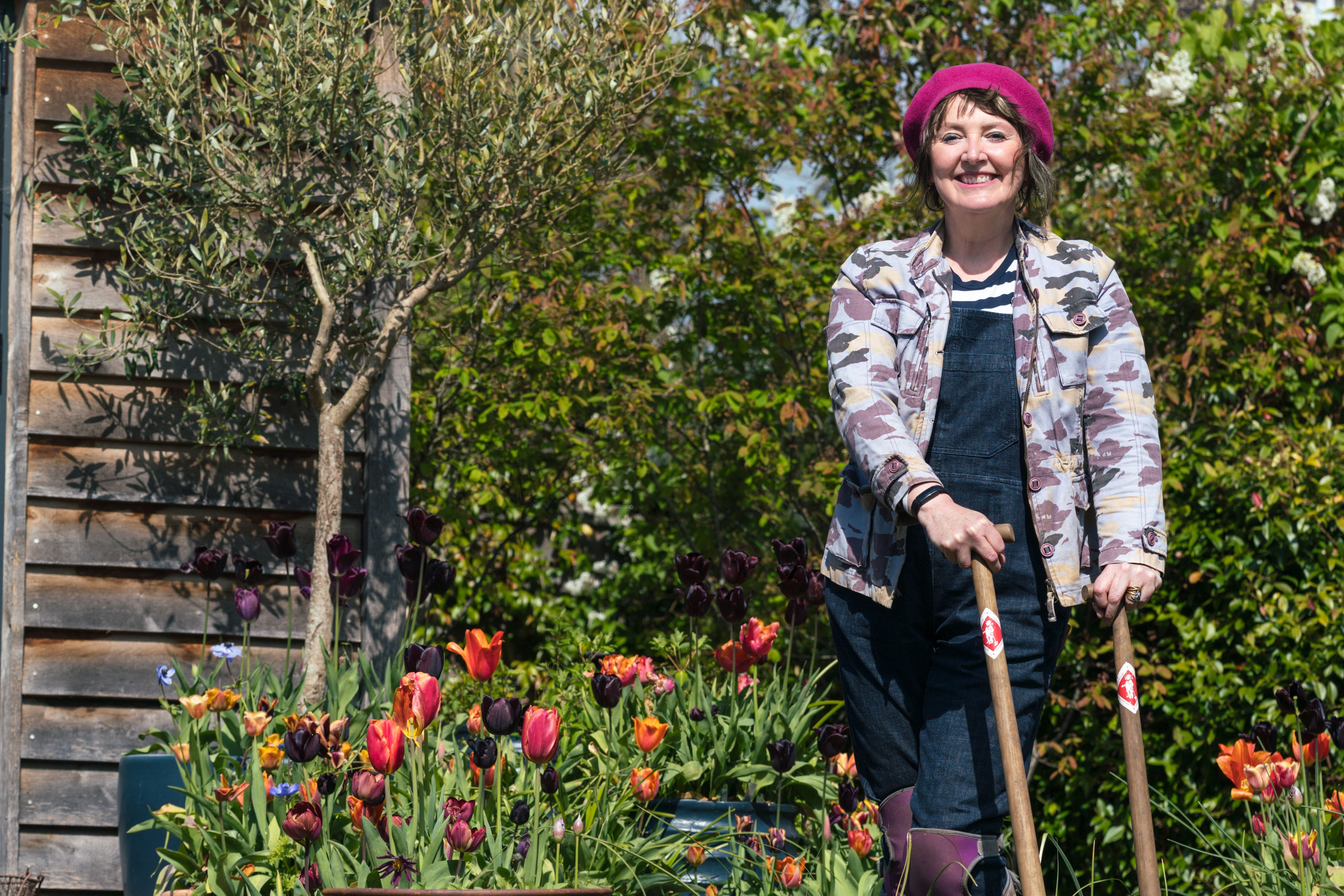
Spring is almost here – and if you are looking for early seasonal colour and texture where you can see it, you need to choose wisely.
“What you need coming out of winter is lots of pots by your back door, because you can see them straight away, which will entice you out,” says multi-award winning garden designer, TV presenter and writer Ann-Marie Powell, author of a new book, A Year Of Colour, which provides readers with inspiration on how to have seasonal colour, all year round.
Here, she offers her top choices of plants for spring.
Iris reticulata
“I love Iris ‘Pixie’ and ‘Angela’, which is a paler blue with a purple glow to it and an orange blotch in the fall of the petal – it looks really lovely with Crocus ‘Orange Monarch’, she says.
“If you plant those together you have a gorgeous awakening that is jazzed up with the bright orange and pale blue, an unusual combination which just makes your heart sing.”
Irises are short-lived, but they should be in the top layer of a container, which you can plant with violas, then underneath you could have other bulbs such as tulips which will emerge later in spring.
Tulips
“I’d go for perennial tulips (those which don’t need lifting and will come back year after year). My favourite is Tulipa ‘Sonnet’ because it goes with everything. It has these beautiful pinky purple elongated blooms, but also apricot and yellow flames to the edges of it. It’s like a stained glass window when it is caught in the light.
“This means you can mix it with really brooding colour schemes of deep plummy maroons and blacks, like ‘Queen Of Night’ or you can go for bright oranges like ‘Ballerina’ and I like to zing it up with ‘Bourbon Street’, which is orangey-red.
“’Banja Luka’ is a really dramatic, huge goblet-shaped plant, golden yellow streaked with red. With that, you get all the strident colours which you can pick. I plant them massively in borders.”
The perennial tulips she recommends tend to do better in the border in subsequent years than in pots, because there are more nutrients in the soil, she says.
In her borders, Powell tends to plant in clumps of 12, leaving a gap, then another 12, but all the 12 are mixed colours, which gives a repeat-planting flow to the garden.
“You get a mixed array, but it looks a bit more purposeful and intentional and gives you more impact,” she explains. “And when your perennials start coming up a bit later, they will cover all that tulip leaf mess.”
Don’t plant these bulbs too near the front of the border as you won’t be able to hide the spent tulip leaves, she advises. Plant them at least 2ft in from the front.
Amelanchier x lamarckii
“If you plant one tree in your garden it’s got to be an Amelanchier x lamarckii, especially in spring. There’s a variety called ‘Ballerina’ which is smaller than the standard type, so you can plant it in reasonably small gardens.
“It has a brilliant season of interest, but in early spring you get these beautiful white/pink/peach flowers on the bare branches. That makes your eye lift up so you are looking at the sky. In spring, a lot of things tend to be more at ground level but if you have something that’s flowering its heart out, with star-shaped white blossoms, it really lifts the scene.”
Powell plants her amelanchiers each side of a path, which form an archway to frame the whole garden view.
You can plant them in pots, but they require more care because you will need to supply them with more nutrients and water over the year.
Foliage beauty
“At this time of year there aren’t that many flowers to choose from, but when the new foliage of roses comes up, you’ll see rich red young leaves and the red stems are glorious,” she enthuses.
“I have roses growing next to a Rodgersia in my garden. It’s a good combination for shady spots where you have tricky soil.
“All the ferns are coming up so you have the lime greens of matteuccias and the fresh green crosiers (commonly known as fiddleheads) of Polystichum Herrenhausen. I love watching a fern unfold. It’s almost prehistoric and adds colour and excitement where other colour is going to come later in the season. Put them in a semi-shady border.
“You could grow many roses, like Rosa x odorata ‘Mutabilis’ and ‘Night Owl’ next to them, with other perennials in between that are going to take over later on and keep the display going. Layering your borders is a really good idea.”
Anemones
These perennial bulbs also provide rich colour in spring, Powell says.
“The gorgeous sapphire anemone ‘Mr Fokker’ is the most welcome plant with all his friends in my garden. They are just so jolly and when they start coming out of the ground they are a bit like meerkats, where their heads are slightly nodding and their blooms are not fully open. Then as the sun warms up the flowers, they come out in all their glory.
“The bulbs are like weird, shrivelled up nuts, and you wouldn’t believe that a flower as glamorous and beautiful as this comes from a wizened old bulb. Their ferny foliage is also really pretty.”
She plants anemones in borders and they also make good plant partners in pots with daffodils, Muscari (grape hyacinths) and pansies. They thrive in sun and are happy in the front of borders.
“And when they’ve lost all of their petals, in seedhead, they are beautiful. They look like silky little purses – and hopefully will help feed your birds.”
A Year Of Colour by Ann-Marie Powell is published by Frances Lincoln, priced £25. Available now
Bookmark popover
Removed from bookmarks