Karen Mulder: Fashion’s forgotten whistleblower who lost everything
The Epstein files have cast new light on allegations made 25 years ago by a ‘Vogue’ model who claimed abuse at the hands of royalty, politicians and tycoons. Katie Rosseinsky tells her tragic story


In November 2001, the Dutch supermodel Karen Mulder sat down for an interview on French TV. Blonde, poised and striking, Mulder, who graced the cover of Vogue nine times over the course of her career, had been nicknamed the “real-life Barbie” for her doll-like beauty. Her chat with presenter Thierry Ardisson, host of the show Tout le monde en parle, should have been a frothy, fun discussion of her latest venture, swapping fashion for the music industry. But what followed took a much darker turn.
Speaking in front of a live studio audience, Mulder made a string of harrowing accusations, claiming that she had been raped by figures in the modelling industry, European royalty, politicians and police officers. The model, then in her early thirties, was soon cut off by Ardisson. “Her claims were regarded as so devastating, and so potentially libellous, that the interview was cut from the show,” a report from The Independent put it at the time. It’s thought that the tapes were destroyed afterwards.
Mulder was painted as hysterical and unstable. This was, after all, more than 15 years before the #MeToo movement; women who levelled accusations of abuse at powerful men were at best ignored, at worst stigmatised and ridiculed. According to reports, the host called her outburst “a paranoid delirium” and said she was in “an extremely disturbed psychological state”. Her family would publicly blame her issues with drugs; other, more euphemistic news stories would allude to a “nervous breakdown”.
Not long after this episode, the woman that Vogue described as “the blonde with class” retreated almost entirely from the public eye. While the names of her Nineties peers like Linda Evangelista, Claudia Schiffer, Christy Turlington and Naomi Campbell are still well known today, hers has faded into semi-obscurity.



But in the wake of the latest release of documents from the Epstein files, Mulder’s claims seem horribly prescient. Countless emails and messages from the files seem to throw light upon just how deeply the convicted paedophile’s network of exploitation was apparently embedded within the modelling industry.
Epstein, who died by suicide in prison while awaiting trial for sex trafficking charges in 2019, is thought to have used his connections with high-profile names in the worlds of fashion and celebrity to lure aspiring models into his grim orbit; he was at the centre of a disturbing nexus of money, power, glamour and abuse.
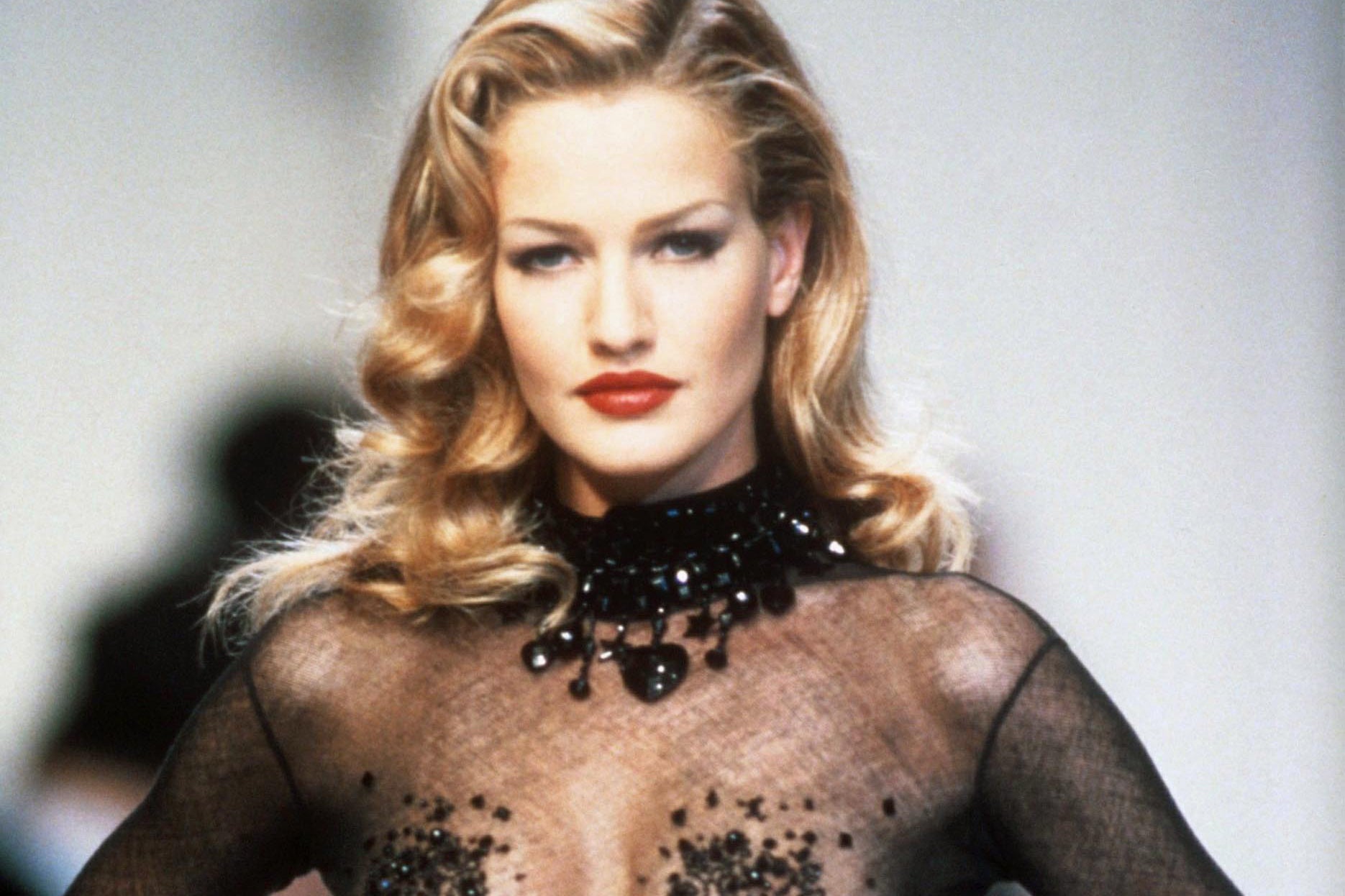
Many of the latest Epstein revelations seem to echo the story that Mulder was trying to tell almost a quarter of a century ago. So was she, in fact, the first fashion industry whistleblower? And what could have been avoided if her claims had been taken more seriously?
At first, Mulder appeared to embody a classic fashion fairytale, her story charting the serendipitous ascent of a beautiful young girl to the pinnacle of celebrity. She was born in Vlaardingen in the Netherlands, in either 1968 or 1970 (accounts online can’t seem to agree on her exact age).
During a family holiday to France in 1985, Mulder saw an advert in a local newspaper for an Elite Model Management competition; she decided not to apply, on account of her wearing braces at the time, but a friend later sent in photos of Mulder without her knowledge. She would go on to win the Dutch heats in Amsterdam and come in second place in the overall finals.
Soon after, she scored a contract with the Paris branch of Elite. It wouldn’t take long for her to secure spots on the runway for all of the most respected fashion houses – Valentino, Versace, Giorgio Armani, Dior and Chanel – although “she could sell a paper bag”, as her agent Ellen Harth put it in The New York Times.
By the early Nineties, hers was one of the biggest names in fashion; she would crop up in some of the era’s most iconic imagery, from Peter Lindbergh’s 1991 “Wild at Heart” shoot, featuring a bunch of supermodels dressed in biker leathers in Brooklyn, to the cover of American Vogue’s 100th anniversary issue, alongside another cohort of beauties wearing all white. In 1992, she signed a contract with Victoria’s Secret; a few years later, in 1996, she became one of the brand’s first-ever “Angels”.
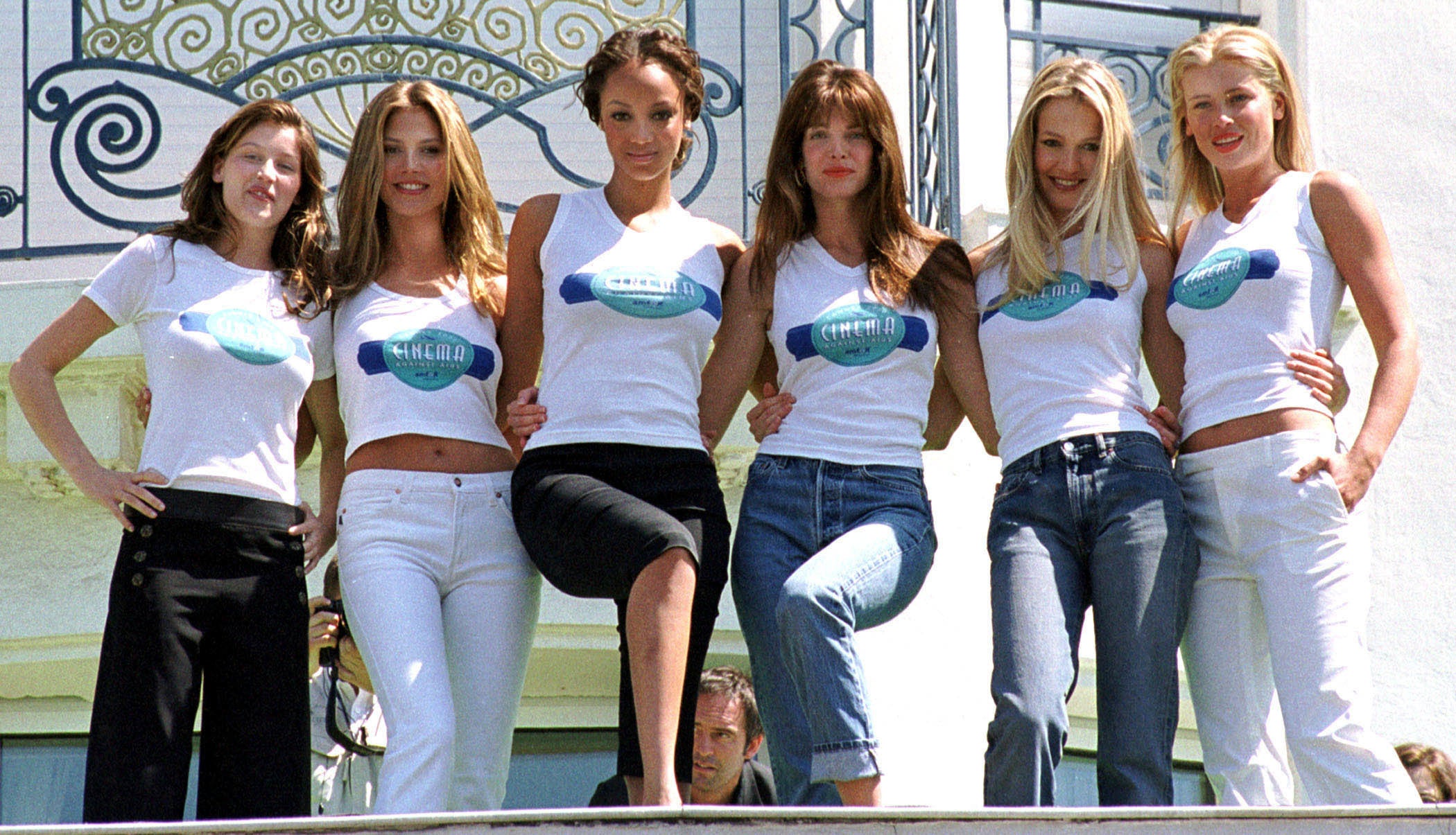
By 2001, around the time of her notorious interview, Mulder had taken a step back from the fashion world in order to pursue acting and music. Although she had reached the top of her profession, earning a rumoured £10,000 per day and accruing a reported £10m fortune, she had struggled under the glare of the cameras. “For me, [being a supermodel] was just an assumed role, and in the end I didn’t know who I really was as a person,” she said in an interview. “Everybody was saying to me, ‘Hi, you’re fantastic’. But inside, I felt worse from day to day.”
Her Tout le monde appearance may have ended up canned, but this didn’t immediately stop Mulder speaking out. It soon emerged that she had visited French police just a few days beforehand to make a statement, “containing very similar allegations to those made on the show”, The Independent reported at the time. The public prosecutor’s office later confirmed that it had started a preliminary investigation for “rape by persons unknown”.
And in another interview with the French magazine VSD, conducted not long after, she reiterated her accusations. “They tried to turn me into a prostitute because they thought it would be so easy,” she said, before alleging that she “was raped by two [model] bookers”. “Then I realised how big the conspiracy was,” she added. “It brought in the government and police, who both used Elite girls.”
.jpeg)
Soon after her outbursts, though, she checked into the Villa Montsouris psychiatric clinic, where she would spend the next five months. It was reported that her stay was paid for by Gérald Marie, previously the head of Elite Model Management’s Parisian arm. Twenty years later, Marie was accused of sexual misconduct and rape by multiple women, with the alleged incidents dating back to the Eighties and Nineties. He strongly denied all the accusations, and French prosecutors eventually dropped the investigation in February 2023 due to the statute of limitations.
Mulder, meanwhile, would later recant her accusations. Speaking to Paris Match, she described them as “a cry for help”. “It seemed to me that the whole world was against me and I was trying to make myself heard,” she said. The police investigation was then dropped.
The model’s story took yet another heartbreaking turn in late 2002, when she attempted suicide. In interviews around the time of her hospitalisation, her family alluded to issues with cocaine, though Mulder herself had previously said she had “never been addicted to any substance”; she had, however, been vocal about her experiences with “the big weight of depression”.
After her recovery, Mulder retreated yet further from the spotlight. She made a brief catwalk comeback in 2007, when she walked in John Galliano’s AW07 show for Dior, a lavish celebration of the brand’s centenary at the Palace of Versailles. But the last time she appeared in the headlines was far less triumphal.
In 2009, she was held at a police station in Paris after allegedly making “threatening” phone calls to a plastic surgeon. A source told The Telegraph that the surgeon became “extremely scared” after repeated phone calls, and claimed that Mulder had been “screaming and shouting” about a past procedure. It doesn’t appear that she was ever charged, however.
Until the unsealing of the Epstein files brought claims of systemic abuse in the fashion industry back into the public consciousness, Mulder’s allegations were largely forgotten; they were not revisited during the #MeToo or #TimesUp movements, which provided a flashpoint for other historic accusations of misconduct.


But in a 2022 interview, Ardisson, the man who cut off Mulder’s initial outpouring, seemed to look back at the incident with a new perspective. “She said some terrible things, which I think were true,” he recalled, describing the “disturbing” episode as the worst moment of his career.
When Mulder repeated her accusations to the press in 2002, she rather poignantly laid out her hope that “when you publish this article, it will be the beginning of the end of my suffering”, adding: “I want justice, that’s all.” It doesn’t seem that she ever received this closure, publicly at least; instead, she was discredited and forgotten. But in light of the horrifying allegations laid out in the Epstein files, one particular line from her interview seems particularly striking: “People will say I am mad, but I know the truth will out.”
Join our commenting forum
Join thought-provoking conversations, follow other Independent readers and see their replies
Comments
Bookmark popover
Removed from bookmarks