I swapped my life in London for off-grid living in Ibiza – this is what I’ve learnt
As a former editor of a glossy magazine, Tiffanie Darke has spent the last few years dreaming of living off-grid, but she didn’t count on how fragile life would become when she actually did it...
.jpeg)
In London, home is a terraced house built by the Victorians to house workers for the nearby cattle market (now a park, clock tower and cafe). Living snugly together, my neighbours and I share heat, views, glasses of wine in the garden, the occasional noise dispute, dog, cat and goldfish sitting, and lots of gossip as we see each other on the street all day every day and our windows look directly into each other’s lives.
I turn on the tap and water comes out. I turn the dial on the thermostat when I want to be warmer. I open the windows for a through draft in the summer, but it’s not enough as our summers are getting hotter. I pay about £130 a month for water, £400 for energy and £250 to the council, for which I get our lovely bin men coming every week and some street lighting. The money comes out of my account without my noticing until there’s nothing left at the end of the month. We fitted one of those smart meters and realised leaving the lights on made no difference whatsoever – it was the tumble dryer that did it.
In London, I do what I can to live with lower impact. I pledge to buy only five new things for my wardrobe every year, and run the Rule of Five campaign to help others commit to that. I fill up my green recycling box and brown compost bin and try to minimise what goes in the wheelie. I drive an electric car, but cycle whenever possible. I subscribe to Oddbox for my fruit and veg and have just joined BRiMM to help with better consumer choices. (Through BRiMM, I’ve discovered a deodorant for life and non-plastic cleaning tools.) But all of this feels like playing at the edges when it comes to living a sustainable life.
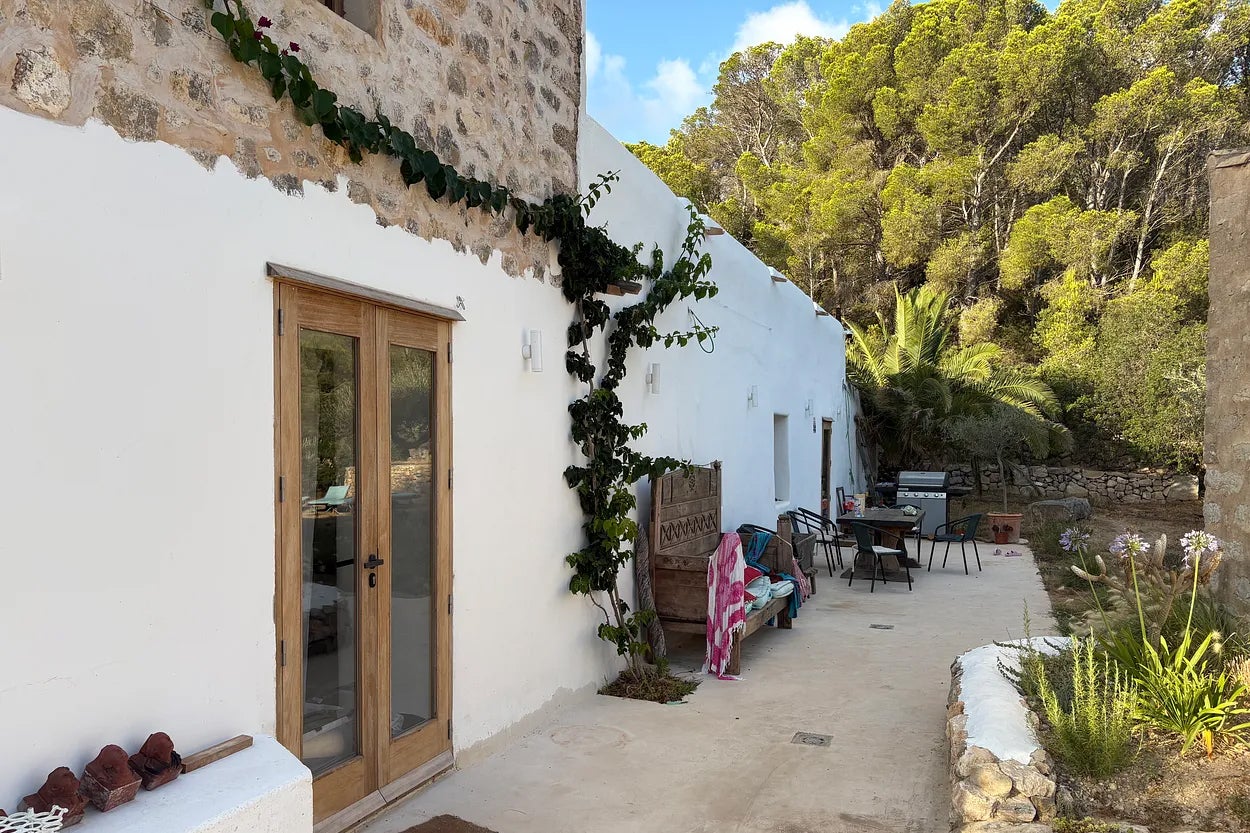
Here in Ibiza, I am house-sitting an old finca up in the hills for the next month. I help run Agora, a boutique championing sustainable fashion up in the north of the island, and for peak season, I need to be here. Negotiating Ibiza villa rentals in high season is only possible on a billionaire’s Amex card, so when a friend offered me his home for a month while he went on holiday, I jumped at it.
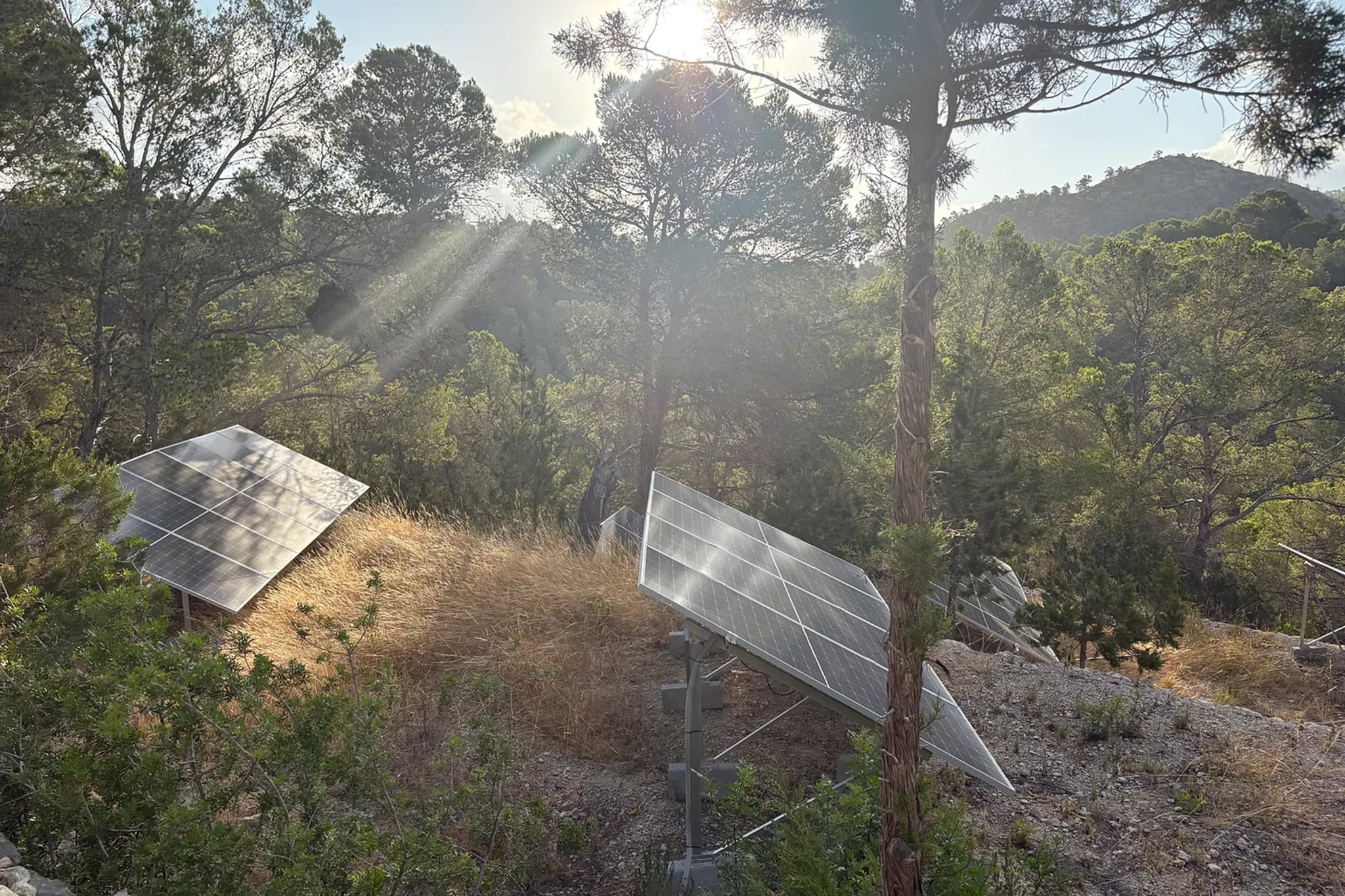
His home is no serviced apartment – far from it. It is off-grid – a living, breathing organism that requires high maintenance, and that was the deal. It relies on its own solar panels for energy, the farmer at the bottom of the valley who has a well, a septic tank and Gaia’s own weather system. It’s a lesson in the past, and the future.


Firstly, it’s very hot here now; there are no fans, but the two bedrooms have air conditioning units. The nights are sweltering, with little to no breeze. Running both AC units bleeds the solar reserve dry, which means the generator kicks in. If the generator isn’t full of diesel, it can break (expensive). So, I drive to the garage with jerry cans to fill them up and end up with diesel all over me and the car. (By the way, no electric charging stations for cars on this island – electrification is a long way off.)
Water is short because the government stopped funding the desalination plants years ago, so they no longer operate, and the island is dependent on a very low water table. When it doesn’t rain, there is no water. (What is it about governments and bad water management?)
There is also no water system outside of Ibiza’s main towns, so you must call up a private water supplier and have them drive a diesel-fuelled truck to your house to fill up your tank. I once watched one of these trucks negotiate an extremely precipitous cliff edge to reach a house on a tiny peninsula that was occupied by Mick Jagger. I hope he was only flushing his toilet once a day.
Or you can siphon off water from a neighbouring well (a few houses have these), but you need the sun to be shining so the pump works, and the neighbour needs to remember/be around to do it. Showers are two minutes max – one mum I know makes her kids shower in the garden with a hosepipe, so she can water her plants at the same time.
Meanwhile, the septic tank needs to munch through all its waste three times a week. The dog needs walking twice a day (but only before and after 9am and 9pm otherwise it’s too hot), the stray cats need feeding and the ants need managing. One breadcrumb on the floor and your house is colonised.
The solar panels are also problematic: staggered rows of black mirrors will only operate if there is full sun on each row. If the shadow of a tree branch falls on one or a cloud passes, the whole row ceases to operate. Would a better design be possible here? Wifi comes from Elon Musk’s Starlink, which is the only available resource for internet signal, much to the annoyance and frustration of my artist hosts. But we must have internet, at all costs, mustn’t we.
Clothes-wise, there’s no need for anything other than cotton and wool. People don’t wear much here, just a few flowing robes. Ibiza town has all the fast-fashion horrors of Zara, Bershka, Stradivarius and the like to dress the clubbing massive in one-night-only polyester. Which is a shame as there are some amazing island artisans and markets (the Agora Mercado Artisanal, held on the last Friday of every month at Six Senses Ibiza, is wonderful).
There’s no rubbish collection, instead there are communal “bin parks”, where you must take your waste and post glass, plastic, card, organic matter and non-recyclable rubbish into separate containers. This means regularly filling your hot car with foul-smelling bin bags, leaking cans and dripping bottles, to dispose of them in a way that the waste disposal teams can manage.
Add to this, we live on an island, so resources are limited to what we can grow and what can arrive by (diesel-fuelled) ship. Back in the day, Ibiza grew all its own produce, but when the tourist boom arrived, farmers abandoned their subsistence living and built lucrative hotels on the seashore.
The land was left untended. An enlightened group of regenerative farmers are trying to get everything going again, but Ibiza still only produces less than 7 per cent of its food needs. Come the apocalypse, we’ll be alright for cacao, olives, lemons and maybe a few almonds. There will be one feast day for goat meat, and that’s it.
The reality of living off-grid like this is a lesson in resource management and the fragility of our systems. In the last 150 years, we have become so removed from the extraction and production of our daily needs that we have no idea of their cost.
Last week was Earth Overshoot Day, the point beyond which the resources we extract from the Earth exceed what the Earth can regenerate. This means that humanity has now spent its resource budget for the year. This overshoot drives biodiversity loss, resource depletion, deforestation and the buildup of greenhouse gases in the atmosphere.
Last year, Earth Overshoot Day was 1 August, so we have accelerated our overshoot by a whole week. Everything we consume now is borrowing from the future. How much longer can this continue? Our day of resource reckoning is coming, and it’s not far off. There will be hot summers, water shortages, a breakdown in energy systems and no internet – imagine! – with just lemons and olives for tea. That’s putting it kindly.
Having been here for a few weeks now, I think all city dwellers should be forced to do this. I’m learning a lot. I’m learning how precious all these things are, and the labour and the cost to keep them running. I’m learning that nothing is a given, not water or energy, and the only thing I can rely on here on this island is the sea. I can see the sea (just) from the finca, and the sunset and the sky. I can smell the pines in the air and listen to the cicadas’ frenzied cries. It’s a long way from my north London terrace, and there’s absolutely no need for a tumble dryer. I’m very grateful for the education.
When I get home, I will think carefully about my hot baths and long showers. When I pay my energy bill, I will imagine the wind turbines, the gas exchanges and the oil drills that are pumping to supply me with my loud music, low lighting and warm floors. I will flush my toilet and imagine the system that takes it all somewhere, and how that system is already creaking. And I will smile warmly and gratefully at the bin men.
You can follow Tiffanie’s adventures in sustainable living here
Join our commenting forum
Join thought-provoking conversations, follow other Independent readers and see their replies
Comments
Bookmark popover
Removed from bookmarks