Father diagnosed with terminal condition after noticing symptom at swimming pool
Danny Tucker was just 39 when he was told he had motor neurone disease (MND)
A midwife is hoping to raise thousands of pounds to adapt her family home after her husband was diagnosed with motor neurone disease (MND) at 39.
In March, Sarah Tucker’s husband, Danny, was told he had MND - a significantly life-shortening neurological condition that causes motor neurons to stop working.
Months before the diagnosis, he noticed weakness in his shoulder and arms, which then sparked alarm bells when he was unable to lift one of his two sons out of a swimming pool.
After applying to Medway Council for help to make alterations to the family home in Romsey Close, Strood, and being rejected twice due to Sarah and Danny both working, a fundraiser was launched as a “last effort” to prepare for his deteriorating condition.
While the family’s original target was £6,000, so far, more than £21,000 has been raised.
Sarah, 35, explained: “MND causes messages to stop reaching muscles and leads to increased weakness and paralysis. There is no cure.”

Since his diagnosis, the family say Danny’s condition has deteriorated far faster than they were prepared for, leaving them facing mounting challenges at home.
The mum-of-two added: “It has been incredibly difficult coming to terms with Danny’s diagnosis, but we are trying our best to navigate life with his terminal illness.
“In such a short time, Danny’s condition has progressed much quicker than we have been prepared for, and we are continuing to face many challenges.”
“It’s a real emotional rollercoaster. You have good days and bad days.
“We’re a normal family which has been dealt rubbish cards that we’ve got to make the best of.”
Their current home is not suitable for Danny’s needs as he can no longer use the stairs, and Sarah wants to install a downstairs space that can accommodate a wet room and specialist equipment.
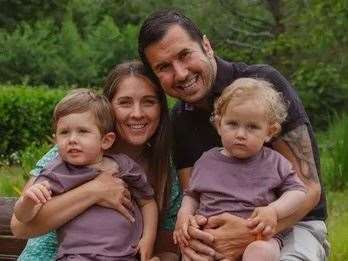
Sarah explained: “He needs access to a private space downstairs to accommodate a wet room and specialist equipment to support his changing needs.”
Despite months of trying, the family say they have been unable to secure funding support for the adaptations from the local authority, and don’t have the savings to do it themselves.
Danny, now 40, has continued working from home as an estimator for a ventilation company, which Sarah says has counted against them when seeking help.
Applications for other options, including DIY SOS, have also been unsuccessful, leaving crowdfunding as their last resort.
“It’s our final option,” she said. “It’s not something we wanted to do as we’re quite private, but we had no choice.”
Symptoms of motor neurone disease (MND)
Symptoms you may have at first include:
- stiff or weak hands – you may have problems holding or gripping things
- weak legs and feet – you may find climbing stairs difficult, you may trip over a lot and you may find it hard to lift or move your foot (foot drop)
- twitches, spasms or muscle cramps (where muscles painfully tighten)
As MND gets worse, you may:
- have problems breathing, swallowing and speaking
- produce a lot of saliva (drool)
- have changes in your mood and personality
- be unable to walk or move
Sarah hopes the adaptations will allow the family to remain in the home they love and focus on spending precious time together.
“Having the necessary adaptations will drastically improve our living situation and will allow us to be as prepared as we can be as Danny’s health continues to deteriorate.
“We desperately want to stay in the family home that we have worked so hard for, and where we can focus on making precious memories in the time we have together.”
“Every contribution, no matter how small, will make such a meaningful difference to our family.”
More information about MND and ongoing campaigns for better support can be found via the MND Association.
Medway Council has been approached for comment.
Join our commenting forum
Join thought-provoking conversations, follow other Independent readers and see their replies
Comments
Bookmark popover
Removed from bookmarks