Resisting treats as a toddler linked to academic success later, say scientists
Children born prematurely are most likely to take the treat
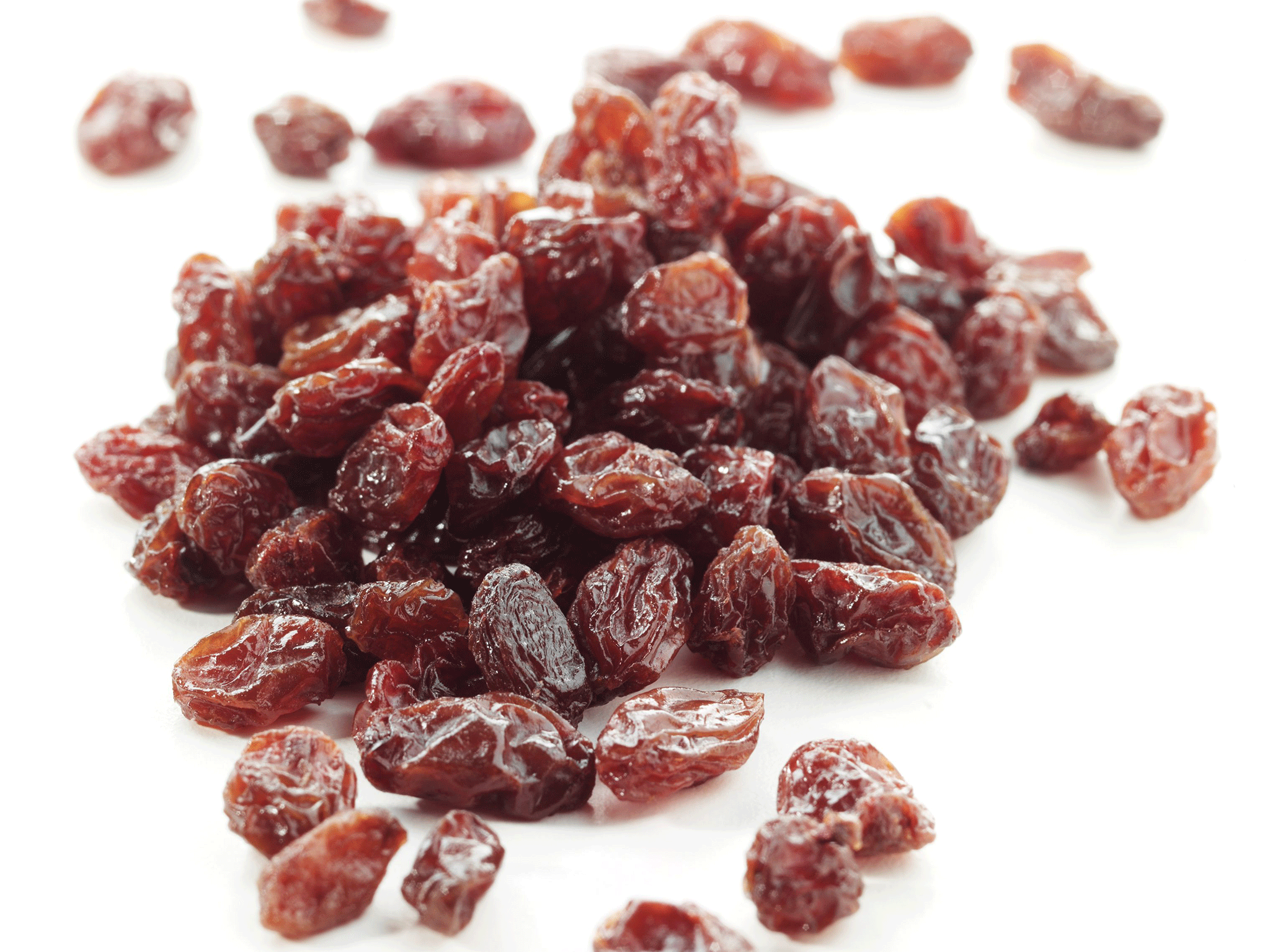
A child's capacity to resist a treat is a good determiner of their intelligence in later years, a study has shown.
Being able to withstand temptation from raisins hidden under a cup for more than a minute has been linked by scientists to better academic achievement when they are older.
And children born prematurely were the most likely to take the treat before the allotted time was over, they found.
Professor Dieter Wolke, author of the study, said the raisin game was an "easy and effective tool" for identifying children at risk of attention and learning problems.
"An easy, five-minute raisin game task represents a promising new tool for follow-up assessments to predict attention regulation and learning in preterm and term born children," he said in a statement.
"The results also point to potential innovative avenues to early intervention after preterm birth."
Children born prematurely were compared in the study to children who were not, with results showing that those born very prematurely were more likely to take the raisin before 60 seconds were up.
They were also the most likely to struggle with learning difficulties in later life, the study found.
The study, which is published in The Journal of Pediatrics, used data collected for the Bavarian Longitudinal Study which began in Germany in 1985 and is still underway.
Professor Wolke's study echoed the Marshmallow Test developed in the 1960s by psychologist Walter Mischel, in which he gave children the choice of one sweet or having two if they waited until he returned.
When he followed up the participants many years later, a clear correlation was shown between those who could wait and their success in life.
A study by University College London from 2012, meanwhile, found that people with lower IQs were less happy in life than those with higher IQs.
Join our commenting forum
Join thought-provoking conversations, follow other Independent readers and see their replies
Comments
Bookmark popover
Removed from bookmarks