The Independent's journalism is supported by our readers. When you purchase through links on our site, we may earn commission.
Your dog’s gut health could determine how long they survive after cancer treatment
Six million dogs are diagnosed with cancer each year in the U.S. - and more than four million die


Your dog’s gut health could help to determine how long they could survive cancer, researchers announced Tuesday.
Canine cancer patients with certain species of bacteria in their guts were found to live longer after treatment with a new drug than those with other bacteria species, scientists at Oregon State University found in a groundbreaking study.
The findings have potential implications for millions of dogs and their owners - and could even result in lengthening your pet’s lifespan.
Almost half of American households have at least one dog, and nearly six million dogs are diagnosed with cancer in the U.S. each year. More than four million die.
“In the future, an analysis of a microbiome swab could help predict how well a dog might respond to a cancer treatment. This allows pet owners and vets to make more informed decisions about care,” university researcher Natalia Shulzhenko explained in a statement.

“And now that we know certain bacteria are linked to survival, we can explore ways to ‘fix’ a dog's gut microbiome to help the vaccine work better and help the dog live longer.”
The researchers examined the gut health of 51 dogs with various forms of cancer, taking rectal swabs from different ages, breeds and weights.
There are more than 300 breeds of dogs and any breed can get cancer - although past research from U.C. Riverside shows medium-sized dogs may be disproportionately impacted. The most common cancers in dogs are lymphoma, melanoma, bone cancer, bladder cancer and cancer in their blood vessels, according to Colorado State University.
The dogs in the study most commonly had bone and blood vessel cancer, but the researchers did not specify which breeds were tested. The swabs allowed the team to analyze the trillions of species of bacteria living in the dogs’ guts, also known as their gut microbiome.
Humans have a gut microbiome, too, which helps to regulate the immune system, support digestion and keep our brains and other areas of the body healthy.
The researchers determined that 11 species of gut bacteria were tied to either positive or negative results after cancer treatment.
The family of bacteria that cause E. coli and C. diff infections and life-threatening heart inflammation known as endocarditis were found to lead to a higher risk of death. Whereas, the multiple sclerosis-linked family Lachnospiraceae and inflammatory bowel disease-tied Ruminococcaceae were actually linked to a lower risk of death.
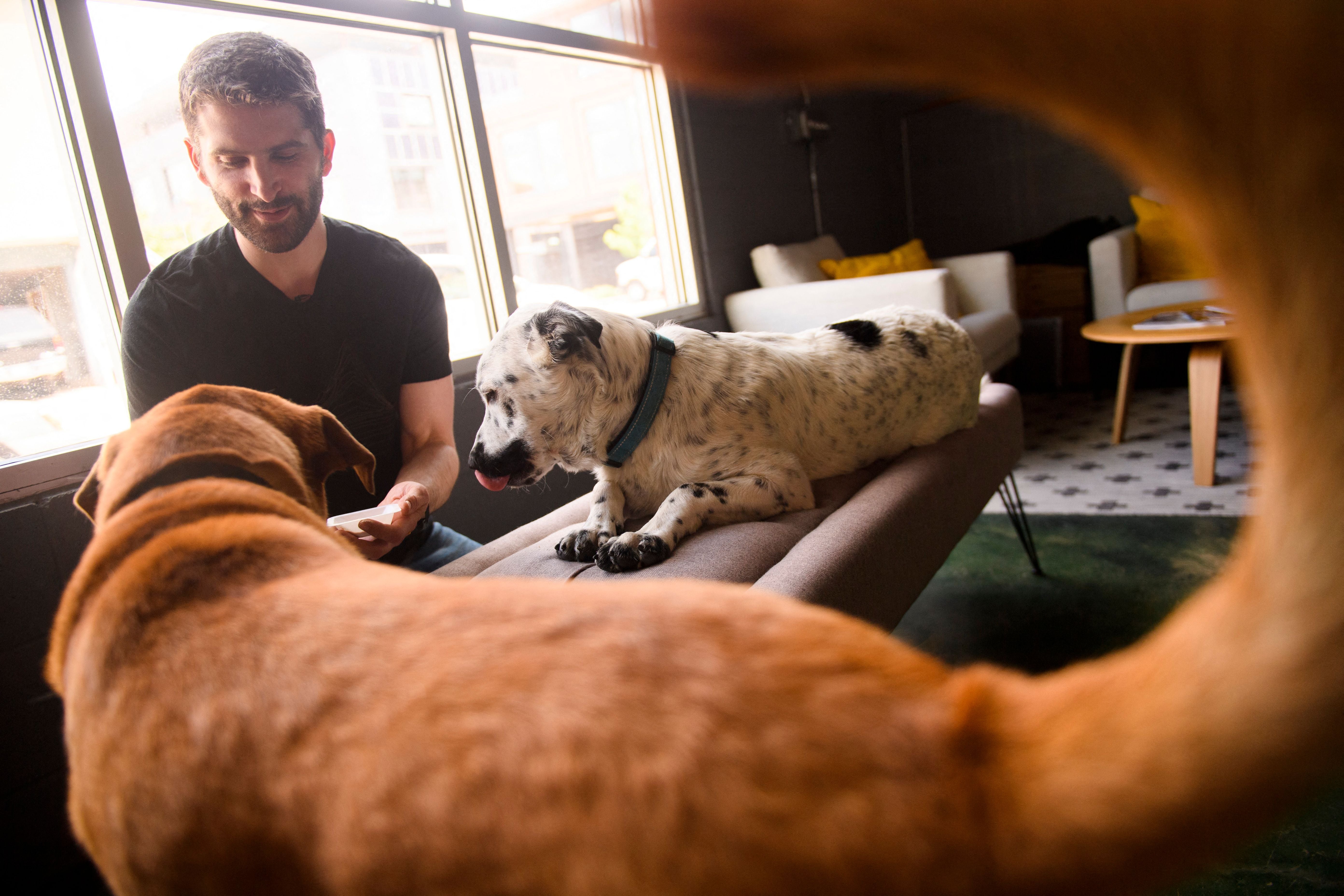
Understanding how these bacteria families behave after cancer treatment in dogs could also help human cancer patients, according to Shulzhenko.
“Our study is a first step toward using the gut microbiome as a tool to develop prognoses and to manipulate cancer, not just in dogs, but potentially as a model for human treatments as well,” she said.
Rates of cancer have been rising in younger adults and appear to be rising in dogs over the last few decades, the Animal Cancer Foundation says.
“We do know that diagnosis is happening more frequently because pet parents are seeking veterinary care and specialty care for cancer. Many factors may influence the appearance of an increase in incidence and more funding is needed for these types of studies,” the foundation wrote.
But that doesn’t change the fact that a quarter of dogs are expected to develop cancer at some point during their life. The risk doubles for elderly canines aged 10 and older, according to the American Veterinary Medical Association.
Join our commenting forum
Join thought-provoking conversations, follow other Independent readers and see their replies
Comments
Bookmark popover
Removed from bookmarks