Testing for Alzheimer’s could soon be done with an at-home blood test
There are currently two robust approaches for diagnosing signs of Alzheimer’s in the brain
Imagine diagnosing one of the most challenging neurological diseases with just a quick finger-prick, a few drops of blood and a test sent in the post. This may sound like science fiction, but we are hoping our research could soon help it become a reality.
Our team at the UK Dementia Research Institute’s Biomarker Factory at UCL are part of the global effort working to develop and validate a test for Alzheimer’s disease. We’re currently working to overcome the various technical challenges facing these tests so that this test can one day soon be available to the broader public.
What do finger-prick tests look for?
At their core, these finger-prick tests are designed to detect specific biomarkers.
Biomarkers are biological molecules found in the blood which indicate signs of disease. In the case of Alzheimer’s disease, the brain gradually accumulates abnormal proteins. These proteins form structures such as amyloid plaques and tau tangles which damage the brain’s neural networks. They’re also involved in brain inflammation.
These abnormal proteins can be detected in the brain, cerebrospinal fluid and, importantly, the blood years before symptoms arise.
Recently, research has also shown these biomarkers can be measured in dried blood samples from a simple finger-prick. A study focusing on 337 people showed that these dried blood samples can reliably detect Alzheimer’s-related changes in biomarkers with a diagnostic accuracy of around 86% compared to conventional methods.
Once refined and validated, these tests could aid with early detection, screening at-risk people, tracking disease progression or even evaluating the effectiveness of emerging treatments.
What are the shortcomings of current diagnostic tools?
In addition to cognitive tests (which check for cognitive decline and memory problems), there are currently two robust approaches for diagnosing signs of Alzheimer’s in the brain.
The first is PET imaging. These scans detect disease characteristics using radioactive tracers which light up areas of the brain where tangles and plaques may be present. However, PET scans are expensive, use radioactivity and require specialist facilities.
The second method uses a spinal tap to extract cerebrospinal fluid (the clear, colourless liquid that protects the brain and extracts waste). This looks for the same biomarkers as finger-prick tests. However, this method is invasive and can be painful and stressful to patients. Some people also may not be eligible to have it done.
Cognitive tests also have shortcomings. As a result, people whose first language isn’t the one in which the test is being administered, or those who have other health conditions that also cause cognitive problems, may be misdiagnosed.
And, while cognitive testing can give an idea about a potential issue, these tests alone can’t tell us what specific condition is causing symptoms. This can also lead to misdiagnosis.
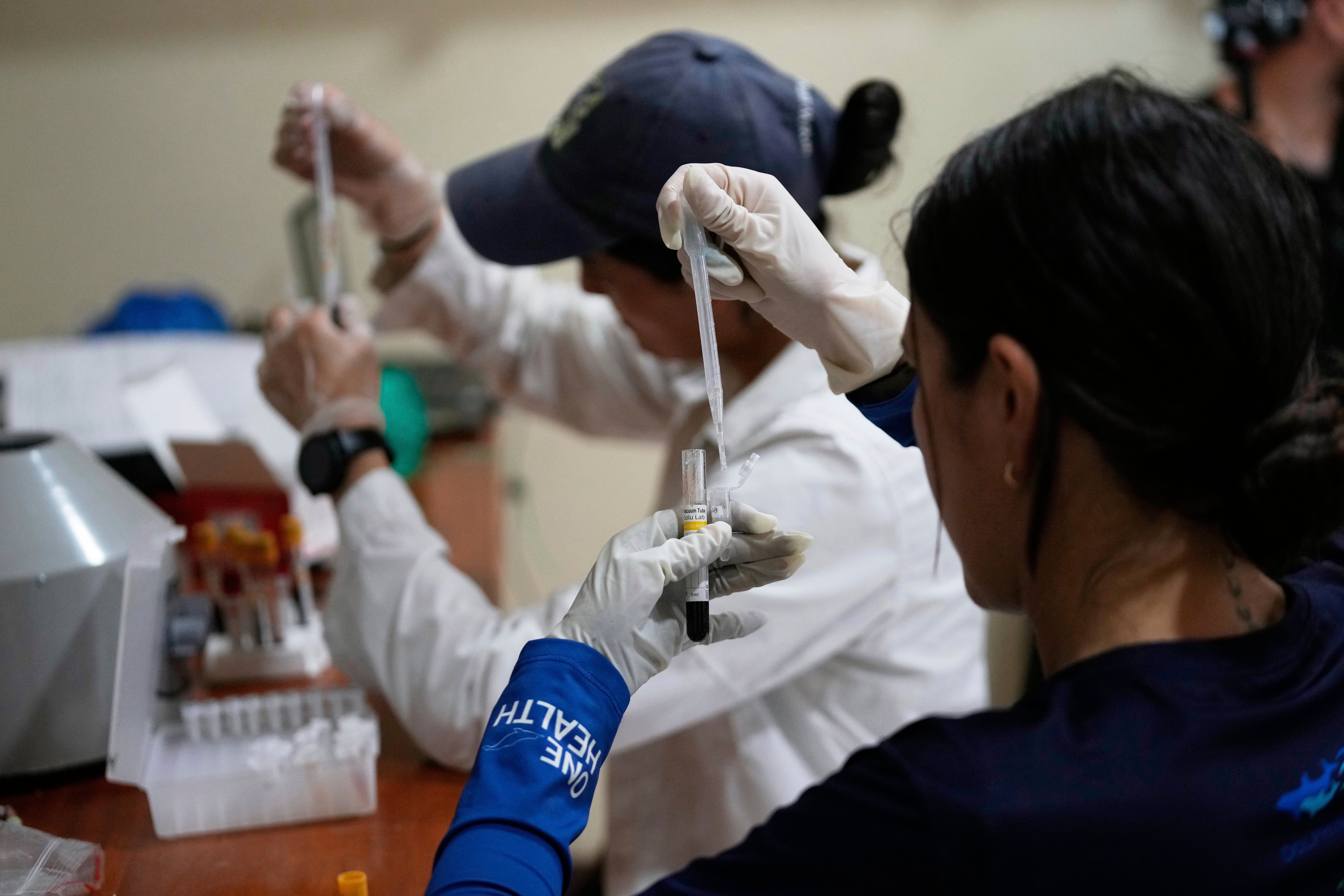
Even traditional blood tests done in a clinic have limitations. These tests require immediate processing (or refrigeration) and careful handling to avoid influencing biomarker levels. This makes traditional blood tests impractical for large-scale, population-level screening – particularly in underserved or rural regions.
By contrast, the finger-prick test we’re developing can be done at home and posted to a lab without refrigeration.
What are we working on in the lab?
Our lab is currently working to improve the sensitivity, reliability and real-world usability of these finger-prick tests.
We’re currently experimenting with different, sensitive biomarker detection methods – using just tiny volumes of blood collected from either the finger or the vein and seeing how these compare.
Alongside tau and amyloid, we’re also testing other proteins associated with Alzheimer’s and various neurodegenerative disorders – such as Parkinson’s disease and multiple sclerosis.
Our hope with these tests is not only to identify Alzheimer’s disease, but to catch it before irreversible brain damage occurs. This would open a window for early intervention.
With novel therapies emerging that may slow the disease, early identification is critical.
What challenges have we encountered?
Designing these tests hasn’t been straightforward. We’ve encountered a few major hurdles along the way.
The first hurdle we encountered had to do with the biomarkers themselves.
Alzheimer’s biomarker levels are often much lower in the blood than they are in cerebrospinal fluid. So the technological methods needed to measure them accurately had to be very sensitive.
Another obstacle we encountered related to sample quality. Without refrigeration, the proteins can degrade – giving inaccurate readings and potentially misdiagnoses. So we’re currently working to develop collection and mailing methods that ensure these dried blood proteins are stable and don’t degrade before testing.
Data interpretation has also been a challenge. Although these tests are accurate for the majority of cases, we still need to figure out how to interpret outliers – such as participants who have high biomarker levels without other signs of the disease, and those who have low biomarker levels with significant signs of the disease. So even when we detect elevated biomarkers, interpreting what that means for a person’s Alzheimer’s risk is complex.
Alzheimer’s biomarkers are also not exclusive to the disease. Similar biomarkers can occur in other neurological conditions such as vascular dementia, multiple sclerosis, and even in otherwise asymptomatic people or even healthy newborns.
About the authors
Eleftheria Kodosaki is a Research Fellow in Neuroimmunology at UCL. Sophie Hicks is a PhD Candidate in Neurodegeneration & Neuroinflammation at UCL. This article is republished from The Conversation under a Creative Commons license. Read the original article.
We’ve since refined our tests so they’re more sensitive and have sourced and are currently comparing devices that make at-home sample collection easier. These solutions are steadily improving test reliability.
What could our work mean for Alzheimer’s diagnosis?
It’s important to emphasise that these tests are still at least a few years away from routine use. But, if validated, finger-prick tests could revolutionise Alzheimer’s diagnosis in several ways.
It would allow for earlier detection of the disease and broaden access for patients. It would also enable larger, more diverse population studies to be conducted – reducing historical gaps in Alzheimer’s research and improving our understanding of the disease globally.
The idea of diagnosing Alzheimer’s with a quick, finger-prick test marks a profound shift in how we could approach neurodegenerative diseases. Moving beyond invasive, costly procedures toward accessible, patient-friendly diagnostics carries enormous potential — for patients, their families and future research.
Join our commenting forum
Join thought-provoking conversations, follow other Independent readers and see their replies
Comments
Bookmark popover
Removed from bookmarks