Mum diagnosed with aggressive cancer after symptoms dismissed as mattress pain
Gabrielle Altoft began experiencing discomfort after swapping mattresses with her son
A mother who attributed her severe lower back pain to an old mattress was left devastated by a diagnosis of aggressive leukaemia.
Gabrielle Altoft, 32, began experiencing "horrendous" discomfort in November 2025 after swapping mattresses with her son.
Also suffering extreme tiredness and shortness of breath, she initially dismissed the symptoms as merely due to the well-worn memory foam.
“Because we'd had the mattress for a little while, I just presumed it was no good for me,” the King’s Lynn, Norfolk woman said.
“It was a memory foam one and I just presumed that it was a bit pants.
“I said to my partner ‘we need to get a new mattress’ because I was really struggling.”

After painkillers failed to help ease the pain, the mum-of-three claimed she visited her GP, who dismissed the pain as an injury and said they would refer her for physio.
Despite blood tests, Ms Altoft claimed doctors failed to pick up on any abnormalities when her white blood cell count came back low.
The paralegal decided to purchase a replacement mattress – but said the pain continued to worsen to the point where she was unable to walk the dog.
“I can remember starting the walk feeling perfectly fine, and then by the time I got back I was doubled over, I couldn't move.”
Ms Altoft returned to her GP at the end of November with what she thought was the superflu.

“I spent five days in bed sleeping for about six hours a day,” she said.
“I went into the GP and sobbed and said ‘I'd never been unwell like this’.
“They told me it was viral.”
Finally, after returning to the doctor for a separate gynaecology appointment, Ms Altoft was referred for further blood tests on 16 December 2025.
The following day, she was asked to attend A&E urgently, where a doctor gave her the devastating diagnosis of acute myeloid leukaemia, an aggressive type of blood cancer.
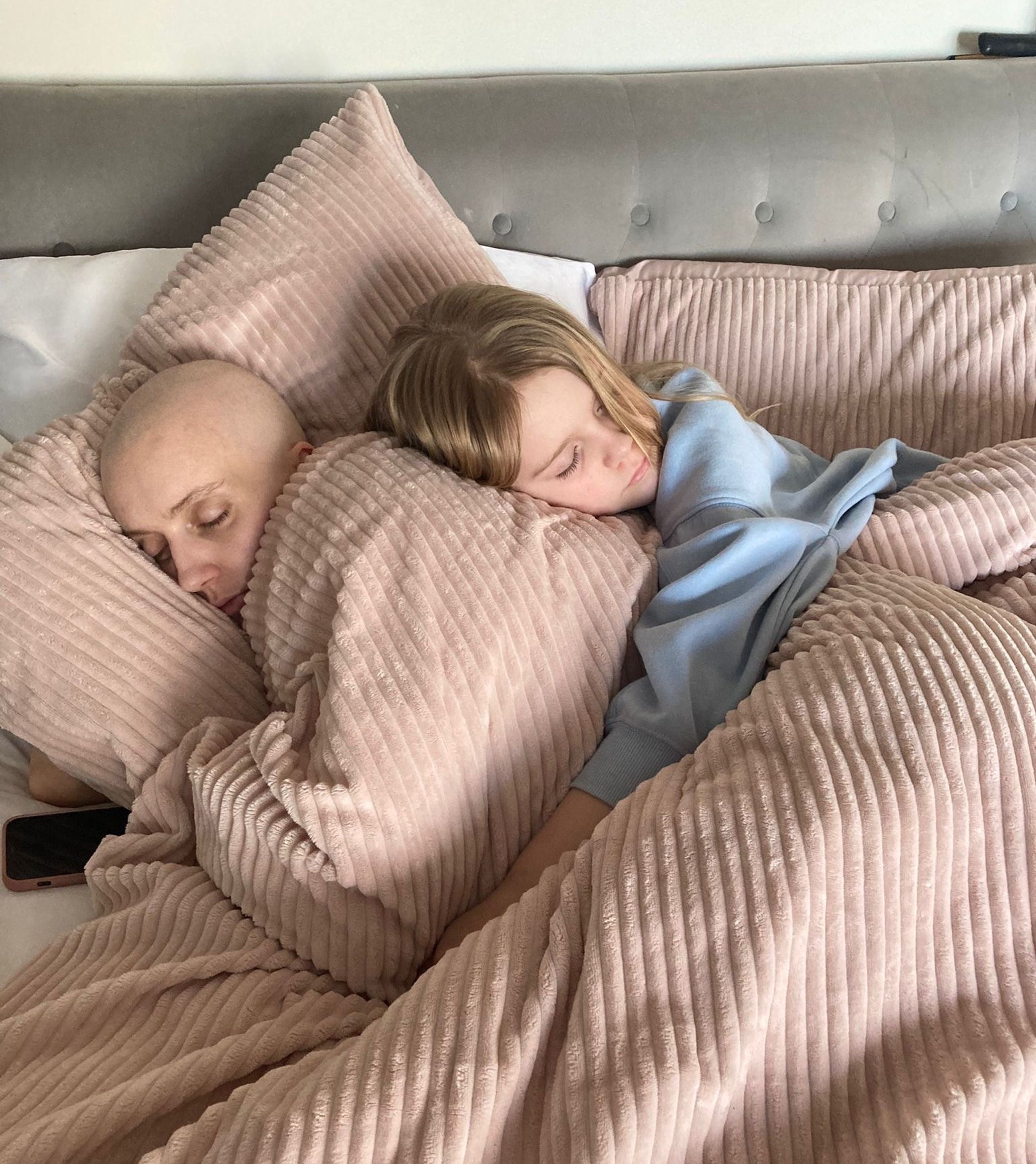
“I was weirdly accepting [when I received the diagnosis] because I'd been so poorly I knew that something was wrong,” she said.
“I thought I was going to die because of how ill I felt.
“I went home and it was really strange – it was all really surreal, I pretended that nothing had happened in front of the children. It was really tough.”
Ms Altoft started receiving intensive chemotherapy treatment on 28 December 2025 and said she will undergo a minimum of two rounds.
Acute myeloid leukaemia
Leukaemia is cancer of the white blood cells. The NHS website explains that acute leukaemia means it progresses quickly and aggressively, and usually requires immediate treatment.
According to the NHS, symptoms usually develop over a few weeks and become worse over time. These include tiredness, breathlessness, frequent infections and unusual and frequent bruising or bleeding.
The NHS website says that chemotherapy is the main treatment, however in some cases a bone marrow or stem cell transplant may also be required.
The legal worker said she is “disappointed” that it took her so long to be diagnosed and is urging other people to push for answers if they are unwell.
“I knew if someone had taken the time to look through all of my blood results [at the start of November] it would have been very apparent that something wasn't normal for me.
“Just push and push [if you feel like something is wrong], you know your body.
“Whether you're 32 or you're 18, your symptoms should be taken seriously.
“With AML, you don't have long to have those symptoms looked at before your organs shut down.”
Join our commenting forum
Join thought-provoking conversations, follow other Independent readers and see their replies
Comments
Bookmark popover
Removed from bookmarks