Why is Friday the 13th considered unlucky? The history of the scariest date
The superstition is widely believed to originate from the Last Supper
The first Friday the 13th of 2026 is due to arrive, a date synonymous with bad luck for the superstitious.
This year will bring a triple dose of misfortune, as the 13th day of the month will fall on a Friday in February, March and November.
The superstition is widely believed to originate from the Last Supper, where 13 people – Jesus Christ and his 12 disciples – gathered on Maundy Thursday, the night before his crucifixion by Roman soldiers on Good Friday. This links 13 to Judas Iscariot, Christ’s betrayer, and deems it imperfect compared to 12, representing the months in a year.
The union of day and date has also been traced back to King Philip IV of France arresting hundreds of Knights Templar on Friday 13 October 1307.
The Catholic crusaders were apprehended, under pressure from Pope Clement V, over allegations made by an excommunicated former member that new recruits to the order were being forced to spit on the cross, deny Christ and engage in homosexual acts during initiation ceremonies.
The claims, seemingly entirely without foundation, were a convenient pretext for Philip to persecute the wealthy order and waive debts he owed them following war with England.
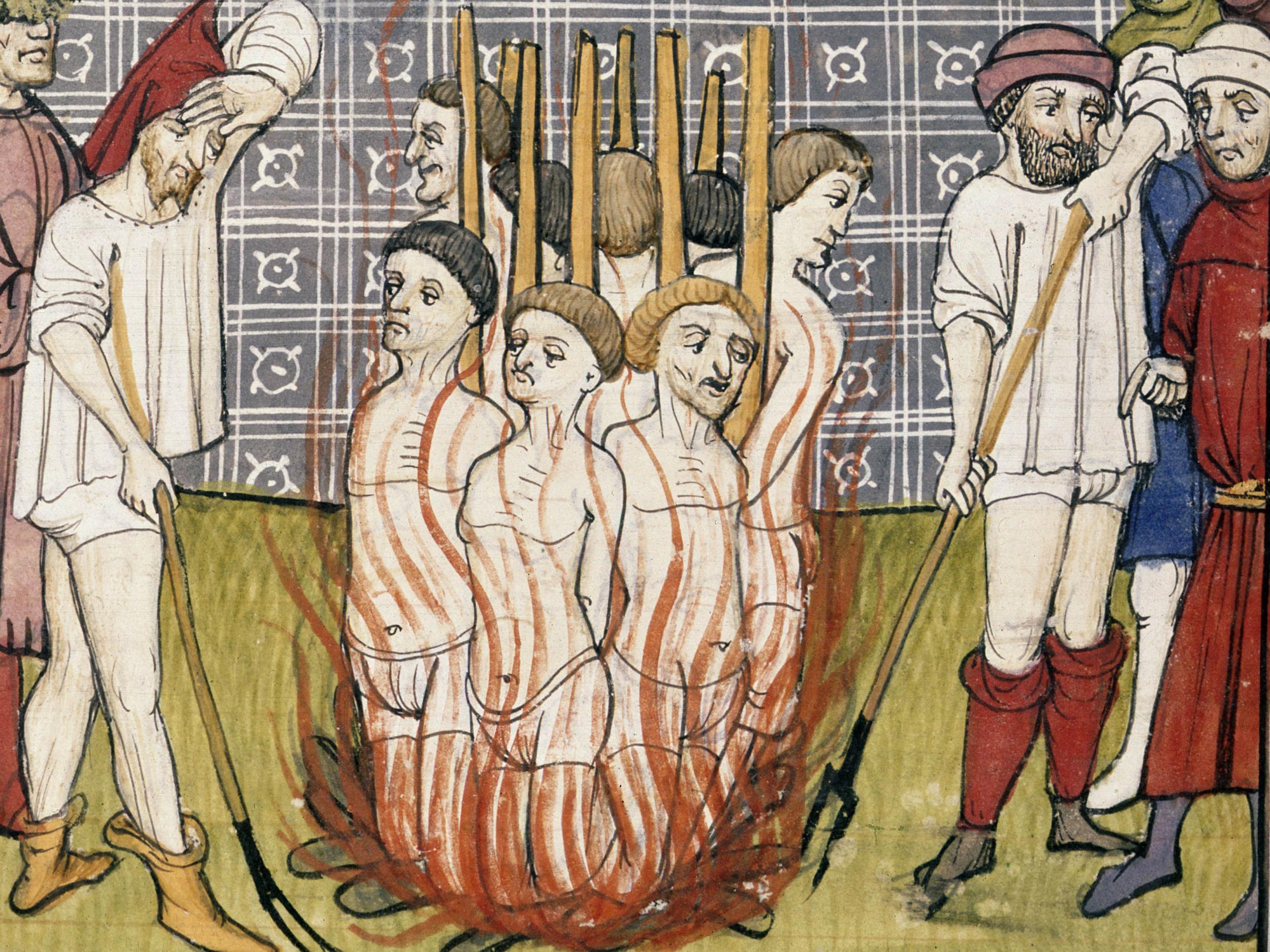
Charged with moral and financial corruption and worshipping false idols, often following confessions obtained under torture, many of the knights were later burnt at the stake in Paris.
The order’s Grand Master, Jacques de Molay, faced the flames in front of Notre Dame Cathedral and is said to have cried out a curse on those who persecuted its members: “God knows who is wrong and has sinned. Soon a calamity will occur to those who have condemned us to death.”
The events initiated by the holy warriors’ arrest, according to tradition, ensured every subsequent Friday the 13th meant bad luck to one and all, De Molay’s hex ringing out through the ages.
An irrational fear of the date is known as paraskevidekatriaphobia.
In Spanish-speaking countries and in Greece, it is Tuesday the 13th that frightens people. In Italy, it is Friday the 17th.
Other famous indicators of bad luck include a black cat crossing your path, breaking a mirror, walking under a ladder, opening an umbrella indoors and saying the name of Shakespeare’s “Scottish play” in a theatre.
Join our commenting forum
Join thought-provoking conversations, follow other Independent readers and see their replies
Comments
Bookmark popover
Removed from bookmarks