The secret to better home curries, according to the Curry Guy
From mastering the all-important base sauce to letting your slow cooker do the hard work, Dan Toombs – aka the Curry Guy – shares the simple techniques that make home-cooked curries taste richer, cheaper and far more like your favourite curry house
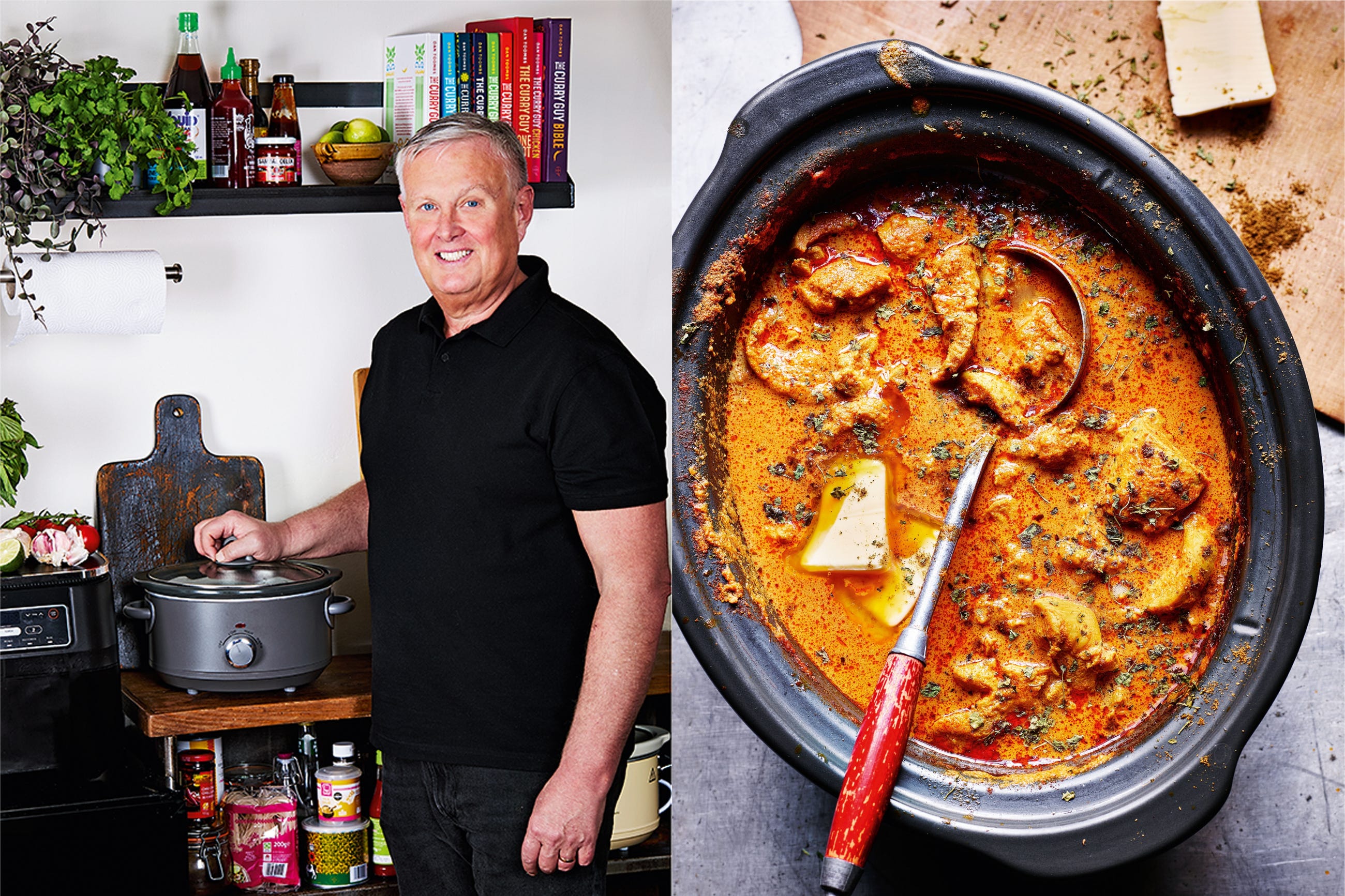
You really can’t go wrong with a curry. Warming, filling and tasty, they’re the perfect meal for this time of year. But you don’t have to spend all your money on a takeaway to have a delicious curry at home – just ask Dan Toombs, AKA the Curry Guy.
Toombs, 60, is obsessed with bringing curries to the masses and is releasing his 11th cookbook, The Curry Guy Slow Cooker.
After moving from California in 1993, Toombs fell in love with the British curry scene, later begging his way into restaurants to learn the secrets of the perfect dish. Now based near York, Toombs knows a thing or two about taking your curry to the next level.
Nail the base
The main thing Toombs learnt from his time in curry house kitchens? It’s all about the base.
“There’s a base sauce” for pretty much every curry that’s made, he says. “It’s quite a bland sauce, similar to chicken stock or vegetable stock.
“When it’s not seasoned, you have this bland stock that you add to almost every curry, and the magic happens when it hits the pan, because you have different spices to make the different curries.”
So if you get this base sauce down – and it’s “quite simple to make”, according to Toombs – you’re golden. “It’s the secret behind how to make real curry house-style foods. It’s not something they do very much in India, it’s really a British thing.”
This base sauce is basically “an onion stock – a lot of places will put other vegetables in it, like cabbage and green pepper, but nothing that has bite to it”, and from there you can create pretty much any curry you like.
Go off-piste

While recipes are a useful guide, Toombs warns against getting too hung up on them.
“A lot of people concentrate too much on the recipe rather than what they personally enjoy,” he explains. So if you like quite a saucy curry, add more stock when you’re cooking, or if you enjoy spice, pump up the chillies.
He recommends “trying things as you go, especially if you’re trying to teach yourself how to cook”, so you can “begin to know what the different spices taste like” and will know how to adjust your dish accordingly.
It’s all about trial and error: “You’ll get the idea behind it, and you can make up your own recipes once you know how to use that base sauce.”
Dig out your slow cooker
If you have a slow cooker, it could be the secret to more flavourful curries with a whole lot less effort.
“What you do get from a slow cooker is a more intense flavour, because you’re not trying to rush things,” Toombs says. “You’re letting all those ingredients melt together.”
Plus, it’s a lot easier than slaving over a hot stove. “The thing I like about slow cookers is you really can set them and forget them, so you can go to work and know there’s not going to be any kind of issues. You’re not going to burn anything to the bottom of the pan or anything like that.”
Toombs recommends trying his recipe for lamb nihari in the slow cooker. “It’s a northern Indian/Pakistani dish which is traditionally cooked over a low heat and simmered for about three or four hours, so it’s perfect for a slow cooker,” he explains.
“You can put it in a slow cooker on high for about four hours, or if you go to work and put the meat in there – which is normally lamb shanks – just let it become really tender for eight hours [on the low setting].”
There’s another benefit to trying your next curry in the slow cooker, with Toombs saying it transforms some of the cheaper cuts of meat into the best dishes, saving you a bit of money along the way.
“A lot of times, the cheap cuts have the most flavour – the reason why they’re cheap is because they take so long to cook. But if you’re putting it in the slow cooker, it doesn’t make any difference. You let it sit there and simmer until it’s cooked through and really tender, and you get a better flavoured meat and it’s a lot less expensive.”
Prep your own spice blends and pastes

Toombs’ top tip is to make your own spice blends and pastes at home. While it might require a bit of labour to start with, once you’ve got them sorted, you’ll be able to make the most delicious curries – saving you time and money.
Toombs suggests that ground spices that have been sitting on the supermarket shelf for a while might not be “their best”. So if you buy fresh, whole spices, “You can toast them, you can make them taste better than just adding them in their ground form… It’s something you can just throw into a curry and you know it’s going to taste good.”
The same goes for spice pastes – and Toombs has recipes for Rogan Josh and tikka masala pastes and more in his new book. Once you’ve whipped them up, he recommends storing them in a preserve jar with an airtight lid, topping them up with oil so the flavour stays fresh.
“Spices, once they’re ground, start to lose their flavour. But by making these pastes and covering them with oil, you’re giving them a longer life,” he says. “I use them all the time.”
Try something new
From a jalfrezi to a Madras, there are the classic curries we all know and love. But if you really want to take things up a notch, Toombs recommends trying something new – like his recipe for a Sri Lankan black chicken curry.
“Unlike in India, where they don’t really use curry powders that much – they’ll use different spices, like garam masala. But in Sri Lanka, they use curry powders quite a lot,” he says.
“Curry powder is a lot of warming spices that can also have chillies in it… And the black chicken curry is one I learnt when I was over in Sri Lanka, it’s one of my favourites. You roast the curry powder until it’s almost black – it’s like chocolatey brown, and that gives it a really intense flavour. I haven’t seen it in any other curries from other parts of the world, it’s something very Sri Lankan, and if you’re looking for something unique, that’s what you have to try.”
Butter chicken
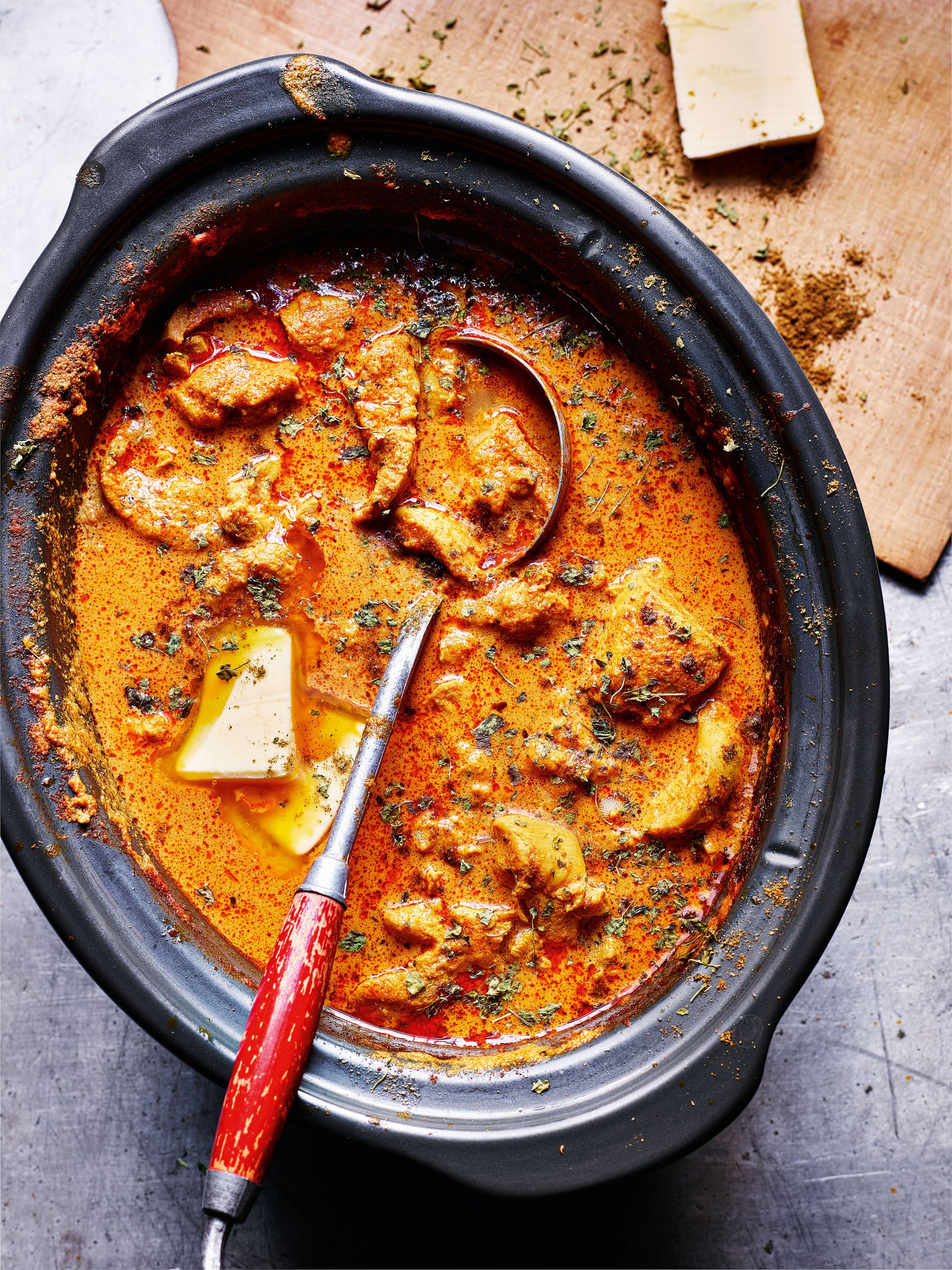
“Butter chicken is usually made with grilled tandoori chicken, and the creamy yogurt marinade is mixed with cream to make the sauce,” says Toombs. “This version is quite a lot easier but you still get a very good, if perhaps less authentic, butter chicken.”
For this recipe, you can make your own spice blends and pastes, or use store-bought if that’s easier.
Serves: 4
Ingredients:
1kg chicken thighs, skinned and cut into small pieces
For the marinade:
Juice of 1 large lemon
2 tbsp rapeseed oil
1 level tsp sea salt
1 tbsp garlic and ginger paste
1 tbsp Kashmiri chilli powder
1 tsp ground cumin
1 tsp ground coriander
½ tsp ground turmeric
1 generous tsp tandoori masala
For the sauce:
15 raw cashews, soaked in water for 15 minutes
250ml passata
2 tbsp ghee or rapeseed oil
2 medium red onions, blended with 2 tbsp water if needed
2 tbsp garlic and ginger paste
1 tsp Kashmiri chilli powder or paprika
1 tsp ground cumin
1 tsp ground coriander
½ tsp sugar, or to taste
100g butter
200ml double cream, whisked
1 tbsp kasoori methi (dried fenugreek leaves)
½ tsp garam masala
Sea salt, to taste
For the garam masala (makes 170g):
6 tbsp coriander seeds
6 tbsp cumin seeds
5 tsp black peppercorns
4 tbsp fennel seeds
3 tsp cloves
7.5cm real cinnamon stick
5 dried Indian bay leaves
20 green cardamom pods, lightly bruised
2 large pieces of mace
For the tandoori masala (makes 120g):
3 tbsp coriander seeds
3 tbsp cumin seeds
1 tbsp black mustard seeds
5cm real cinnamon stick
Small piece of mace
3 dried Indian bay leaves
1 tbsp ground ginger
2 tbsp garlic powder
2 tbsp dried onion powder
2 tbsp amchoor
1 tbsp (or more) red food colouring powder (optional)
For the garlic and ginger paste (makes about 250g):
150g garlic, roughly chopped
150g root ginger, peeled and roughly chopped
Method:
1. For the garam masala: Roast all the spices in a dry frying pan over a medium-high heat until warm to the touch and fragrant, moving them around in the pan as they roast and being careful not to burn them. If they begin to smoke, take them off the heat immediately. Tip the warm spices onto a plate and leave to cool, then grind to a fine powder in a spice grinder or pestle and mortar. Store in an airtight container in a cool, dark place and use within two months for optimal flavour.
2. For the tandoori masala: Roast the whole spices in a dry frying pan over a medium-high heat until warm to the touch and fragrant, moving them around in the pan as they roast and being careful not to burn them. If they begin to smoke, take them off the heat. Tip onto a plate to cool. Grind to a fine powder in a spice grinder or pestle and mortar, then tip into a bowl. Stir in the ground ginger, garlic powder, onion powder and amchoor. Stir in the red food colouring powder (if using). The masala will not look overly red like the commercial brands. Store in an airtight container in a cool, dark place and use as required, within two months for optimal flavour.
3. For the garlic and ginger paste: Place the garlic and ginger in a food processor or pestle and mortar and blend with just enough water to make a smooth paste. Some chefs finely chop their garlic and ginger instead, which is a good alternative to making a paste. Store in an airtight container in the fridge for up to three days and use as needed. If you’re planning a curry party, go ahead and get this job ticked off early. The paste can turn a bit blue or green while in the fridge. This is natural and it is not off. I often make larger batches and freeze it in ice cube trays. Once frozen, the cubes can be transferred to airtight plastic bags in the freezer, ready for when you get that curry craving. Be sure to let them defrost a little first.
4. For the butter chicken: Whisk all the marinade ingredients together in a large mixing bowl.
5. Add the chicken pieces and stir them in to coat. Allow to marinate for 30 minutes or up to four hours but no longer! Strain the soaked raw cashews and blend them with the passata for the sauce together until smooth. Set aside.
6. When ready to cook, heat the ghee or oil in your slow cooker using the sauté/searing mode or in a pan over a medium–high heat. When it begins to bubble lightly, remove as much of the marinade from the chicken as you can and retain all the marinade. Sauté the chicken in one layer for about five to seven minutes to lightly char the exterior. Transfer to a plate using a slotted spoon. The chicken will not be cooked through at this point.
7. Now stir in the blended onions and fry for about five minutes to cook out the raw flavour. Then stir in the garlic and ginger paste and fry for an additional minute. Stir in the chilli powder or paprika, cumin, ground coriander and sugar, then pour in the blended passata and cashews and bring to a simmer. Stir in the chicken and all the marinade. Bring back to a simmer.
8. In your slow cooker, put on the lid and cook for three hours on the high setting or six to eight hours on low until the chicken is cooked through.
9. Stir in the butter and let it melt into the sauce. Then add the whisked cream (you don’t have to add it all if you don’t want to).
10. Add the kasoori methi by rubbing it between your fingers over the sauce, then stir in the garam masala. Season with salt to taste just before serving.
Dal makhani
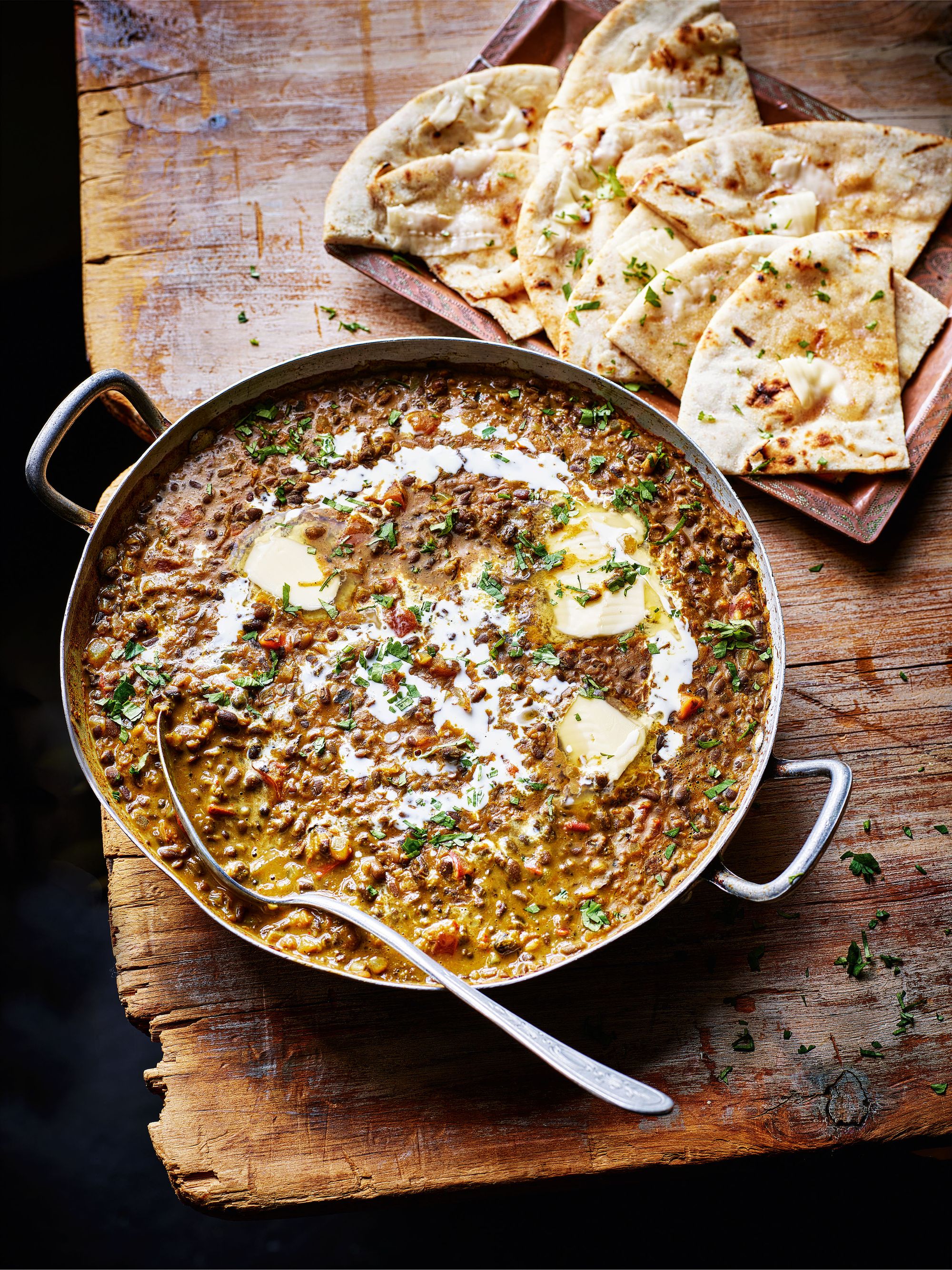
“Dal makhani isn’t a dal you can rush, as these lentils need a good long cook – so this recipe is perfect for the slow cooker,” says Toombs.
“In fact, I think they are better if you cook on low for eight to 10 hours rather than trying to speed things up by cooking on the high setting. So some forward planning might be a good idea. I usually soak the lentils all day on day one, then place them in the slow cooker overnight. Once they are cooked, this is a quick and easy dish.
“This version is quite a lot easier but you still get a very good, if perhaps less authentic, butter chicken.”
Serves: 4 or more as part of a multi-course meal
Ingredients:
300g black urad dal, soaked overnight in cold water
750ml boiling water, plus extra if needed
5 tbsp rapeseed oil
2 onions, finely chopped
2 tbsp garlic and ginger paste
2 tomatoes, diced
2 tsp Kashmiri chilli powder
1 tsp ground turmeric
1 tbsp garam masala
1 tsp paprika
250ml single cream
2 tsp sea salt, or to taste
3 tbsp butter, or to taste
4 tbsp chopped coriander leaves, to garnish
For the garam masala (makes 170g):
6 tbsp coriander seeds
6 tbsp cumin seeds
5 tsp black peppercorns
4 tbsp fennel seeds
3 tsp cloves
7.5cm real cinnamon stick
5 dried Indian bay leaves
20 green cardamom pods, lightly bruised
2 large pieces of mace
For the garlic and ginger paste (makes about 250g):
150g garlic, roughly chopped
150g root ginger, peeled and roughly chopped
Method:
1. For the garam masala: Roast all the spices in a dry frying pan over a medium-high heat until warm to the touch and fragrant, moving them around in the pan as they roast and being careful not to burn them. If they begin to smoke, take them off the heat immediately. Tip the warm spices onto a plate and leave to cool, then grind to a fine powder in a spice grinder or pestle and mortar. Store in an airtight container in a cool, dark place and use within two months for optimal flavour.
2. For the garlic and ginger paste: Place the garlic and ginger in a food processor or pestle and mortar and blend with just enough water to make a smooth paste. Some chefs finely chop their garlic and ginger instead, which is a good alternative to making a paste. Store in an airtight container in the fridge for up to three days and use as needed. If you’re planning a curry party, go ahead and get this job ticked off early. The paste can turn a bit blue or green while in the fridge. This is natural and it is not off. I often make larger batches and freeze it in ice cube trays. Once frozen, the cubes can be transferred to airtight plastic bags in the freezer, ready for when you get that curry craving. Be sure to let them defrost a little first.
3. For the dal makhani: For best results, rinse and then soak the urad lentils for eight hours. Rinsing is required but you could get away with not soaking them. It might just take longer for them to cook.
4. Place the lentils in your slow cooker, pour in the water and cook on low for eight hours. Sometime during the day, when it is convenient, heat the oil in a frying pan over a medium-high heat and add the chopped onions. Fry for 10 minutes, or until the onions are soft, translucent and lightly browned and then add the garlic and ginger paste and fry for a further minute. Turn off the heat and stir in the tomatoes, chilli powder, turmeric, garam masala and paprika. Stir for a minute into the hot oil, then set aside.
5. Check the lentils after eight hours to ensure they are fall-apart soft. If not, continue cooking. Once soft, mash them with a potato masher or blend using a stick blender.
6. Pour in the prepared onion and spice mixture. You want the dal makhani to be good and hot, so if serving later you could reheat it using the sauté/searing mode of your slow cooker or in a pot on your stove.
7. Just before serving, stir in most of the cream and season with salt to taste. Top with the butter, which will melt into the dal. I usually swirl a little cream on top at the end before garnishing with the chopped coriander.
Lamb niharil
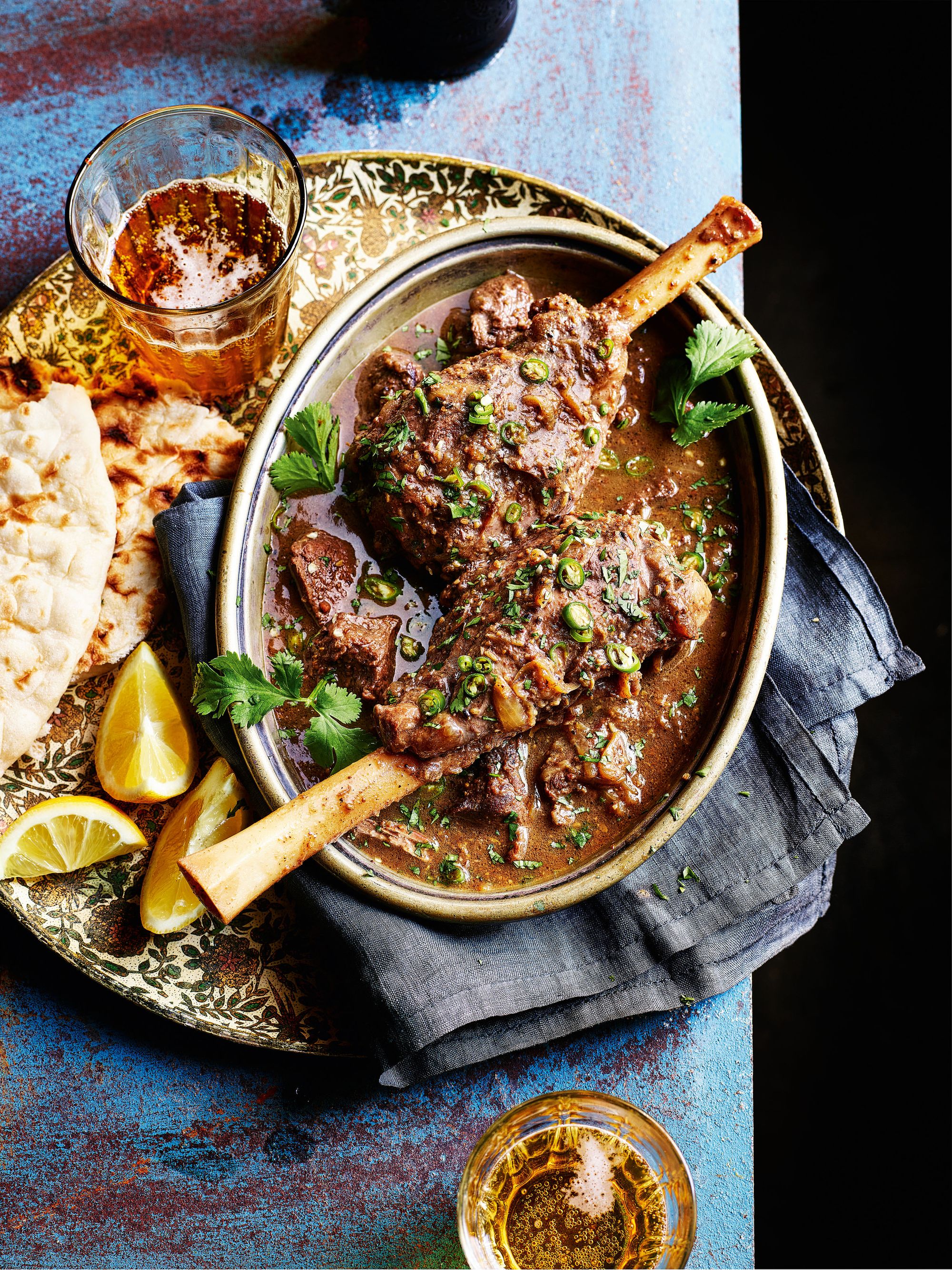
“You can choose the cuts of lamb you want to use for this recipe. Use only lamb shanks or perhaps go with shanks and some shoulder,” says Toombs.
“This is also good made with stewing beef, as it is seared before slow cooking. You will need about one kilogram of meat not including the bones, regardless of what you choose. This is a delicious curry that is served at the table with chopped coriander, lemon wedges, julienned ginger and chopped green chillies to taste.”
Serves: 4-6
Ingredients:
70ml rapeseed oil or ghee
2 onions, thinly sliced
2 tbsp garlic and ginger paste
2 lamb shanks and 500g lamb shoulder, cut into bite-sized pieces
½ tsp sea salt, plus extra to taste
For the spice blend:
1 whole nutmeg, crushed into small pieces
1 blade of mace
2 tbsp fennel seeds
3 Indian bay leaves, shredded
2.5cm real cinnamon stick or cassia bark, broken into small pieces
1 tsp black peppercorns
1 tsp nigella seeds
1 tsp cloves
2 tsp cumin seeds
1 tsp paprika
1 tsp hot chilli powder
1 tsp ground ginger
2 generous tbsp chapati flour (if you are gluten free, you can substitute 3-4 tbsp of cornflour)
To serve:
Rice, chapatis or rumali roti
5cm piece of root ginger, peeled and julienned
2-3 hot fresh green chillies, finely sliced
1 handful of coriander leaves
Lemon wedges
For the garlic and ginger paste (makes about 250g):
150g garlic, roughly chopped
150g root ginger, peeled and roughly chopped
Method:
1. For the garlic and ginger paste: Place the garlic and ginger in a food processor or pestle and mortar and blend with just enough water to make a smooth paste. Some chefs finely chop their garlic and ginger instead, which is a good alternative to making a paste. Store in an airtight container in the fridge for up to three days and use as needed. If you’re planning a curry party, go ahead and get this job ticked off early. The paste can turn a bit blue or green while in the fridge. This is natural and it is not off. I often make larger batches and freeze it in ice cube trays. Once frozen, the cubes can be transferred to airtight plastic bags in the freezer, ready for when you get that curry craving. Be sure to let them defrost a little first.
2. Place all the whole spices for the blend in a spice grinder and grind to a fine powder. There is no need to roast them first when making a nihari. Add the paprika, chilli powder, ginger and chapati flour and blend again to combine. Set aside.
3. Heat the oil or ghee in your slow cooker using the sauté/searing mode or in a pan over a medium–high heat and add the sliced onions. Fry for about eight minutes or until soft, brown and translucent.
4. Stir in the garlic and ginger paste and fry for another minute. Season the meat with the salt and add it to the pot. Stir regularly for about five minutes to brown the meat and then add the nihari spice blend. Stir well so the meat is completely coated with the spice blend and then add 500 millilitres of water.
5. Cover with the lid and set your slow cooker to the high setting for four hours or low for six to eight hours. Push the meat down as much as you can into the liquid. The meat will reduce in size as it cooks and there will be more gravy when finished, so don’t be tempted to add more liquid.
6. When the meat is fall-apart tender, lift the lid. If it is too watery, you can reduce it down using the sauté/searing function of your slow cooker with the lid off, or in a pan. The sauce should be quite thick thanks to the flour in the spice blend. Season with salt to taste and serve over rice or with chapatis or rumali roti. Serve with the ginger, green chillies, coriander leaves and lemon wedges, which can be added to taste at the table.
‘Curry Guy Slow Cooker’ by Dan Toombs (Quadrille, £16.99).
Join our commenting forum
Join thought-provoking conversations, follow other Independent readers and see their replies
Comments
Bookmark popover
Removed from bookmarks