Slow-cooked winter comfort: Beef shin, pork vindaloo and creamy chicken
When the cold sets in, slow-cooking is the only sensible response. Restaurateur-turned-butcher Richard H Turner serves up winter comfort in three parts: beef shin with marrow, pork neck vindaloo and creamy chicken with leeks and tarragon
Comfort food, for me, transcends the simple joy of eating; it’s about the way it fills the home with mouthwatering aromas. There’s something special about slow-cooking throughout the afternoon, allowing those rich scents to permeate the air while you go about your day, letting the flavours develop.
As the colder months settle in, we crave hearty dishes that bring warmth, be it a slow-cooked roast in a savoury sauce or a fragrant curry that warms you from the inside out. This style of cooking invites us to take a step back and embrace a slower pace, especially after the hustle and bustle of the festive season.
While we often gravitate towards beef, pork or lamb for that comforting, slow-cooked taste, let’s not overlook chicken in winter. A creamy dish featuring chicken, leeks, tarragon, and mustard proves that poultry can stand up to the chill just as well.
Braised shin of beef
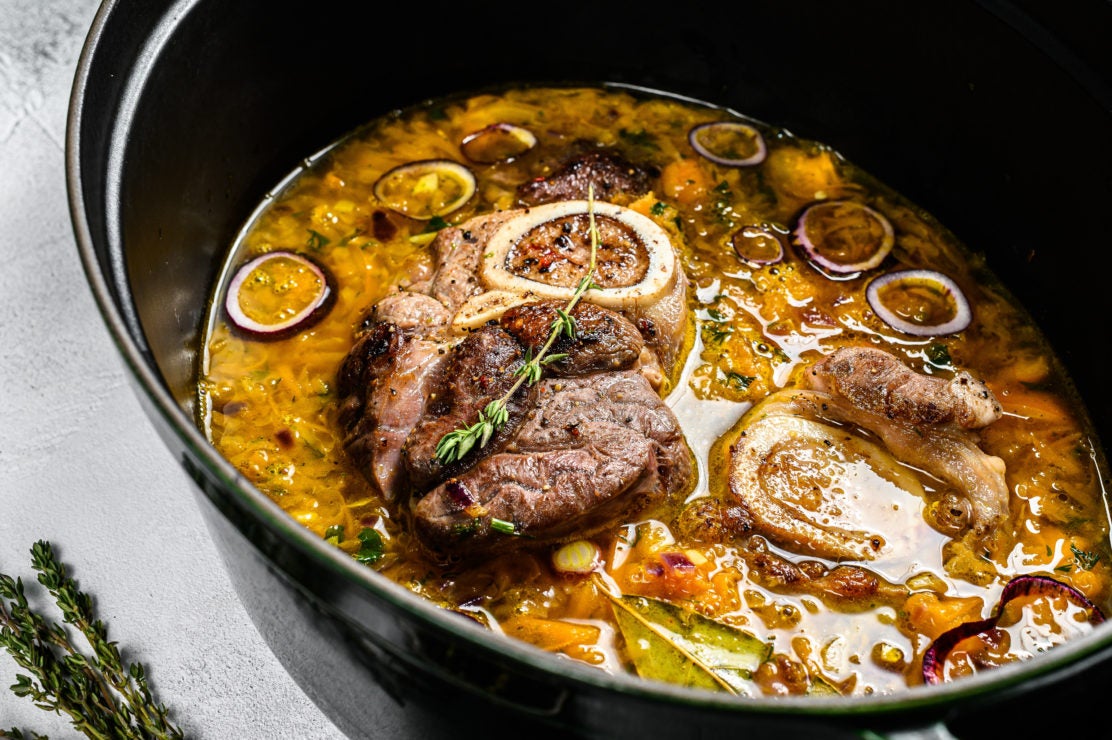
Approaches towards beef shin do have a tendency to hide or tuck it away. Quite often it is diced up for stews or pies and left unrecognisable, all flaked up in a mix of gravy and veg. Which is a shame because, as far as presentation goes, a slice of shin lying on a plate, all glistening and serene, looks very appetising indeed.
Especially if the attached bone is pointing skywards, showing off that soft marrow.
No doubt some hands are shooting up right now, desperate to note that dishes like osso buco do justice in this way and the following recipe does take reference from this famous dish from Milan. In fact, it’s based on Richard H Turner’s approach towards it in PRIME.
Except in this case, it is beef and not rose veal that is being used here. And rather than serve up with a traditional saffron risotto, we are suggesting plain ol’ buttery mash and greens to inspire you on a cold, winter’s day.
Keep it simple, in other words, and let the meat do the talking.
Serves: 4
Ingredients:
2kg bone-in beef shin (your butcher can slice into even portions for you)
2-3 tbs plain flour, seasoned with salt and pepper
75g beef dripping
1 onion, peeled and chopped
1 carrot, peeled and chopped
1 garlic bulb, halved
2 bay leaves
5 thyme stalks
400g tin chopped tomatoes
300ml white wine
300ml chicken stock
Maldon sea salt and fresh ground black pepper
Method:
1. Coat the beef shin slices in the seasoned flour and then melt the beef dripping in a large heavy-based pan until hot and brown the meat all over, until golden and crusted. Set aside on a plate.
2. Next add the onion, carrot and celery, plus a sprinkle of salt, and cook until soft. Add the garlic halves, bay and thyme and cook for a few minutes more.
3. Increase the heat and add the wine and chopped tomatoes to the pan. Return the meat and place on top of the vegetables and bubble until the wine has reduced by half. Pour in the stock and reduce to a simmer.
4. Reduce the heat to its lowest, cover and simmer for 2 hours, carefully turning the meat every 30 minutes or so, until it is tender enough to cut with a spoon.
5. Serve with buttered mash and greens.
Pork neck vindaloo

Pork neck is one of those cuts that butchers and chefs quietly treasure, and it was a bit of a wrestle to coax this recipe from the big man himself. But eventually, we did it. (It took about four of us.)
For distinction, the neck is actually taken from the shoulder of the pig and you might recognise it from the pork rib eyes we sell, so never let it be known that butchers can’t be creative with their cutting skills.
The bottom line is that the neck carries just the right amount of fat running through the muscle.
In turn, that marbling melts slowly as it cooks, keeping the meat succulent and full of flavour. It’s basically a cut built for long, gentle braises and curries, which makes it the perfect star of this vindaloo.
Rich, fiery and deeply aromatic, this pork vindaloo uses brining overnight to kickstart the tenderising and we encourage you to build a slow-cooked spice paste to deliver real depth. The big trick (hence the wrestling) is the addition of the trotter. Trotters are packed with collagen, and as they cook slowly, that collagen breaks down into natural gelatin. The result is a sauce that’s silkier, thicker and more luxurious without needing flour or starch to hold it together.
And there you go, the secret is out… finally!
Ingredients:
For the brine:
1.5 kg pork neck, cut into 6 cm chunks
1 pig’s trotter
1 litre coconut water
100ml coconut vinegar
50 g Maldon sea salt
For the curry:
1.5kg brined pork neck
50g coconut oil
30 cloves
3 sticks of cinnamon
1 tsp cumin seeds
½ tsp black peppercorns
12 red Kashmiri chillies, chopped
1 piece fresh turmeric, peeled and chopped
1 piece fresh ginger, peeled and chopped
2 heads garlic, peeled and chopped
6 onions, peeled and chopped
100ml coconut vinegar
250g tamarind paste
Salt to taste
Method:
1. Brine the pork neck and pig’s trotter in the coconut water, vinegar and salt, then refrigerate overnight. The next day, remove the pork from the brine – trotter too – and pat it all dry.
2. In a large pan or casserole, warm the coconut oil and lightly toast the cloves, cinnamon, cumin and peppercorns until fragrant. Add the chopped chillies, turmeric, ginger, garlic and onions, sweating them down until softened.
3. Stir in the salt, coconut vinegar and tamarind paste, cook out for a few minutes, then blend everything into a smooth paste.
4. Return the paste to the pan and add the brined pork. Bring to a simmer, cover tightly, lower the heat and cook gently for three hours, until the pork is tender and the sauce has thickened. Remove the pig’s trotter, strip the meat and skin from the bone, dice into 1 cm cubes and return it to the sauce.
5. Adjust seasoning, then cook for a final twenty minutes at 160C.
Serving suggestions:
A dish this bold deserves equally good sides. Serve your pork vindaloo with steamed basmati rice to soak up the sauce, or go heartier with fluffy naan or parathas for scooping. A cooling cucumber raita or plain yoghurt works beautifully to balance the heat, while a simple kachumber salad of onions, tomatoes and cucumber adds freshness and crunch. If you want to make it a feast, add a side of dal or some roasted spiced potatoes.
A note on shortcuts:
If sourcing all the spices feels daunting, there’s no shame in a shortcut. Two jars of Gymkhana Vindaloo Curry Sauce, which is available at Waitrose, can be swapped in for the curry paste.
It won’t be quite the same as making it from scratch, but it’s a fast and tasty alternative.
Chicken with leek, tarragon, mustard and cream
When the UK winter settles in – as it very much has – our thoughts naturally drift toward winter warmers. The sort of dishes that take their time. Deep, slow-cooked affairs traditionally associated with beef, pork and lamb: shin bubbling away for hours, shoulders surrendering gradually to heat, patience and a glass of something warming. They are the stalwarts of cold-weather cooking, built for short days, long nights and kitchens that feel like refuges from the chill outside.
But it’s worth pausing to consider chicken. Often overlooked in this low-and-slow conversation, it can more than hold its own when the temperature drops. It delivers comfort and richness in much the same way – the good news being that it doesn’t demand quite the same commitment as, say, a shin of beef that won’t even consider tenderness until half the day has passed. Chicken brings warmth, depth and generosity, just on a slightly more forgiving timetable.
In fact, the other day in the shop, right at the end of a shift, we found ourselves in a surprisingly profound discussion about chicken. As knives were put down and aprons untied, the conversation drifted toward what a fantastic product it really is – recipes, techniques, traditions and the sheer breadth of possibilities. And we came to the philosophical conclusion that, as an ingredient, chicken is quite simply boundless.
(Yes, butchers can be philosophical, you know.)
But do we shout about it enough? Not really. And so it came to pass, with a fist gently but firmly on the table, that we should sing a little louder about our free-range poultry – sourced from Adlington Farm in Warwickshire – particularly now, when winter has dug its heels in and looks in no hurry to leave the UK.
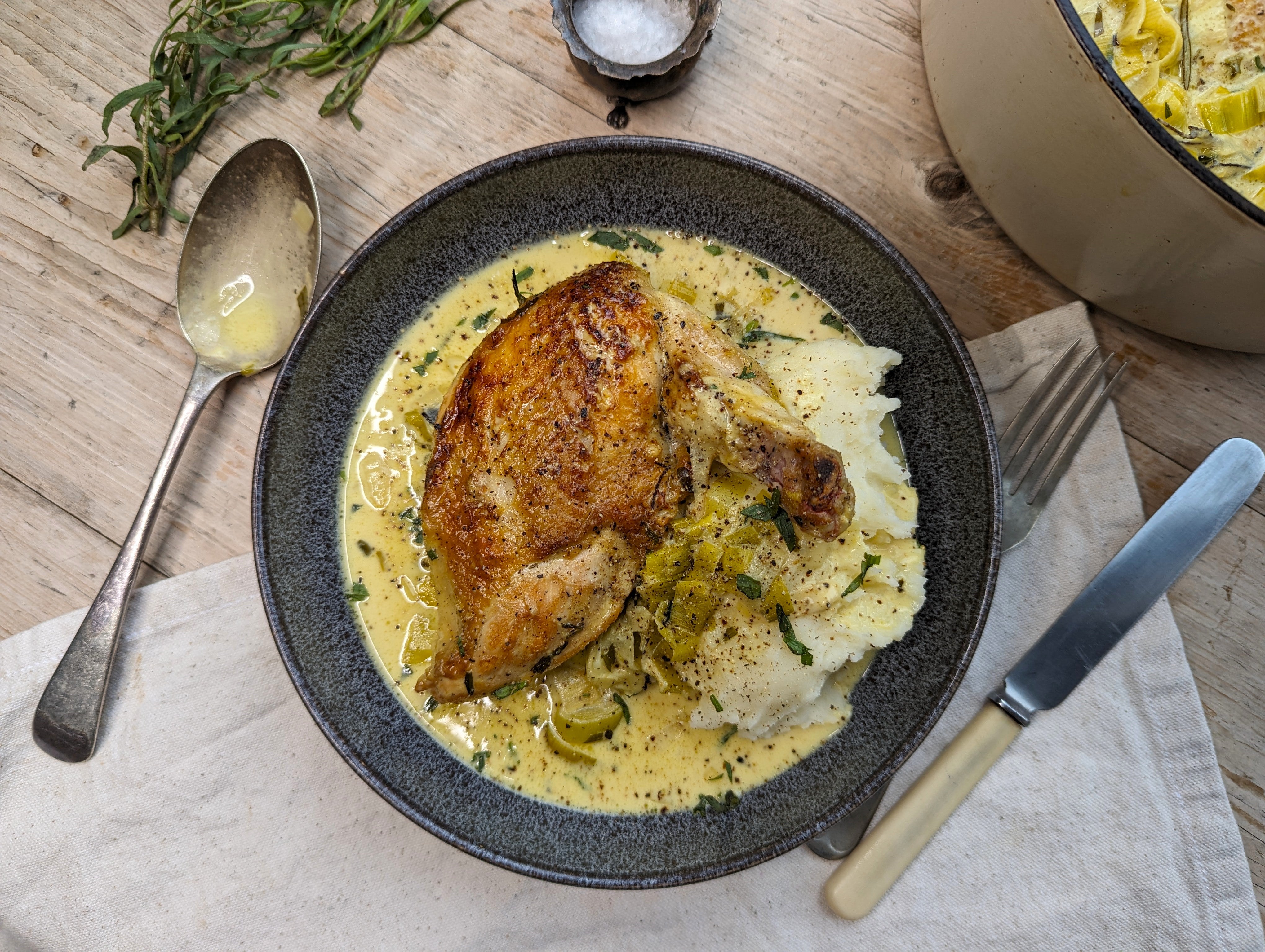
This is a proper cold-weather warmer: a comforting combination of leek, tarragon, mustard and cream. It delivers a rich kick at the start, reassurance all the way through, and finally that deep, satisfied sigh that only comes once something warming and generous has been safely tucked away in your belly, preferably while the rain lashes the windows.
Two chicken breasts and two chicken oyster legs will comfortably see four people through a bleak evening. But feel free to mix things up: breast only, perhaps, or thighs if that’s your preference. Better still, buy a whole chicken and break it down at home, if you’re feeling brave. The leftover meat will earn its keep in another meal (risotto, anyone?) and the bones will make a stock that feels like central heating in a saucepan.
Like we said, the possibilities are boundless.
Serves: 4
Ingredients:
2 chicken breasts
2 chicken oyster legs
25ml vegetable oil
2 sprigs rosemary
3 sprigs thyme
2 bay leaves
1 small bunch of tarragon
25g unsalted butter
3 large leeks, trimmed and sliced into rounds
500ml medium cider
300ml double cream
2 tbsp English mustard
Maldon sea salt and freshly ground black pepper
Method:
1. First, season the chicken pieces generously and place a large frying pan over the hob on a medium to high. Add the chicken breast and legs to pan, skin down and fry for 5 minutes to brown off
2. Turn everything over and add the thyme, rosemary and bay and cook off for another 3 minutes.
3. Take a casserole or pot and place that on the hob, over a medium heat and add the butter. Once it has melted, add the leeks and stir through for a good 10 minutes, until the leeks are nice and soft.
4. Chop up half the tarragon, stalks and all and add to the leeks, stirring through for another two minutes before adding the cider. Reduce by half and then add the cream, mustard and the chicken legs only at this stage.
5. Bring to a simmer and cook for 15 minutes and then add the chicken breast to the pot, to cook for another 15 minutes. Leave the pot uncovered, so that the sauce reduces and thickens.
6. The chicken will be done after this time but if you like the meat to be extra tender, simply cook for another 10 minutes.
7. Check for seasoning right at the end and serve with creamy mashed potato.
Recipes from www.turnerandgeorge.co.uk
Join our commenting forum
Join thought-provoking conversations, follow other Independent readers and see their replies
Comments
Bookmark popover
Removed from bookmarks