Beyond the hunger and the conflict - Gaza’s growing mental health crisis
When people think of conflict, rarely do we pause and consider the psychological distress and trauma they suffer, says Action Against Hunger country director Cobi Rietveld. On World Mental Health Day, it’s time that changed


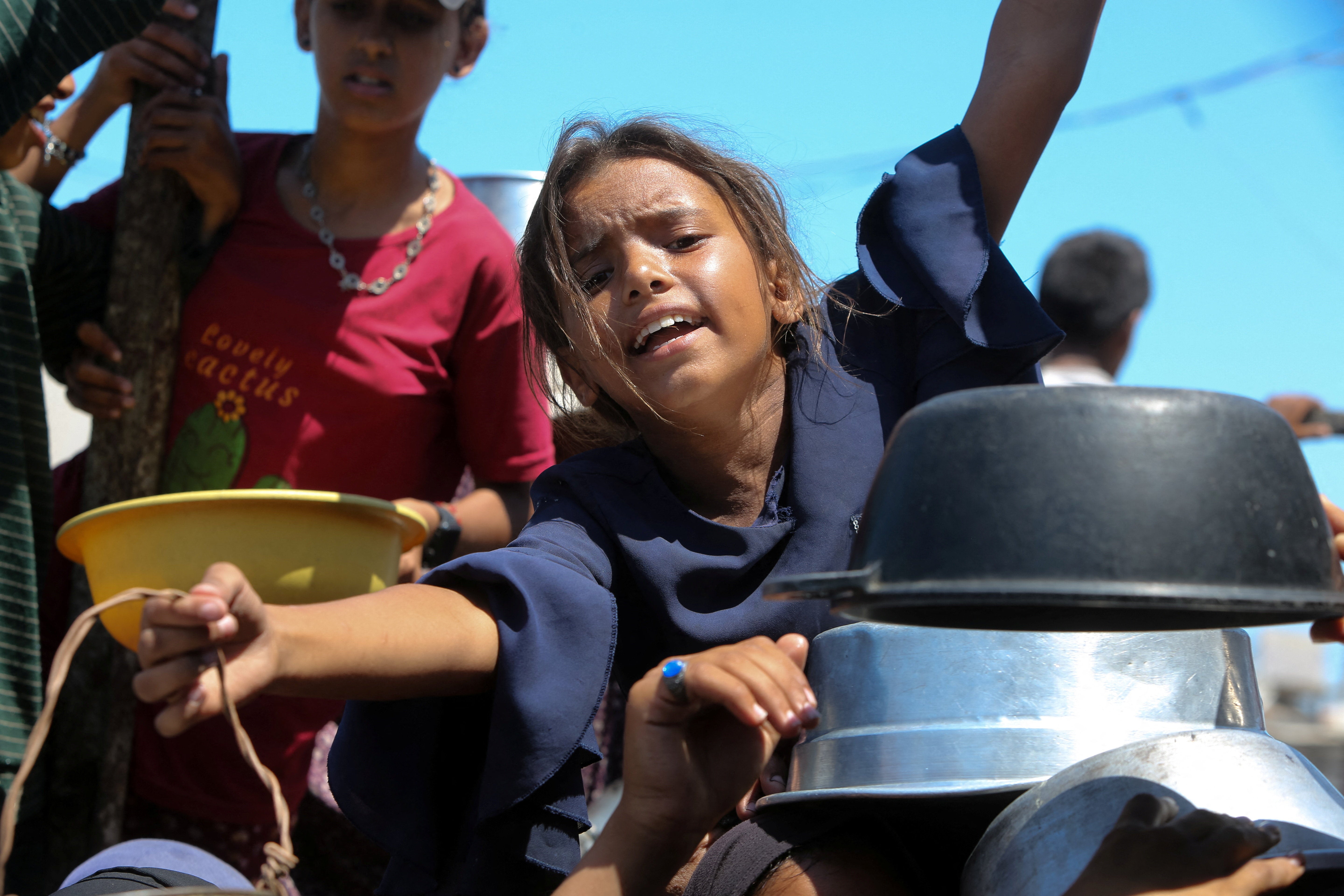
As we watch the heart-breaking scenes from Gaza—families constantly fleeing and searching for safety, children crying, homes and hospitals destroyed, no proper health care, and no food—I think about the people and the terrible things they have to endure. I wonder how it’s even possible to survive—not just physically, but mentally.
Conflict brings more than violence. It brings hunger, fear, and deep uncertainty. When people don’t know where their next meal will come from, or whether their home will still be standing tomorrow, the stress becomes overwhelming.
I started my career as a nurse, and I have seen how people carry the pain of war, displacement, loss, and hardship with them for years. Surviving is just the first step—but the struggle doesn’t end there. It continues long after survival, as people try to cope, process, and rebuild their lives. Trauma doesn’t fade quickly. It stays with people—in their bodies, in their minds, and in their daily lives. Even when the conflict ends, the suffering continues.
Gaza is not alone. Across the world, many communities live through similar pain—some in silence, some without the world watching. Afghanistan is one of them. I work in Afghanistan as country director for Action Against Hunger, and every day we witness the quiet suffering that rarely makes headlines.
When people think of Afghanistan, they picture war, hunger, displacement, and poverty. Imagine parents losing children to hunger or a simple infection, or a mother dying during childbirth because there is no access to health care. Imagine a family forced to return from Iran or Pakistan, only to find no home, no shelter, and nothing to eat. These aren’t dramatic headlines—they are daily realities for many Afghan families.
Beyond these visible and immediate challenges, there is another emergency—quieter but just as serious: a mental health crisis affecting millions of Afghans. People are not only surviving conflict and poverty—they are also carrying the heavy burden of daily life. The stress, uncertainty, and emotional pain often go unseen. Reports show that more than half of Afghans suffer from psychological distress, and nearly 70% show symptoms of depression.
Mental health is health. It is not separate from physical health, and it should not be treated as less important. Just like we respond to a broken bone or an infection, we must respond to emotional pain, stress, and trauma. Mental health is a basic part of the right to health.
In my work across the country, I see daily realities that push people to the edge—mothers who have lost multiple children to malnutrition, families still grieving loved ones lost to war, and young people with dreams of education but no opportunities. Mental health support is essential, but for most Afghans, it is out of reach. The same will be true for Gazans.
Health centres rarely offer psychological support, and even when they do, they are often far away. For many, walking two hours in mountainous areas to reach a health centre is not realistic—especially when the priority is finding food or income for the family. Sadly, with ongoing funding cuts, mental health services are often the first to disappear.
We need creative solutions to bring mental health support closer to communities. At Action Against Hunger, we run a national hotline where trained psychologists respond to up to 500 consultations a month. After an initial assessment, callers receive a tailored care plan across several sessions. The service is free and accessible—even for those in remote areas.
Recently we have been receiving many calls from Afghans recently deported from neighbouring countries—nearly three million this year. These are some of the hardest cases for our psychologists. Many arrive at the border after years away, with nothing and nowhere to go. One counsellor worked with a father who was suicidal after being deported from Iran with his eight children. He received 10,000 AFN (about $180 USD) in support, but had no shelter or family support. In deep distress, he shared plans to do great harm to himself and his family. Over 14 phone sessions, held as he moved from place to place, he began to manage his thoughts. Phone-based support offers a lifeline when everything else is uncertain.
Afghanistan faces a severe shortage of mental health services. In emergencies and catastrophes, access to mental health care is not optional—it is essential. It must be part of every humanitarian response and integrated into primary health care and community-based services that are culturally sensitive, locally driven, and accessible to all.
On World Mental Health Day, we must not look away from Afghanistan’s and Gaza’s silent crisis. With the right investment and scaled-up approaches, we can offer hope and stability to those who have endured unimaginable hardship.
If you are experiencing feelings of distress, or are struggling to cope, you can speak to the Samaritans, in confidence, on 116 123 (UK and ROI), email jo@samaritans.org, or visit the Samaritans website to find details of your nearest branch.
If you are based in the USA, and you or someone you know needs mental health assistance right now, call or text 988, or visit 988lifeline.org to access online chat from the 988 Suicide and Crisis Lifeline. This is a free, confidential crisis hotline that is available to everyone 24 hours a day, seven days a week.
If you are in another country, you can go to www.befrienders.org to find a helpline near you
Join our commenting forum
Join thought-provoking conversations, follow other Independent readers and see their replies
Comments
Bookmark popover
Removed from bookmarks