The Independent's journalism is supported by our readers. When you purchase through links on our site, we may earn commission.
‘My health was in a tailspin – until I divorced my husband of 26 years’
At 19, Ateh Jewel thought she’d found the love of her life. Then her health took a nosedive. She tells Emilie Lavinia the full story of her marriage, divorce, and the magic of bouncing back
While others might reminisce, you couldn’t pay Ateh Jewel enough money in the world to go back to being in her twenties. At 47, she’s more than happy to have the messy business of youth in the rearview. There was the pressure of trying to prove herself; the health issues that hit her like a truck as a consequence; and the really big, really hard battle of trying desperately to make her marriage work.
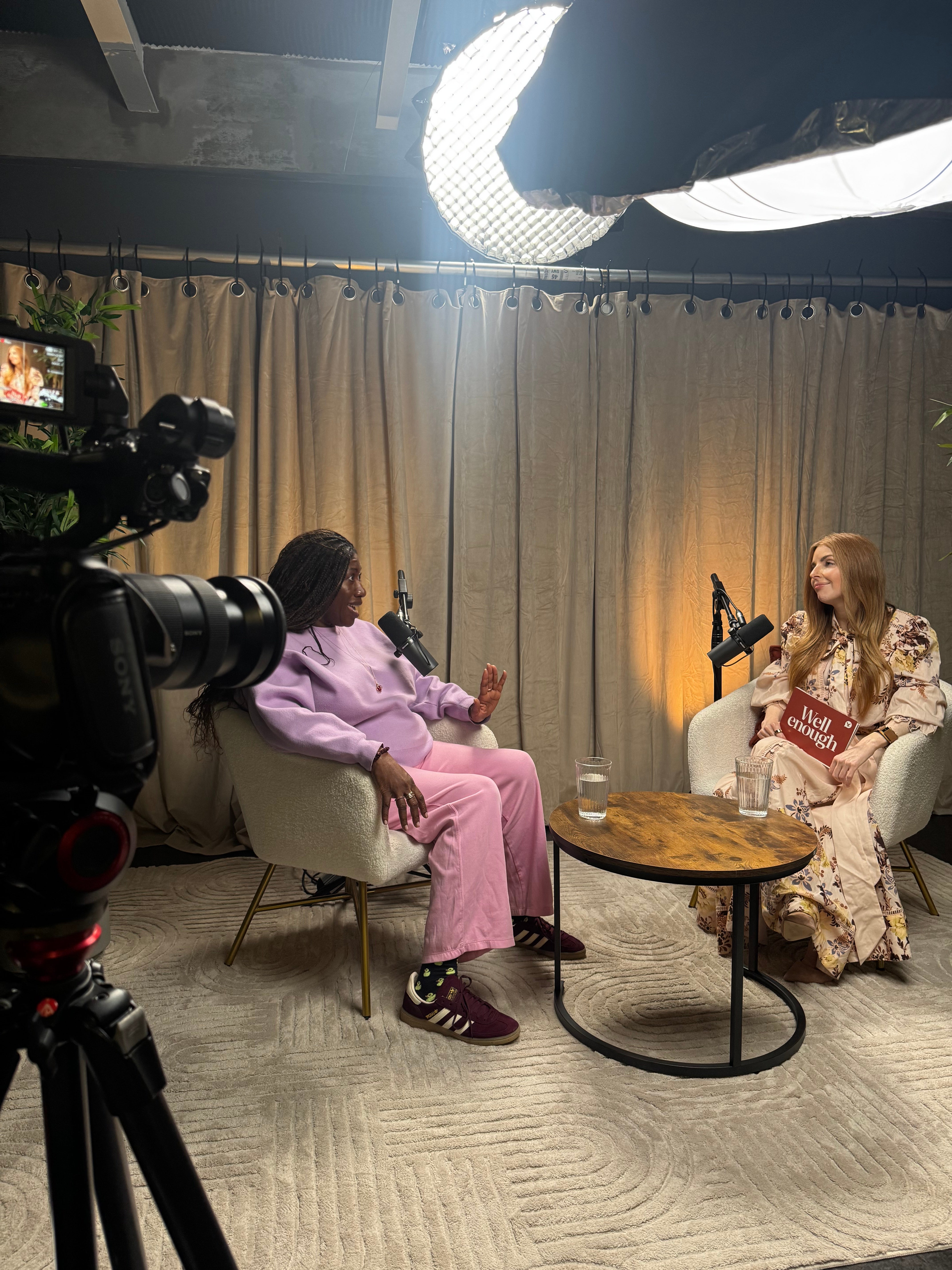
Now, over two years after calling it quits with her husband of 26 years, she beams with confidence and self-assurance while speaking to Emilie Lavinia on The Independent’s Well Enough podcast. “The lies we were fed about ageing, oh my god…” She rolls her eyes. “Honestly, the way the patriarchy makes it out, it’s as if you turn 40 and just float away to an island, never to be heard of or seen ever again.
“But I’m divorced, I’m single, I co-parent my two teenage daughters, and my forties have been my most fabulous decade. I’ve never been stronger, healthier, or more in love with myself. The woman I am now is just so delicious.”
Ateh married her first boyfriend at the age of 19. “We were in love, but I was so, so young,” she laments. He was clever, sweet, handsome, everything she could have dreamed. “I felt very picked. I felt like I got to be with the prince of white privilege.”
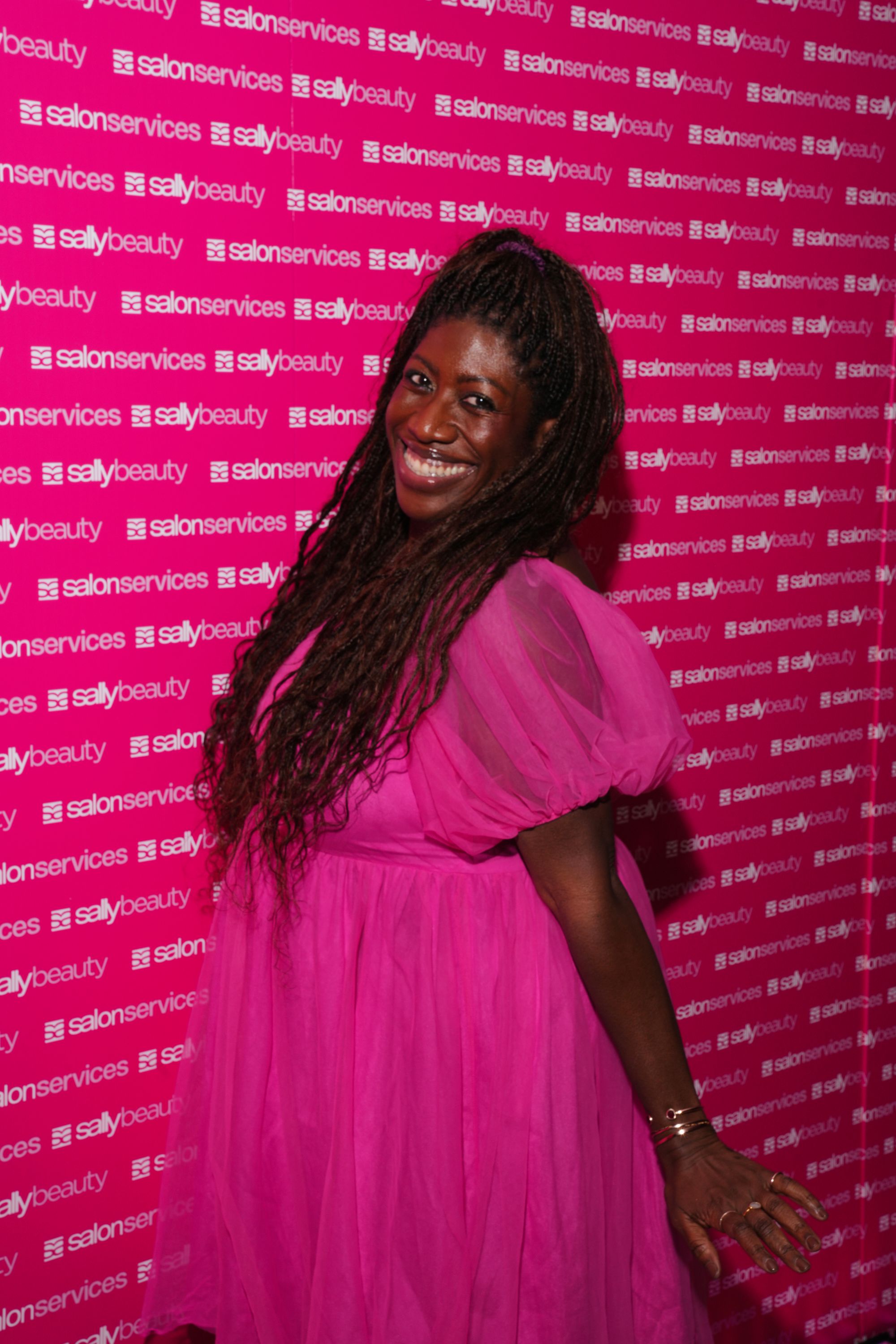
The beauty journalist recognises now that she should have ‘pulled the plug’ two or three years before she was brave enough to do so. Part of what kept her going was being a child of divorce herself. “I really wanted it to work, and so I tried really hard. I can put my hand on my heart and say to my kids and myself that I did everything I possibly could.”
Giving it her all came at a major cost: her physical health. While she felt very loved and happy in her life, she was ‘destructive’ with her body, she reflects. “I was in a total fury with the world, and as a result, I worked really hard. 18-hour days, like, 'I’ll show you!’ I mean, I had my twin babies, and I was back to work two weeks after giving birth. It was like, I love you, babies, but I’ve got to stop double breastfeeding now because I’ve got to crack on.
“When you’re very self-destructive in a productive way, you can achieve a lot, and I did. The world rewarded me with success, so it was hard to see that it wasn’t necessarily good for my health.” Two of the most extreme consequences were rapid weight gain – 11 stone – and the development of type II diabetes. Now, as an ambassador for Diabetes UK, she’s passionate about to raising awareness of the condition, and reducing the shame associated.
When Ateh’s health deteriorated, she had to make some extreme changes. When she explained to her then-husband that she wanted to escape the chaos of London and move to the countryside, his response was unenthusiastic, but it didn’t deter her. “I remember saying to him, if I don’t see a tree and some sheep, I will die.” Her terms were clear. I’m going to go do this. Come with me or don’t – but it’s happening.
“That was the beginning of the end. When I started to pick myself, the marriage disintegrated. But I’m so grateful I did. I would have had a stroke or a heart attack if I had stayed. I don’t say that lightly. I would have died.”
Her concern for her own well-being came up against long-held beliefs that the end of a marriage meant failure. Shame is the silent killer, she says, but the narrative is changing, evident from recent high-profile divorces. On his split from Angelina Jolie in 2003, Billy Bob Thornton said that it was ‘one of the greatest times of his life’. He was candid and straightforward about the reason for the end of their marriage: ”Our lifestyles were so different.”
For Ateh, refuge and comfort from the same were found through the women in her life. “One of my friends, Lizzie, who’s a grief counsellor, asked me: How is a 26-year relationship and two beautiful children a failure? And she’s right. We have the most beautiful girls in the world, and they were born of love and laughter and friendship. That really helped me to reframe it.”
Ateh did the inevitable, what she’d known she needed to (“I took a shotgun and I put the marriage out of its misery,”) on 1 July 2023. The aftermath was like a fever dream. “I was twirling, I was delirious, I was happy, I was crying, I was free, I was liberated. Before, I could not conceive of a life, of my identity, without this man in this marriage. But on the other side of that is such self-romance, and freedom, and joy.”
Even though Ateh is far better off for doing the big, hard thing, it wasn’t a painless process. The taboo remains, despite younger generations embracing divorce and separation with less stigma. “You lose friends. You lose family. I haven’t spoken to my in-laws in three years. It’s really sad.” Ateh says. “My attitude is more like, ‘let’s be French about it!’, but sometimes that’s not in your power.”
The reactions of the people around her were hard to come to terms with. She felt ostracised and misunderstood. “Everyone thinks you’re a sexual pariah. Like, I don’t want to have sex with your middle-aged, balding husband. You can still invite me to your dinner parties!”
The lifeline was her ‘true’ friends. She notes that processes like divorce reveal who you can really trust, rely on, and be your best self with. Assemble your war council, Ateh advises. You will lose people, she warns, but you also find out very quickly who your friends are. Either way, it’s good to prepare.
She recommends being strategic about the concrete stuff – like financials and childcare – and having a plan to stick to. Discipline and ritual ‘saved her’, Ateh notes, and this discipline can come from unlikely places. “My friend Laura told me to get an animal. I’d never had a pet before, but I followed her advice and got a kitten. She’s called Opal Caramel Jewel, and I love her. She's so sassy. The ritual of having to get up and feed her, when you’re going through a tough time, is so helpful, because you’re forced to keep going.”
Ultimately, Ateh’s message to anyone in a similar position, either before or after divorce, is to walk strong through the fire. “Burn it down, burn it down, burn it down. Start again. You will be okay. And even when you're not okay, you will be okay.”
Watch the full episode of Well Enough with Ateh Jewel here, or listen on Spotify and Apple Podcasts.
Join our commenting forum
Join thought-provoking conversations, follow other Independent readers and see their replies
Comments
Bookmark popover
Removed from bookmarks