PTSD and trauma drives history in places like Gaza - but there may be a fix
PTSD is a widespread injury that affects millions across the globe – none more so than those who are living in war zones, writes Sam Kiley, world affairs editor. On World Mental Health Day, he looks at the complex trauma suffered by those in places of conflict and how they could be helped in the future

It is difficult to explain to someone who has never suffered from post-traumatic stress disorder how demeaning and downright irritating it is that the injury has become so fashionable that it’s a turn of phrase. As in “that guy is such a creep, he’s given me PTSD” and “my office is toxic, I’ve got PTSD”.
You haven’t. The after-shocks might be real and painful, but they’re not the screaming terror that most genuine sufferers feel as they wander a world where no one can hear them, flayed of their skin. PTSD is a psychological injury that is carried by millions. And it is part of the shaping of history. It affects people now, and it’s passed down through generations through culture and genetics – so it drives the future, too.
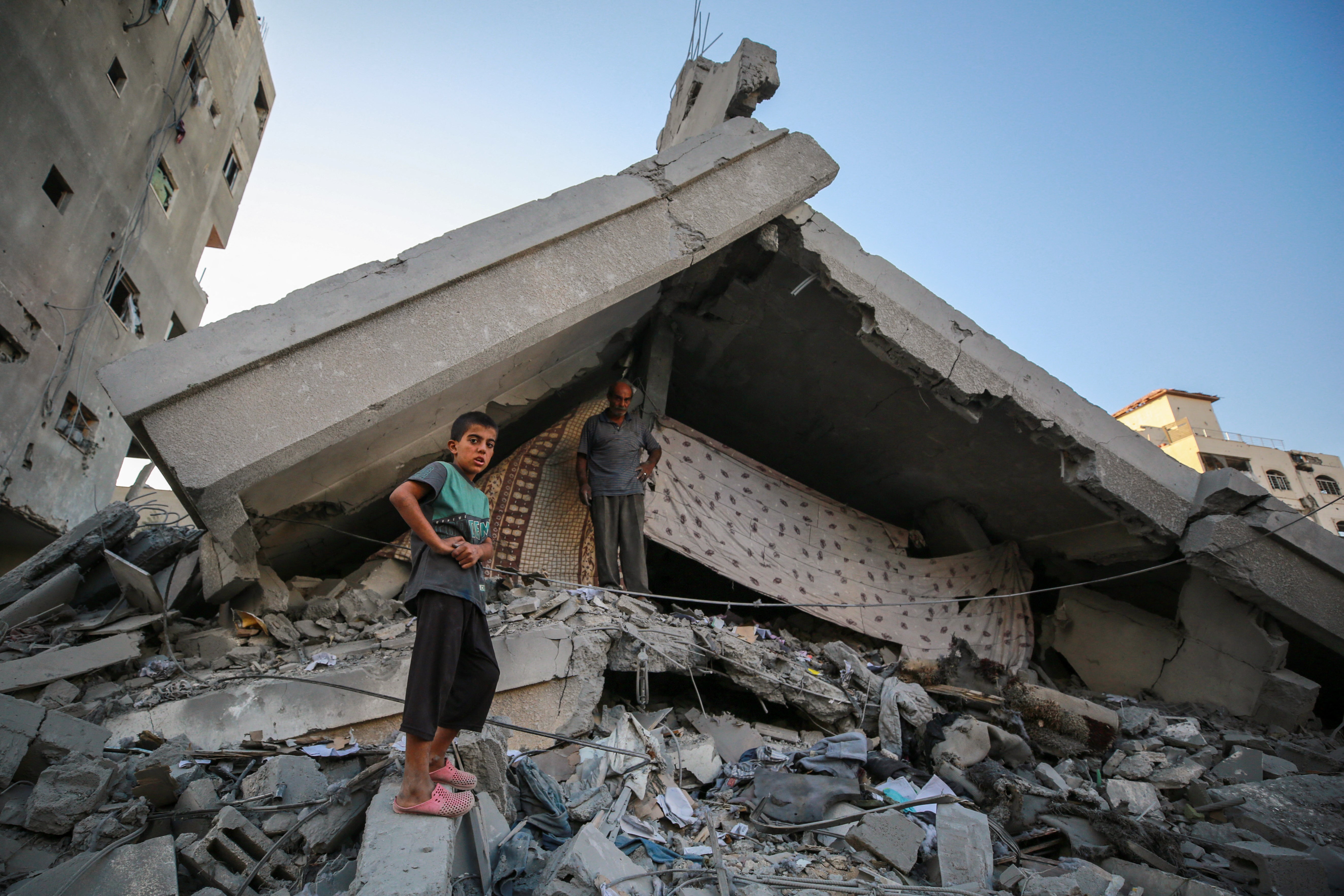
In Gaza, before the 2023 horrors, more than 50 per cent of children were assessed to have PTSD, according to The Lancet. More than 100 per cent of Gazans had also witnessed traumatic events – again, before 7 October 2023.
As the authors of a study in the 2023 journal Middle East Current Psychiatry said, “Palestinians will suffer for a long time from PTSD, which should be called Chronic Traumatic Stress Disorder (CTSD) rather than PTSD.”
Many survivors of the Hamas-led attacks that ignited the latest war in Gaza will suffer from this, too. And both people are defined historically, and to an extent psychologically, by their past traumas. For Jews, this includes the epigenetic and cultural echoes of the Holocaust. For Palestinians, the memories of the Naqba, the “catastrophe” of their displacement in the war of 1947-1949 and the effects of decades of often violent occupation and humiliation, have deepened the widespread wounding of an entire nation.
And it’s hard to stay rational when you’re carrying PTSD. Circuits in the limbic system, which control emotions and behaviour, have been fried. Simply put, the system that usually assesses danger is on the blink. First, the peanut-sized blobs near the centre of the brain called the amygdala are messed up. Their job is to control “fight or flight”. They also control how we read the faces of people, how we work out their intentions. They’re bigger in PTSD victims.
Meanwhile, the brain’s hard drive, the hippocampus, has shrunk. And the pre-frontal cortex, MRI scans have shown, is also reduced. This is a problem because that’s where people do their immediate, sensible thinking and put the signals from the amygdala and hippocampus into context.
A war veteran sees a cleaner with a broom in the corner of her eye in a restaurant. For a moment, they are troubled – but relax because their limbic circuit’s working. Their companion, a PTSD sufferer, sees the same, but the amygdala floods his body with adrenaline and cortisol, causing his blood pressure to shoot up and reality to be distorted.
The hippocampus reinforces the "fight for your life” message with memories of extreme trauma – the sufferer is then confronted not by a man with a broom, but by what he sees is a gunman. This can cause violence and rage. The front of his brain knows that this response is irrational, but context and caution are unheard amid the screams and spikes of the hormone ambush; he’s diving under the restaurant table.
People with PTSD endure a permanent state of hyper-vigilance, their every nerve jangling with every breath of wind. They watch every face for threat, seeing danger when it’s not there. Imagine being a car that’s driven only in first gear with a foot rammed onto the accelerator. The engine is screaming all the time. That’s life with CTSD and PTSD.
One in four British children will develop PTSD by the time they’re 18, according to a 2023 King’s College study. Some 80 per cent of British gang members have experienced three violent episodes over the previous five years, and 59 per cent of black men have friends or family who have endured significant trauma.
This affects judgement and causes suicide and depression at home. It does all that abroad and more – it drives what is happening now and what will happen tomorrow. Victims of chronic trauma disorder are prone to pass their trauma on through abuse, violence or self-harm. Especially in places like the Democratic Republic of the Congo, Israel and the Palestinian territories. A kill-or-be-killed mentality pervades these landscapes, infecting societies with the shadows of death.
Recent studies at Imperial and King's College and in American universities, however, have shown that there may well be a way to help fix PTSD. Used alongside psychotherapy, some PTSD patients no longer showed symptoms after treatment involving MDMA, ketamine, LSD and psilocybin. As chronic trauma disorders involve negative neural patterns (hypervigilance, fear and anxiety), neuroplasticity studies suggest that classic tryptamines (LSD, psilocybin) may help the brain “re-wire” or adapt more flexibly in response to therapy.
In 1991, a despairing special representative of the UN’s secretary general to Somalia, Mohamed Sahnoun, returned from the mayhem of the civil war in that country, where tens of thousands were starving and summoned two journalists who had spent time there in a desperate search for a solution.
Sahnoun was a veteran of the violent struggle for Algerian independence from France. “What can be done with Somalia,” he asked.
The author, Aidan Hartley, then a Reuters correspondent, replied, “blanket bomb the place with ecstasy – it'll make everyone love each other.”
“Bloody good idea,” was the diplomat’s reply.
He was being facetious. But since, controlled doses of MDMA and LSD and psilocybin have had promising results in the treatment of war veterans and other trauma victims, there’s growing evidence that it might have been more than a silly idea.
Join our commenting forum
Join thought-provoking conversations, follow other Independent readers and see their replies
Comments
Bookmark popover
Removed from bookmarks