The Independent's journalism is supported by our readers. When you purchase through links on our site, we may earn commission.
Cycle-syncing workouts: Should your period dictate your gym routine?
‘Cycle smart’ fitness classes are encouraging women to align their workouts with their menstrual cycle. Lydia Spencer-Elliott examines whether this popular trend is backed by science - or just hype.

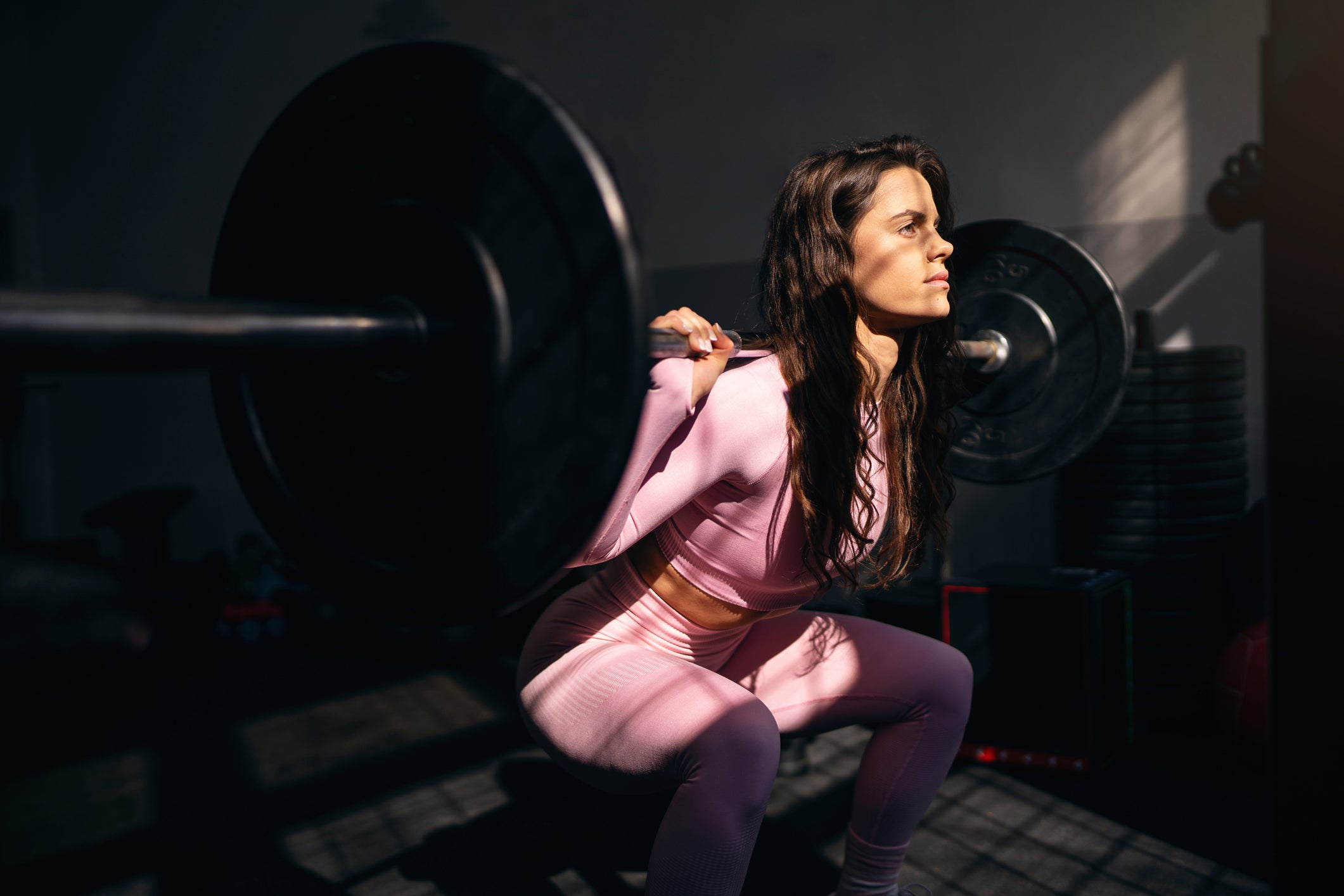
We’ve all been there: the days where your body is made of lead, your head has a heavy mental band clanging inside and your stomach cramps are trying to kill you. The last thing you want to do is pull on your lycra and hit the gym. During these hours of period hell, the sofa, a hot water bottle and a large pack of biscuits are much more appealing, thank you very much. Yet, gyms are trying to drag us back in, kicking and screaming at any stage of our cycle.
The “Bloody Good Workout” strength class at London-wide fitness club Gymbox offers three training stations designed to be adapted to different intensities depending on an attendee’s menstrual phase. “Luteal, follicular or somewhere in between, this class teaches you to lift in sync with your body, not in spite of it,” claims Gymbox. “Because strength is not about ignoring your cycle. It’s about working with it.”
Anyone who’s menstruated knows the inevitable chaos that can ensue in any given month. First there’s the menstrual phase, when your uterine lining exits your body and hands you the gift of cramps, bloating, fatigue, irritability, low mood and depleted energy. Then there’s the follicular phase, where your brain encourages your ovaries to mature eggs with an increase of oestrogen, ramping us back up to energetic, focused and motivated humans. Next we get ovulation as we release an egg, which can make you either confident, social and lively, or anxious and moody (great). And, finally, the luteal phase, where we get a calming bump of progesterone to support potential pregnancy, before both levels of this and oestrogen drop, premenstrual syndrome (PMS) hits, and we’re back to reduced energy and irritability again.
With this rollercoaster in mind, altering how heavy a weight you’re lifting day to day sounds like it makes sense. TikTok is awash with personal trainers advising women how to tailor their workouts to their cycles and many are taking matters into their own hands with period tracking apps like Clue, Hormona, Flo, Glow, Natural Cycles and Flo Living – with or without a specialist gym class to guide them. In 2020, a survey conducted by Women’s Health found that 87 per cent of their readers cycle sync. Studies have, of course, confirmed that hormone fluctuations have an impact on women’s bodies. Hormones are chemical messengers that work on every single cell throughout our bodies and organs, so, when the levels fluctuate, it can affect our muscles and brains.
Yet, beyond these peaks and troughs, there’s very little evidence that cycle syncing can improve the benefits of exercise. One research paper in the journal Sports Medicine found that exercise performance may be “trivially reduced” during the follicular phase. However, in 2023, the Journal of Physiology found that menstrual cycle phases had no impact on female participants' output in cycle trials compared to men.
Additionally, a separate paper published in Frontiers in Sport and Active Living found that it was “highly premature to conclude that short-term fluctuations in ovarian hormones appreciably influence acute exercise performance or long-term adaptations to resistance training. Thus, the development of RET [resistance exercise training] based on cyclical hormonal changes is not an evidence-based approach.” As the evidence currently stands, it’s seemingly all a load of nonsense.
GP and hormone expert Dr Louise Newson says that if women are routinely feeling awful because of their fluctuating hormones, this should be treated. We shouldn’t have to adapt our lives, or our exercise routines, to cope with exhaustion and pain. “If women are having to change their exercise routines because of their hormonal changes, they should be thinking about how to feel better,” says Newson. “We should all be able to exercise. We need to think about what’s causing it.”
Newson points to more severe conditions like Premenstrual Dysphoric Disorder (PMDD) - a hormone-related mood disorder that affects one in 20 of us - as potential reasons for women feeling unable to exercise. “They don’t want to go out, they feel very low in their mood, have reduced energy, reduced stamina, palpitations, dry skin, urinary tract symptoms. So yes, you could say don’t exercise on those days… But you wouldn’t say to a man for a few days a month, ‘oh, don’t do any weight training because your hormone levels have dropped.’”
Another common claim from social media nutritionists is that you can balance out your hormones with diet. While you can eat certain food groups (complete protein, healthy fats, complex carbs) to aid your body's production of certain hormones, you can’t give a helping hand to what’s not there. “We should all be looking at our nutrition, regardless of hormones,” explains Newson. “But you can’t eat hormones. If there’s a hormonal problem, then eating food is not going to replace them.”
“If hormonal changes consistently make exercise significantly harder, or lead to severe physical and emotional symptoms that impact daily life, it could indicate an underlying hormonal imbalance or condition requiring medical attention,” echoes Dr Zahra Damji, GP and Women’s Health Lead at Boots Online Doctor, who adds Polycystic Ovary Syndrome (PCOS), Endometriosis, thyroid disorders, or nutritional deficiencies (e.g. iron, Vitamin D) as possible causes of depleted exercise tolerance.
If a drop in progesterone levels causes women to feel considerable and repeated exhaustion or low mood, Newson recommends taking a capsule or pessary of the hormone to balance the levels back out. “The problem is people seem to be scared of hormones,” she says of the sparse recommendations for hormonal treatment on our health service as it stands. “If people find that their mood is changing before their periods, they’re often given antidepressants or they go on the contraceptive pill and that doesn’t always help.”
Yet, these are the two top treatments currently listed on the NHS website. If women are noticing low mood or exhaustion on the days before or during their periods, Newson recommends replacing hormones like progesterone or estradiol on the days where levels drop. “Try for a few cycles and see if it helps,” she says. “I see a lot of women in their twenties and they’re literally saying ‘It’s transformational. I feel amazing. The same every month. I didn’t know it was legal to feel like this.’”
So, back to the gym. “Every woman's cycle is unique, so a truly ‘cycle smart’ approach should encourage self-awareness and adaptation rather than a one-size-fits-all plan,” says Damji. “Ultimately, the most important science is your own body's feedback; if a class doesn't align with how you feel, it might not be optimal for your cycle,” she adds.
As you might have come to expect, you know your own body – and the experts all agree that you should listen to it. Train hard when you feel good, opt for something like yoga when you don’t – you don’t need an app's permission for that. But if symptoms are making you sick, expert intervention could be needed. Periods shouldn’t be incapacitating any day of the month.
Join our commenting forum
Join thought-provoking conversations, follow other Independent readers and see their replies
Comments
Bookmark popover
Removed from bookmarks