McLaren F1 boss calls for three rule changes due to 2026 car safety concerns
Last week’s pre-season test in Bahrain triggered concerns over elements of the sport’s new set of regulations
McLaren team principal Andrea Stella has called for three rule changes to be implemented ahead of the F1 season-opener in Australia on 8 March.
Radical new engine and chassis regulations threaten to shake up the pecking order, but early tests have triggered several concerns, which Stella highlighted to the media last week.
Two concern safety measures regarding race starts and the potential for collisions on the grid, as well as the controversial ‘lift and coast’ procedure at the end of straights, which could also result in high-speed collisions.
Stella’s third rule-change proposal concerns the new ‘overtake mode’, replacing DRS this season, with the notion being that it is not powerful enough to create overtaking opportunities during races. Speaking about said issues, Stella said: "I think it's imperative [changes are made] because it's possible and it's simple.
“So, we should not complicate what is simple and we should not postpone what is possible immediately. Therefore, I think it's something that we should definitely achieve before Australia.”
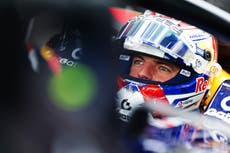
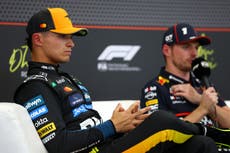

A practice race-start at the end of last week’s test saw multiple cars struggle to move off the line. The new engines need to be revved to build up turbo boost pressure and minimise turbo-lag, resulting in some drivers revving hard for more than ten seconds.
The current start procedure, which sees five red lights blink at one-second intervals before all five vanish, will potentially not provide enough time for drivers at the back of the grid to prepare their turbo in time.
Stella detailed: "We need to make sure that the race start procedure allows all cars to have the power unit ready to go because the grid is not the place in which you want to have cars slow in taking off the grid.
"This is of bigger interest than any competitive interest. I think all teams and the FIA should play the game of responsibility when it comes to what is needed in terms of race start procedure. I'm thinking about the timings, for instance, the timing of the lights, the timing before the lights.
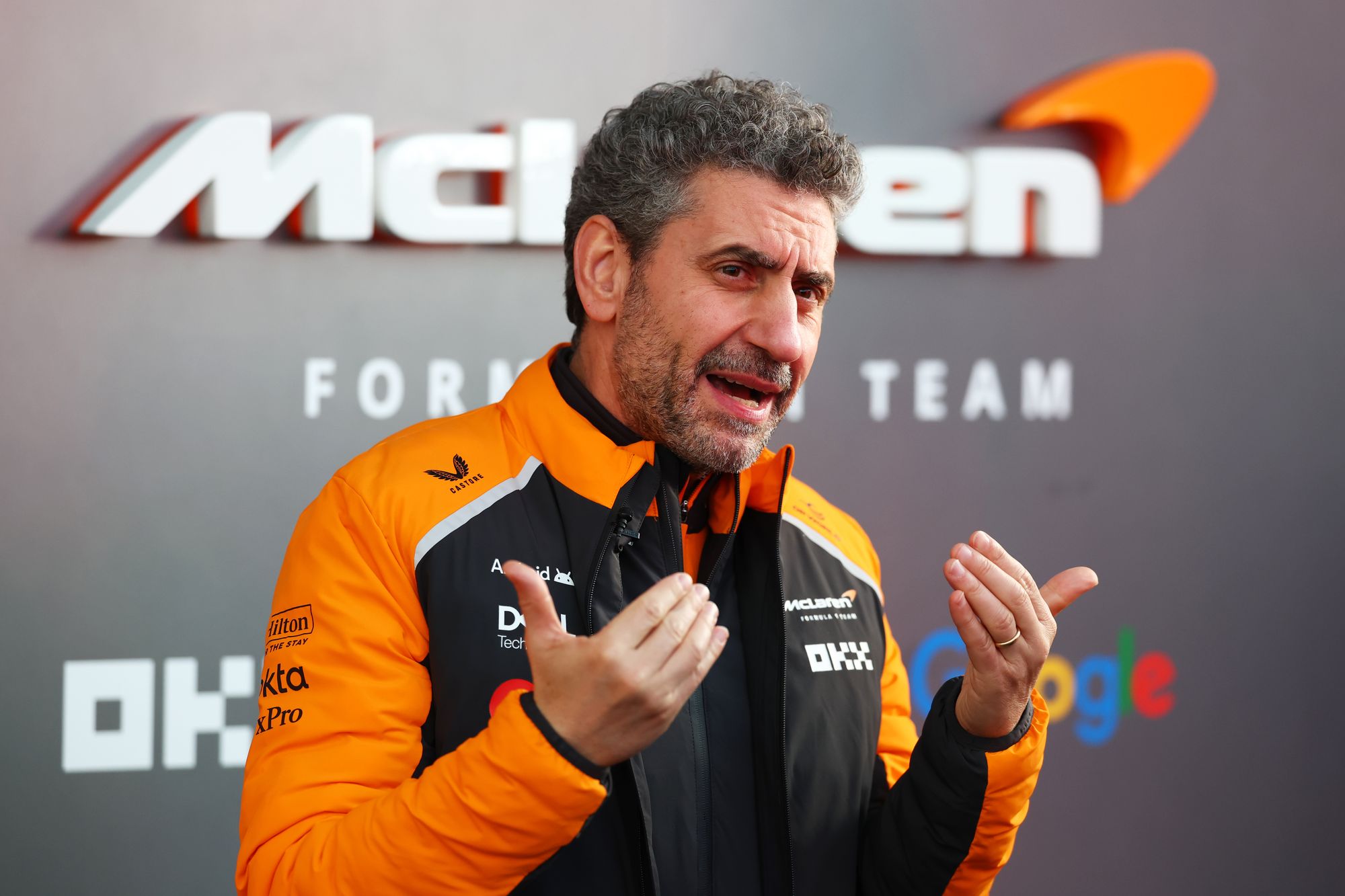
"They need to be in the right place to make sure that, first of all, it's a safe phase of the way we go racing."
Speaking about the ‘lift and coast’ issue, with drivers looking to take their foot off the accelerator to recharge the battery, Stella also believed it was a safety concern.
"There could be cars that follow another car and the car ahead may want to lift to harvest [energy],” he said. "This may not be an ideal situation when you follow closely and this can give a race situation like we've seen before a few [high speed crashes] times in Valencia, [Riccardo] Patrese in Portugal and there are a few more that definitely we don't want to see anymore in Formula 1."
As for the ‘overtake mode’, Stella is concerned there will not be enough energy to use it effectively, which removes a key overtaking device.
The Italian engineer detailed: "I think, unlike in the past, where we had the DRS and the DRS created such an advantage from an aerodynamic drag point of view for the following car, this year, when you follow somebody, you have the same drag and the same power, so it becomes quite difficult to overtake.
"Our drivers have been racing with other drivers during these three days of testing in Bahrain and they found it extremely difficult to overtake. The fact that you have an additional amount of energy when you follow and you are within one second is difficult to exploit because this extra energy may mean that there is just a little bit more deployment at the end of the straight, if anything.
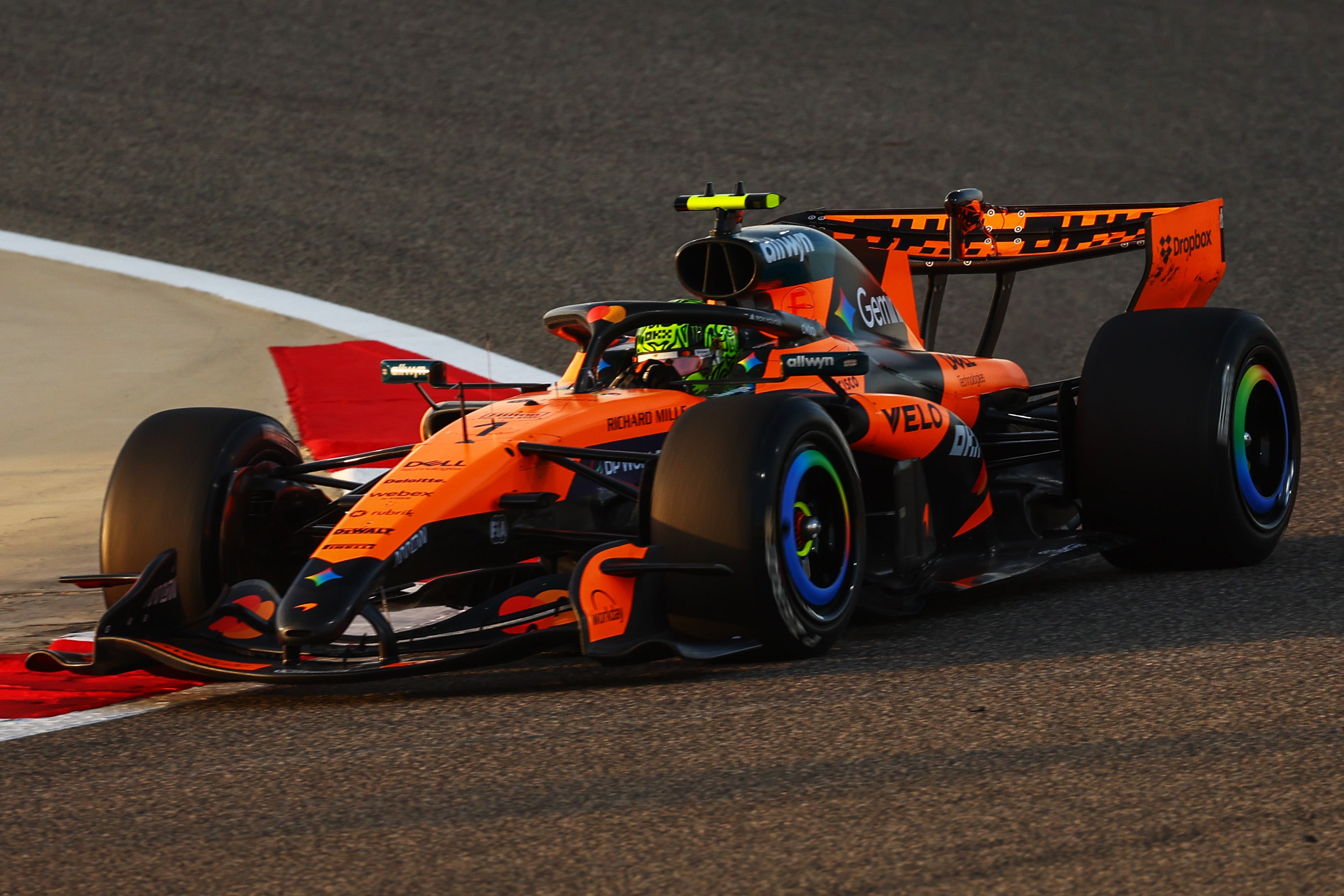
"So I think, again, as an F1 community, we should look at what can be done to make sure that we have a sensible feasibility when it comes to overtaking. Otherwise, we lose one of the fundamental elements of the nature of racing, which is giving drivers the possibility to overtake."
Stella was keen to emphasise that his proposals are not about McLaren’s competitiveness, but the overall health of the sport as a new era dawns in Melbourne.
"We are not talking about how fast you are in qualifying," he added. "We are not talking about what is your race pace. We are talking about safety on the grid.
"Like I said before, there are some topics which are simply bigger than the competitive interest. And for me, having safety on the grid, which can be achieved with simple adjustment, is just a no-brainer. It's just a bigger interest."
The topics will be a point of discussion between the FIA and teams at F1’s Commission meeting this Wednesday, taking place in conjunction with the final pre-season test in Bahrain.
Join our commenting forum
Join thought-provoking conversations, follow other Independent readers and see their replies
Comments
Bookmark popover
Removed from bookmarks