Have F1’s new regulations made a difference to wheel-to-wheel racing so far?
A return to European circuits has provided the racing action Formula One craves as it embarks on a stratospheric worldwide boom this year
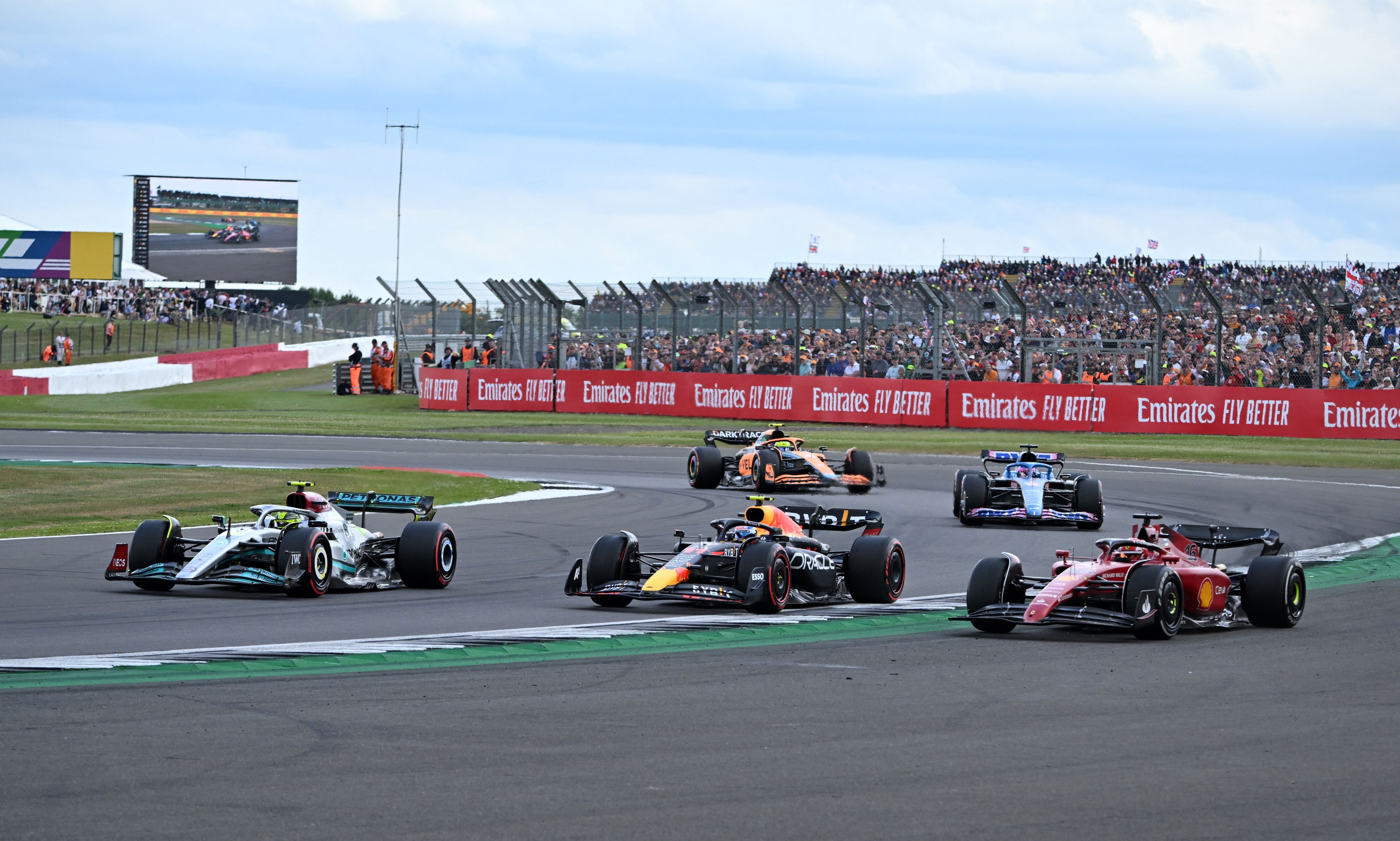
Describing the captivating wheel-to-wheel racing at Silverstone two weeks ago as “reminiscent of the karting days”, Lewis Hamilton was under no illusions: the encouraging impact of this year’s new regulations in Formula One were clear for all to see.
Much was made in the off-season of the modifications. The aerodynamic changes – with ground effect, altered rear wings and a new front-wing shape – should in theory make cars easier to follow, resulting in tighter racing, while a move from 13in- to 18in-rim tyres means the car’s overall design is vastly changed too.
And yet it wasn’t until race 10 of a 22-race calendar, at the British Grand Prix, when these changes were seen in such mesmeric style. Lap 45 of 52 saw Hamilton’s battle with Sergio Perez and Charles Leclerc enthralled a worldwide audience in thrilling fashion, not to mention the thousands going barmy in the grandstands. “Through goes Hamilton!” commentator David Croft roared, as the Mercedes pounced for a memorable double overtake approaching the now aptly named Hamilton Straight.
“I feel that’s Formula One at its best,” the seven-time world champion said afterwards. “The fact that we were able to follow and dice like that, lap on lap is a testament to the direction I think that we’re now in.”
Perez, who lost out at Club corner but quickly took the position back a mere 10 seconds later, agreed: “The level of racing we were able to do across the grid was great. It was a very good fight, it felt like we were able to race each other hard and follow each other through high speeds.
“It was very good racing and was a good test for this generation of cars. We are able to follow each other, we could keep fighting and it’s good for the new regulations.”
A return to European race tracks after street circuits in Monaco, Baku and Montreal have provided the racing action F1 craves as it embarks on a stratospheric worldwide boom this year. We saw early inclinations in the season-opener in Bahrain, as we did at Imola and Barcelona in races four and six.
Yet the issue of porpoising and bouncing has, or at least had, been the biggest diversion in performance clearly due to the new regulations. Mercedes’ problems in this department have been well documented, as has Lewis Hamilton’s subsequent back pain post-Azerbaijan, with a new FIA technical directive announced in the last month aimed at eradicating the issue.
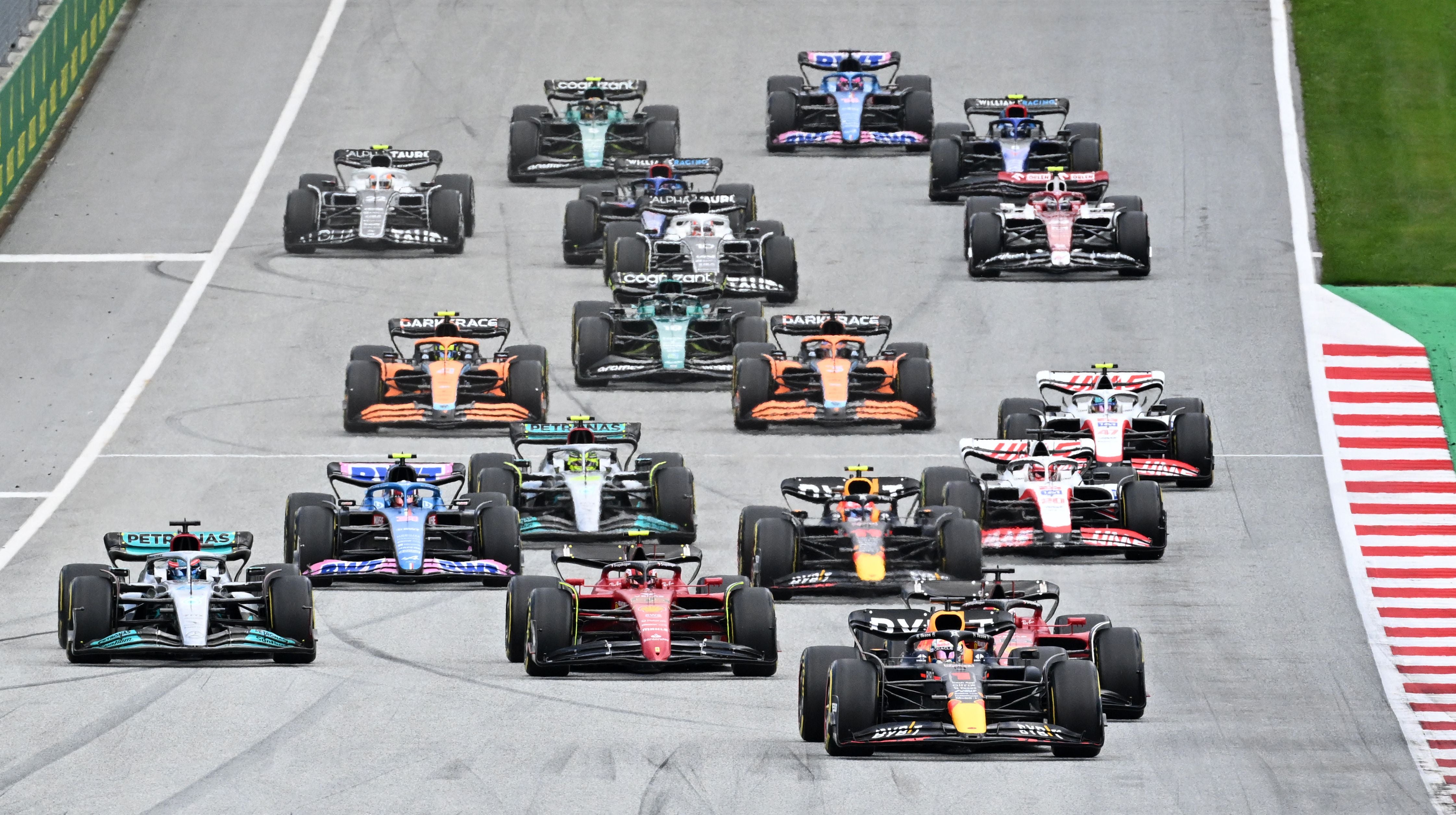
But it’s only the past two Grands Prix which have really delivered the start-to-finish battles on track which were, undoubtedly, the primary focus of these set of wide-reaching regulations. Perfect timing, halfway into the season.
While Silverstone provided that late drama – including a final-lap battle between last year’s world champion Max Verstappen and 2021’s joint-worst driver Mick Schumacher which left the whole 52-lap race riveting until the chequered flag – the Austrian Grand Prix saw a 2022 record of 69 overtakes. For context, Spielberg hosted two races last year and saw 62 overtakes across both. Some difference, that.
Sainz, a debut winner at the British GP earlier this month, elaborated on the surprise slipstream effect he experienced in his Ferrari at Silverstone: “I think it’s a great step forward for Formula One. I feel these cars have improved a lot of racing in high speed corners, Silverstone was a great example of how much better it is to follow. I
“It’s much more predictable, we don’t get weird snaps like we got last year. I was surprised with the slipstream effect, as soon as Max and Charles passed me I could stay in reach. It helps to stay in range of the cars and I think it had a great effect on the cars.
Damon Hill, a Championship winner in 1996, did however admit that the gap between the top teams – Red Bull, Ferrari and Mercedes – and the midfield was large and may not decrease for a “couple of seasons” yet.
Asked by The Independent if the midfield should be closer to the front three teams given the new regulations, Hill said: “I think we might have to wait until much later in the season for that to happen. At the moment, the top three teams still have the advantage of their infrastructure already being there and the budget cap can’t really affect them as much, yet.
“It’ll only be later, or maybe even a couple of seasons, when you’re going to see what the budget cap has done to the pack.”


Hill – a trusted pundit nowadays for Sky Sports – also elaborated on the impact the cars have at different races, dependent on the subtly different characteristics of each model as well as the tracks themselves.
“The regulation changes on the cars have shown that within the midfield, it’s very tight,” he believes. “The characteristics of certain cars suiting different circuits is a huge factor, much more than before – you could have a car which is good on one side of the track and is then back down towards the bottom at another part. That can happen quite radically it seems.”
“The ability for cars to stick closer in corners I think is noticeable but it’s whether that translates into the ability to pass. I don’t think these cars are very good in slow corners – [before Silverstone] there weren’t many good examples of overtaking without using DRS. They are big heavy cars, they need to be made lighter and nimbler if we can possibly do that and then we might see better racing.”
While teams continue to grapple with different set-ups and approaches, looking to eke out as much performance as possible, the next five races taking place on traditional European circuits should satisfy the fans and executives watching on.
Wheel-to-wheel action is likely, particularly pre-summer break at high-speed Circuit Paul Ricard this week and the main straight at the Hungaroring to follow. 2022’s next test is Le Castellet in a few days’ time.
Join our commenting forum
Join thought-provoking conversations, follow other Independent readers and see their replies
Comments
Bookmark popover
Removed from bookmarks