The Independent's journalism is supported by our readers. When you purchase through links on our site, we may earn commission. Why trust us?
9 best hammer drills that make light work of heavy materials
Tackle concrete and brick or chisel holes in wood with one of these multi-purpose tools
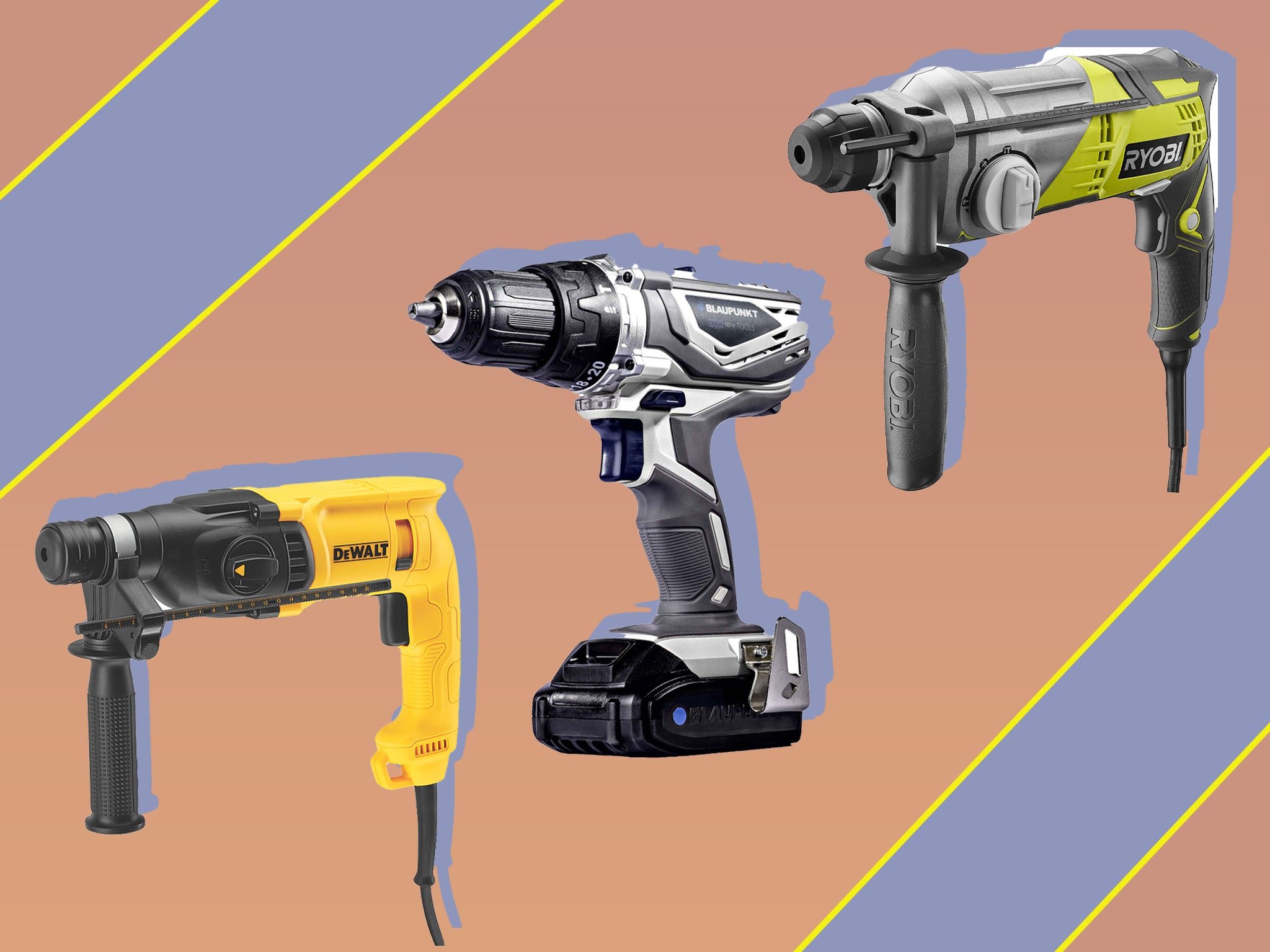
A hammer drill is a tool that has a back-and-forth hammering action as well as a clockwise or anti-clockwise drilling action.
They can do jobs regular drills are not suitable for, such as drilling into very hard materials like masonry and concrete. Some hammer drills can even perform demolition tasks such as breaking up breezeblocks, flagstones and other tough objects.
Any tool that features a hammer drill mode may be referred to as a hammer drill (or percussion drill, or impact drill). The options available range from beginner-friendly models that are well-suited to moderate DIY use to contractor-standard models that would be right at home on a building site.
Combi drills are the most accessible type of tool with hammer drill functionality. Combining hammer drill with regular drill and drill-driver modes, this type of tool should give you all the capability you need to do routine DIY work like making holes for wall plugs and screwing things together.
Standard hammer drills give you similar capabilities to a combi drill but usually with much higher power. These drills often have two handles: one that houses the trigger that turns the drill on or off and an auxiliary handle designed to help you keep the drill steady. We would recommend this type of tool to DIYers who will often need to drill into hard materials.
Read more:
- 10 best outdoor pizza ovens that are definitely worth your dough
- Best outdoor furniture for the perfect garden set-up
- 8 best grass trimmers for perfecting your lawn edges
- 10 best lawnmowers to make sure your grass is always greener
SDS or SDS+ drills are a third type of drill with a hammer action. These are built for heavier-duty drilling, as well as chiselling tasks such as chipping up tiles. If you’re undertaking a major renovation project, or if you’re working as a contractor, you might consider purchasing one of these powerful drills.
Before you go ahead and buy one that suits the jobs you need to get done, you might want to order some drill bits to go with it, as hammer drills are often sold without them. The bits you buy should suit the type of hammer drill you are purchasing, as well as the tasks and materials you will be working on.
The best hammer drills for 2021 are:
- Best overall – DeWalt DCH253M2-GB 18V 4.0AH li-ion XR cordless SDS+ drill: £349.99, Screwfix.com
- Best heavy duty drill – Clarke contractor CON1500RDV 1500W SDS+ rotary hammer drill: £107.98, Machinemart.co.uk
- Best for comfort – Ryobi RSDS680-G 680W corded SDS+ rotary hammer drill: £91.67, Amazon.co.uk
- Best user-friendly corded option – DeWalt D25033-GB electric SDS+ drill: £109.98, Screwfix.com
- Best ergonomic design – Bosch advancedImpact 18 cordless combi drill: £259, Ao.com
- Best for speed and efficiency – Clarke 1200W hammer drill CON1200: £53.99, Machinemart.co.uk
- Best mid-range impact drill – VonHaus 3500153 1200W 2-speed impact drill: £54.99, Vonhaus.com
- Best for intermediate DIYers – Erbauer EHD650 650W 240V corded hammer drill: £35, Diy.com
- Best cordless drill – VonHaus 3500148 20V max li-ion cordless SDS+ drill: £112.99, Vonhaus.com
Hammer drills FAQs
Which drill should I buy: Regular, combi or hammer?
A hammer drill refers to any tool that features a hammer mode – this can include both regular drills and combi drill options. A combi drill – which combines a hammer drill with regular drill and drill-driver modes – drills into wood, metal and masonry. If you’re looking to carry out everyday DIY tasks such as drilling holes in walls and driving screws, a combi drill is your best bet.
On the other hand, regular hammer drills allow you to do everything you would with a combi, but with a bit more oomph. These drills have two handles – one to turn them on and off and the other to keep them steady while in use. This makes them better suited for tougher jobs where you need power and stability.
What should you look for in a hammer drill?
Power – When working with masonry – stone, brick, cinder blocks and tiles – go for a higher wattage, while a lower wattage works well for other, less heavy duty materials, such as plasterboard. A 550W drill will be powerful enough for most routine DIY jobs.
Corded or cordless? – Connected directly to the mains, corded drills tend to be more powerful than their cordless cousins and are therefore better suited to heavy duty work. You will, however, need access to a power source to use them, while a cordless model can be charged up and used wherever you need it.
Variable speed settings – Hammer drills will generally have two or three speed settings, which makes them great for multitasking. If you’re planning heavy duty work, you’ll want the option of a higher speed setting, but for lighter work, such as driving screws, a lower speed setting will suffice.
Weight – For routine DIY tasks, it’s recommended that you go for a lightweight model, which will generally come in at around 2kg.
The verdict: Hammer drills
Based on our testing, the DeWalt DCH253M2-GB is the very best hammer drill out there, with excellent performance across a huge range of tasks using all three modes: drill, hammer drill, and hammer. The only potential drawback is the price.
Voucher codes
For the latest discounts on power tools, try the links below:
For more DIY inspiration, read our guide to the best cordless drill