Weak climate targets mean UK banks risk missing out on ‘enormous opportunity’ of Africa’s renewable energy boom
‘Africa will need hundreds of billions of dollars annually by 2030 if it is to meet energy access and development goals,’ one financial expert tells The Independent. Nick Ferris reports

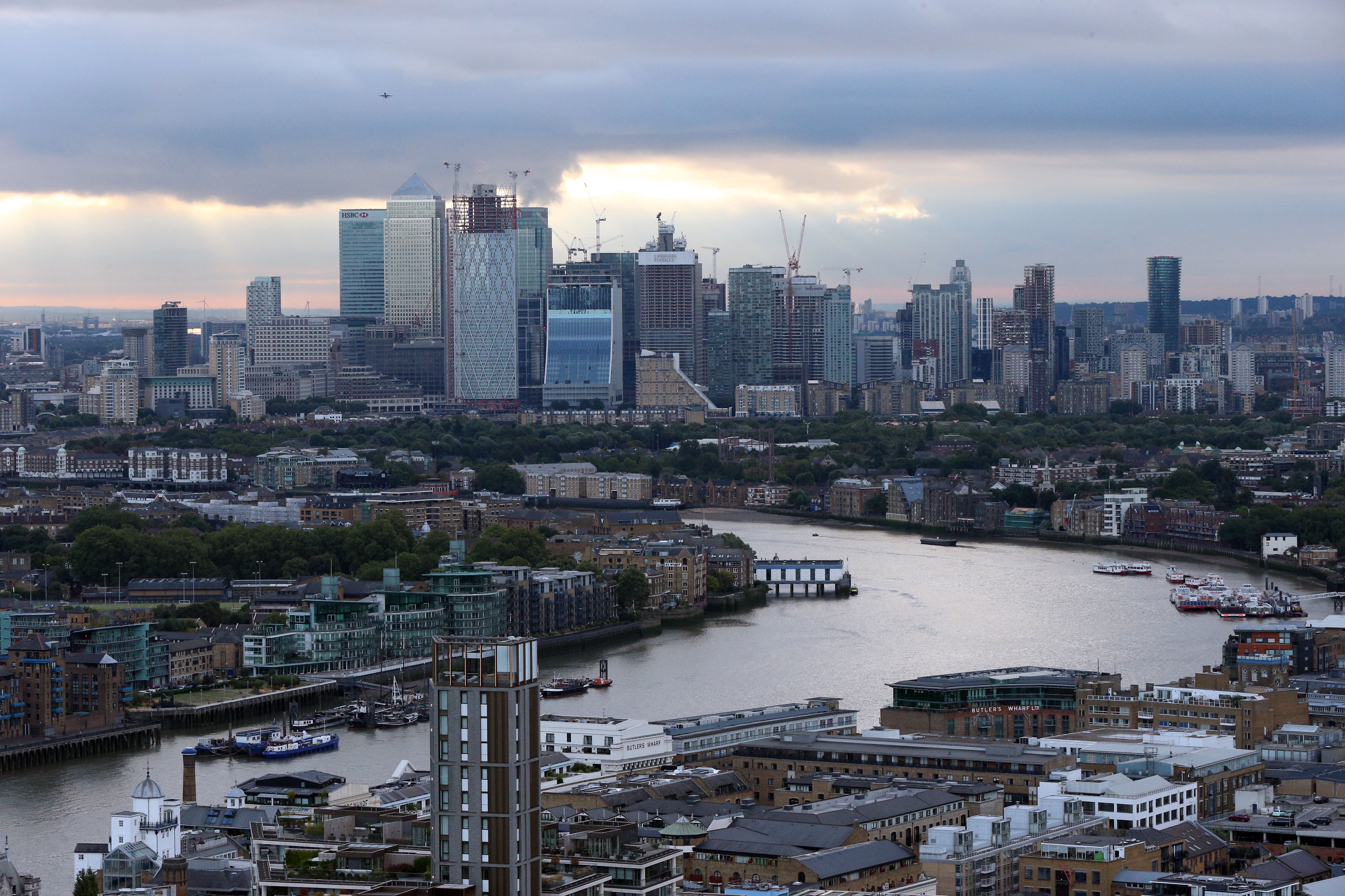
Weak climate targets from UK banks means that they are at risk of missing out on the “enormous opportunity” of Africa’s renewable energy revolution, financial experts have told The Independent.
Rapidly falling costs for solar, wind and battery technologies — propelled by large-scale, low-cost manufacturing in China — have accelerated the decarbonisation of electricity systems worldwide. This shift is now extending to Africa, a region that has historically struggled to attract investment because of perceived risks.
In recent years, private sector investment in clean energy in Africa soared, more than doubling from $17bn (£13bn) in 2019 to $40bn (£29bn) in 2024, according to the International Energy Agency. Moreover, with more than 600m people continuing to lack electricity on the continent, and with African countries’ collectively holding 60 per cent of the world’s solar potential, the opportunities around clean energy in Africa are considered to be vast.
Given the UK’s large financial services sector, which already has a large footprint in many different countries across the world, there is a big opportunity for British banks to invest in clean energy systems in emerging economies around the world, experts agree.
“There’s an enormous opportunity for international financiers to enter emerging markets and offer their experience and expertise to develop renewable energy deals,” explains Elliot Thornton, research manager on the banking programme at ESG-focused nonprofit ShareAction.
“Africa will need hundreds of billions of dollars annually by 2030 if it is to meet energy access and development goals, presenting a significant financing opportunity for UK institutions,” agrees Alasdair Docherty, an analyst at the Institute for Energy Economics and Financial Analysis.
“A tendency to treat these financing needs primarily as a ‘climate obligation’ risks missing the reality that this is also a story about enabling core infrastructure in markets with huge growth potential.”
But rather than maximising their exposure to the clean energy revolution in developing markets, British banks appear to be turning away from climate opportunities.
HSBC, which is both the UK and Europe’s largest bank, has in recent months weakened its climate policies, by removing its pledge not to take on new clients with significant investments in oil & gas exploration, and by revising climate change targets up from warming of 1.5°C - which is the temperature limit considered ‘safe’ by climate scientists - to a range that allows up to 1.7°C.
HSBC continues to fund clients that are expanding operations in oil and gas, even if it has restricted its ability to offer dedicated financing for new upstream oil and gas fields. The bank also announced in July last year that it would withdraw from the Net Zero Banking Alliance, despite being one of the first global banks to set a net zero by 2050 target.
ShareAction has also written to Standard Chartered, which is a UK bank that has a specific focus on emerging markets, calling for it to align decarbonisation targets across all of its operations to a 1.5°C warming target, and also for it to set a specific investment target for renewable energy in emerging markets and developing countries.
Other banks, such as BNP Paribas, have shown it is possible to set renewable energy financing targets aligned with the Paris Agreement’s 1.5°C goal, and ShareAction argues that Standard Chartered should follow suit in its work in developing countries.
“You need to think long-term if you really want to grow sustainable finance, particularly in emerging markets. It takes planning, investment, and coordination. HSBC is not providing itself a stable platform by backtracking on its climate commitments," says Thornton. “If you're kind of flip-flopping on targets that you set only a few years ago, you are giving a weak signal that you are going to make the most of sustainable finance opportunities in the years to come.”
On Standard Chartered, Thornton adds: “While the bank has done some great individual deals in renewable energy, the challenge with a big financial institution like this is you need clear incentives to give a strong signal of intent and really drive things forward across the whole bank.
“These incentives would ensure the bank is laying the groundwork in emerging markets to make the most of massive opportunities in sustainable finance in the years to come.”
When approached for comment on claims made in this article, Standard Chartered declined to comment.
A spokesperson for HSBC said: “Our ambition is to become a net zero bank by 2050, and we’re focused on financing that helps our customers deliver their decarbonisation plans, whilst recognising that transition won’t look the same across every industry, market and region.
“With our global reach across trade corridors and value chains, deep roots in Asia and the Middle East, and leading infrastructure and project finance capabilities, we are helping to mobilise capital at scale, and supporting today’s economy to decarbonise, powering innovation and growth, and helping to unlock significant opportunity in the new economy.”
A massive opportunity for UK business
For financial institutions that are well-established in the clean energy space in African countries, the opportunity to make money has been big. London-based investor the Private infrastructure Development Group (PIDG), for example, is solely focused on building infrastructure in emerging economies, and has over the past two decades mobilised some $47.2bn and served some 232 million people.
Having run into some controversy over continued support for fossil fuel projects in 2020, the group is now firmly focused on clean energy, with a big focus on supporting renewables in the world’s least developed countries.
“Emerging markets and developing economies, which represent 86 per cent of the global population and nearly all future incremental energy demand, are the ideal growth frontier for renewables investments,” says Tim Streeter, global head of investor relations at PIDG.
Recent years have seen opportunities for profit improve, Streeter adds, driven by “a convergence of private capital, collapsing technology costs, and policy maturity” - as well as African countries “dismantling barriers through regulatory reforms and improved procurement policies”.
Establishing a foothold in these markets by supporting the energy sector would also bring further business opportunities both for UK banks and other British businesses.
“When UK banks and investors finance energy projects, UK firms are typically involved in structuring deals, providing technical and commercial expertise, monitoring performance, and supporting early-stage development and operational set-up,” says Alasdair Docherty, from IEEFA. “Where UK and European finance hesitates, others will inevitably step in,” he adds.
“By supporting renewable deals in new markets, not only will UK investors open up further deals in the renewable energy space, but you will also open up more opportunities in the economy more broadly, which is now benefiting from having access to low cost, renewable energy,” adds ShareAction’s Elliot Thornton.
A misguided idea of ‘risk’
Investing in energy infrastructure, especially in emerging markets, does come with its challenges. Renewable energy investment contracts typically span many years, exposing financiers to risks such as currency fluctuations and inflation in unstable economies, as well as potential issues arising from political instability, corruption, or social unrest.
However, these risks have been accused of being overblown by ratings agencies wary of exposing capital to new markets - and particularly so when it comes to newer technologies like renewables. Donald Trump’s spurning of renewables in the US also shows that political risks related to the clean energy transition are by no means limited to developing countries.
“The UN Development Programme and others have highlighted how risk frameworks can systematically over-penalise renewable projects even where risks are partially mitigated through guarantees, co-financing or hard-currency contracts,” says IEEFA’s Docherty. “Closing the investment gap could require commercial banks update their risk frameworks, to better reflect how risks are now shared and managed in clean energy finance.”
PIDG’s Tim Streeter believes that there is a “significant gap” between “perceived and actual investment risk” in African renewable markets. “The reality, as can be seen across PIDG’s Africa debt portfolio alone, is that our losses in two decades of investing have been a small fraction of what would have been predicted by the implicit rating of the agencies,” he says.
While the investment risks around renewables in Africa might be overblown, the risks around future climate shocks - which are made ever more likely by continued investment in fossil fuels - are regularly cited by climate scientists and economists as being underplayed.
A report published this week warned that climate models currently used by governments are banking on steady economic growth being slowed by gradual rising average temperatures - rather than a future of chaotic climate tipping points and unmanageable climate disasters.
“We’re not dealing with manageable economic adjustments,” said Dr Jesse Abrams, at the University of Exeter. “The climate scientists we surveyed were unambiguous: current economic models can’t capture what matters most – the cascading failures and compounding shocks that define climate risk in a warmer world – and could undermine the very foundations of economic growth.”
“For financial institutions and policymakers, it’s a fundamental misreading of the risks we face,” he continued. “We are thinking about something like a 2008 [crash], but one we can’t recover from as well. Once we have ecosystem breakdown or climate breakdown, we can’t bail out the Earth like we did the banks.”
This article was produced as part of The Independent’s Rethinking Global Aid project
Join our commenting forum
Join thought-provoking conversations, follow other Independent readers and see their replies
Comments
Bookmark popover
Removed from bookmarks