An invasion of smelly seaweed is costing US beach communities millions of dollars
That’s on top of the rotting egg smell and potential harms to peoples’ health
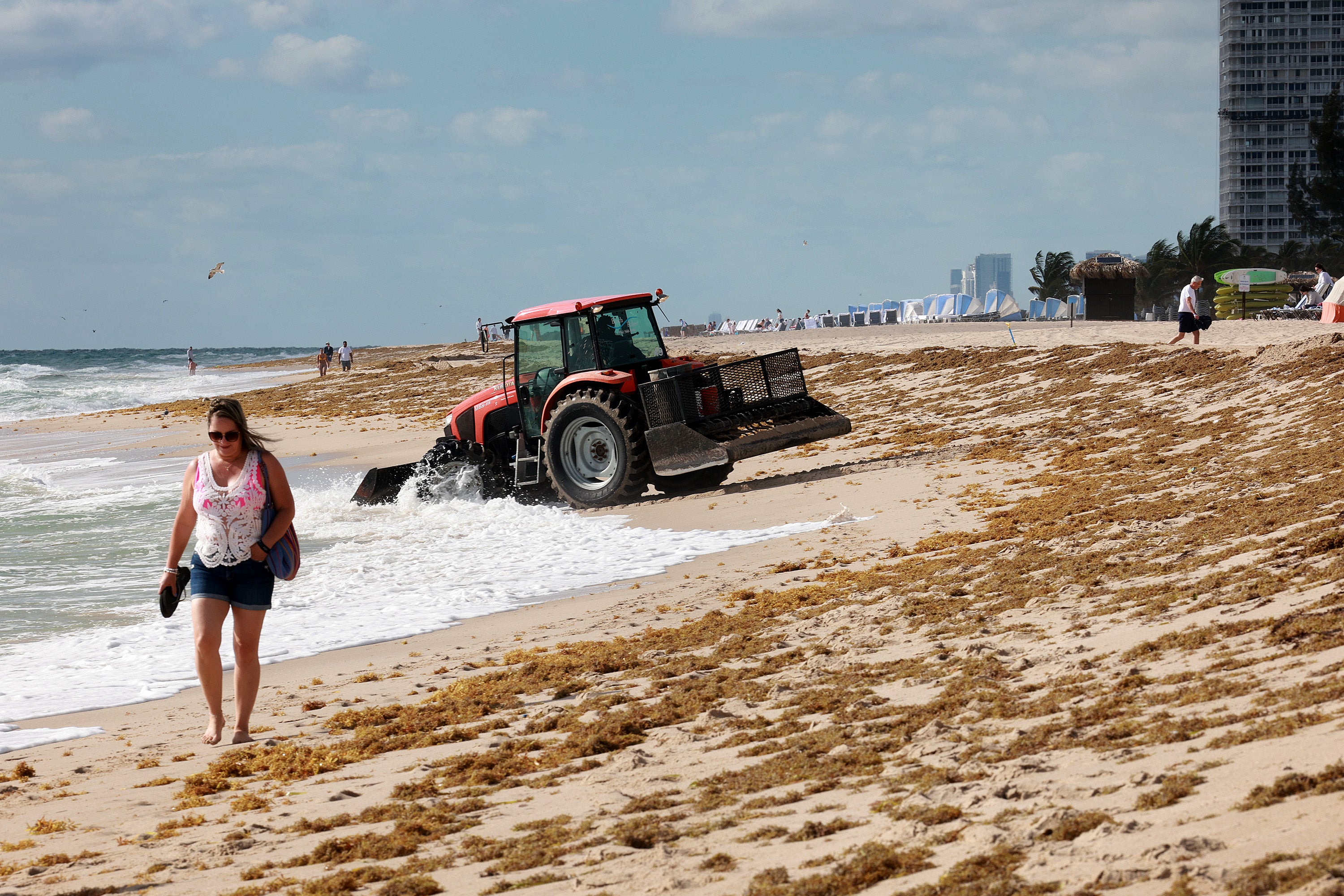
Massive, stinky sargassum seaweed blooms are costing some U.S. coastal communities millions – and even up to a billion dollars – in economic damage each year, researchers said this week.
The affected communities include Florida, Puerto Rico and the U.S. Virgin Islands, according to a new study from Massachusetts’ Woods Hole Oceanographic Institution and the University of Rhode Island.
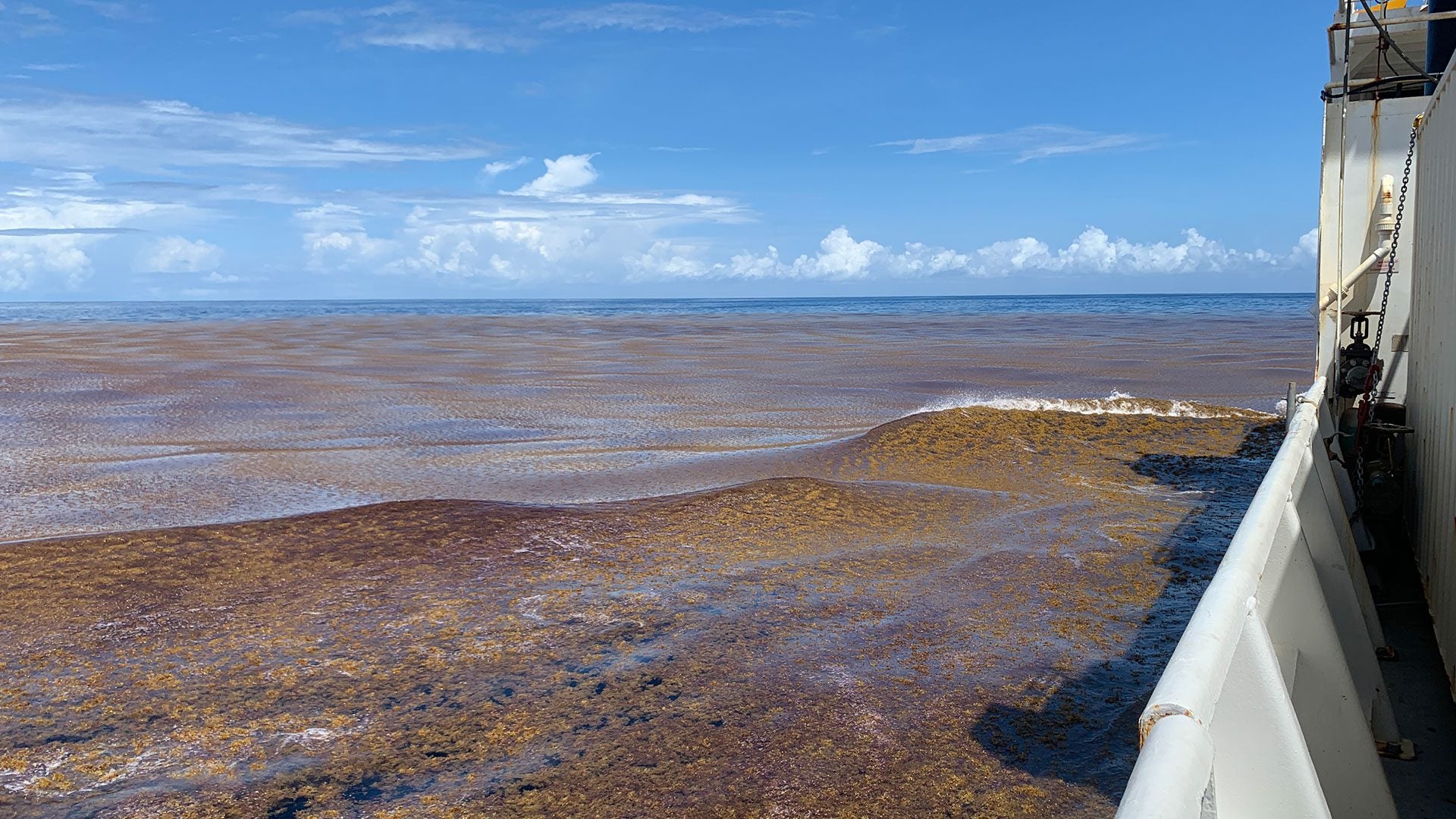
The blooms, which largely peak over the summer, originate in the Atlantic Ocean, floating on the water’s surface and providing a habitat for marine life. Massive amounts head into the South Atlantic and the Gulf of Mexico from a 5,000-mile stretch of sargassum known as the “Great Atlantic Sargassum Belt.”
But the seaweed also carries ocean plastic, exposure brings several health harms for humans and animals, and blooms can hurt tourism by closing beaches for months.
“While the ecological and public health impacts of sargassum inundation events have been widely documented,” Tracey Dalton, a professor of marine affairs at the university, said in a statement, “their direct and indirect economic costs to governments, coastal communities and private industries had not previously been quantified.”
Seasons stretching longer
Dalton and other researchers used economic modeling, satellite observations, NOAA reports and other sargassum monitoring, hotel cancellation and visitor spending data and estimates on declines in commercial and recreational fishing landings to help quantify the impacts of the blooms.
They found that sargassum seasons – when the seaweed floats toward shores, typically lasting from March through October – are starting earlier and lasting longer in the western Atlantic and the Caribbean.
Southeast Florida, Puerto Rico and the U.S. Virgin Islands face the highest risk of severe sargassum inundation.
However, the researchers noted that existing sargassum forecasting tools are performing well.
“These results highlight the urgency of sustained investment in sargassum monitoring, forecasting and cleanup infrastructure,” Dalton said. “Without proactive management, the economic consequences for coastal communities will continue to escalate.”
Concerns extend past the money
Sargassum blooms, also known as brown tides, can affect people with respiratory conditions when rotten – and it’s not just the rotten egg-like stench.
It releases a hydrogen sulfide gas that can irritate your eyes, nose and throat, sometimes leading to trouble breathing.
“Exposure to hydrogen sulfide and ammonia, produced during the decay of sargassum, may also cause mild to serious health effects, including respiratory, cardiovascular and neurological impacts,” the U.S. Environmental Protection Agency warns.
The blooms also accumulate and leach pesticides and heavy metals, such as arsenic and cadmium. Exposure to high levels of both can be fatal for humans and animals.
Sargassum blooms can harm animals by smothering coral reefs and disrupting nesting grounds for sea turtles, as well.
A possible climate connection
While climate change has made conditions for other algae blooms more hospitable, scientists are divided about whether warming ocean temperatures are helping or hurting sargassum growth.
Authors of the new study say unprecedented sargassum events are symptoms of broader shifts in the Atlantic.
“As the Atlantic continues to change, we’re seeing cascading effects that directly connect offshore ocean processes to coastal economic vulnerability,” Di Jin, a senior scientist at the Marine Policy Center at WHOI, said. “This study links those large-scale environmental drivers to real-world economic consequences.”
Join our commenting forum
Join thought-provoking conversations, follow other Independent readers and see their replies
Comments
Bookmark popover
Removed from bookmarks