Australia receives first climate migrants from sinking Pacific nation Tuvalu
Tuvalu is already losing ground to encroaching tides and storm surges and could be underwater by 2050
The first climate migrants from Tuvalu have arrived in Australia, marking the start of a historic relocation effort from one of the world’s most climate-threatened nations.
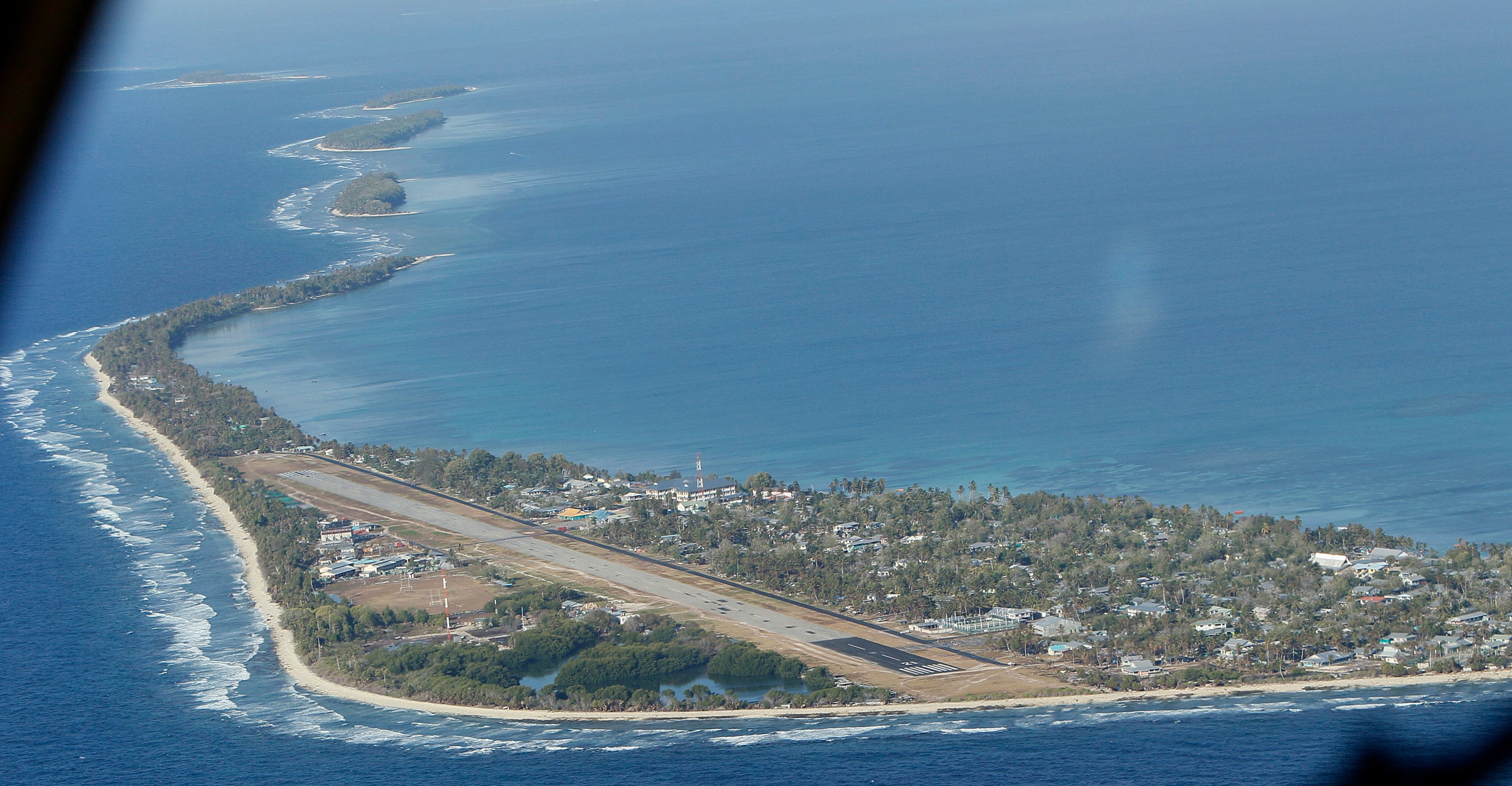
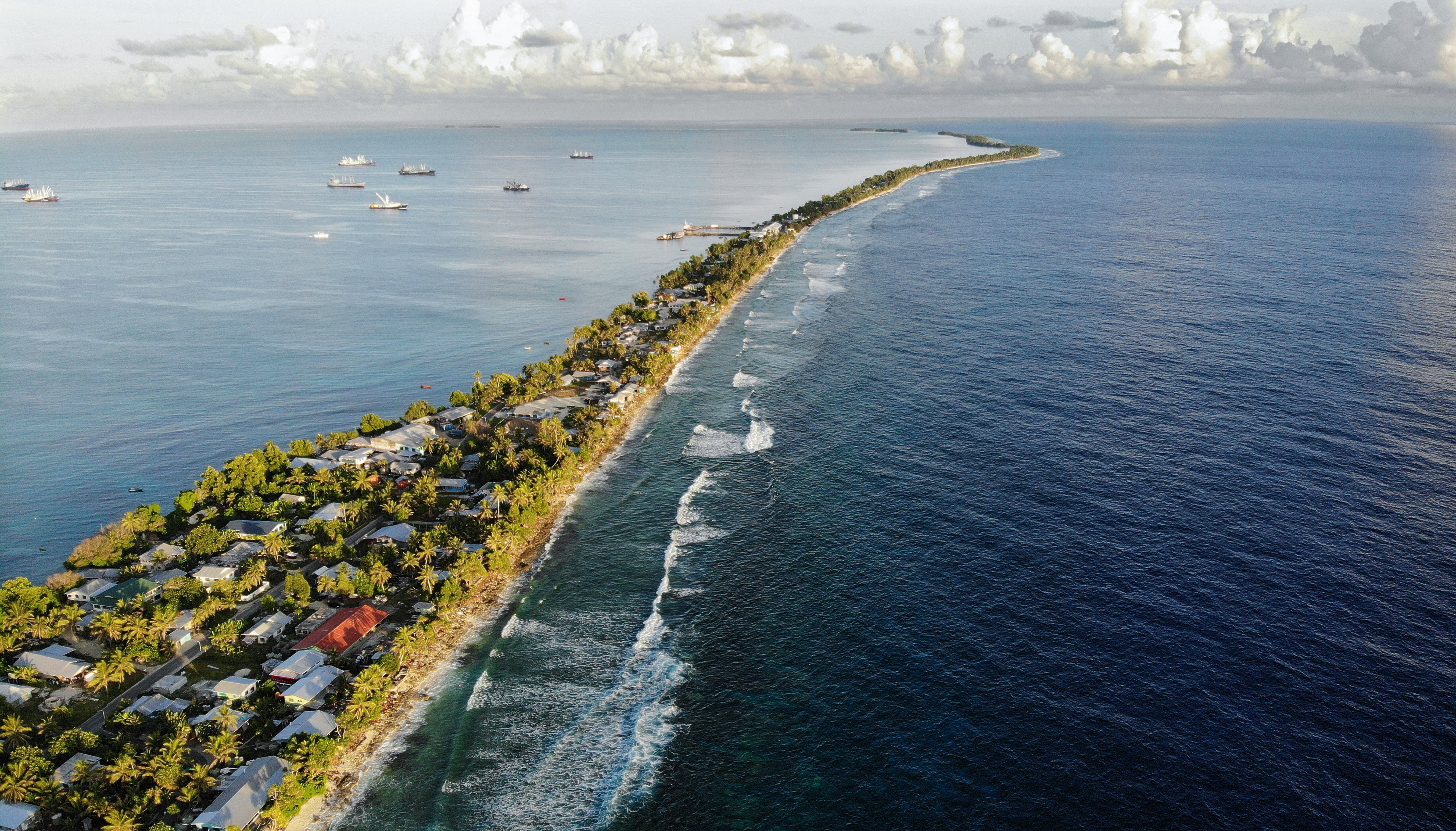
Tuvalu – a chain of low-lying atolls in the Pacific with a population of around 11,000 – is made up of just 26 sq km of land in total, most of it less than two metres above sea level.
It is already losing ground to encroaching tides and storm surges. Scientific modelling suggests up to 90 per cent of its main atoll could be underwater by 2050 under worst-case sea-level rise scenarios, leaving communities with nowhere to retreat.
Under a 2023 climate and security pact with Australia, known as the Falepili Union, up to 280 Tuvaluans a year can move to Australia as climate impacts worsen.
Australian foreign affairs officials confirmed on Thursday that members of the first intake have now arrived, including Tuvalu’s first female forklift driver, a dentist, and a pastor who will support Tuvaluan families settling thousands of kilometres from home.
More than one-third of Tuvalu’s population applied for the visa scheme, which the country’s leaders describe as essential for ensuring “mobility with dignity” as sea-level rise threatens the survival of entire communities. The intake is capped to avoid a rapid “brain drain” in a nation that already faces shortages of skilled workers.
Among those who have already relocated is Manipua Puafolau, a trainee pastor from Funafuti, Tuvalu’s main atoll, where in many places the land is barely wider than the road. He plans to live in Naracoorte, a small town in South Australia, where Pacific Islanders work in seasonal agriculture and meat-processing jobs.
“For the people moving to Australia, it is not only for their physical and economic well-being, but also calls for spiritual guidance,” he said in a video released by Australia’s foreign affairs department.
Tuvalu’s prime minister, Feleti Teo, visited the Tuvaluan community in Melbourne last month to emphasise the importance of maintaining cultural ties as more citizens prepare to leave.
On Funafuti, 60 per cent of Tuvaluans live on a strip of land as narrow as 20 metres – an area NASA scientists say could be half-submerged by daily tides by 2050 under mid-range projections.
Australian climate minister Penny Wong said the mobility scheme was designed to help Tuvaluans rebuild their lives while keeping their identity intact.
The visa offered “mobility with dignity, by providing Tuvaluans the opportunity to live, study and work in Australia as climate impacts worsen,” she said in a statement to Reuters.
Australia is establishing support services in Melbourne, Adelaide and Queensland to help new arrivals resettle. Kitai Haulapi, Tuvalu’s first female forklift driver, who recently married and will move to Melbourne, said she hopes to find work and send money home.
She said she hopes “to find a job in Australia and continue to contribute to Tuvalu by sending money back to her family.”

Dentist Masina Matolu, who will relocate to Darwin with her three children, said she plans to use her skills to support Indigenous communities.
“I can always bring whatever I learn new from Australia back to my home culture, just to help,” she said.
Tuvalu is considered a frontline nation in the climate crisis, with average elevations of just two metres above sea level and limited freshwater supplies. Saltwater intrusion, extreme tides, and coastal erosion have already forced some villages to move inland, even as the government pursues land-reclamation projects to preserve habitable areas.
Scientists say the country’s long-term survival is uncertain under current global emissions trajectories. NASA projections suggest that in a worst-case scenario – two metres of sea-level rise – up to 90 per cent of Funafuti could be underwater by 2050.
In recent years, Tuvalu has become a powerful diplomatic voice for loss-and-damage finance and climate mobility, arguing that nations least responsible for the crisis face the gravest consequences.
The Tuvalu scheme is the first formal bilateral climate-migration pathway of its kind anywhere in the world, and is being closely studied by Pacific governments, UN agencies and legal experts as a potential model for future displacement in a warming world.
Additional reporting by agencies.
Join our commenting forum
Join thought-provoking conversations, follow other Independent readers and see their replies
Comments
Bookmark popover
Removed from bookmarks