Small hamlet recognised as England’s first dark sky community
Thorington Street in Dedham Vale has been handed the accolade by DarkSky International.
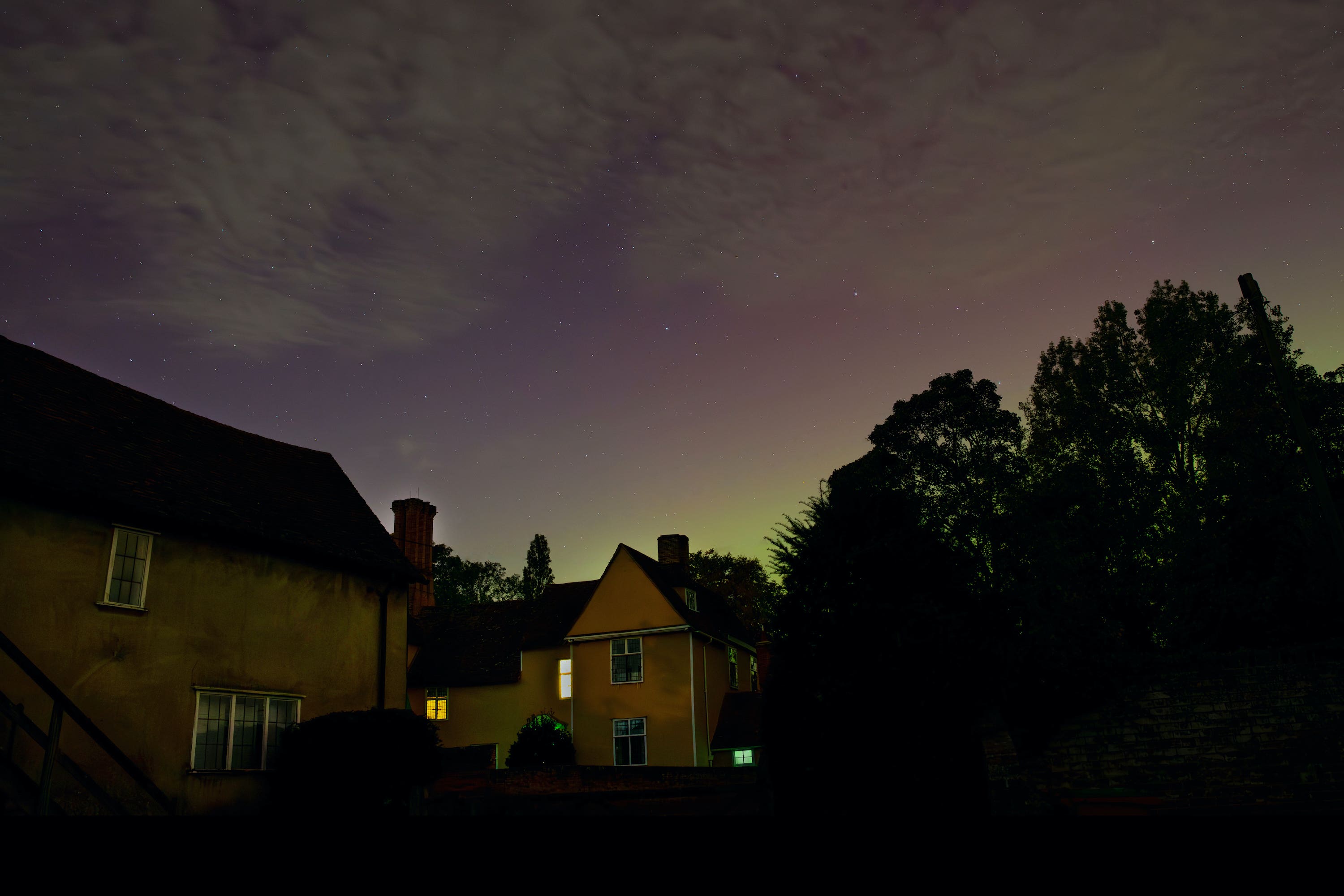
A hamlet in Suffolk has been recognised as England’s first dark sky community by DarkSky International.
Thorington Street, in Dedham Vale, gets “some really lovely dark skies” and the “Milky Way can be seen very clearly in the late summer”, an astronomer said.
The hamlet has been designated as an International DarkSky Community by DarkSky International, an organisation which said it has been spreading the word about light pollution since 1988.
It joins just six other communities with the status in the UK: Orkney, Coll, and Moffatt in Scotland; Presteigne and Gower in Wales; and Sark in the Channel Islands.
The picturesque Dedham Vale and Stour Valley has been a source of inspiration for many artists, from John Constable to Thomas Gainsborough.
DarkSky International has already recognised other areas of England in different categories, such as Bodmin Moor in Cornwall in the parks category, but Thorington Street in Suffolk is England’s first in the community category.
Charles Clover, chairman of the Dedham Vale Society, which initiated the nine-year campaign to get the status for Thorington Street, said it was an “important win”.
A Tudor barn owned by the National Trust is being used as a DarkSky Discovery Centre, for stargazing, astronomy, teaching and community events.
Astronomer Mike Barrett, who helped with the hamlet’s application, said: “Dedham Vale is in a sweet spot.
“It’s the darkest area outside London when you’re coming north.
“It’s snug right in between Colchester, Ipswich, Felixstowe to a certain extent and Sudbury.
“Thorington Street is right in the centre of that sweet spot and we do get some really lovely dark skies here.
“The Milky Way can be seen very clearly in the late summer.”
He said it was “quite difficult” to get the status and during the application process they “had to get the parish council and the county council to say there weren’t going to be any street lights in the community”.
He said they talked to residents and “explained about downlights, timed lighting, motion sensors, that sort of thing, but they were all very much on board already”.
Mr Barrett, who has an observatory in nearby Polstead, said that dark sky community status was a “relatively new classification”.
“I suspect a lot of people don’t know or realise that there’s this international body that does the accreditation so we need to make more awareness of it,” he said.
“Everybody knows about littering, looking after trees, looking after animals, but very often you forget you need to look up as well and conserve the night skies.”
Dan Oakley, policy and destination manager of DarkSky, said: “The level of commitment to achieve dark sky status from such a small community was amazing.”
He said that a “key component of their success” was adopting a lighting management plan, and that they would “undoubtedly inspire other places to follow their example”.
Bookmark popover
Removed from bookmarks