Trump rolls back the clock again and returns car and power pollution to American skies
Rescinding the 2009 rule will leave Americans to pay a high price — up to nearly $4 trillion by 2055, and a health risk to tens of millions, writes Julia Musto
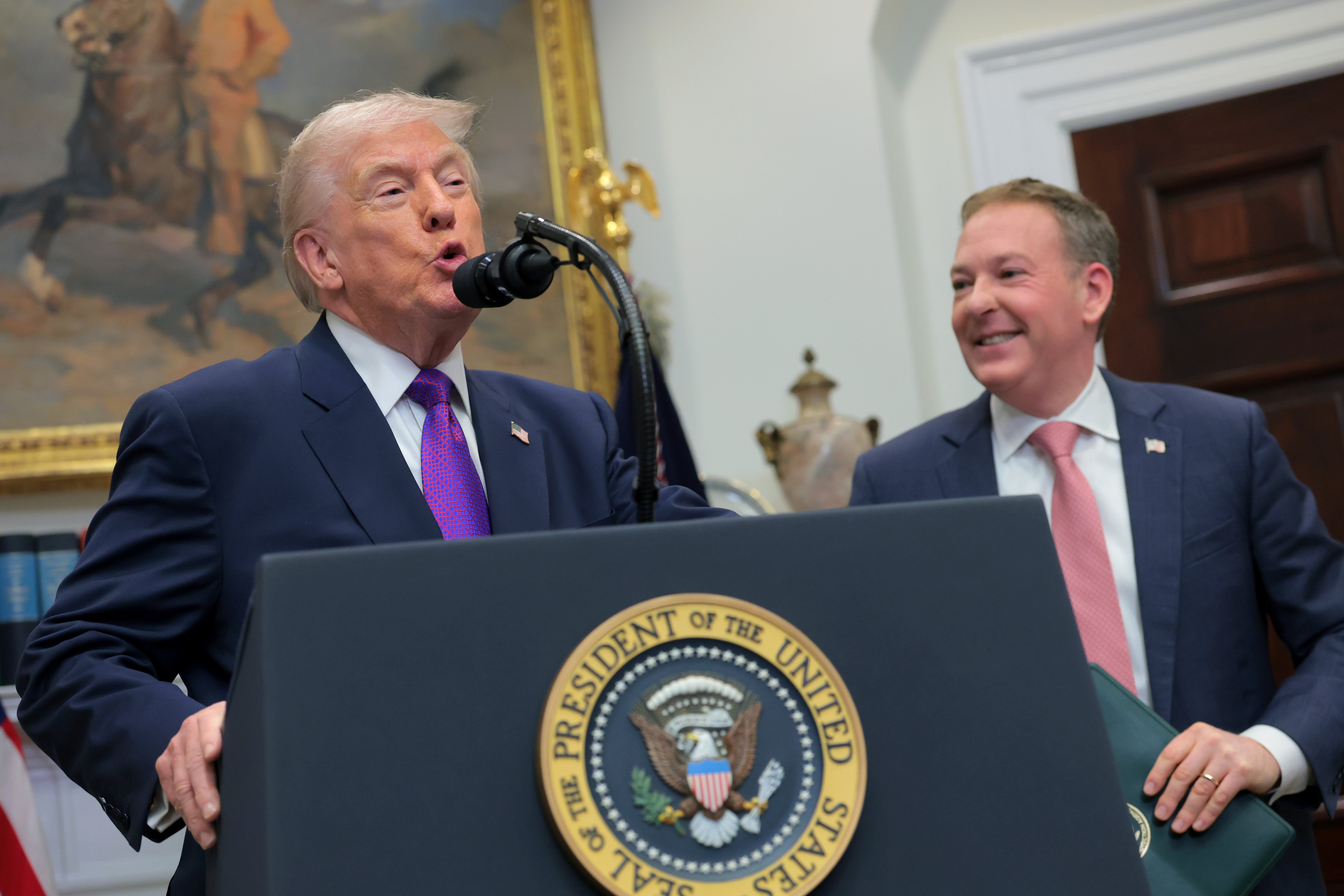
President Donald Trump once again moved to roll back the clock on Thursday, announcing the Environmental Protection Agency would move to rescind the landmark endangerment finding.
The Obama-era rule cleared the way for regulating polluting and planet-warming greenhouse gas emissions, and confirmed that the fossil fuel industry’s emissions endangered peoples’ health. Reversing the 2009 finding will remove emissions standards designed to protect Americans and the environment, as well as contribute to a continued rise in global temperature that's resulted in more extreme climate impacts and a species extinction crisis.
Speaking at the White House, Trump said, without providing evidence, that the endangerment finding had “no basis in fact” and “no basis in law."
"Bad things happened, and yet this radical rule became the legal foundation for the green new scam, one of the greatest scams in history," said Trump, "...that is why, effective immediately, we are repealing the ridiculous endangerment finding and terminating all additional green emission standards imposed unnecessarily on vehicle models and engines between 2012 and 2027 and beyond."
The move represents the latest example of the Trump administration turning back the clock on policy developments from the past half century, including overturning federal abortion rights, making unions weaker and slashing international health and climate aid.

The basis for these decisions has often seemed personal or economic – and flying in the face of scientifically established facts.
Trump has repeatedly said he believes human-caused climate change is a “hoax” and lambasted international actions to limit pollution and emissions.
Show me the money
The EPA said that scrapping the endangerment finding would save American taxpayers more than $1.3 trillion – neglecting to mention how much health care costs or costs related to extreme climate events would be as a result of the move.
Yet, estimates show this rollback – should it survive promised legal challenges – could actually cost a lot more.
An analysis from the Environmental Defense Fund (EDF) showed that the repeal could result in as much as 18 billion more tons of pollution between now and 2055 – around three times the annual emissions today – and impose up to $3.9 trillion in climate harms.
The proposal may make gas more expensive as well, forcing Americans to spend up to $1.7 trillion more on gas, and air pollution costs could reach up to $260 billion.
“This decision will drive up costs for businesses and consumers and weaken our economy,” Sandra Purohit, federal advocacy director for the national nonpartisan business group E2, said in a statement.
Escalating health impacts
But the consequences are much more than just financial. Scientists, environmental groups and leaders say that eliminating the finding will be nothing short of disastrous for human health.
For one, rescinding the finding will stop regulating emissions from vehicles and other sectors – emissions that have been shown to lead to increased incidences of heart disease, cancer, asthma and premature death.
“Globally, fossil fuel pollution is responsible for one in five deaths. In the United States, 350,000 premature deaths in 2018 were attributed to fossil fuel-related pollution, with the highest number of deaths per capita in states like Pennsylvania, Ohio and West Virginia,” the Environmental Energy and Study Institute says.
Increased air pollution from carbon dioxide, methane and other greenhouse gases could lead to as many as 77,000 early deaths and 52 million more asthma attacks, the EDF says.
“Climate change harms health – period. By refusing to acknowledge and act on this, America’s health will suffer preventable harm,” American Lung Association CEO Harold Wimmer said in a release.
Multiplying climate disasters
Scientists have been clear about the science for decades: spewing more greenhouse gases into Earth’s atmosphere will accelerate the planet’s rate of warming.
A warmer atmosphere can hold more moisture, but warmer air is also thirstier, leading to longer and wider droughts.
This will lead to more extreme and frequent severe weather threats, such as droughts, floods, wildfires and storms.
Hurricanes will get larger, flooding storms will have more rain and wildfires will also grow in size and severity.
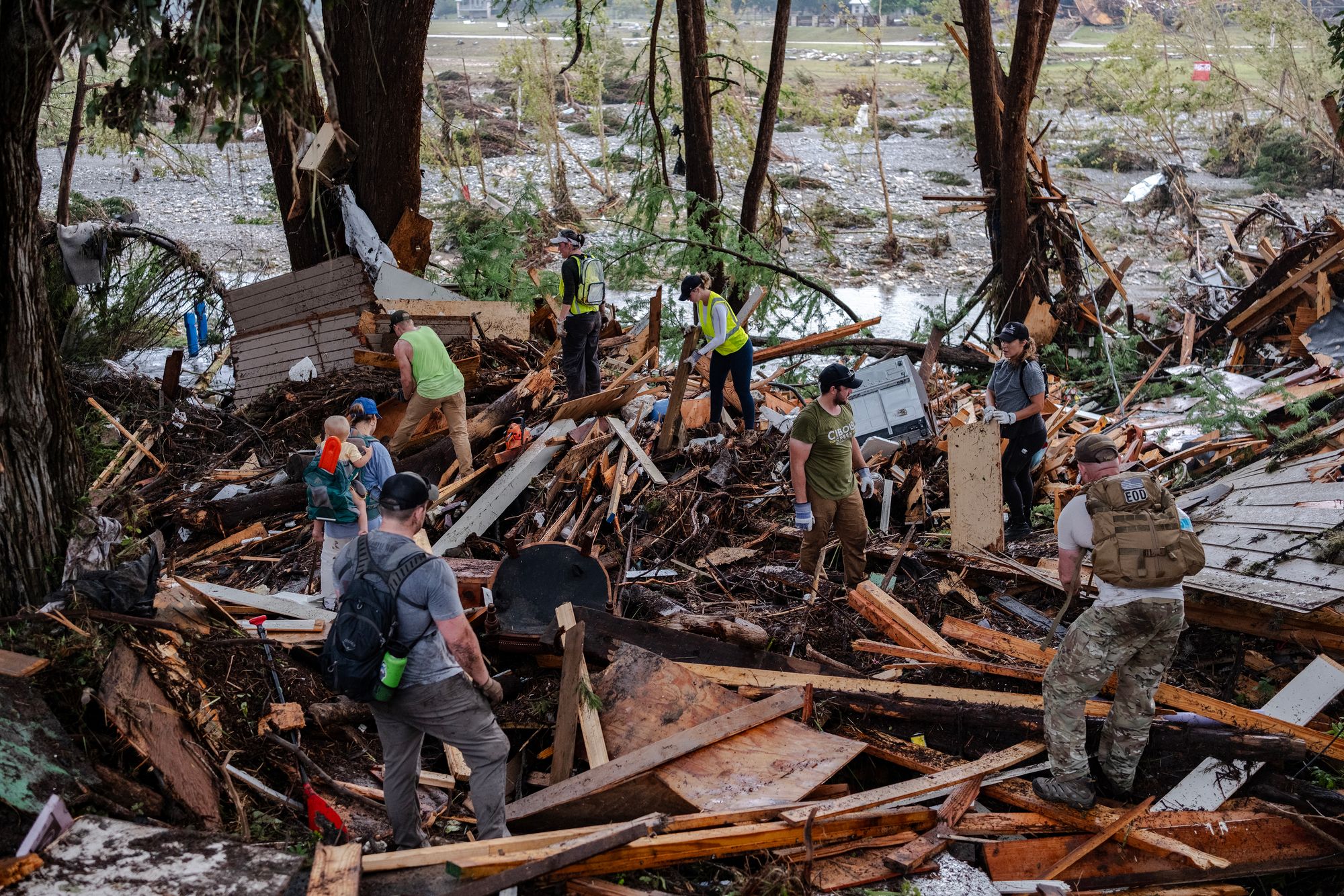
It’s been happening for years already, with hurricanes supercharged by record-warm waters and fires fueled by years of tinderbox conditions and hurricane debris.
Cough up at the pump
The EPA blasted the Biden administration’s push toward electric vehicles.
But, the auto and transportation sectors account for the largest portion of total climate pollution in the U.S., according to the EPA’s own data.
By revoking the endangerment finding and overturning clean vehicle standards, the EDF says it will cost Americans an additional $1.4 trillion for fuel in the next three decades.
The cost of gas will rise by 25 cents per gallon in 2035 and 76 cents per gallon in 2050, the group said.
“The transportation sector is the single largest source of U.S. global heat-trapping emissions. By scrapping vehicle global warming pollution standards today, the Trump administration has co-signed the release of more than 7 billion tons of planet-warming emissions nationally in the decades ahead,” Dr. Gretchen Goldman, president of the Union of Concerned Scientists, said Thursday.
Powerful pollution
One of the biggest concerns about the repeal is regarding the energy sector.
The fossil fuel industry is the primary driver of climate change already, and responsible for around three-quarters of the nation’s total greenhouse gas emissions, according to the U.S. Energy Information Administration. The U.S. is one of the world’s biggest producers of those emissions.
Overturning the endangerment finding essentially gives the industry no guardrails – and could reverse progress on climate already made.
“In practical terms, without the endangerment finding, regulating greenhouse gas emissions is no longer a legal requirement. The science hasn’t changed, but the obligation to act on it has been removed,” the World Resources Institute said.
That would be in the administration’s interest, as the president works to revitalize coal and open protected lands and waters to drilling for oil and gas.
Recently, he said he aims to focus on “beautiful, clean coal.” There is no such thing.
A strong response
Reaction to Thursday’s announcement has been swift and strong.
Environmental groups had been sounding the alarm about the possible decision for months.
“People nationwide will pay the price for this illegal action. With no protections in place, climate change will worsen — that means more air pollution, more health problems, higher energy bills, and more extreme storms,” Manish Bapna, the president and CEO of the Natural Resources Defense Council, said in a release. “Science and the law won’t allow it to stand.”
“The Trump administration justifies this assault on science and our health by falsely claiming that U.S. climate-heating pollution doesn’t matter and that it lacks the authority to cut it,” Dan Becker, director of the Center for Biological Diversity's Safe Climate Transport Campaign, said in a statement shared with The Independent. “That’s a lie, and any six-year-old knows it’s wrong to lie.”
Former president Barack Obama also expressed his concern.
“Today, the Trump administration repealed the endangerment finding: the ruling that served as the basis for limits on tailpipe emissions and power plant rules. Without it, we’ll be less safe, less healthy and less able to fight climate change — all so the fossil fuel industry can make even more money,” he said in a social media post.
The Independent has requested comment from the EPA.
This article has been produced as part of The Independent’s Rethinking Global Aid project
Join our commenting forum
Join thought-provoking conversations, follow other Independent readers and see their replies
Comments
Bookmark popover
Removed from bookmarks