Why Japan issues ‘megaquake’ advisories after significant earthquakes
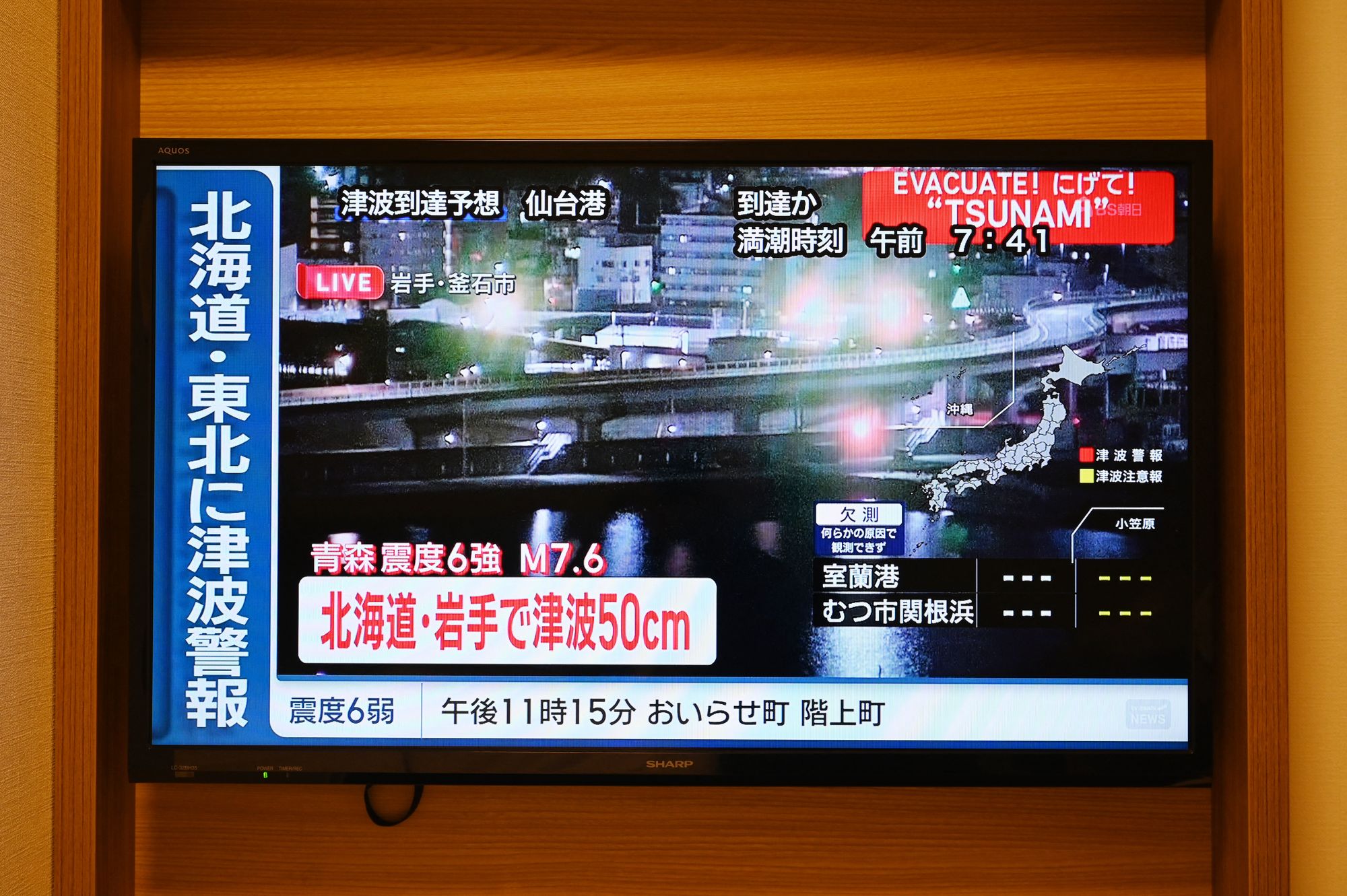
A tsunami warning flashes over live footage of a waterfront area, on a television screen in Sapporo, in Japan's northern Hokkaido prefecture on December 9, 2025 (GREG BAKER / AFP via Getty Images)
A powerful 7.5-magnitude earthquake struck off the coast of northeastern Japan late Monday, prompting tsunami warnings and evacuation orders for approximately 90,000 residents.
The Japan Meteorological Agency initially warned of tsunamis up to 3 meters (10 feet) high, but hours later downgraded the warnings to advisories after observed waves reached 20-70 cm (7 to 27 inches).
Japan is highly prone to earthquakes, experiencing a tremor every five minutes and accounting for 20% of global quakes over magnitude 6.0 due to its location in the Pacific “Ring of Fire.”
One of the country’s most-deadly earthquakes, a 9.0-magnitude, struck in March 2011 and triggered a series of massive tsunamis two days after a magnitude 7-level quake.
That tragedy claimed nearly 20,000 lives and led Japan to implement a one-week “megaquake” advisory system after significant earthquakes in a region, a system that was most recently activated in August last year for the Nankai Trough area in central-southern Japan.