Communist Party congress gets underway to chart Vietnam’s future amid crackdown on critics
To Lam expected to retain role as party chief and also seek state presidency
Vietnamese leader To Lam vowed to tackle corruption and boost economic growth as the Communist Party congress convened to decide his political future.
The week-long 14th congress began in Hanoi on Monday to select the next party chief, the most powerful position in the single-party country.
Decisions about leadership are made by top party officials behind closed doors. Citizens who aren’t members of the party are barred from publicly discussing or endorsing candidates for the top posts.
Delegates to the congress are subjected to stringent security protocols: they can’t access the mobile phone network or the internet and must stay in their designated accommodation.
The communist government is also accused of intensifying the arrests of its critics ahead of the congress.
To Lam, 68, is likely to retain his role as the party’s general secretary and also seek the state presidency like his ally Xi Jinping of China. The announcement is expected by the end of the week.
In a 40-minute speech, To Lam said the congress was taking place in a time of “many overlapping difficulties and challenges, from natural disasters, storms and floods to epidemics, security risks, fierce strategic competition, and major disruptions in the energy and food supply chains".
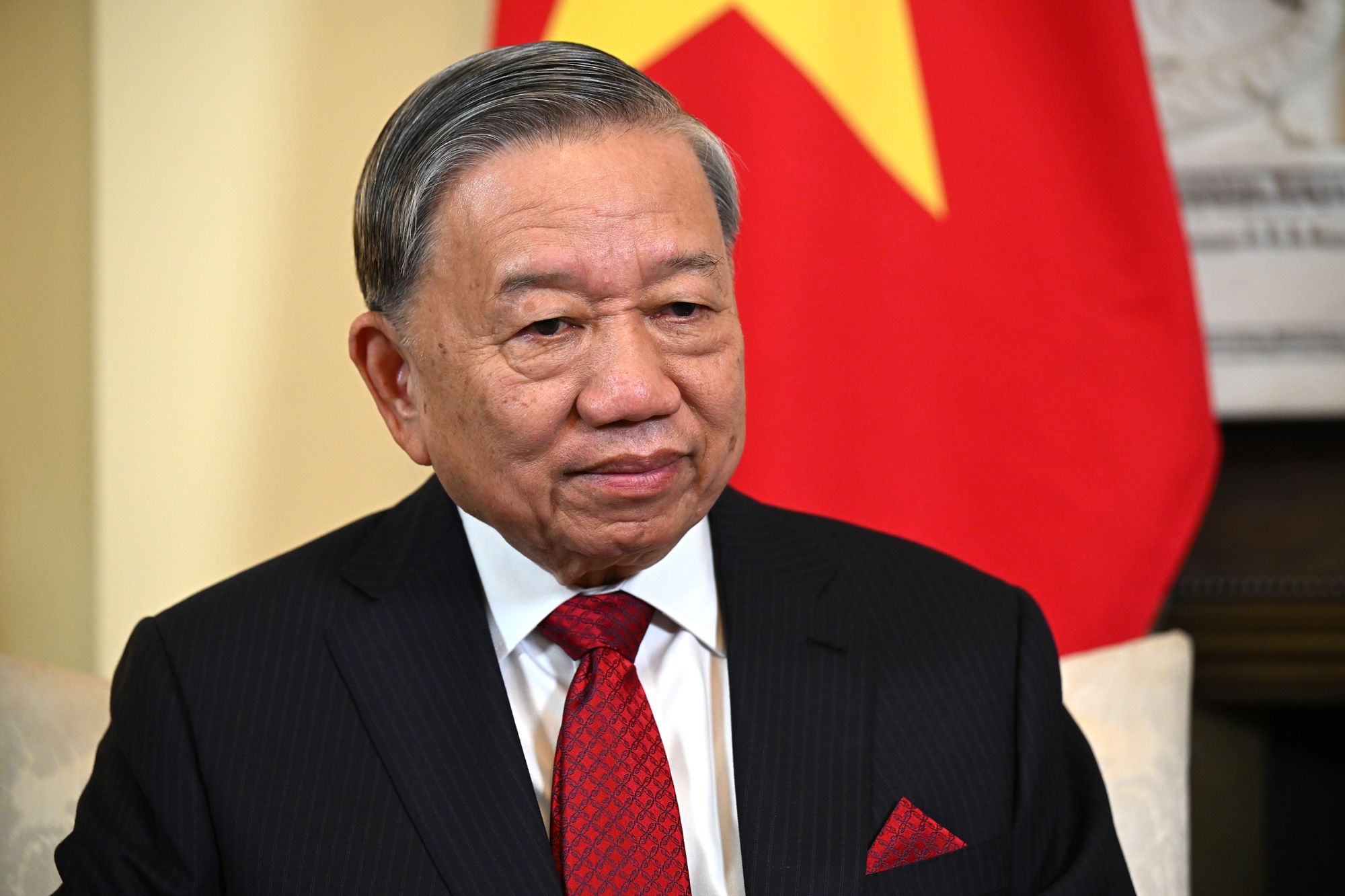
The general secretary told the 1,600-strong delegation that “all wrongdoing must be addressed”, and urged party officials to press ahead with administrative reforms and confront "waste and negativity in government".
He promised to continue the fight against corruption, although during his tenure the anti-graft drive launched by predecessor Nguyen Phu Trong abated as To Lam sought to speed up project approvals to boost growth.
"Infrastructure must be developed to adapt to climate change and ensure strong regional, inter-regional, and global connectivity," he said.
He said Vietnam needed to cut red tape and expand trade to protect its independence and national interests. The 20 per cent import levy imposed by Donald Trump last year didn’t restrain the growth of Vietnamese exports to the US, leading to a record surplus with Washington.
But Vietnam is seeking to increase trade with other partners as the impact of the US tariffs will likely be felt in the coming months.
A party document submitted to the congress set Vietnam's annual growth goal at no less than 10 per cent until 2030, far above the missed target of 6.5-7 per cent for the first half of the decade.
To Lam is widely seen as a risk-taker. Since taking power in 2024, he has eliminated whole layers of government, abolished eight ministries, and pushed ambitious power and rail projects, putting thousands of civil servants out of their jobs, drawing sharp criticism.
He has also moved to tighten state security, expanding police powers to vet laws and regulate businesses, while intensifying rivalry with the army which controls a web of economic interests.
At the same time, the government has intensified its crackdown on dissent by arresting activists, journalists, lawyers, and critics.
Hanoi police arrested blogger Hoang Thi Hong Thai on 7 January allegedly for making social media comments critical of the government which garnered thousands of views.
She was barred from leaving Vietnam last April and interrogated by police about her writing. She was also threatened with arrest, forcing her to announce that she had no choice but to stop writing.
She was later arrested for “making, storing, disseminating, or propagating information, documents, or items aimed at opposing the state".
On December 31, a Hanoi court sentenced in absentia human rights lawyer Nguyen Van Dai, 56, to 17 years in jail for criticising the Communist Party’s leaders on social media.
Another Hanoi court sentenced in absentia the Berlin-based journalist Le Trung Khoa to 17 years in prison. The 54-year-old is the founder and editor of Thoibao, an online media outlet that publishes political news and commentary about Vietnam’s leaders.
Three of his alleged “accomplices” – Do Van Nga Huynh Bao Duc, and Pham Quang Thien – were sentenced to seven, six-and-a-half and five-and-a-half years to prison, respectively.
On 27 December, an appeals court in Da Nang upheld the 11-year prison sentence of rights activist Trinh Ba Phuong for allegedly keeping a sign critical of the Communist Party in his prison cell.
“‘It’s that time again for escalating arrests and jailing prominent critics ahead of Vietnam’s Communist Party congress,” Patricia Gossman, senior associate Asia director at Human Rights Watch, said.
“Not only does the government block citizens from choosing their own leaders, but the authorities gag those they think might complain about the process.”
Reporters Without Borders, which calls Vietnam “one of the world’s biggest prisons for journalists”, ranks the Southeast Asian country 173rd in its press freedom index of 180 countries.
Join our commenting forum
Join thought-provoking conversations, follow other Independent readers and see their replies
Comments
Bookmark popover
Removed from bookmarks