Thailand races to contain outbreak of deadly feline virus after 72 tigers die in tourist parks
Tests found that the tigers were infected with feline parvovirus
Thailand is trying to contain a devastating disease outbreak that has killed at least 72 captive tigers at wildlife parks in the northern province of Chiang Mai, officials said on Saturday.
The majority of the deaths were recorded at Tiger Kingdom Mae Taeng and Tiger Kingdom Mae Rim, two privately operated animal parks that allow visitors to interact closely with big cats.
Between 8 and 19 February, 51 tigers died at Mae Taeng and 21 at Mae Rim, according to a timeline released by the regional Protected Area Office.
Preliminary tests by livestock officials found that the 72 dead tigers were infected with feline parvovirus, also known as feline panleukopenia, reported The Bangkok Post.
Veterinary teams from the Chiang Mai provincial livestock office said autopsies confirmed the presence of the virus, while laboratory tests on samples from the carcasses also detected canine distemper virus (CDV) and Mycoplasma bacteria. No traces of influenza A, which causes bird flu, were found.
Feline parvovirus is a highly contagious and often fatal disease that severely attacks the digestive system and immune response, causing vomiting, bloody diarrhoea, high fever, lethargy and loss of appetite.
Canine distemper is a highly contagious virus that spreads through close contact and attacks the lungs, stomach, and sometimes the brain, and it can be fatal in big cats. Mycoplasma is a bacterial infection that affects the respiratory system and can make pneumonia and breathing problems significantly worse, particularly in animals with weakened immune systems.
“Treating sick tigers is very different from treating dogs and cats. Dogs and cats live closely with us, so when they show symptoms, we can respond and provide treatment right away. Tigers, however, aren’t living closely with humans. By the time we notice that something is wrong, the illness may already be advanced,” Somchuan Ratanamungklanon, director-general of Thailand’s department of livestock development, told local media.
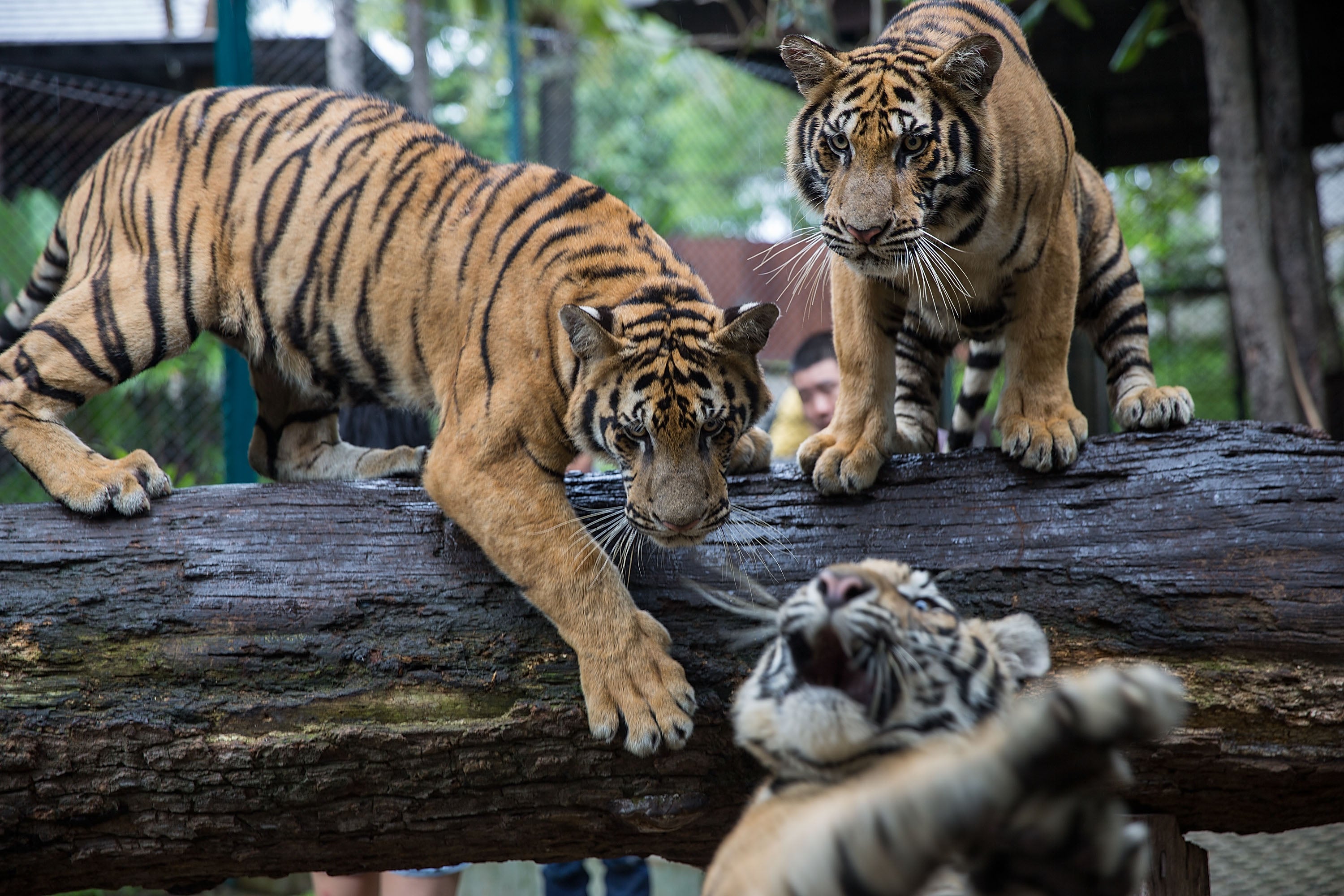
The department of livestock development said that inbreeding among captive tigers may have weakened the animals’ immune systems, which could have increased their susceptibility to infection and accelerated the spread of disease.
Authorities have temporarily closed Tiger Kingdom Mae Rim for 14 days, restricted access to both facilities, and deployed teams to disinfect enclosures and equipment.
The Independent has reached out to Tiger Kingdom Chiang Mai for comment.
All surviving tigers have been relocated to quarantine and care centres in Mae Taeng district for close monitoring, and plans are being made to vaccinate healthy animals to prevent further spread, according to The Nation Thailand.
Somchuan said strict biosecurity and disinfection controls were being enforced to limit transmission, and added that canine distemper virus does not infect humans.
“These tigers died the way they lived – in misery, confinement and fear,” the animal rights organisation PETA Asia told AFP.
“If tourists stayed away, these places would quickly become unprofitable, and tragedies like this would be far less likely to happen.”
Thailand has seen serious outbreaks of disease in captive big cats before. In 2004, during the spread of highly pathogenic avian influenza H5N1, at least 147 tigers at the Sriracha Tiger Zoo in Chonburi Province either died from infection or were euthanised to stop the virus spreading.
In 2024, dozens of captive tigers and other big cats died in Vietnam after contracting H5N1 at privately run zoos and safari parks.
Join our commenting forum
Join thought-provoking conversations, follow other Independent readers and see their replies
Comments
Bookmark popover
Removed from bookmarks