New Taliban penal code puts husbands on par with ‘slave masters’ and legalises domestic violence
A Kabul-based legal adviser says it is now ‘impossible for women to get any justice’ in the Taliban-run courts. Arpan Rai reports
The Taliban has published a new penal code enshrining some of its most backward practices into the law of the land in Afghanistan, with women in particular set to suffer at the hands of the courts.
Signed by the hardline Islamist group’s supreme leader Hiabatullah Akhundzada, the 90-page criminal code includes anachronistic stipulations harking back to Islamic scripture, such as different levels of punishment depending on whether the offender is “free” or “a slave”.
It effectively creates a new caste system of upper and lower members of Afghan society, allowing religious leaders or mullahs at the top virtual immunity from criminal prosecution and setting out the harshest punishments for those of the working class.
Perhaps most alarmingly, the code effectively appears to put women on a par with “slaves”, with clauses stating that either “slave masters” or husbands can mete out discretionary punishment in the form of beatings to their wives or subordinates.
The Independent has seen a copy of the criminal code, called De Mahakumu Jazaai Osulnama, which has been distributed across courts in Afghanistan.
Many people are afraid to speak out against the code for fear of recriminations from the Taliban, even on condition of anonymity. After ripples of discontent started spreading online and via activists based outside the country, the Taliban has now issued a separate ruling stating that even discussing the new code is itself an offence, rights groups say.
The code states that corporal punishment for serious crimes will be carried out not by the correctional services, but by Islamic clerics.
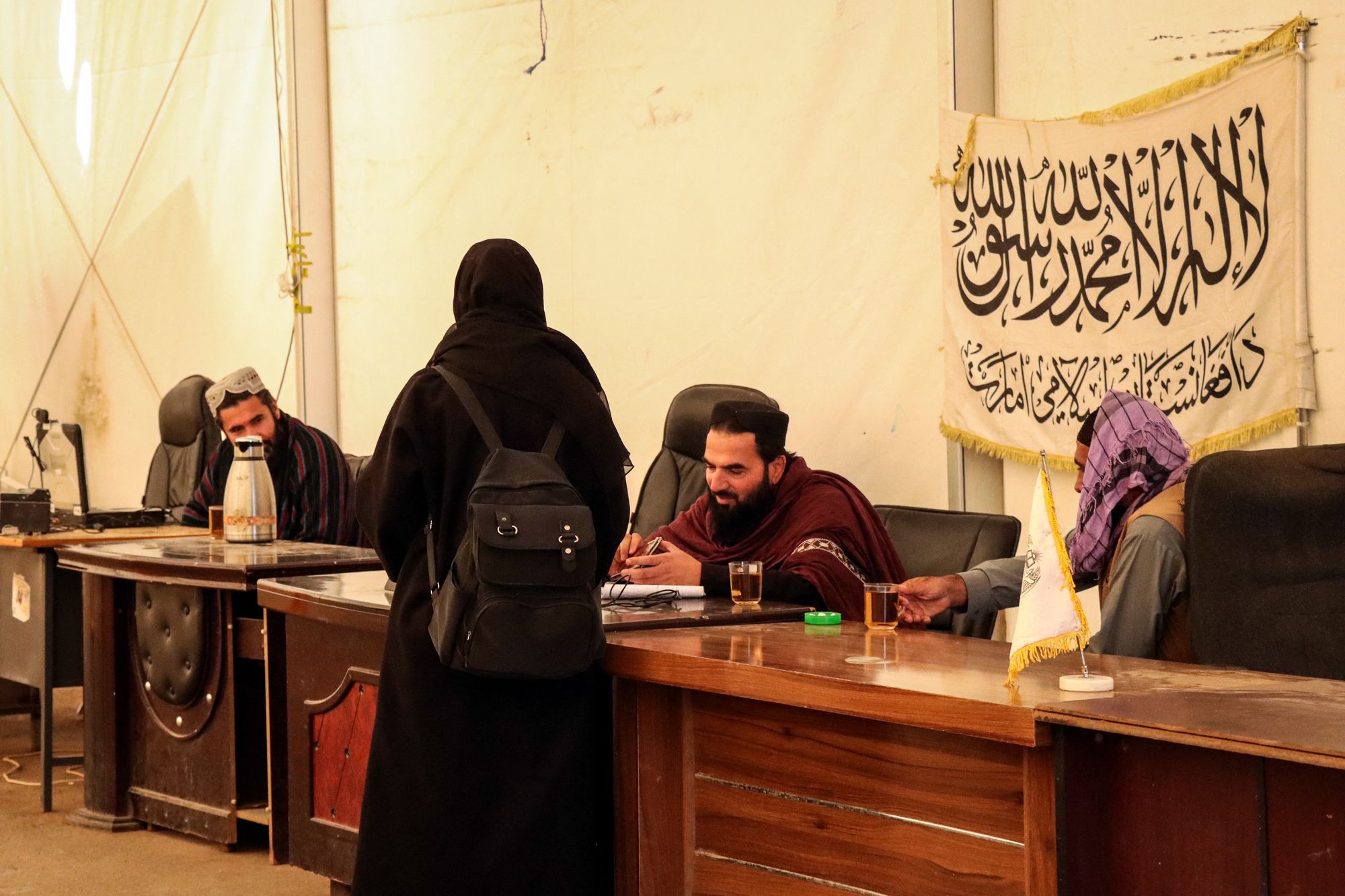
It encourages less serious misdemeanours to be dealt with through a “ta’zir” (discretionary punishment) – in other words, in cases where the “offender” is a wife, a beating by her husband.
The code does provide a route to justice for women who are assaulted, but they are required to prove they have suffered serious bodily harm by showing their wounds to the judge – while at the same time being required to remain fully covered. They are also required to be accompanied to the court by their husband or male chaperone (mehram) – even though the majority of offenders in such cases are the husbands themselves.
A legal adviser working in the Afghan capital, speaking on condition of anonymity, told The Independent that women faced an “extremely lengthy and difficult” process to get justice for assaults under Taliban law.
She cited one of her recent cases where a woman was beaten by a Taliban guard during a visit to her husband in prison. When she complained to the authorities, she was told her plea would not be heard without her male chaperone being present – the husband who was behind bars.
She told them if she had a chaperone, a mehram, the Taliban guard would not have assaulted her in the first place, the legal adviser said. “She cried and shouted in the public that death is better [than the process she is going through],” she said. “It is impossible for women to get any justice for an assault that happens to them.”
It is a stark deterioration from the progress made under the previous Nato-backed Afghan administration, which had introduced tough new measures against forced marriage, rape and other forms of gender-based violence. Domestic violence against women invited punishment from three months to one year.
Under the new code, even if an Afghan woman gets through all the legal and social hurdles to prove she has been the subject of a serious assault by her spouse, the husband will be given a maximum sentence of 15 days.
The Taliban has neither condemned or explicitly prohibited physical, psychological or sexual violence against women in the new code, human rights experts told The Independent.
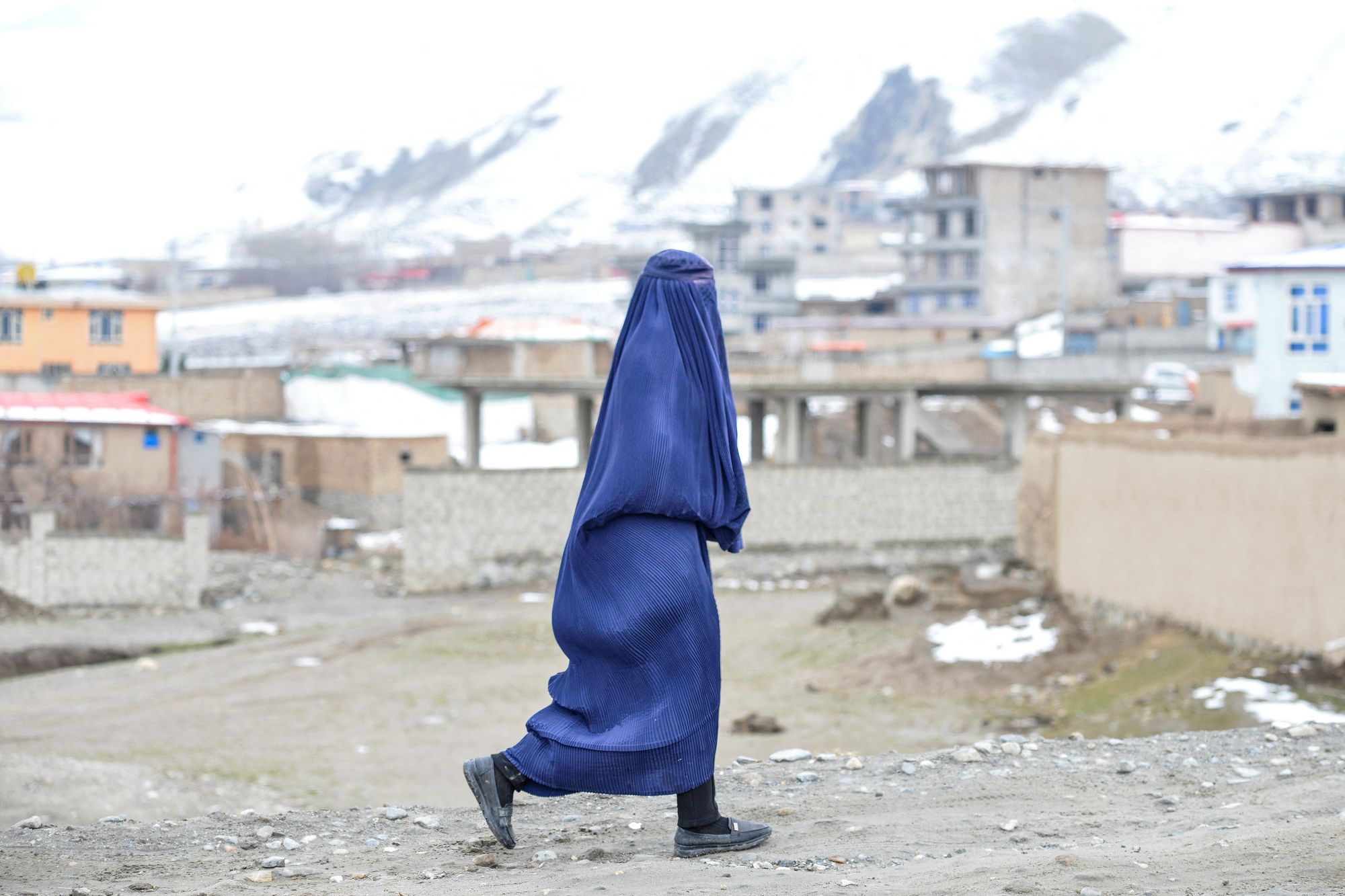
Rawadari, a human rights movement tracking the hardline Islamist regime in Afghanistan that mostly operates in exile, said another part of the code does not allow women to take safe sanctuary at their parents’ home.
“Article 34 states that if a woman repeatedly goes to her father’s house or that of other relatives without her husband’s permission and does not return home despite her husband’s request, the woman and any member of her family and relatives who has prevented her from going to her husband’s house are deemed criminal and will be sentenced to three months’ imprisonment,” the organisation said in a statement.
“This provision, particularly in the case of women who take refuge at their parents’ house and relatives’ homes from violence and maltreatment by their husbands, exposes them to continued domestic violence and strips them of family and community protection, the only remaining protection for women victims of domestic violence in absence of formal and legal remedies,” Rawadari said.
Shaharzad Akbar, Rawadri’s executive director, told The Independent that the code makes religious scholars responsible for enforcing systemic restrictions on the rights of women, girls and minorities, while the mullahs themselves are granted sweeping immunity from legal consequences.
The new legal system also effectively institutes a caste system in which punishment is decided not by the nature of the crime, but the social status of the criminal. At the top of the hierarchy are religious scholars, followed by the elites, the “middle class” and the “lower class” at the bottom.
If a religious scholar commits a crime, they will receive “advice” regarding their actions. A member of the social elite would receive a maximum punishment of “advice” and a court summons if needed. For the “middle class” the maximum punishment is imprisonment, while for the “lower class” it is imprisonment combined with corporal punishment.
“So the mullah is king now,” Akbar says. “The mullah calls the shots, and the mullah gets all the privileges that ordinary people can’t, because they're put even above elites.”
Join our commenting forum
Join thought-provoking conversations, follow other Independent readers and see their replies
Comments
Bookmark popover
Removed from bookmarks