Bangladesh’s new prime minister to be sworn in after historic election win
Muhammad Yunus led South Asian country for 18 months after a bloody street agitation ousted Sheikh Hasina


Muhammad Yunus has stepped down as Bangladesh’s interim leader, paving the way for Tarique Rahman to take over as the new prime minister.
Mr Yunus, a Nobel laureate, returned from self-exile in August 2024 to lead the country after a bloody mass agitation felled Sheikh Hasina’s Awami League government and sent her fleeing to India.
The former banker announced his resignation after Mr Rahman’s Bangladeshi Nationalist Party won a landslide mandate in the first parliamentary election since Ms Hasina’s ouster.
Mr Rahman, 60, the son of late prime minister Khaleda Zia, led his party to victory less than two months after returning from a 17-year self-exile in December. He will take his oath on Tuesday.
Breaking with a long-standing tradition, the swearing-in ceremony will be held at the Parliament Complex instead of Bangabhaban, the presidential palace, and in the presence of foreign leaders. President Mohammed Shahabuddin will administer the oath to the new cabinet at 4pm local time.
Indian parliament speaker Om Birla, Pakistani planning minister Ahsan Iqbal, Sri Lankan health minister Nalinda Jayatiss, Bhutanese prime minister Tshering Topgay, and Maldivian president Mohamed Muizzu will be in attendance. British undersecretary of state Seema Malhotra is also expected.
Mr Rahman’s party bagged 209 of the 300 parliamentary seats while Jamaat-e-Islami, an Islamist party, won 68 seats. Ms Hasina’s Awami League, winner of the previous four elections, was barred from contesting.
On election day on 12 February, Mr Yunus had declared the occasion a celebration akin to “a mega Eid”.
“Today, the interim government is stepping down,” Mr Yunus, 85, said in his farewell speech. “But let the practice of democracy, freedom of speech, and fundamental rights that has begun not be halted.”
He described Ms Hasina’s ouster as a "day of great liberation".
"What a day of joy it was!” he added. “Bangladeshis across the world shed tears of happiness.”
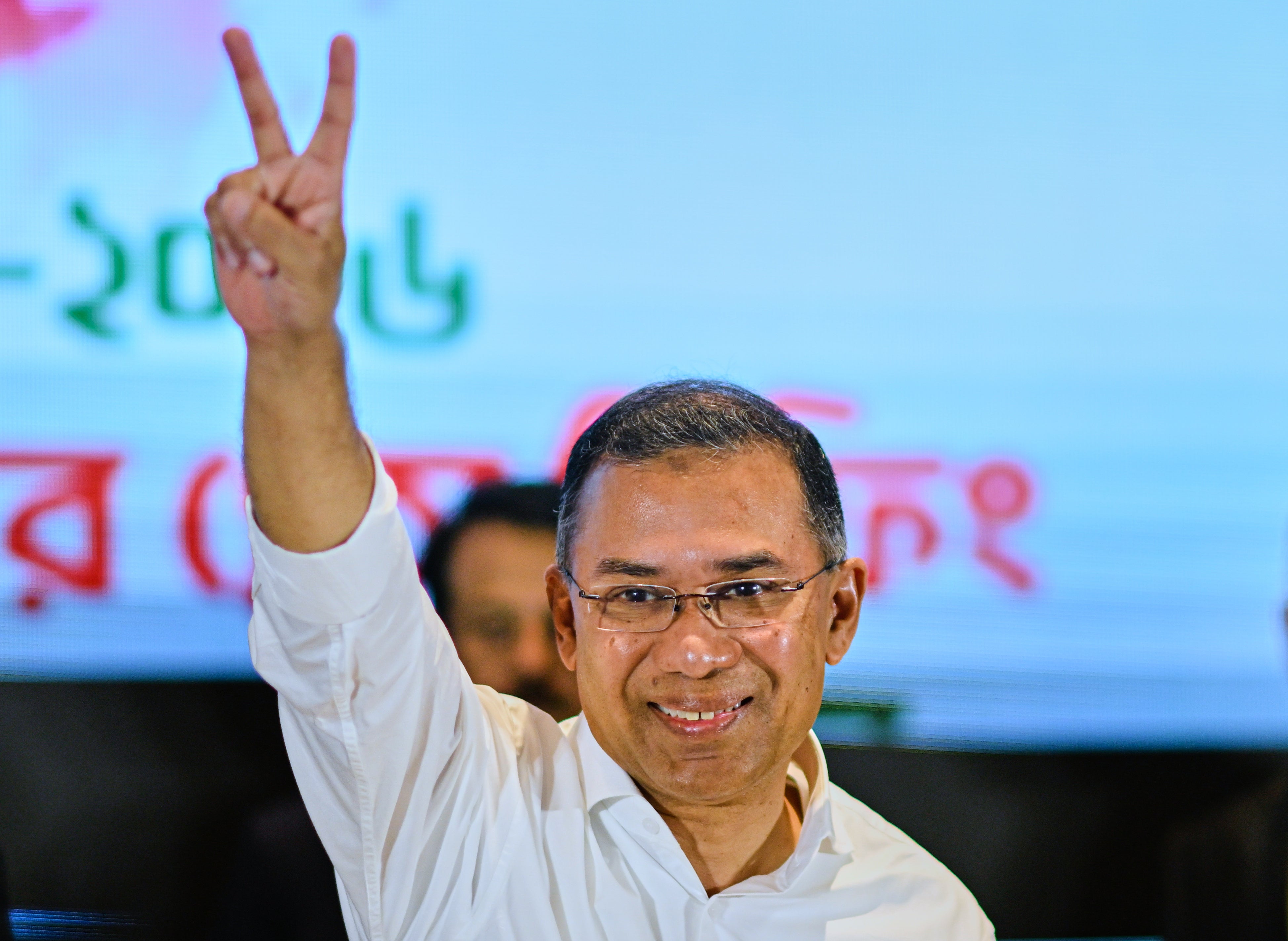
In addition to electing a new government, Bangladeshi voters endorsed sweeping democratic reforms in a national referendum held the same day.
The referendum, which proposed major changes to the country’s constitution, was seen as a major pillar of Dr Yunus’s transition agenda.
It proposed term limits for prime ministers, the creation of an upper house of parliament, stronger presidential powers, and greater judicial independence.
“We didn’t start from zero, we started from a deficit,” Mr Yunus said. “Sweeping away the ruins, we rebuilt institutions and set the course for reforms.”
After his victory, Mr Rahman visited the homes of his political rivals, including Jamaat-e-Islami chief Shafiqur Rahman and National Citizen Party convener Nahid Islam, and held what were described as cordial discussions.
In a press briefing in Dhaka, Mr Rahman said his priorities would be to improve law and order and handle a fragile economy.
“We are about to begin our journey in a situation marked by a fragile economy left behind by the authoritarian regime, weakened constitutional and statutory institutions and a deteriorating law and order situation,” he told reporters.
Join our commenting forum
Join thought-provoking conversations, follow other Independent readers and see their replies
Comments
Bookmark popover
Removed from bookmarks