Sheikh Hasina’s son says government ‘completely mishandled’ Gen Z protests as Bangladesh heads to polls
Sajeeb Wazed tells The Independent’s Alisha Rahaman Sarkar that the ousted government failed to ‘sit down’ with student protesters before it was forced from power – but stops short of blaming his mother
The son of Bangladesh’s ousted prime minister has made the rare admission that his mother’s government “mishandled” the volatile situation in Dhaka during the popular Gen Z uprising of 2024, which ultimately brought down the country’s oldest political party.
Over 128 million voters will cast their ballots on Thursday to restore democracy in Bangladesh after an 18-month period of political and economic turbulence.
But, Sajeeb Wazed, son of Sheikh Hasina, tells The Independent the election won’t bring stability to the country. Now banned from contesting, Wazed has urged loyalists of the Awami League to boycott the “sham” elections.
Reflecting back on the days following the “July Revolution” of 2024 led by people under 30, Wazed says the police action was brutal and unnecessary and that there was a “failure of communication and a failure of judgement”.
“Our government did not sit down with the protesters. And then you had the Islamists taking advantage of the protests, the militants jumping in... armed attacks... taking this as an opportunity to sort of try and overthrow the government.
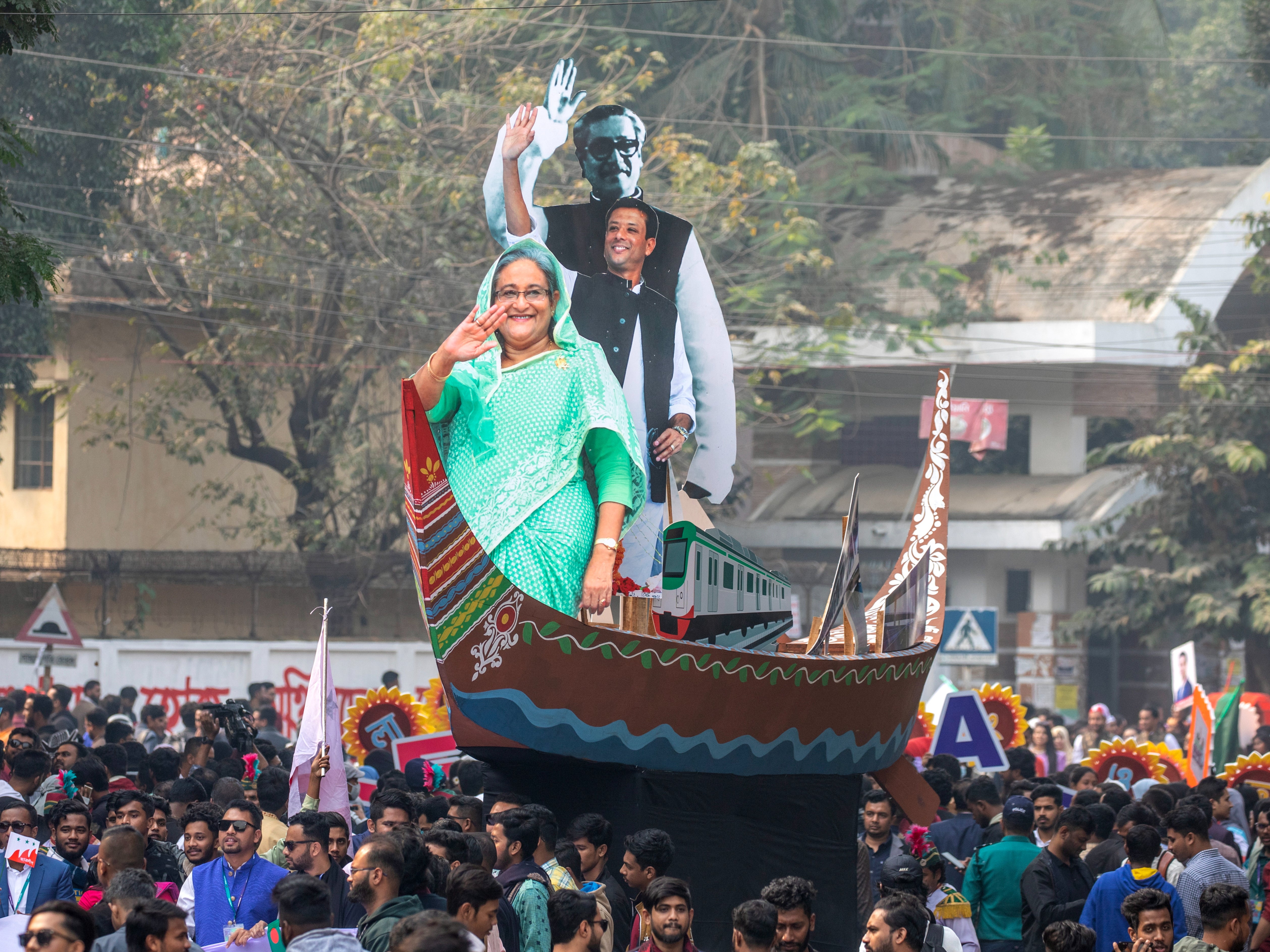
“And the protests turned violent. And at that point, our government completely mishandled it as well. You had law enforcement that used excessive force. We let it, our government let it completely get out of hand. It should never have gone that far. And, you know, it's regrettable,” he says.
A government crackdown led to up to 1,400 deaths, according to the UN. A Bangladeshi tribunal court sentenced Hasina to death in absentia in November last year for crimes against humanity – an unprecedented order that was met with fierce criticism.
He says there has been a de facto ban on “all progressive and non-Islamic parties in Bangladesh”.
“This is a completely manipulated election, in particular to give Jamaat (Jamaat-e-Islami) a much greater proportion of seats in parliament than they would ever get in a fair election,” he says in a phone interview from Washington.
Wazed says the rise of the once outlawed Jamaat-e-Islami party in the past year has triggered alarm bells amid fears of Islamisation of Bangladesh following reports of targeted violence against minorities.
Hasina, who now lives in “good health” close to the corridors of power in New Delhi, was forced to flee to India as an angry mob marched to her presidential palace in the summer of 2024. Protests that began as a student movement quickly snowballed into a popular revolution against the Awami League government.
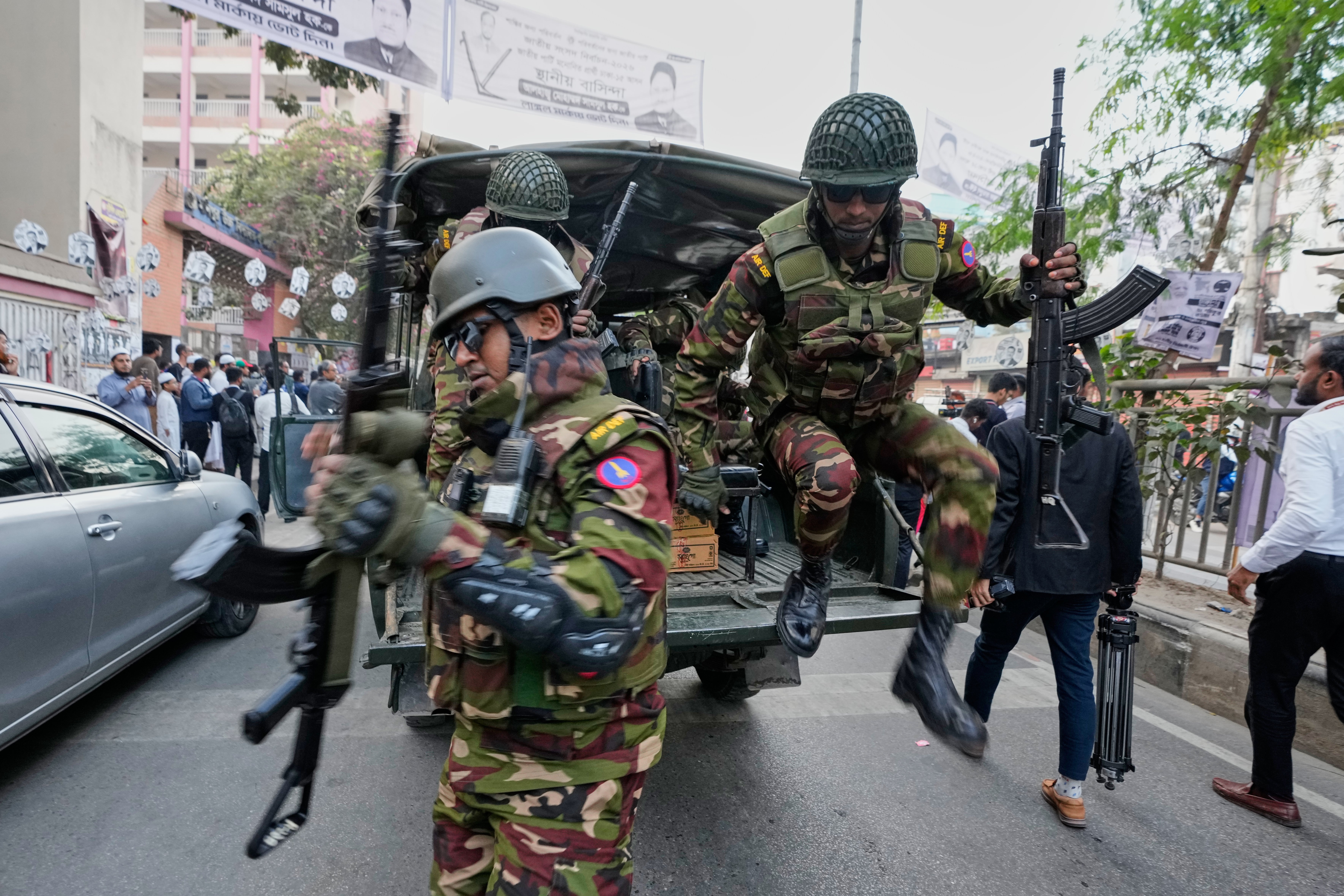
Nobel laureate Muhammad Yunus, who stepped in to govern the country in the absence of a political leader, banned the Awami League from politics citing national security concerns and the need to safeguard witnesses in ongoing criminal trials.
Wazed says Hasina met with the families of the people who died in the uprising and promised them justice. She even formed a judicial committee to investigate the killings, but the body was disbanded by the Yunus administration, he says.
“This regime has granted immunity for the deaths of our people as well, especially for the deaths of police officers. So, I mean, yes, what happened is regrettable, but what happened after is definitely not justice. It's a mockery of justice.”
Hasina was Bangladesh’s longest-serving prime minister, winning consecutive elections from 2009 onwards. She is credited with lifting millions out of poverty as a boom in garment exports boomed, her government walked a careful line between China and India, and Islamist militancy was driven to the fringes of national politics.
But her legacy was overshadowed by allegations of the bloody crackdown, while elections held under her leadership were repeatedly criticised for falling short of democratic standards. Over the years, her government was also accused of tightening its grip on dissent by jailing opposition figures, pursuing critics through sweeping digital security laws, and ruling the country with an iron fist.
Wazed stops short of blaming his mother for the situation following 2024, instead placing responsibility on senior party leaders.
“What happened is, I think because the party was in power for so long, you had several people high up in the government, and it definitely wasn't my mother, but there were people who had been in key positions for far too long. They became far too, how should I put it, authoritarian, frankly speaking. And people such as myself, we weren't happy with it at all,” he says.
Wazed says he recommended that Hasina replace the members, but his pleas went unheard and “the whole party got blamed for that”.
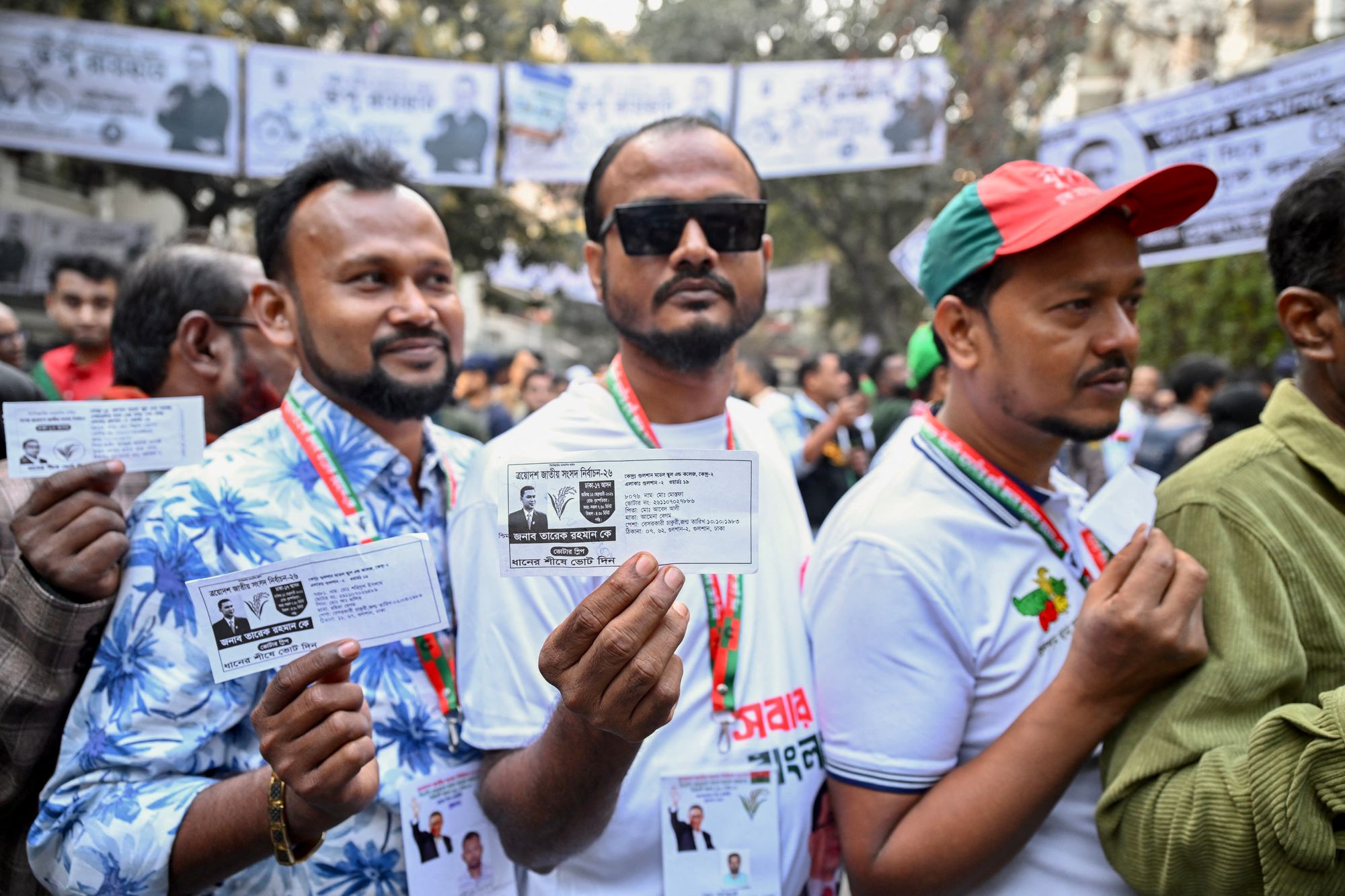
“I can't change the past. What's happened has happened,” he says, adding that since the summer of 2024, the situation in Dhaka worsened. He claims over 500 Awami League members were killed and “hundreds of minorities murdered”.
“In the last few weeks, they've arrested over 20,000 of our activists. They've had several what they call ‘Operation Devil Hunts’, where they've arrested 8,000 to 10,000 at a time. You've had tens of thousands of our senior leaders behind bars without any justice whatsoever, now for a year and a half,” he says.
The Awami League and Bangladesh Nationalist Party are two of the biggest political parties in Bangladesh, almost like the Labour Party and the Tories in the UK, he says. “The BNP have been in government twice before. If you look at their past record, the economy's muddled along. Bangladesh became the most corrupt government in the world. And both times they were voted out of power again because they failed miserably.”
Despite current repression, Wazed believes the Awami League retains deep-rooted support tied to Bangladesh’s independence history and will eventually return. “It is not a matter of if but when about the Awami League’s return to active politics in Bangladesh”, he says.
Nearly a third of Thursday’s voters are Gen Z. Yet Wazed believes their anger at the Awami League will fade, and they will eventually return to the party’s fold.
“Yes, the youth went against my mother in 2024, but at the same time, given how the economy has crashed in the last year and a half, law and order has collapsed, and mob justice has taken over, and even if you talk about freedom of expression, I mean, in the past year and a half, there's been such a climate of fear that in the polls run by youth organisations, it's showing that half of those youths regret what they did, what happened,” he adds.
The Awami League is reaching out to European governments and US lawmakers to highlight the threat of Islamic fundamentalism in Bangladesh.
Wazed says his mother has been “deeply frustrated” by the election developments in Bangladesh.
“But other than that, she's fine. The Indian government is treating her very well. They're treating her as a head of state. They've provided her full security. So she is actually in the safest place in the world that she could be. She is healthy and perfectly safe”.
Join our commenting forum
Join thought-provoking conversations, follow other Independent readers and see their replies
Comments
Bookmark popover
Removed from bookmarks