Who is Sanae Takaichi? Japan’s ‘Iron Lady’ calls snap election after only three months as PM
Conservative leader is seeking to take advantage of strong approval ratings to strengthen her hold over the ruling LDP and reinforce her coalition’s narrow majority
Sanae Takaichi has called a snap election for 8 February, seeking a renewed public mandate for higher spending, tax cuts and a security strategy that would speed up Japan’s military expansion.
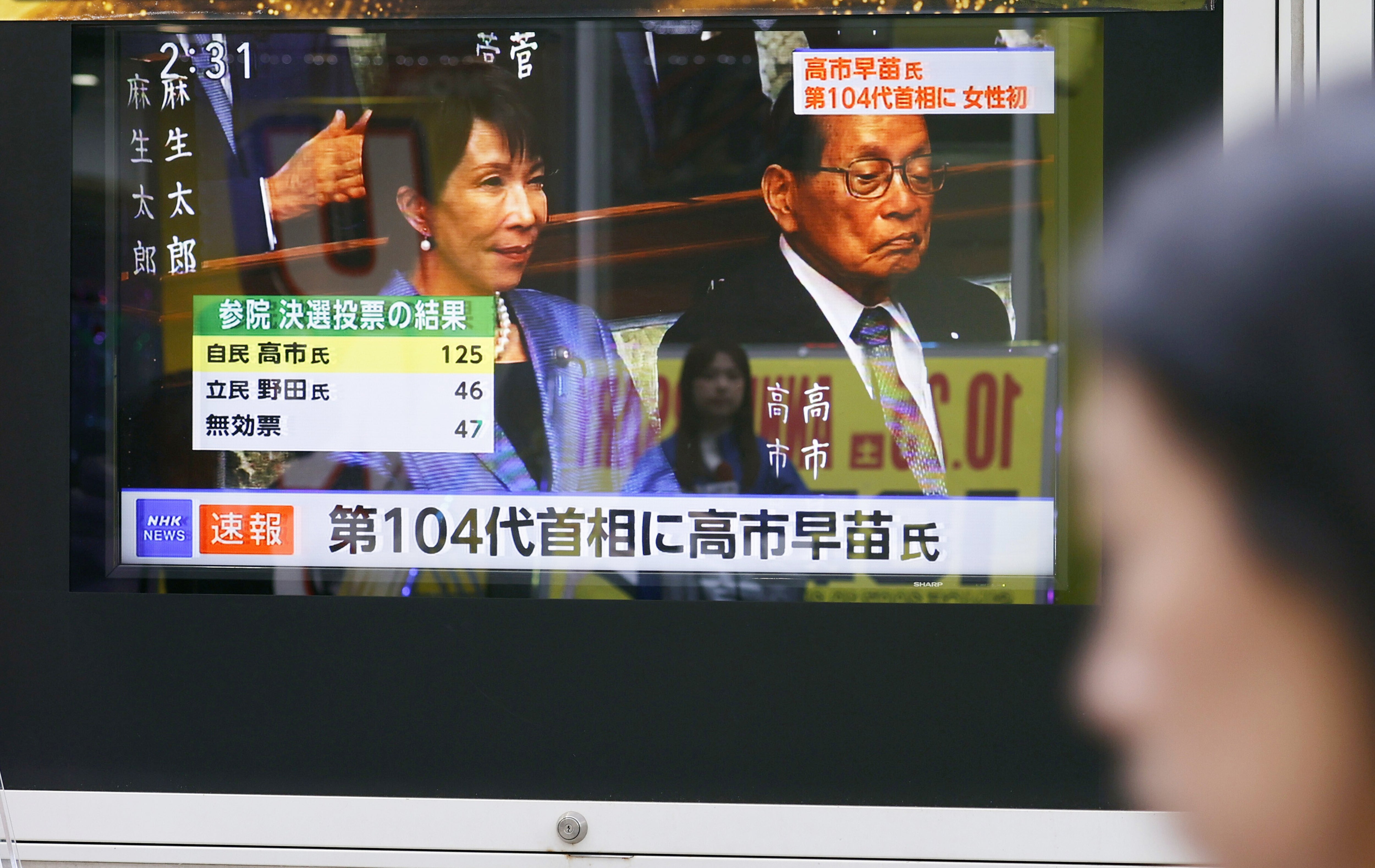
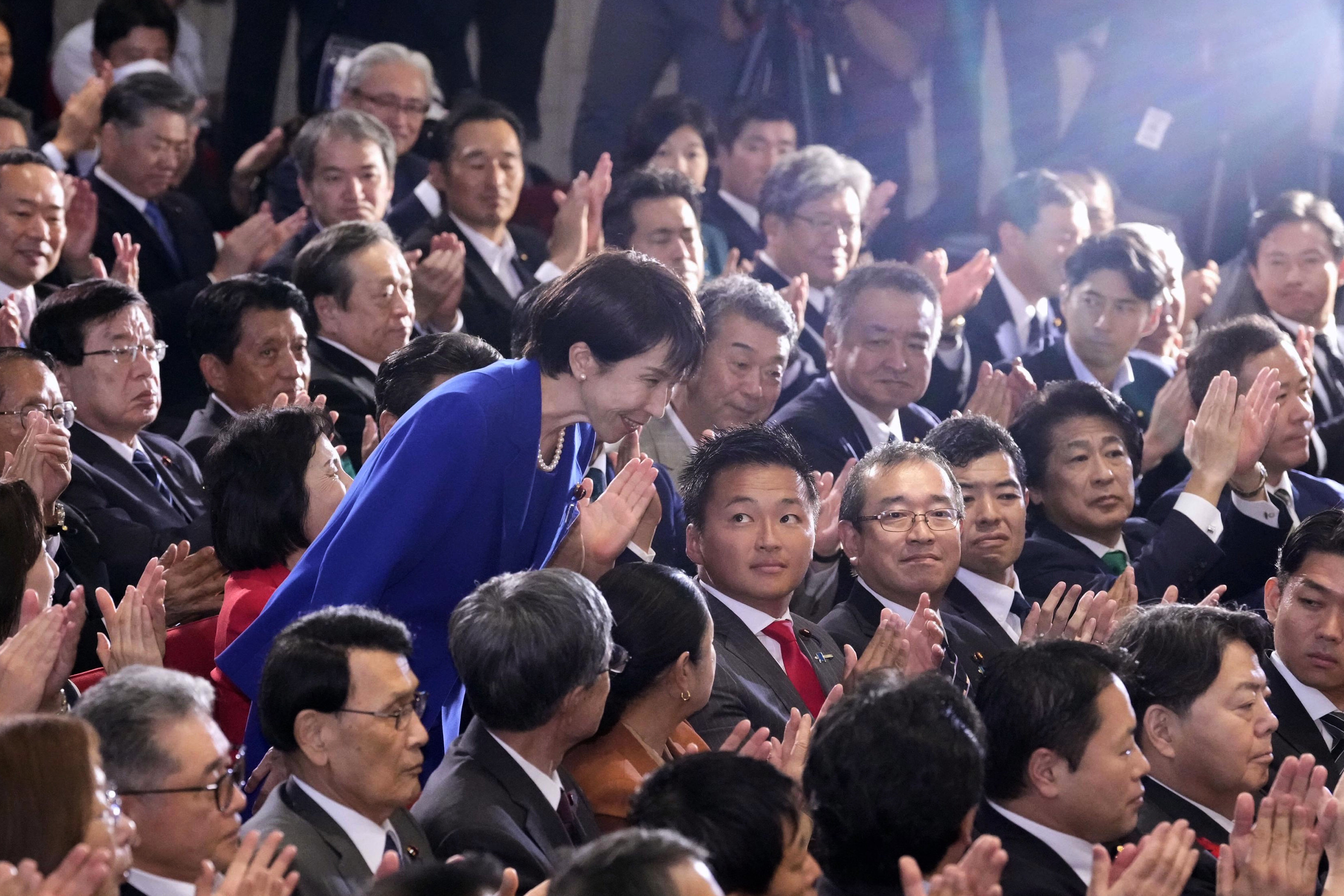
Ms Takaichi, elected Japan’s first woman prime minister in October after a historic parliamentary vote, said she was putting her leadership on the line to build support for her economic and defence agendas.
“I am staking my own political future as prime minister on this election. I want the public to judge directly whether they will entrust me with the management of the nation,” she told a news conference.
Ms Takaichi, 64, won the Liberal Democratic Party’s leadership contest after Shigeru Ishiba suffered heavy electoral losses and resigned. But she secured the country’s top job only after the LDP, which remains the largest party in the parliament, stitched up a coalition with the smaller right-wing Japan Innovation Party, also known as Ishin.
Calling herself the successor of former prime minister Shinzo Abe, whom she was an ally of, Ms Takaichi said she would pick Satsuki Katayama as the nation’s first woman finance minister at a time of rising prices and slowing growth.
She vowed to "work, work, work" to turn "people's anxieties about their daily lives and the future into hope".
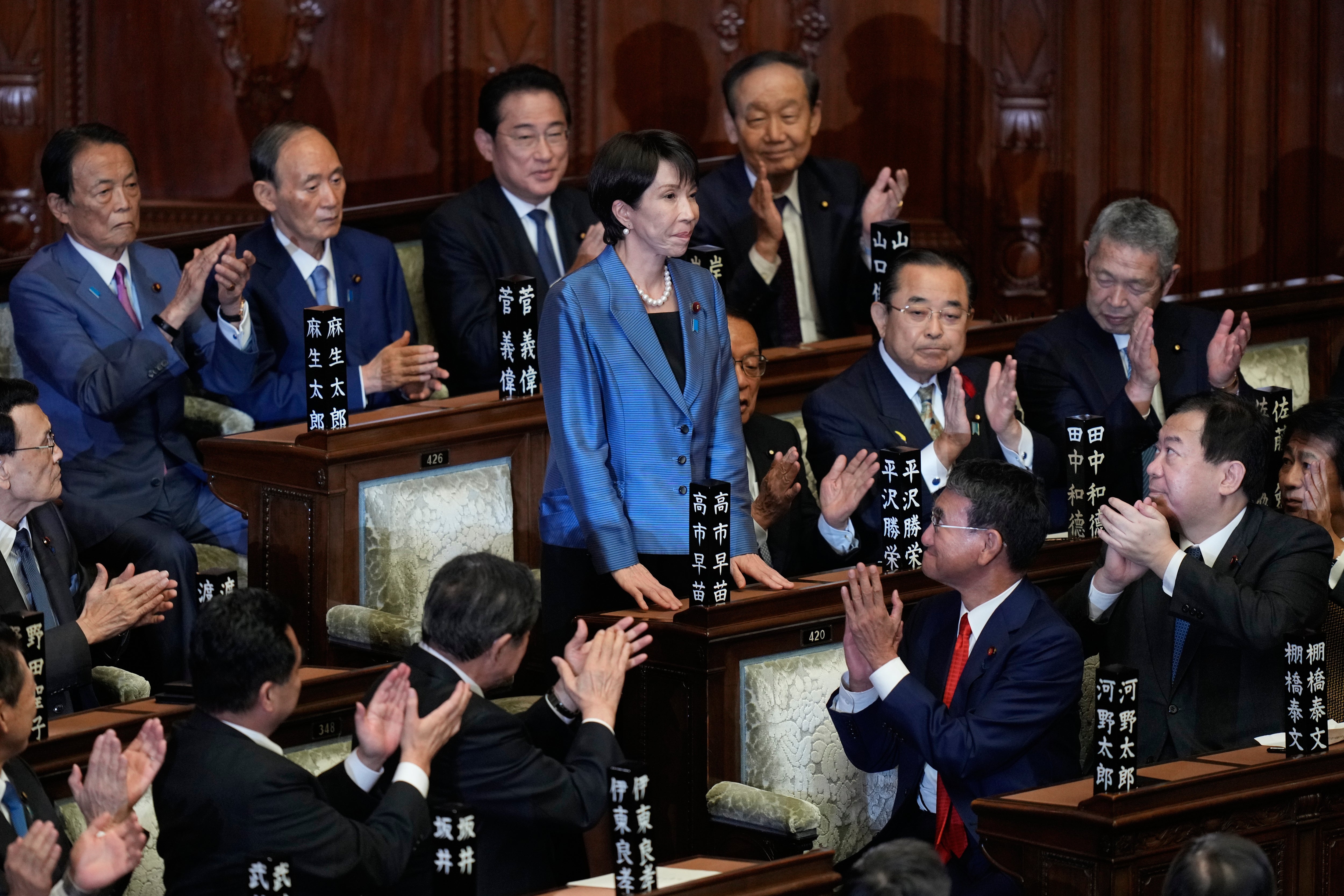
“I have thrown away my own work-life balance and I will work, work, work,” she said.
“Recently, I have heard harsh voices from across the country saying we do not know what the LDP stands for anymore,” she had said in a speech before the vote that put her in the leader’s chair. “That sense of urgency drove me. I wanted to turn people’s anxieties about their daily lives and the future into hope.”
After taking over as the prime minister, Ms Takaichi pledged to suspend an eight per cent consumption tax on food for two years and argued her spending proposals would generate employment, boost household consumption and ultimately raise tax receipts elsewhere.
Government estimates suggest the tax break will cut annual revenue by about 5 trillion yen (£25bn). News of the proposed cut pushed yields on Japan’s 10-year government bonds to their highest level in 27 years earlier on Monday.
By calling an early election, Ms Takaichi is seeking to take advantage of strong approval ratings to strengthen her hold over the ruling party and reinforce her coalition’s narrow majority.
The campaign is expected to focus on living costs, which surveys show are the main concern of the voters. In a poll published by state broadcaster NHK last week, 45 per cent of the respondents named rising prices as their biggest worry, compared with 16 per cent who cited diplomacy and national security.
When she assumed office last year, Ms Takaichi was faced with the mammoth task of winning back trust from a public angered by rising prices and corruption scandals and drawn to opposition groups promising big stimulus packages and clampdowns on foreigners.
She was also called to shoulder the responsibility of steering a fractured party marred by scandal while navigating a nation grappling with demographic decline.
Though her leadership campaign did not focus overwhelmingly on her gender, Ms Takaichi noted in her victory speech that she had “made history for the LDP”.
“Right now, instead of savouring joy, I’m overwhelmed by what’s ahead, a mountain of challenges that I have to tackle with help from all of you,” she said at the time.
“We must make our party one that is more energetic and cheerful so that we can change the people’s worries into hope,” she added, seeking cooperation from LDP lawmakers. “Otherwise, we can’t rebuild our party.”
A former economic security and interior minister, Ms Takaichi cites Margaret Thatcher as a source of inspiration. She refers to the former British prime minister as a political hero, citing her strong character and convictions coupled with her “womanly warmth”.
She met “the Iron Lady” at a symposium shortly before Thatcher’s death in 2013, she said.
"My goal is to become the Iron Lady," she told a group of children during the campaign.
A drummer and a fan of heavy metal, Ms Takaichi is no stranger to making some noise herself. She’s a regular visitor to the Yasukuni shrine, which honours Japan’s war dead, including some executed war criminals, and is viewed by some Asian neighbours as a symbol of its past militarism.
She called for a hardline stance towards China after the neighbouring country marked the 80th anniversary of Japan’s defeat and the end of the World War with its grandest military parade this past summer.
She previously pledged to form a cabinet with gender parity, marking a shift from the outgoing premier’s ministry, which included just two women. But surveys suggest her conservative views resonate more strongly with men than with women.
Ms Takaichi remains opposed to same-sex marriage and to revising a 19th century policy which could allow married couples to use separate surnames. She also backs male-only imperial succession.
Yuki Tsuji, a professor specialising in politics and gender at Tokai University, said Ms Takaichi had “no interest in women’s rights or gender equality policies”.
“Therefore, it is unlikely that any change will occur in this policy area compared with previous LDP administrations,” she told AFP news agency.
However, professor Tsuji said the symbolic significance of having a woman as the premier was “quite substantial”. If she failed to achieve results, though, “this could foster negative perceptions of women prime ministers”.
Japan ranks 118th out of 148 countries in the World Economic Forum’s 2025 Global Gender Gap Report, with women MPs making up only 15 per cent of the lower house.
A protégé of the late Abe and a supporter of his “Abenomics” stimulus programme, Ms Takaichi urged increased public spending and tax cuts to offset the rising cost of living while criticising the Bank of Japan’s decision to hike interest rates.
The central bank’s governor Kazuo Ueda previously said it would set rates “without any preconceptions”.
Born in Nara, western Japan, to a police officer mother and a father employed in the country’s vital automotive sector, Ms Takaichi has often drawn on her roots to shape her political image.
In a speech last month, she denounced tourists for mistreating the sacred deer at the Nara Park, promising tougher action against unruly foreigners.
It is the sort of stance that is increasingly striking a chord with voters amid record numbers of tourists visiting Japan, though when pressed, Ms Takaichi struggled to provide evidence for incidents of the kinds of animal abuse she described.

A graduate of Kobe University with a degree in business management, Ms Takaichi served as a congressional fellow in the US Congress, according to her website.
Apparently eager to grasp how Japan was seen abroad, she worked in the office of Democrat Patricia Schroeder, known for her sharp criticism of Tokyo.
Before entering politics, Ms Takaichi reportedly worked as a television host. She joined politics in 1993, winning a seat in the lower house as an independent before joining the LDP three years later.
She has won 10 parliamentary elections since and carved out a reputation as one of the party’s most vocal conservative figures.
As prime minister, Ms Takaichi had said she would travel overseas more regularly than her predecessor to spread the word that “Japan is Back!”
“Takaichi is a very experienced politician. She has had some experience working in the US as well and she’s a long-term observer of US-Japan relations, so that’s her strength,” said Yuka Hayashi, vice president of the Asia Group, a strategic advisory firm based in Washington.
“She said that she’s confident that she could build a very strong personal relationship with President Trump. And the reason for that’s her policy focuses on what she calls the ‘Japan First’ policy. And that kind of corresponds to President Trump’s America First policy. She sees that sort of common thread there. On the other hand, she is a hardliner, very conservative when it comes to Japan’s relationship with its Asian neighbours,” said Mr Hayashi.
“She has had a very hawkish stance on World War II legacy issues. She has insisted on visiting the Yasukuni Shrine numerous times, knowing that would inflame Japan’s relationship with its neighbours. So there is some concern that she could fuel tensions with the relationship with South Korea and China. This is a very challenging time for the LDP so I think she would probably try to focus on party unity and be very careful about taking excessively conservative hardline stances in foreign policy.”
Join our commenting forum
Join thought-provoking conversations, follow other Independent readers and see their replies
Comments
Bookmark popover
Removed from bookmarks