‘Genius’ chimpanzee who could paint, count and recognise colours dies at 49
The research with Ai helped to establish an experimental framework for understanding the chimpanzee mind
A West African-born chimpanzee who was able to identify more than 100 Chinese characters as well as the English alphabet, died in Japan at the age of 49.
Ai, widely known as a “genius” chimpanzee, passed away on 9 January from multiple organ failure linked to old age, surrounded by staff who had cared for her for decades, Kyoto University’s Center for the Evolutionary Origins of Human Behaviour said in a statement.
Arriving in Japan in 1977, Ai became the central figure of what would later be called the Ai Project – a pioneering effort to understand how chimpanzees perceive, remember, and interpret the world, according to the centre.
Her participation began when she was just a year old, and her natural curiosity soon turned her into one of the most closely studied primates in scientific history.
Researchers equipped Ai with a special computer-linked keyboard when she was only 18 months old, allowing her to communicate choices and responses in cognitive tests.
By the age of five, her abilities were already remarkable. In a 1985 scientific paper, the primatologist behind the Ai project, Tetsuro Matsuzawa, wrote that Ai had “mastered numerical naming from one to six and was able to name the number, colour, and object of 300 types of samples”.
Ai was Mr Matsuzawa’s most celebrated research participant. Her name Ai translates to “love” in Japanese.
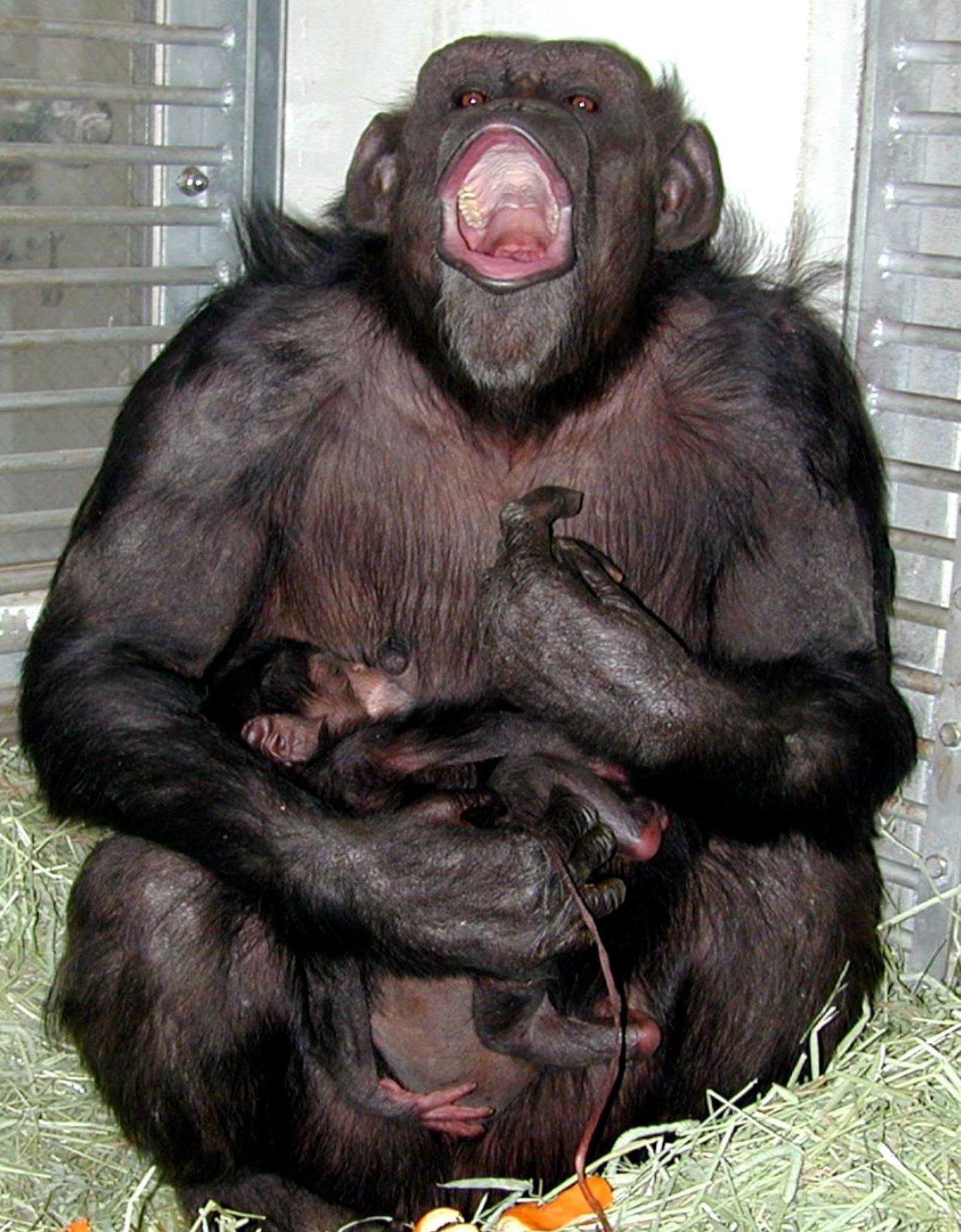
Over time, Ai’s skills expanded dramatically. In 2014, Mr Matsuzawa said Ai could recognise Arabic numerals from zero to nine, 11 different colours, more than 100 Chinese characters, and the English alphabet.
According to The Japan Times, in one experiment, Ai was presented with a computer screen displaying the Chinese character for pink, along with a pink square and an alternative purple square. The chimpanzee correctly chose the pink square, Mr Matsuzawa said.
In another, when shown an apple, Ai picked out a rectangle, a circle and a dot on the computer screen to draw a “virtual apple”.
Her achievements made her a fixture in academic journals, including Nature. In popular media she came to be referred to as a “genius”.
The research with Ai helped to establish “an experimental framework for understanding the chimpanzee mind, providing a crucial foundation for considering the evolution of the human mind”, the centre said.
“Ai was highly curious and actively participated in these studies, revealing various aspects of the chimpanzee mind for the first time,” it said.
Ai was also artistic, often drawing or painting without being prompted by food rewards. She once made headlines for unlocking her cage with a key and escaping with another primate.
In 2000 she gave birth to a son, Ayumu, who later became famous for his own exceptional memory. In 2017, one of Ai’s paintings was turned into a scarf and presented to Dame Jane Goodall.
One of Ai’s best-known artworks – a 2013 piece on Shikishi paper made with red and black brushes – was presented to Prof Kazuo Oike when he became Dean of the Kyoto University of Art and Design.
According to The Smithsonian magazine, Mr Matsuzawa wrote an account of his first meeting with Ai: “When I looked into this chimpanzee’s eyes, she looked back into mine. This amazed me – the monkeys I had known and worked with never looked into my eyes.”
He wrote: “I had simply thought that chimpanzees would be big black monkeys. This, however, was no monkey. It was something mysterious.”
Join our commenting forum
Join thought-provoking conversations, follow other Independent readers and see their replies
Comments
Bookmark popover
Removed from bookmarks