Indian state considers new ‘honour killing’ law after brazen murder of young pregnant woman
Six months pregnant, the student had returned home briefly after marrying a Dalit man despite facing threats from her family
Protests have gripped the southern Indian state of Karnataka after a woman who was six months pregnant was beaten to death allegedly for marrying outside her caste.
The woman, Manya Doddamani, 20, had married Vivekananda Doddamani earlier this year against the wishes of her family. She was assaulted on 21 December in Inam Veerapur village in Dharwad district and died later the same night in hospital.
Police say Doddamani belonged to the Lingayat community, a dominant caste group in Karnataka, while her husband is from a Dalit community. Formally known as “Untouchables”, Dalits formed the lowest wrung of Hinduism’s archaic caste system and have historically been subjected to discrimination.
Discriminating against inter-caste marriages in India is illegal, but such relationships can still provoke violent backlashes in more socially conservative parts of the country.
Doddamani’s death has triggered protests and demands for better safeguards for inter-caste couples, with the state government now saying it is considering a new law against so-called “honour killings”.
“Manya and Vivekananda fell in love a couple of years ago. They used to chat on Instagram as it was hard for them to meet in the village. Both families learned of their relationship, and eventually, in May, they fled and married at a sub-register office. Vivekananda and Manya were also undergraduate students,” a police officer told the Indian Express.
“After they got married, they appeared before the police. The local police officer convened a meeting between the families, and warned Manya’s parents not to trouble them after they said that they would not allow her to enter their house,” the police officer added.
According to investigators, the couple had been living in Haveri district, around 100km away, after receiving threats from her family.
They returned to their village on 8 December to collect important documents such as their Aadhaar biometric identity cards, which would be needed for her hospital admission ahead of the baby’s delivery. They are said to have believed that her pregnancy might soften opposition to their marriage.
Police say that on the evening of the attack, Doddamani was working on a farm when her father, Prakashgouda Patil, and other relatives assaulted her with iron pipes. When her mother-in-law, Renavva Doddamani, and a relative, Subhash, tried to intervene, they too were beaten, said Gunjan Arya, the superintendent of police for Dharwad district.
All three victims were taken to a private hospital in Hubballi, where Doddamani succumbed to her injuries. Doddamani’s husband was also attacked at the same time by another group, police say, but escaped to inform the authorities.
Police initially arrested three suspects, including Doddamani’s father, and have since detained additional relatives.
Investigators said call records and CCTV footage pointed to wider involvement, and one suspect was allegedly found carrying a plastic can believed to contain petrol, raising fears that the family home may have been targeted for arson.
“It is evident that several people in the village instigated the Gouda family members to take stringent action against Manya and her husband’s family for marrying a boy from the Dalit community,” a police officer said, adding that anyone who supported or abetted the crime would also be arrested, reported the New Indian Express.
Authorities confirmed that the couple had earlier approached police seeking protection.
A local officer had convened a meeting between the two families after the marriage and warned Doddamani’s parents not to harass the couple after they said they would sever ties with their daughter. Despite that intervention, no formal protection order or long-term monitoring mechanism was put in place, a gap now under scrutiny.
The killing has provoked outrage across Karnataka.
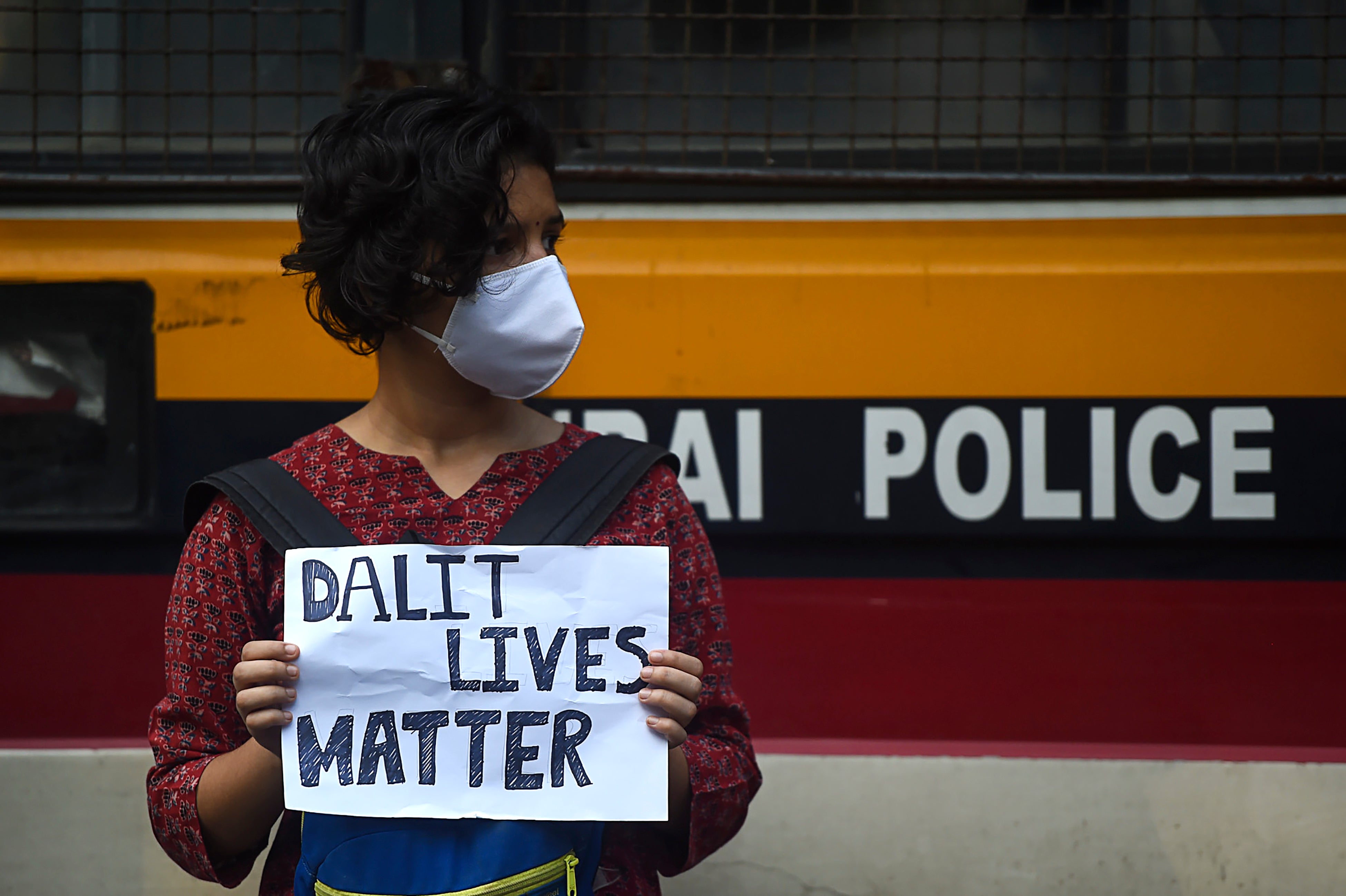
Dalit organisations staged protest marches in Hubballi, demanding fast-track courts, stronger protection for inter-caste couples and harsher punishment for those involved.
Karnataka-based advocate and activist K P Sripal described the murder as a collective moral failure. “We claim to be a civilised society. But the murder has shown how badly we behave. We all should bow our heads in shame.”
The state government has offered financial assistance for Mr Doddamani’s family. An initial cheque of Rs 500,000 (£4,700) was issued by the district administration, followed by compensation of Rs1.7m (£14,060) under the Scheduled Castes and Scheduled Tribes (Prevention of Atrocities) Act, a law meant to address crimes motivated by caste prejudice.
Social welfare minister H C Mahadevappa said Karnataka’s state government was examining whether a tougher, standalone law to prevent caste-based killings was needed, possibly to be named after the victim.
The government “will not tolerate attempts to suppress such rights,” he said, reiterating that adult women have a constitutional right to choose their partners. He said that not only the attackers but also those who encouraged the crime would face action, and that allegations of official negligence would be investigated.
Join our commenting forum
Join thought-provoking conversations, follow other Independent readers and see their replies
Comments
Bookmark popover
Removed from bookmarks