Elephant kills 20 people in days-long rampage before disappearing into jungle
Forest officials say elephant’s erratic movement has made it difficult for the department to trace it
A rogue wild elephant in India's eastern state of Jharkhand went on a killing spree for days before disappearing as officials continued their hunt to trace the animal.
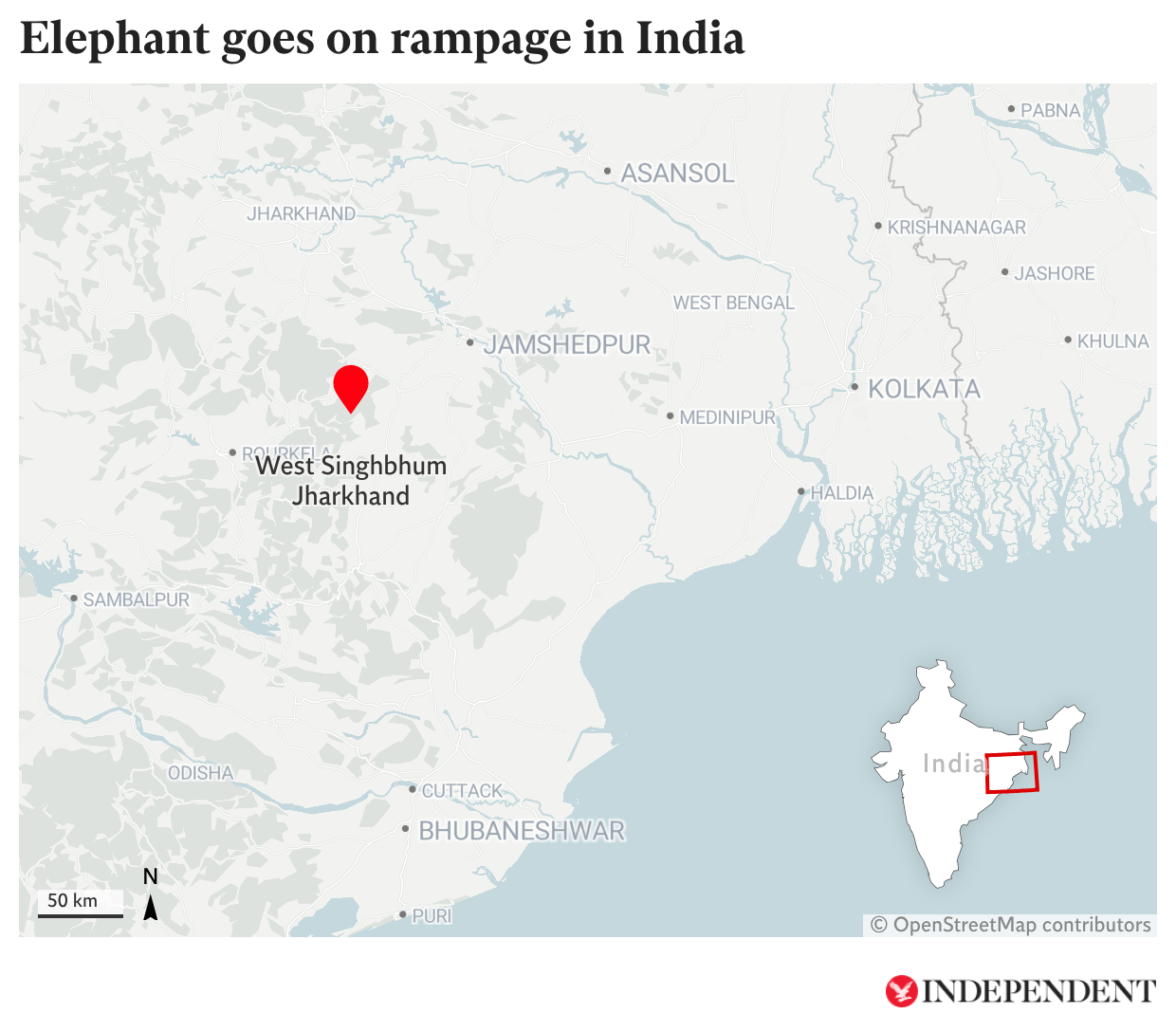
The lone male elephant has trampled to death at least 20 people between 1 and 9 January in the Chaibasa and Kolhan forest areas in the West Singhbhum district, home to the largest forest of Sal trees in Asia.
Forest officials told The Independent there have been no attacks in the past four days, and the elephant remained untraceable.
A forest department member was one of the victims of elephant, which has also claimed the lives of young children and elderly villagers.
"The elephant's movement is very erratic. There have been no reported injuries and deaths in the past four days, and the elephant has not been seen," Chaibasa divisional forest officer Aditya Narayan said.
"The attacks by the lone elephant are unprecedented. I don't remember seeing anything in the recent past," he said, adding that the tusker killed 13 people in Chaibasa division and seven in Kolhan.
The Chaibasa and Kolhan areas in Jharkhand’s West Singhbhum district, about 1,400km east of New Delhi, form part of the Saranda forest belt.
Mr Narayan said the tusker had been moving across the region and changing its location rapidly, which made it difficult to track.
The tusker struck people in the dead of the night around the fringes of the forest near the agricultural land, where residents were guarding paddy stored in fields and barns, the official said.
The forest department has deployed around 100 personnel to control the animal and divert it to a safer location. Experts from the neighbouring state of West Bengal have also been roped in to steer the elephant back into the forest.
Experts believe the elephant appears to have turned rogue and is in musth, a periodic condition in bull elephants marked by heightened aggression and a surge in reproductive hormones.
The region is gripped by fear, villagers say, with families staying indoors and voicing particular concern for the safety of children and the elderly. Authorities have urged residents to avoid forested areas since officials said most attacks took place around the fringe areas.
The lone elephant has reportedly killed three members of a family, including children aged six and eight, in one of the attacks during the first week of the year.
Mr Narayan said that officials are monitoring the villages around the forest, but due to the unavailability of photographic evidence and the tusker's erratic movements and attacks at night, it has made the hunt for the animal arduous.
Jharkhand has recorded nearly 1,300 deaths due to elephant attacks over the past 23 years, according to a recent study by the Wildlife Institute of India.
India’s environment ministry told parliament earlier this year that about 80 wild elephants had been killed nationwide after being hit by trains between 2020-21 and 2024-25.
In one of the latest such incidents, eight tuskers were killed in late December when a passenger train struck a herd in the northeastern state of Assam, railway authorities said.
Join our commenting forum
Join thought-provoking conversations, follow other Independent readers and see their replies
Comments
Bookmark popover
Removed from bookmarks