India stakes its claim in the AI race with first global South summit - but can it compete?
Stuti Mishra reports from Delhi, where a global AI summit is being hosted by a developing country for the first time – and attracting big names from the world of tech

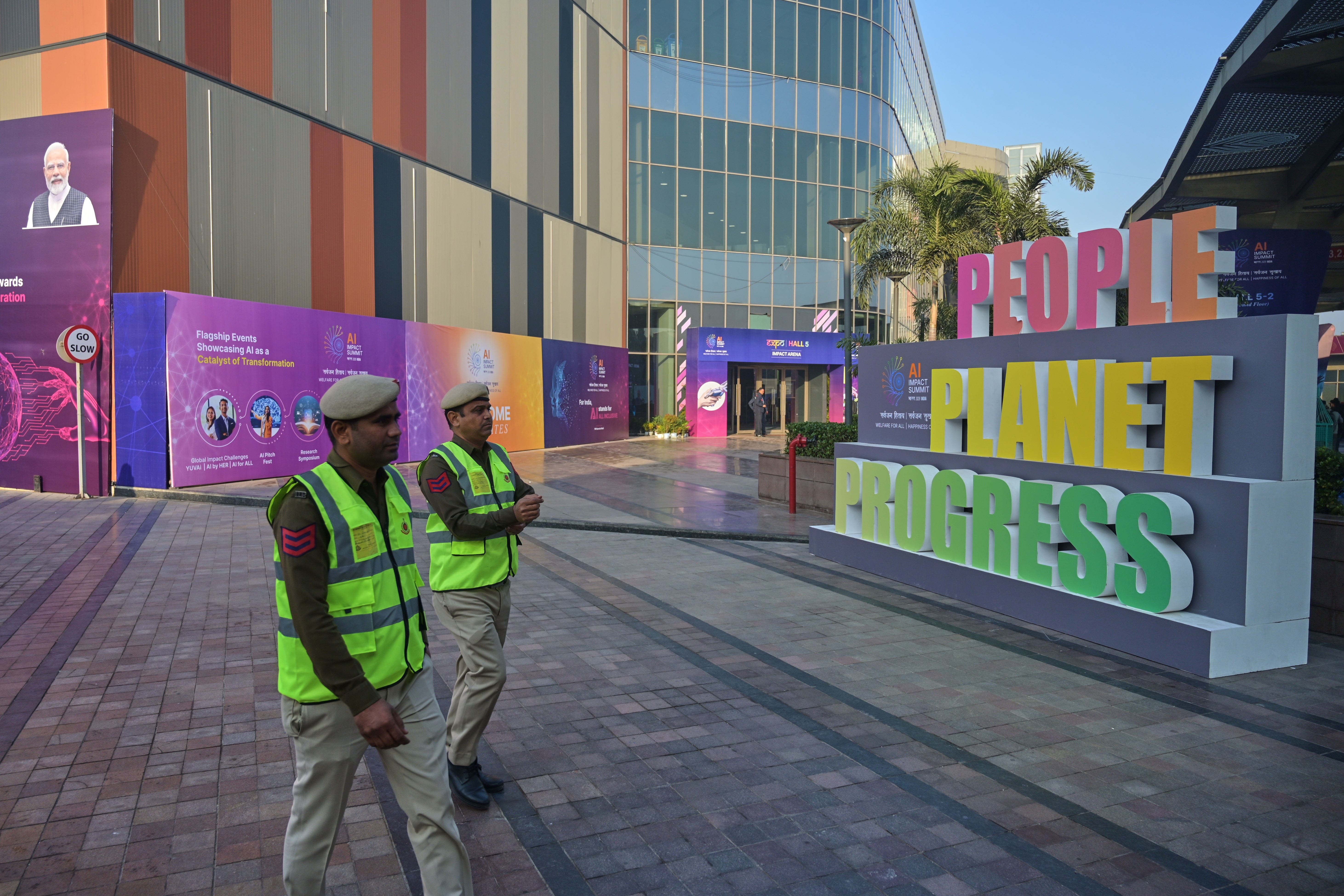
India is announcing itself in the race to develop advanced artificial intelligence models this week, hosting one of the world’s biggest AI gatherings and positioning itself as the voice of the global South in a field long dominated by the US and China.
More than 250,000 participants are expected across the five-day India–AI Impact Summit at New Delhi’s 123-acre Bharat Mandapam complex, with leaders from 20 nations and ministerial delegations from over 45 countries in attendance. Tech chiefs including Sam Altman and Sundar Pichai are on the guest list alongside policymakers, investors and researchers.
The goal of the summit’s organisers is clear from messaging emblazoned across the venue: “Democratising AI for a Billion+ Indians.”
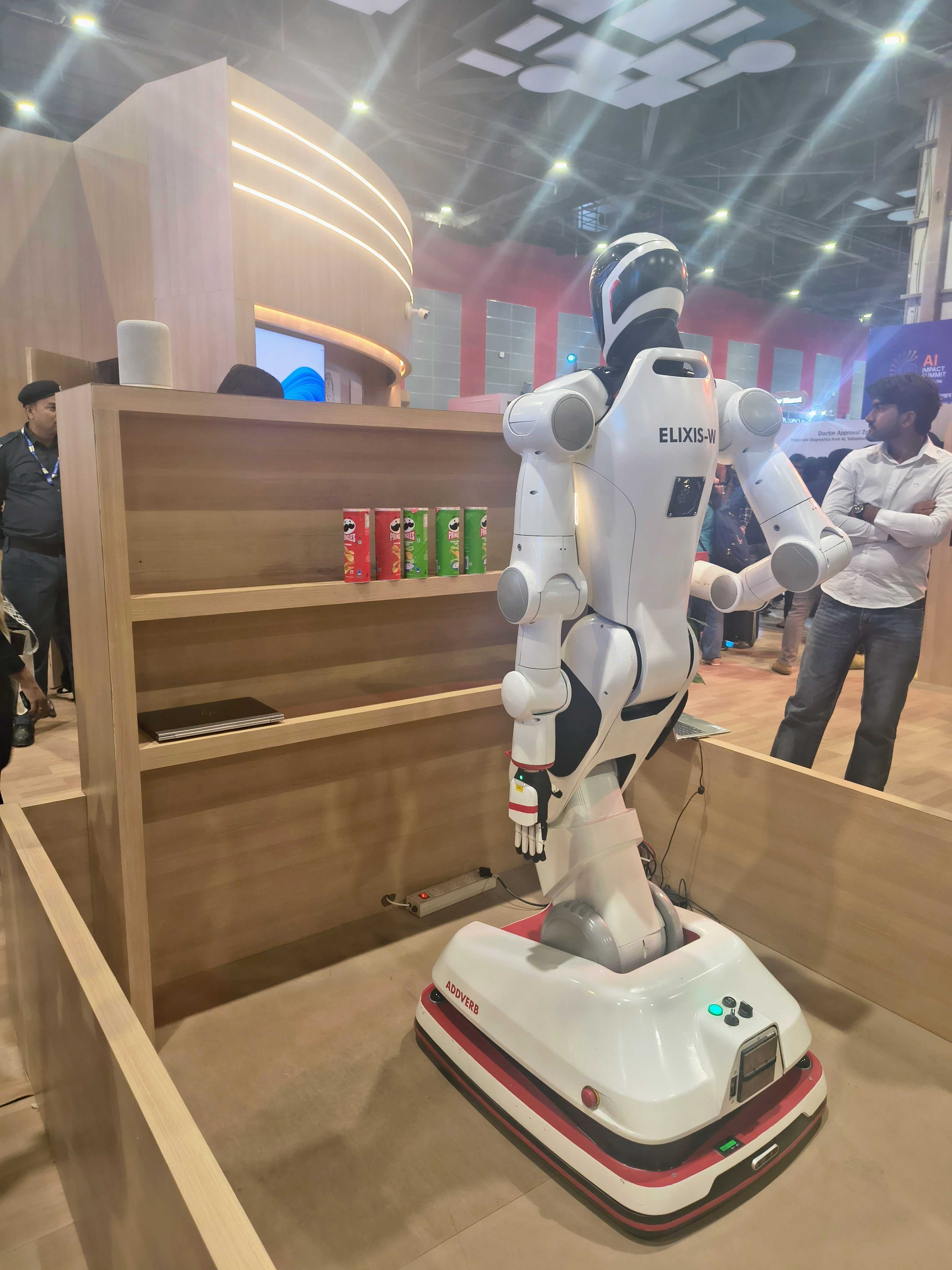
Inside the sprawling event halls, robots serve coffee while start-ups pitch voice assistants trained in Indian languages. One booth showcases AI tools to decode Ayurveda – traditional Indian medicine – while another promises systems to tackle deepfakes and online scams, major issues facing India’s internet users.
Giant digital installations reimagine the Mahabharata, a Hindu epic, in immersive AI-generated scenes. Displays for global household names sit alongside those representing early-stage Indian entrepreneurs hoping to build alternatives to Silicon Valley’s dominance.
The gathering marks the first time the global AI summit has been hosted in a developing country. Previous editions were held in the UK, South Korea and France.
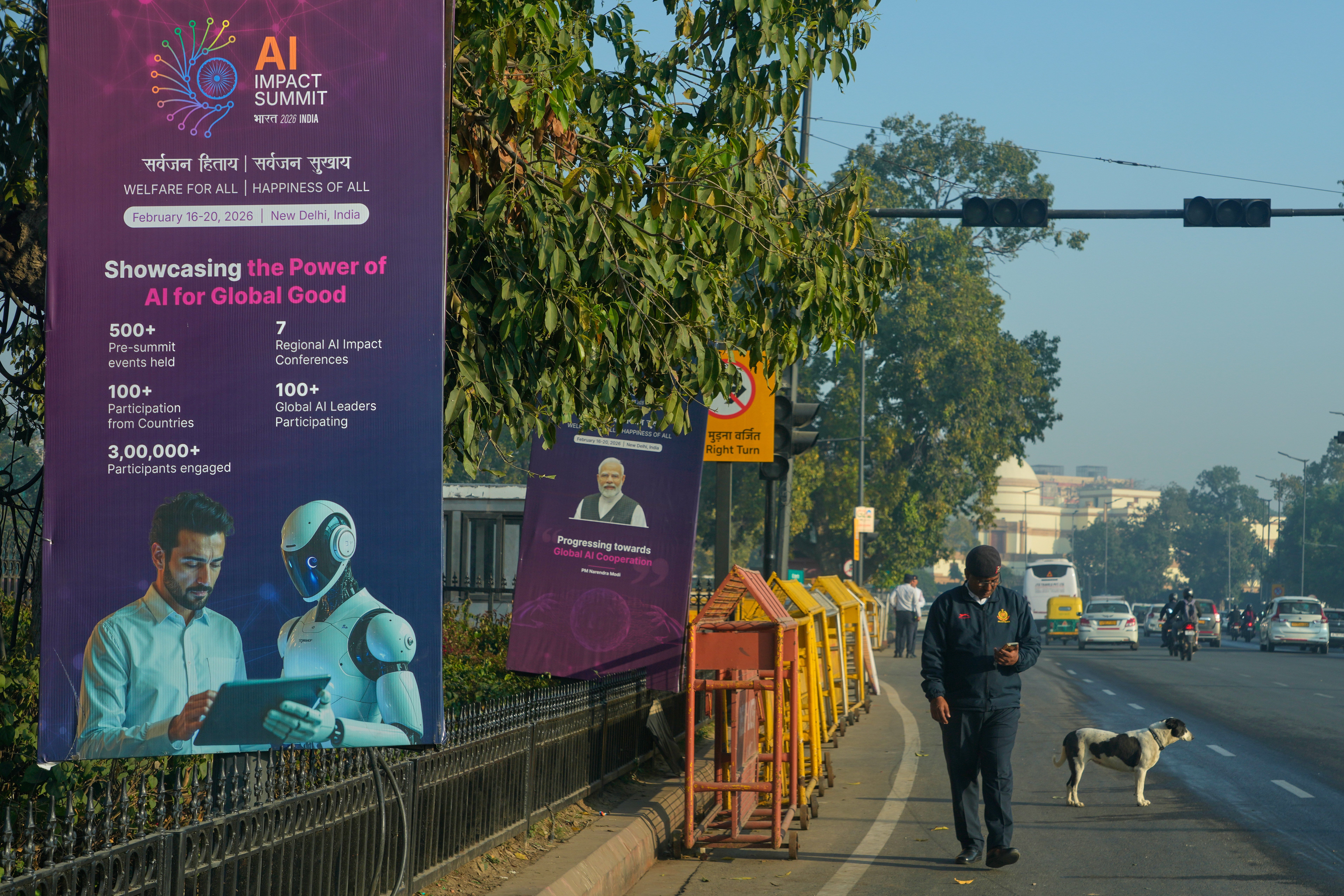
India currently ranks third globally in AI competitiveness behind the US and China, according to Stanford University research. Officials argue that the country’s digital public infrastructure – from biometric identity to online payments – gives it an edge in scaling AI across governance, health, education and agriculture.
“By overlaying AI over existing digital identity, payment rails as well as health care, education and governance stacks, India is attempting to compress decades of development into years,” Abhishek Singh, additional secretary at the Ministry of Electronics and IT, said in a pre-summit briefing.
The government is betting heavily on affordability and access, with a strategy that prioritises the development of small sector-specific models and systems designed to work for India’s rich linguistic diversity. BharatGen, a government-backed model, is expected to unveil a new model supporting 22 different Indian languages later this week.

At one exhibition, a robotic arm demonstrated how a technician in a remote clinic could scan a patient’s abdomen while artificial intelligence flagged anomalies before a doctor confirmed a diagnosis.
Sandhya Ramachandran Arun from Wipro technology told The Independent AI could narrow gaps in specialist medical care, connecting remote Indian clinics to doctors in big cities. India could be an example of innovations like this for the world, Ms Ramachandran said.
“If we can do things at population scale, there is no scale that we can't beat in the world,” she added.
For India, the stakes are high. The country missed the personal computer boom but built a global software services industry. It leapfrogged landlines to smartphones in under two decades. Now it is trying to ensure it does not miss the AI era.
While India has talent and data, the advanced chips powering frontier AI systems remain largely controlled by American firms.
Martin Willcox, global head of analytics at Teradata, cautioned against equating competitiveness with training the biggest models.
“There is no good AI without good data,” he said. “[We should] focus less on training our own models,” he suggests, arguing that open-source systems often only lag behind proprietary models by a matter of months. “A good model that I can score quickly and cost effectively is better, nine times out of 10, than the best model that I can’t get out of the lab and into production.”
India’s advantage may lie not in winning a race for the largest model, but in deploying AI effectively across sectors at scale. Otherwise “if we insist that every layer has to be Indian, then we will probably have to wait,” says Mandar Kulkarni, National Security Officer (India & South Asia) at Microsoft.
He says he understands India’s desire to develop indigenous technology, describing concerns all governments have about dependence on cloud systems. In other words, “How can [I ensure] nobody else switches me off?”
Pier Stefano Sailer of KPMG framed the debate as a balance between “openness versus security… speed of innovation versus governance… global integration versus autonomy”, suggesting India could chart a path somewhere between Europe’s regulatory emphasis and America’s innovation-first model.
Outside Bharat Mandapam, traffic restrictions stretch across central Delhi as security tightens. Inside, banners repeat the summit’s themes of “People, Planet and Progress” beneath towering portraits of the prime minister. Delegations move between closed-door meetings and public sessions on AI safety, inclusion and governance.
The question here is whether democratising access to AI for 1.4 billion people can translate into technological leadership — or whether the next phase of the race will still be defined by who controls the most powerful models and the hardware that runs them.
Join our commenting forum
Join thought-provoking conversations, follow other Independent readers and see their replies
Comments
Bookmark popover
Removed from bookmarks