Bharat Bandh: Protesters march through Indian capital on second day of major strike
Banking, transport and railway services have been disrupted in several Indian states
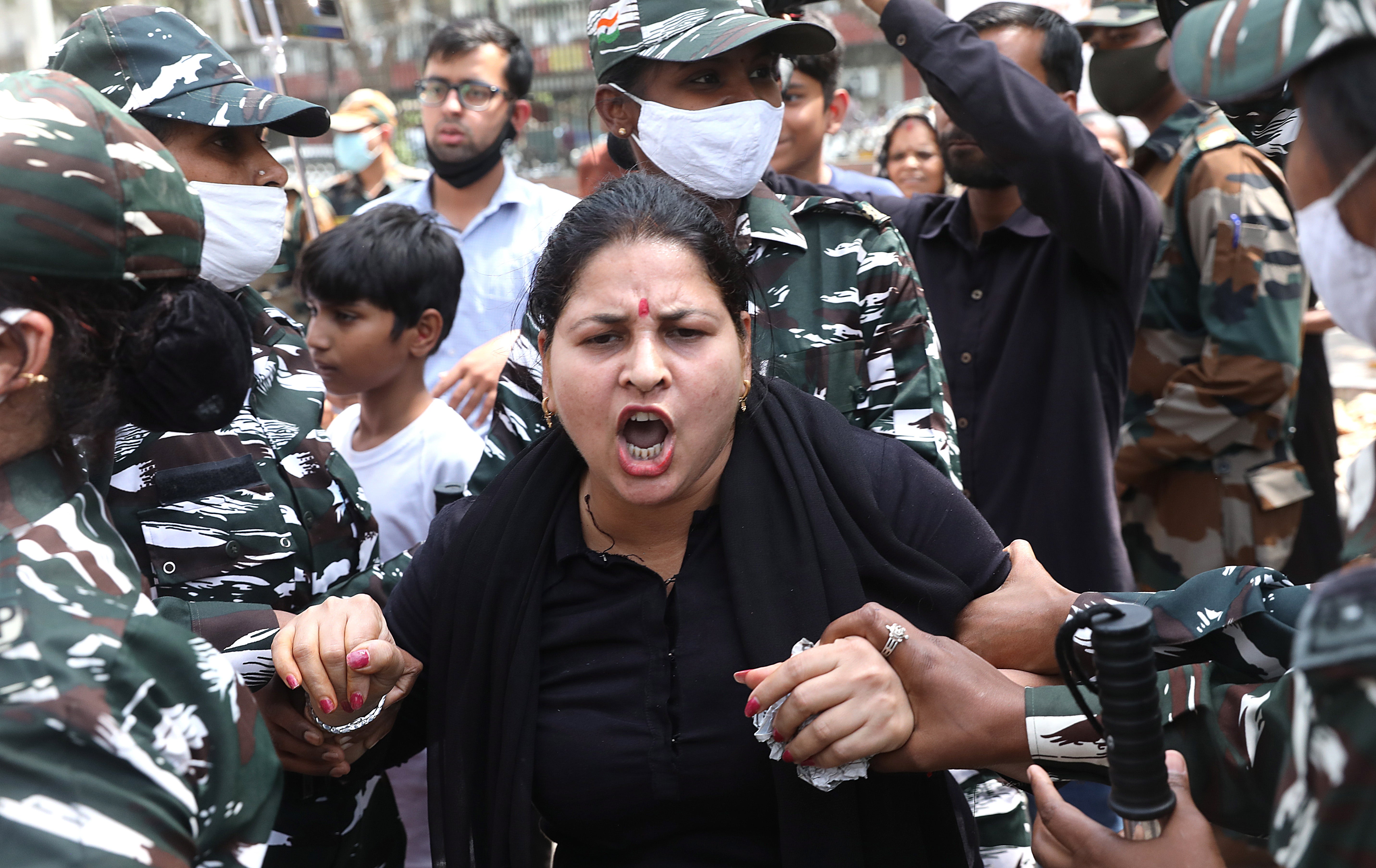
Hundreds of people from all walks of life, including women, doctors, farmers and workers, marched on Indian roads with flags and banners on Tuesday to protest against the government on the second day of a nationwide strike.
Banking and public transport services remained partially disrupted in some Indian states despite local governments warning of action to deter protesters in the so-called Bharat Bandh strike.
This is the first large-scale strike that has been held against the policies of Narendra Modi government since the prime minister rolled back three farm laws last December to end a year-long farmers protest.
On Tuesday, the protesters marched to Jantar Mantar, an architectural monument in the heart of New Delhi just 2km from the Indian parliament, to put pressure on the government over its economic policies that trade unions say are hurting workers and the country’s vast unorganised sector.
The two-day nationwide strike has been joined by all major trade unions to demand universal social security coverage for workers in the unorganised sector, hiking of minimum wage under a flagship employment guarantee program MNREGA, and the scrapping of a new labour law.


The legislation with changes in the four labour codes was passed in parliament recently and will be implemented across the country from 1 October. The changes will lead to increased working hours and would give employers greater leeway in setting reduced wages.
“Modi government has only one point, that it wants to hide its economic criminality under the garb of communalism and religion,” said Swadesh Dev Roye, a top official with the Centre of Indian Trade Unions.
Pictures from various states showed empty streets, with barricades on main roads and closed shops. Hundreds of Indian paramilitary troops stood guard as demonstrators marched the streets and tried to breach the barricades.
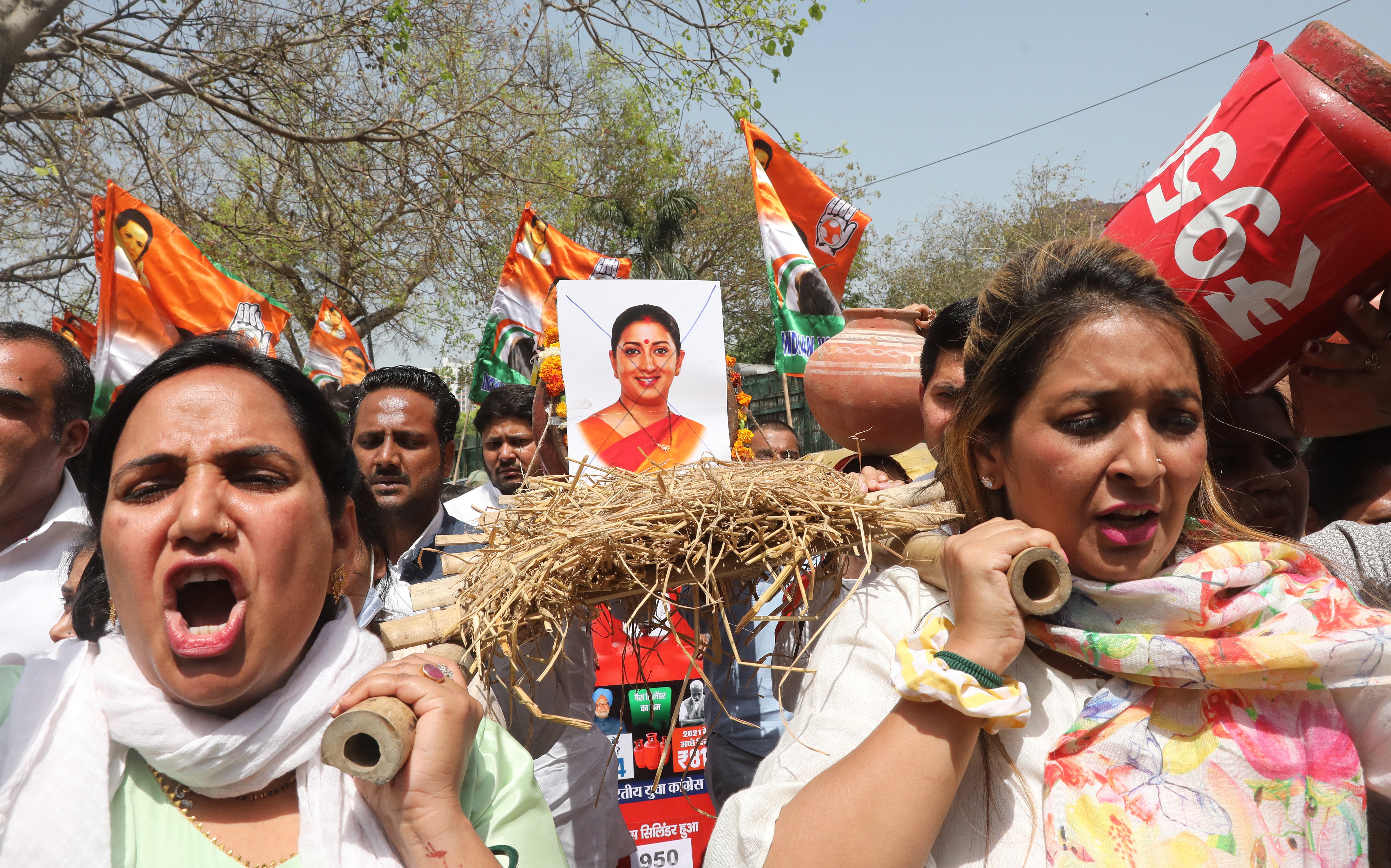
Some carried cooking gas cylinders to protest against the price rise of liquefied petroleum gas and raised slogans against increasing prices of diesel and petrol.
Banking services were affected in some parts after bank unions joined the protest against the government’s plan to privatise public sector banks, as well as the Banking Laws Amendment Bill 2021.
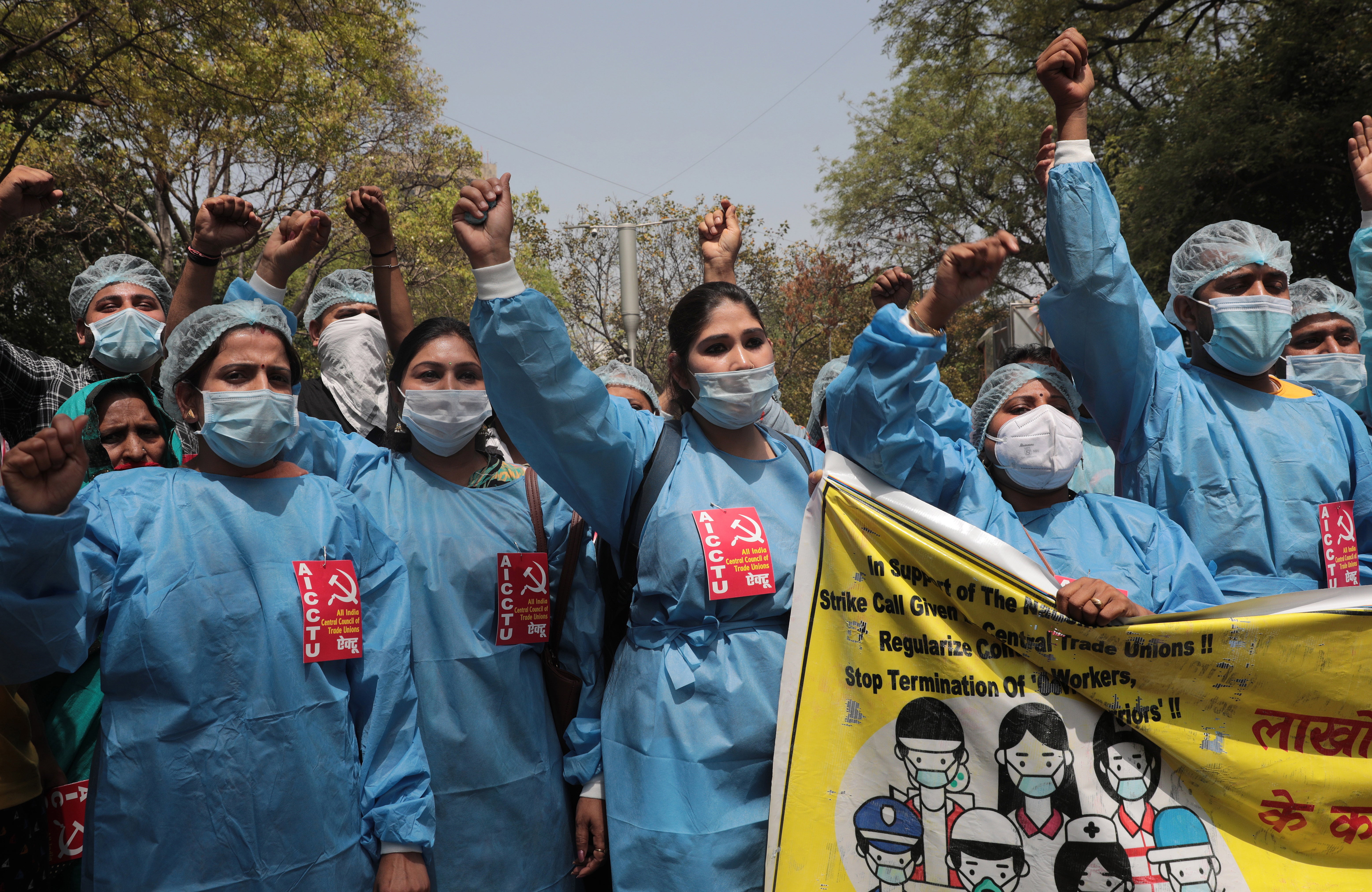
“As per our reports, in the Southern Grid functioning in Chennai, during our strike yesterday and today, about 600,000 cheques/instruments worth about Rs 50bn (£500mn) could not be sent for clearance as branches did not function due to the strike,” All India Bank Employees Association (AIBEA) general secretary CH Venkatachalam said.
At the national level, about 2 million cheques worth about Rs180bn (£1.8bn) could not be cleared, he claimed.
In Karnataka, the Kerala High Court directed the state government to issue orders to curb the protests. The government declared that employees who were absent without authorisation and participating in the strike would not get remuneration for the day.
Join our commenting forum
Join thought-provoking conversations, follow other Independent readers and see their replies
Comments
Bookmark popover
Removed from bookmarks