Delhi tightens anti-pollution curbs after citizens take to streets over poor air quality
Under stage three of the plan, non-essential construction is banned and curbs on industrial activity using polluting fuels are enforced
The government on Tuesday imposed stricter anti-pollution measures in India’s capital Delhi and its adjoining areas following citizens’ protests over deteriorating air quality.
A body that manages the coordination, research, and resolution of problems related to air quality in the capital and its adjoining areas said a Graded Response Action Plan (GARP) was being enforced, "keeping in view the prevailing trend of air quality, and in an effort to prevent further deterioration".
Under stage three of the plan, non-essential construction is banned and curbs on industrial activity using polluting fuels are enforced, the Commission for Air Quality Management said.
Delhi's air quality index hovered above 400 at several monitoring stations on Tuesday morning in the "severe" category, as compared with "good" readings below 50, Central Pollution Control Board data showed.
The move followed weekend protests at the India Gate monument, where police detained dozens of people demanding cleaner air, a rare public demonstration against pollution in the capital.
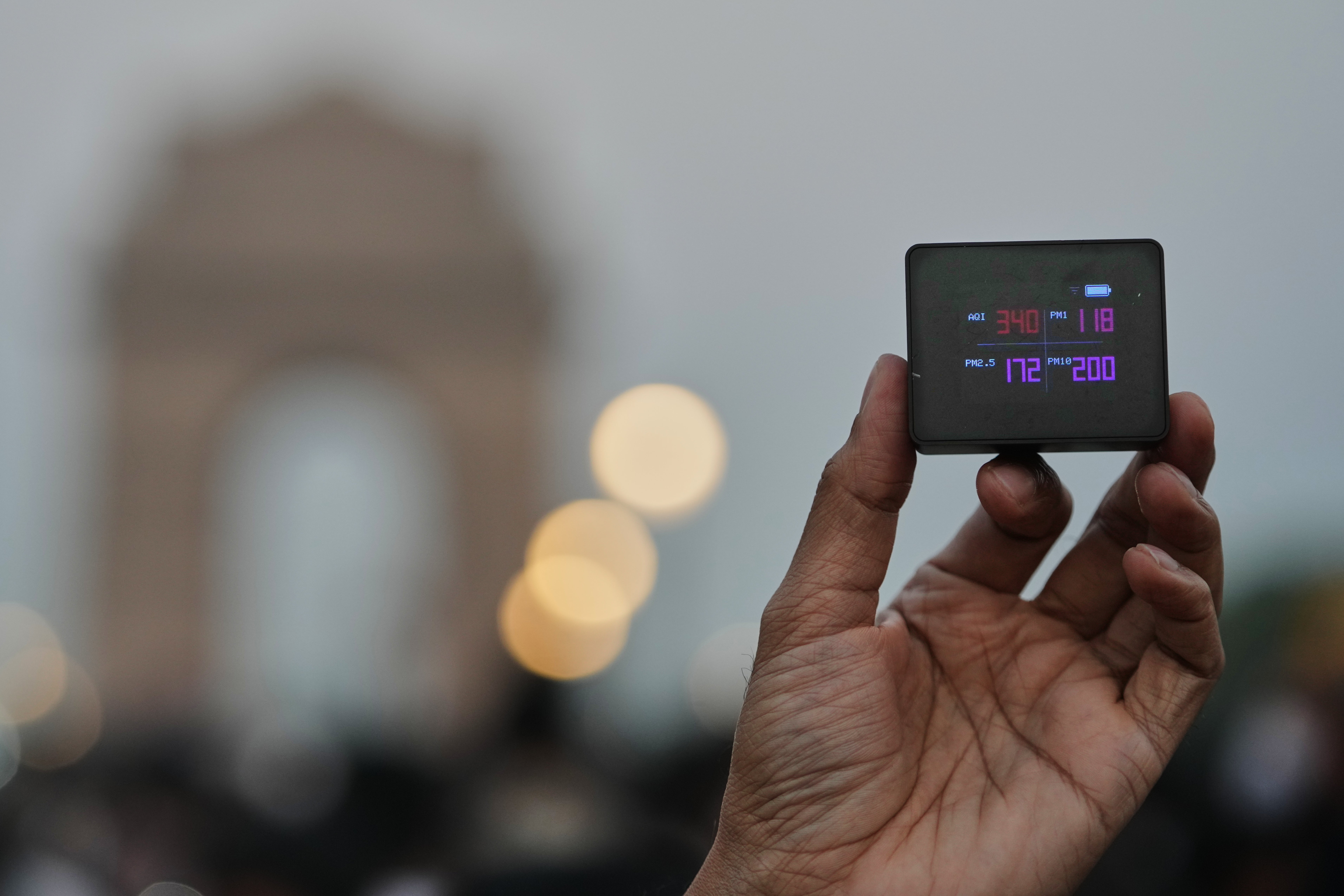
Hundreds of people, including parents and environmental activists, gathered at New Delhi’s India Gate in a rare protest, urging authorities to act. Many wore masks and carried placards, with one reading: “I miss breathing".
Worsening air quality in the capital has sparked outrage from residents suffering from headaches and persistent coughs. Frustration is mounting toward politicians accused of trading blame instead of enforcing policies to combat what has become an annual health emergency.
India's National Capital Region, home to some 30 million people, routinely ranks among the world’s most polluted.
Air quality in the city worsens further each winter as farmers burn crop residue in nearby states and cooler temperatures trap the smoke, which mixes with vehicle and industrial emissions.

Government satellite data showed a rise in crop stubble fires, used by farmers to clear land before the next planting, since the start of November.
In the past, such fires have been a cause for high pollution in northern India. However, the Indian government said the total number of farm fire incidents from 15 September to 9 November were much lower this year than in the past.
Toxic particles linger because Delhi’s winters are often dry and windless, sometimes pushing pollution levels to 20 times the World Health Organization’s safe limit.
Authorities recently initiated a cloud-seeding project over Delhi to combat the severe air pollution, but it failed due to a lack of moisture in the air.
Delhi’s local government has been accused of trying to fudge AQI data by sprinkling water around monitoring stations. Opposition parties have also criticised the ruling Bharatiya Janata Party of spending large sums on air purifiers for its own offices and leaving ordinary residents to choke on hazardous air.
Join our commenting forum
Join thought-provoking conversations, follow other Independent readers and see their replies
Comments
Bookmark popover
Removed from bookmarks