Drinking water crisis blows up in India after deadly disease outbreaks
Confidence in safety of drinking water supply is eroding after sewage contamination causes deaths in Indore and typhoid outbreak in Gujarat
People in India are questioning the safety of their drinking water following a series of deadly disease outbreaks and official warnings.
Alarm intensified last month after 18 people died in Indore, declared by the federal government as the nation’s “cleanest city”, and at least 133 were hospitalised in the western state of Gujarat following a typhoid outbreak. In both cases, the victims had consumed water contaminated by raw sewage.
These tragedies prompted calls for urgent action in the national capital Delhi, where residents shared accounts of dirty water flowing from taps, triggering contamination fears.
At Chilla village near Mayur Vihar in east Delhi, where narrow lanes are lined with open sewage drains carrying waste from homes, Ravinder, a shopkeeper, said: “The main sewer line has been clogged for 3-4 years now.”
He added that cracked pipes allowed sewage and drinking water to “mix up”. “It largely affects the quality of our drinking water,” he told the New Indian Express.
Another resident, Jiten Bhati, pointed to toilets improperly connected to sewer lines. “That’s why waste including human faeces can be seen on the road in front of houses,” he said.
Ashok Kumar, who lives nearby, described the residential area as “a den of diseases” because of overflowing sewers and foul smells.
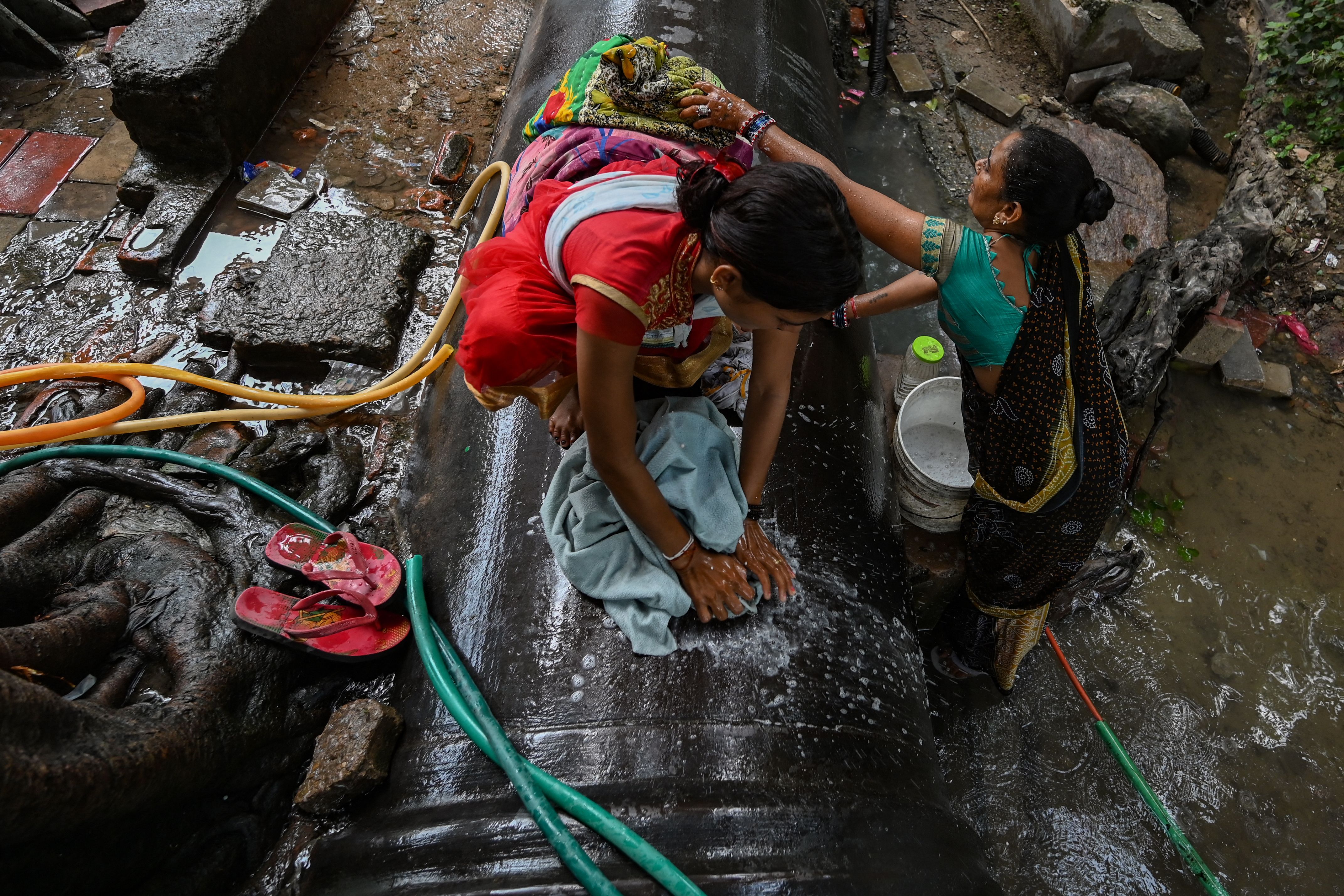
Similar complaints come from Pandav Nagar in east Delhi where residents reported visibly dirty water flowing from taps for days at a time, unfit even for bathing.
Vinaypal Singh Tanwar said reverse osmosis filters sometimes failed because the water was too contaminated, forcing families to buy water cans.
Surendra Singh blamed old pipelines and said promised replacements never arrived even after a change of government last year. “Water supply pipelines here are very old, due to which sewage water often mixes with drinking water,” the resident explained to ETV Bharat.
Following the outbreaks in Indore and Gujarat’s Gandhinagar, Delhi’s government ordered the public water utility Delhi Jal Board to audit ageing infrastructure and prioritise repairs in high-risk neighbourhoods.
State water minister Parvesh Verma issued a checklist directing inspections of supply lines running close to sewers, improvements to monitoring systems and resolution of complaints.
Delhi Jal Board chief executive Kaushal Raj Sharma ordered additional manpower for sample collection and warned his staff of disciplinary action for non-compliance with the ministerial directive.
Staff were instructed to resolve complaints within two days, deploy 30 sewer-cleaning vehicles known as super-suckers and 16 recycler machines, and submit daily reports to senior officials about contamination.
Around 18 per cent of Delhi’s 15,600km of supply lines are more than 30 years old, according to assessments by the utility, making them prone to cracks and leaks that allow sewage ingress.
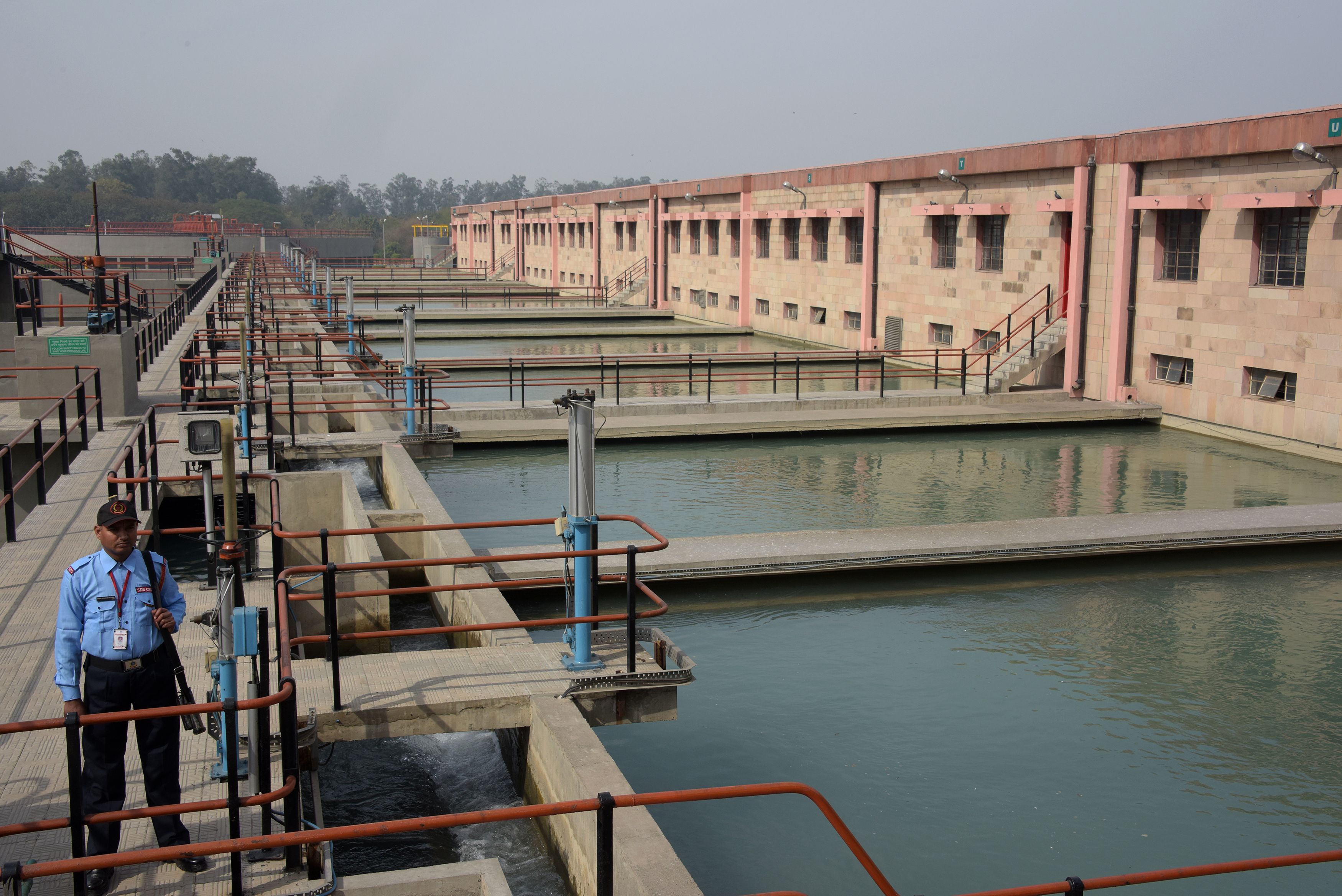
The Delhi Jal Board operates nine water treatment plants, which, supplemented by groundwater, supply roughly 1,000 million gallons a day through 123 underground reservoirs.
Between 1 and 18 December, the utility’s labs tested 7,129 drinking water samples and found 100 “unsatisfactory”, including some taken from underground reservoirs and booster pumping stations, the Hindustan Times reported.
Experts say this level of testing is inadequate. Regulations require testing of some 1,000 samples per day for a city of Delhi’s size, but only 300-400 are being tested.
Just two of over 25 government water-testing laboratories in Delhi are accredited by the National Accreditation Board for Testing and Calibration, raising questions about reliability.
Anil Gupta, a member of the Delhi Pollution Control Committee, asked for treatment plants to be closely monitored to ensure that damaged sewers weren’t contaminating potable water, as happened in Indore.
Beyond piped supply, a less visible threat lies underground.
A recent report by the Central Ground Water Board said that 13-15 per cent of groundwater samples collected from across Delhi contained uranium above the permissible limit of 30 parts per billion, placing the capital behind only Punjab and Haryana nationally.
Of the 83-86 locations tested, about 24 exceeded the limit, the New Indian Express reported in December. Excess uranium, a heavy metal, can damage kidneys, weaken bones and, with long-term exposure, increase cancer risk.
The study also detected nitrate, fluoride, lead, high salinity, and elevated dissolved solids in many wells.
Nitrate contamination, often linked to fertiliser runoff and sewage infiltration, can cause “blue baby syndrome” in infants, a potentially fatal condition that decreases oxygen in the blood.
In spite of years of warnings – including a 2018 Duke University study that first highlighted high uranium in the city’s groundwater – there has been little visible remediation.
Activists said that although national standards were tightened in 2021 to align with WHO guidelines, evidence of targeted clean-up or closure of contaminated wells is scant.
Delhi relies on over 5,500 tubewells and borewells, many in poorer areas and water from these sources also feeds tanker supplies during shortages. There is no routine screening of tanker water for heavy metals.
The health risks are easy to ignore because contamination is often invisible. Uranium doesn’t change the taste, colour or smell of water, and kidney damage develops slowly. By the time symptoms appear, linking illness to water exposure can be rather difficult.
Join our commenting forum
Join thought-provoking conversations, follow other Independent readers and see their replies
Comments
Bookmark popover
Removed from bookmarks