Taiwan’s omission from Trump’s new defence strategy raises alarm as China conducts sorties near island
Document asks allies to take primary responsibility for their own defence with ‘more limited support’ from American forces
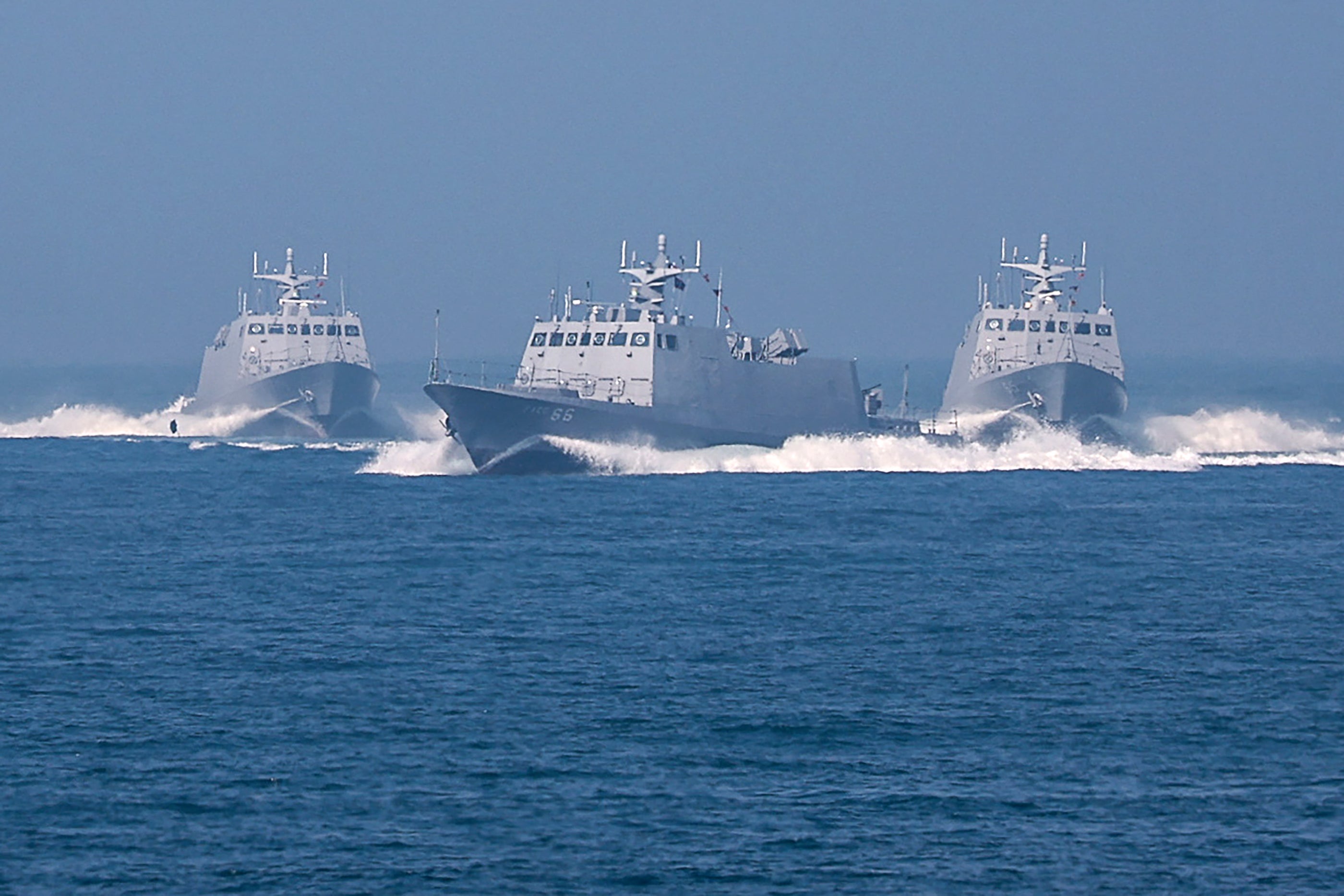
The absence of any mention of Taiwan in Washington’s new defence strategy document has raised concerns in Taipei, at a time when Beijing continues to threaten the island with naval and air force sorties.
The 2026 National Defense Strategy has been described by analysts as a dramatic reordering of the Trump administration’s defence priorities, and where it sees its limitations.
And while the 2022 edition of the document mentioned Taiwan several times, with Beijing described as launching “increasingly provocative rhetoric and coercive actions” that “threatened stability” across the Taiwan Strait, there was not a single direct reference to Taiwan in the new version released last week.
Earlier editions made note of China’s overt threats to Taiwan – Chinese president Xi Jinping has vowed to “reunite” the self-governed island with the mainland by force, if necessary, and the US is bound by treaty to help arm Taipei to defend itself from attack.
One Sunday, Taiwan’s defence ministry said it detected a People’s Liberation Army (PLA) helicopter and six naval vessels on sorties that crossed the median line between the island and the mainland.
The defence ministry said it deployed aircraft, naval ships, and coastal-based missile systems in response. “We have monitored the situation and responded,” it said in a post on X.
Some experts said the omission of Taiwan from the NDS document was part of a wider strategy for the Trump administration to remain open for negotiations with Beijing.
Trump is scheduled to meet the Chinese president in April, according to Dennis Weng, a Taiwanese political scientist.
“This document adopted a more restrained, pragmatic and even reconciliatory language for Beijing,” Dr Weng, founding director of the Asia Pacific Peace Research Institute (APPRI), said in a post on Facebook.
Taiwan’s main opposition party, Kuomintang (KMT), raised concerns over what message the omission sends before Trump’s planned meeting with Xi.
“Even though we have spent so much buying US arms, there is no mention of Taiwan’s security in this strategy. That shows where Trump’s priorities lie,” KMT legislator Lai Shyh-bao told SCMP.
“Taiwan has met what the US demanded, but cannot even get a single mention in return. That leaves people with a bitter feeling,” said Wang Hung-wei, another KMT lawmaker.
Officials from the ruling Democratic Progressive Party (DPP) cautioned against reading too much into the report, arguing that Americas’s “actions and institutions” meant more than any strategy document.
The document also appeared to suggest that the new US defence strategy would focus more on internal security.
“As US forces focus on Homeland defence and the Indo-Pacific, our allies and partners elsewhere will take primary responsibility for their own defence with critical, but more limited support, from American forces,” the document noted, indicating a reduction in US military presence in other parts of the world.
The document does mention security in the Asia-Pacific region, even if it is short on details. The document says the US military will “erect a strong denial defence along the First Island Chain” – a string of islands that includes Taiwan, Japan, and the Philippines.
It adds that the US military presence in East Asia would continue “to ensure that neither China nor anyone else can dominate us and our allies”.
Join our commenting forum
Join thought-provoking conversations, follow other Independent readers and see their replies
Comments
Bookmark popover
Removed from bookmarks